Key facts:
- Pay-per-click (PPC) advertising is a digital advertising model where businesses pay when someone clicks their ad.
- PPC campaigns can run across search engines, social media, shopping platforms, and display networks, with targeting options that vary by platform.
- PPC costs depend on competition, targeting, bidding, and ad quality. A cheaper click doesn’t necessarily mean a more profitable campaign.
- A relevant landing page helps turn paid traffic into leads or sales by continuing the offer and message visitors saw in the ad.
Getting someone to click your ad is one thing. Getting them to stay, trust your offer, and actually do something is another. That’s the part of PPC marketing that’s easy to overlook when you’re focused on bids and budgets. According to WordStream’s 2026 search advertising benchmarks, the average cost per click across the Google Ads and Microsoft Ads search campaigns analyzed was $5.42, while the average cost per lead reached $66.69. Those numbers tell a useful story: paying for traffic is only the beginning, and what happens after the click deserves just as much attention. A successful PPC strategy connects the right ad formats, targeting, costs, and campaign settings with a landing page that delivers on the ad’s promise. With Landingi, you can create dedicated PPC landing pages, test variations, and examine how visitors respond before deciding what to improve next.

What Is PPC (Pay-Per-Click) Advertising?
PPC (pay-per-click) advertising is a digital advertising model in which businesses pay a fee each time someone clicks their ad. It’s a common part of digital marketing strategies, used across search engines, social media, shopping platforms, and other paid placements.
Imagine a local law firm advertising its services on Google. Here’s what happens:
- The firm runs an ad targeting searches such as “personal injury lawyer near me.”
- Someone searches for that service and sees the ad among the sponsored results.
- They click the ad, and the firm pays for the click.
- They arrive on a landing page, where they can learn about the service and request a consultation.
That’s the basic idea. PPC can bring potential customers to your website shortly after a campaign launches, but it doesn’t guarantee they’ll take action.
And while Google Search ads often rely on keyword-based auctions, other PPC campaigns use audience targeting and different ad delivery systems. The real goal isn’t simply to buy clicks. It’s to attract people who are likely to become customers, at a cost that makes sense for your business.

How Does PPC Advertising Work?
PPC advertising works by connecting advertisers with potential customers through paid ad placements. Businesses choose where and to whom they want to advertise, platforms determine which ads to display, and advertisers pay when someone clicks. What happens next depends on whether the visitor finds the offer worth acting on.
The process typically follows six steps:
Step 1. Choose a platform and define your audience
Start with where your potential customers are most likely to discover your offer. Google Search can reach people actively looking for a solution, while Meta or LinkedIn can introduce it to audiences based on their interests, professional characteristics, or previous interactions.
Your campaign goal and chosen platform determine which targeting and bidding options are available.
Step 2. Enter the auction or ad delivery system
Most major advertising platforms use auctions, but they don’t all work the same way. Google Search evaluates eligible ads in the context of a search query, considering factors such as bids, relevance, and expected ad performance.
Social and display campaigns rely more heavily on audience signals, placements, and automated delivery. Shopping campaigns also use product information from a catalog or feed, so they aren’t simply traditional keyword ads with pictures.
Step 3. Display the ad to an eligible user
The platform decides whether and where an ad appears based on campaign settings, available inventory, competition, and its delivery system.
A search ad might appear alongside relevant Google results. A social ad could appear in someone’s Instagram feed, while a display ad might show up on a website they’re browsing.
Step 4. Pay when someone clicks
In a PPC campaign, the advertiser is charged for a click, even if the visitor leaves immediately afterward.
The actual cost per click can vary between auctions. Your maximum bid isn’t necessarily the amount you’ll pay, and a higher bid doesn’t automatically guarantee better placement.
Step 5. Direct the visitor to a landing page
The click takes someone to a destination you’ve chosen, often a dedicated PPC landing page.
Imagine an ad promising a free 30-minute marketing consultation. If visitors arrive on a generic agency homepage and have to search for that offer, some will leave. A landing page that repeats the promise, explains the consultation, and provides a clear booking form gives them a much more direct path.
As Krzysztof Marzec, Google Ads expert and CEO of DevaGroup, explains in his conversation with Landingi Talks:

Step 6. Track conversions and evaluate results
A conversion happens when someone completes the action your campaign is designed to encourage, such as booking a call, submitting a form, or purchasing a product.
Conversion tracking connects these actions to your advertising efforts. It helps you determine which campaigns generate valuable outcomes, not just traffic.
That’s the distinction worth remembering: PPC pays for the click, while campaign success depends on what happens afterward.
How does PPC targeting work?
PPC targeting works by using keywords, location, demographics, interests, audience data, and previous interactions to determine when and to whom ads can be shown. The available options depend on the advertising platform and campaign type.
For example, Google Search campaigns can target people searching for specific keywords, while LinkedIn Ads can reach professionals based on job titles, industries, or company size. Remarketing helps advertisers reconnect with people who’ve previously visited their website or engaged with their brand.
A B2B accounting software company might target searches for “accounting software for small businesses” on Google, then use LinkedIn to reach finance managers at mid-sized companies. Same product, different ways of finding potential customers.
Keep in mind that targeting doesn’t guarantee every impression reaches your ideal customer. Some automated campaigns use audience inputs as signals to guide delivery, not strict restrictions.
What factors influence PPC ad performance?
PPC ad performance depends on four main factors: bidding and competition, ad quality and relevance, budget and delivery, and accurate conversion tracking. Together, they influence how often your ads appear, how much you pay, and whether those clicks generate valuable results.
- Bidding and competition. Your bidding strategy determines how the platform competes for ad placements. Actual costs vary with competition and auction conditions. Automated bidding can optimize for clicks, conversions, or conversion value, depending on your campaign goal.
- Ad quality and relevance. Ads should match the user’s intent and clearly communicate the offer. In Google Search, expected click-through rate, ad relevance, and landing page experience help assess quality. Quality Score is a diagnostic metric, not a direct input into Ad Rank.
- Budget and delivery. Your budget limits how much you can spend and may affect how often your ads appear. Increasing it can bring more traffic, but won’t necessarily improve profitability if targeting or conversion performance is weak.
- Tracking and measurement. CTR and CPC tell you how efficiently you’re attracting visitors. Conversion rate, cost per acquisition (CPA), and return on ad spend (ROAS) help reveal whether those visitors are delivering business value.
Here’s a simple example: two ads generate 100 clicks each at $2 per click. Both cost $200, but one brings in two leads and the other ten. That’s $100 versus $20 per lead – a substantial difference, even though their CPC is identical.
What Are the Main Types of PPC Ads?
The main types of PPC ads are search ads, display ads, social media ads, shopping ads, video ads, and in-app ads. Each reaches people in a different context, from actively searching for a product to scrolling through social media or using a mobile app.
Not every campaign using these formats is billed per click. Depending on the platform and objective, advertisers may also pay for impressions, video views, or other outcomes.
| Ad type | Best for | Typical platform |
| Search ads | Reaching people actively looking for products or services | Google Ads, Microsoft Advertising |
| Display ads | Brand awareness, visual promotion, and re-engagement | Google Display Network, Google Demand Gen |
| Social media ads | Audience discovery, lead generation, and product promotion | Meta Ads, LinkedIn Ads, TikTok Ads |
| Shopping ads | Showing products, prices, and availability to potential buyers | Google Shopping, Microsoft Shopping |
| Video ads | Product demonstrations, storytelling, and building interest | YouTube Ads, TikTok Ads, Meta Ads |
| In-app ads | Reaching mobile users and driving app installs or in-app actions | Google AdMob, AppLovin, Unity Ads |
Search ads appear alongside search results, usually when someone enters a relevant query. They’re particularly useful when demand already exists. A person searching for “emergency plumber in Chicago,” for example, probably wants a solution now, not a long introduction to plumbing services.
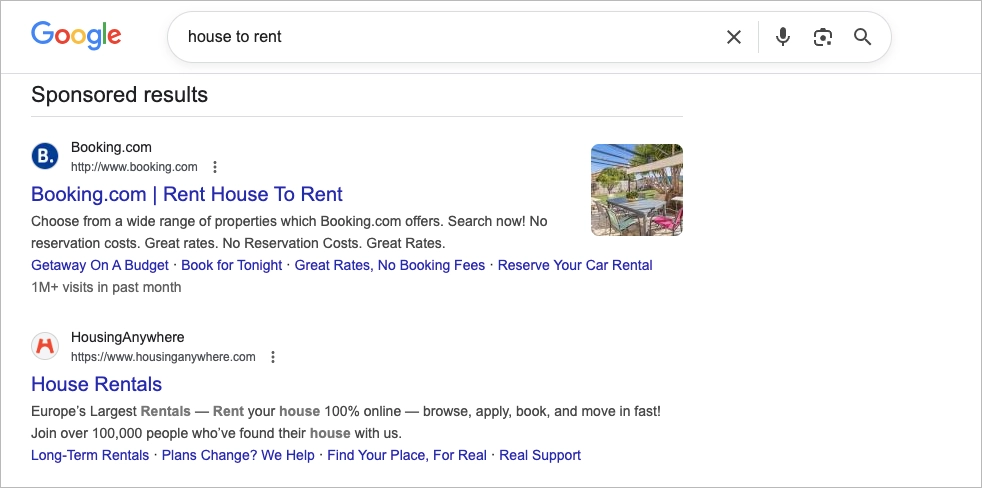
Display ads use images, banners, or responsive creatives across websites and apps. They’re useful for keeping a brand visible while potential customers explore their options. Google’s Demand Gen campaigns also help advertisers reach audiences across visual placements, including the Display Network, Gmail, and Discover.

Social media ads appear in feeds, Stories, Reels, and other placements. Unlike search ads, they can introduce an offer to people who weren’t actively looking for it. A fitness brand might use Instagram to reach people interested in running, while a B2B company could use LinkedIn to reach decision-makers in specific industries.
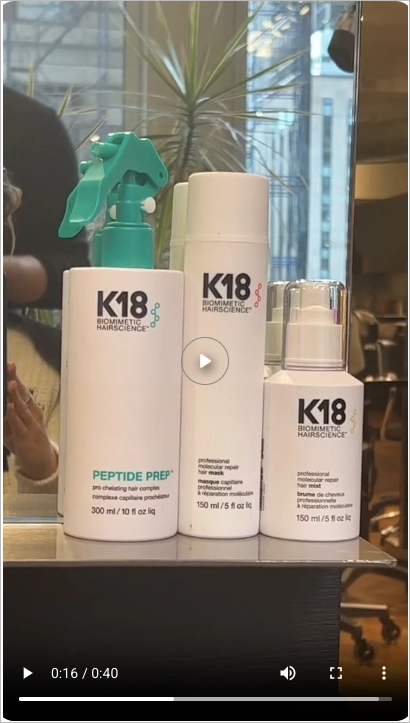
Shopping ads show product information such as images, prices, and store names, helping customers compare options before clicking. In Google Ads, these campaigns rely on product data from Merchant Center, not just keywords chosen by the advertiser. That makes accurate product titles, descriptions, and pricing especially important.

Video ads give businesses room to demonstrate a product or explain an offer visually. Think of a short software walkthrough on YouTube or a skincare demonstration in a TikTok feed. Some video campaigns charge for clicks, while others use view-based or impression-based pricing.

In-app ads appear inside mobile applications, including games and utility apps. They can take the form of banners, videos, or interactive placements. They’re often used to promote other apps, subscriptions, and mobile-focused services, with billing models that vary by campaign.

There are also more specialized placements. Amazon Ads, for example, offers CPC-based Sponsored Products to reach shoppers browsing Amazon. Sponsored placements can also appear in email environments, including Gmail through Google’s Demand Gen campaigns.
Remarketing is a targeting strategy, not a separate ad format. It helps you reach people who’ve previously interacted with your business through search, display, social, or other eligible placements.
Whichever format you choose, the next step matters. A search ad promising a free quote and a social ad promoting a product demo may attract visitors with very different expectations. Their landing pages should reflect that difference, giving each audience a clear reason to convert.

What Are the Benefits and Limitations of PPC?
The main benefits of PPC advertising are fast visibility, budget control, audience targeting, measurable results, and flexible optimization. Its biggest limitations include ongoing costs, competition, irrelevant clicks, ad fatigue, and dependence on landing page quality.
Benefits of PPC advertising
| Benefit | What it means for your business |
| Fast visibility | Start attracting visitors shortly after campaign approval. |
| Budget control | Set spending limits and adjust bids based on performance. |
| Audience targeting | Reach people based on search intent, location, interests, or professional characteristics, depending on the platform. |
| Measurable results | Track clicks, conversions, acquisition costs, and revenue when the necessary tracking is in place. |
| Flexible optimization | Test ads, refine targeting, and adjust campaigns as performance data comes in. |
These advantages make PPC particularly useful when you need to test a new offer, promote a time-sensitive campaign, or reach customers beyond your existing audience.

However, having control over your advertising budget doesn’t mean having control over the outcome. You can decide how much you’re willing to spend, but not how many people will convert.
Limitations of PPC advertising
| Limitation | What to watch out for |
| Ongoing costs | Paid traffic can decline quickly when campaigns stop running. |
| Competition | Popular keywords and valuable audiences can drive up advertising costs. |
| Irrelevant clicks | Poor targeting or mismatched search intent can consume your budget without generating useful leads. |
| Ad fatigue | Repeated exposure to the same creative can reduce engagement, particularly on social and display platforms. |
| Landing page friction | A confusing page, slow loading, or an offer that doesn’t match the ad can discourage visitors from converting. |
Consider a campaign bringing in hundreds of clicks at a reasonable CPC. That might look encouraging until you discover that hardly anyone completes the form or that most leads aren’t qualified. The cost of the click tells you only part of the story.
PPC can bring people to your offer quickly, but it doesn’t guarantee profitable conversions. The real measure of success is whether those visits generate enough business value to justify what you’re spending.
How to Create a PPC Campaign in 7 Steps
To create a PPC campaign, define your conversion goal, choose an advertising platform, research your audience, set a budget and bidding strategy, prepare relevant ads and landing pages, configure tracking, and launch. Once the campaign is running, use performance data to improve targeting, costs, and conversions.
Here’s how to build a PPC campaign that goes beyond simply bringing people to your website.
Step 1. Define campaign goals and KPIs
Before spending anything, decide what a successful click should lead to. Are you trying to generate demo requests, sell products, or get people to register for a webinar?
Make that action your primary conversion goal, then choose the metrics that tell you whether the campaign is working.
| Campaign goal | Main KPI | Supporting metrics |
| Generate leads | Cost per qualified lead / CPA | Conversion rate, CPC, lead volume |
| Drive ecommerce sales | ROAS or conversion value | Purchase conversion rate, CPA, CPC |
| Attract website visitors | Cost per click (CPC) | CTR, engagement, qualified traffic |
| Increase awareness | Reach or impressions | CPM, frequency, brand lift |
For example, a B2B software company offering free demos should measure completed demo requests, not just clicks on the booking button. If those demos rarely turn into sales opportunities, lead quality deserves attention too.
Practical tip: Give your campaign one primary conversion action and track smaller interactions separately. This helps prevent automated bidding from optimizing toward easy but less valuable actions.
Step 2. Choose your PPC platform and ad format
The best PPC platform depends on where your customers are and what they’re doing when they see your ad.
Google Search and Microsoft Advertising are useful when people are actively searching for a solution. Meta and TikTok can introduce products to audiences through visual content, while LinkedIn offers professional targeting for B2B campaigns.
A company selling project management software might use Google Search to reach people comparing tools and LinkedIn to target operations managers. An ecommerce fashion brand, meanwhile, could combine Google Shopping with Instagram ads to reach shoppers at different stages of their buying journey.
Choose the format that fits the audience’s intent, not simply the platform with the largest reach.
Step 3. Research keywords and define your target audience
Good keyword research starts with understanding what someone actually wants when they search.
For Google Search, use tools such as Keyword Planner to examine relevant queries, estimated PPC costs, and search demand. Pay attention to intent: “what is CRM software” suggests research, while “CRM software pricing” may indicate someone closer to making a decision.
Then refine your PPC targeting using the options available for your campaign:
- Keywords and search intent: Focus on searches relevant to your offer. Use match types deliberately and review actual search terms after launch.
- Location and demographics: Choose geographic markets and eligible audience characteristics that reflect where your customers are.
- Audience segments: Use interests, professional characteristics, or behavioral signals where the platform supports them.
- Remarketing: Reconnect with previous visitors or engaged audiences when consent and platform requirements allow.
For example, a B2B cybersecurity company could target commercial-intent searches such as “managed cybersecurity services for small business” in its service area, then test LinkedIn campaigns aimed at IT decision-makers in companies with 50–500 employees.
One detail worth checking in Google Ads is location targeting. Reaching people physically present in your market isn’t always the same as reaching people who’ve merely shown interest in it. The right setting depends on your offer.
Your landing page should reflect those choices too. Someone searching for cybersecurity services for a small business should arrive on a page addressing that need, not a generic list of everything your company sells.
Step 4. Set your budget and bidding strategy
Start with what you can afford to spend on acquiring a customer or qualified lead, then work backward.
Suppose your target cost per lead is $60 and your landing page converts 5% of visitors. At that conversion rate, you need roughly 20 clicks to generate one lead, meaning your estimated break-even CPC against that CPL target is $3.
That’s a planning estimate, not a guarantee. Actual performance will vary, and you’ll need to account for lead quality, sales conversion rates, and operating costs.
Your bidding strategy should match the campaign’s objective:
- Maximize Clicks: Useful when the immediate goal is traffic, but it doesn’t optimize directly for conversions.
- Maximize Conversions: Uses automated bidding to pursue more conversions within the available budget.
- Target CPA: Aims to generate conversions around a target acquisition cost.
- Target ROAS: Focuses on conversion value relative to ad spend, making it more suitable when reliable revenue or value data is available.
In 2026, Google Ads uses these updated bidding strategy labels, including Target CPA and Target ROAS. Availability and configuration depend on campaign type.
Practical tip: Don’t set an unrealistically low CPA target simply because that’s what you’d like to pay. Use historical results or a realistic starting estimate, and give automated bidding time to learn before making frequent adjustments.
Step 5. Create your ads and matching landing pages
Your ad earns the click. Your landing page needs to make that click worthwhile.
Imagine you’re advertising a free PPC audit:
| Ad message | Matching landing page |
| “Free Google Ads Audit” | Headline confirming the free audit |
| “Find Wasted Ad Spend” | Explanation of what the audit reviews |
| “Get Your Free Audit” | Form with the same CTA |
| “For B2B Companies” | Examples and proof relevant to B2B advertisers |
The visitor shouldn’t have to figure out whether they’ve landed in the right place. Keep the offer, headline, CTA, and audience intent consistent. Make the page mobile-friendly, quick to load, and easy to act on.
Creating separate pages for different audiences doesn’t have to mean building each one from scratch. Lunar, Landingi’s AI-native landing page generator, uses AI to turn a prompt describing your offer, audience, and conversion goal into a complete, editable landing page, including its copy, layout, and conversion elements. You can then tailor each version to the specific ad.
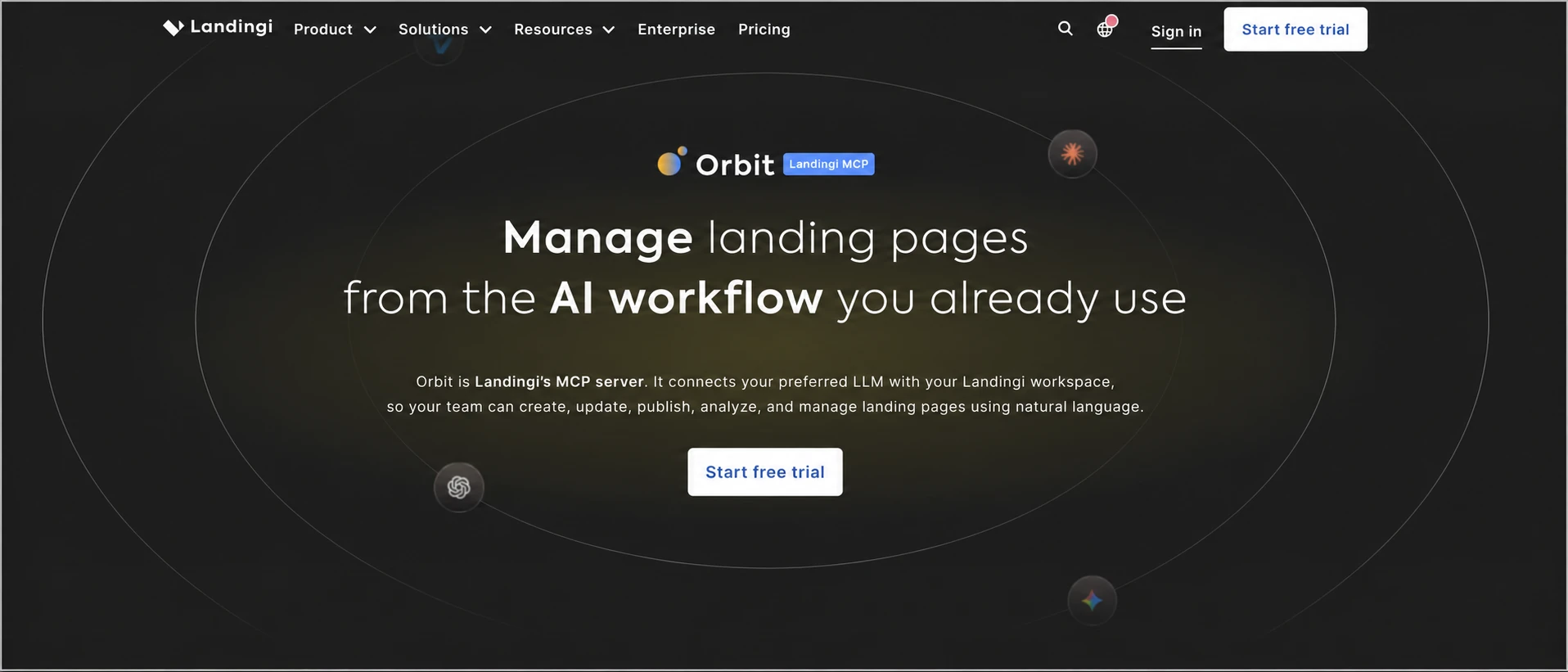
For teams managing multiple PPC campaigns, Orbit, Landingi’s MCP server, connects the platform to your preferred AI assistant. You can use natural-language instructions to duplicate pages for new audiences, update content, and manage publishing without constantly switching between tools.
Use Orbit to manage PPC landing pages through your AI assistant, from content updates to publishing.
Step 6. Configure conversion tracking and launch
Don’t launch a campaign until you know whether its most important actions are being recorded correctly.
For a lead generation campaign, that usually means tracking successful form submissions, qualified leads, or booked appointments. In Google Ads, distinguish between primary conversions, which can guide bidding, and secondary conversions, which are mainly useful for observation.
Before going live, check that:
- Conversion events fire after a successful action, not merely when someone opens a form.
- GA4 and advertising platform tracking are configured correctly, with consent requirements respected.
- UTM parameters identify the campaign, source, and relevant creative or audience details.
- Forms and integrations actually deliver leads to your CRM or inbox.
- The landing page loads properly on mobile and the thank-you experience works.
Submit a test lead and verify it reaches the correct destination. Also check that conversions aren’t being counted twice through overlapping tracking setups.
Once everything is ready, launch the campaign and monitor delivery, spending, and tracking. Resist the urge to rewrite your ads after the first few clicks.
Step 7. Analyze results and optimize
Effective PPC optimization starts with looking beyond CTR and CPC. Once your campaign has collected enough data, focus on the outcome that matters: Are you getting qualified leads or sales at an acceptable cost?
Then investigate where performance is slipping.
| What you’re seeing | What to investigate |
| High CPC, few conversions | Keyword competition, targeting, bidding, and commercial intent |
| Good CTR, poor landing page conversion | Ad-to-page message match, offer clarity, forms, and mobile experience |
| Plenty of leads, few qualified prospects | Audience targeting, conversion goals, and qualification questions |
| Spending on irrelevant searches | Search terms report, keyword match types, and negative keywords |
| Declining social ad performance | Creative fatigue, frequency, audience saturation, and new creative tests |
For search campaigns, make reviewing the search terms report a habit. A keyword that looks relevant in your account may still attract queries that have little to do with your offer. Adding well-chosen negative keywords can help prevent further waste.
For landing pages, examine what visitors do after arriving. Landingi’s EventTracker records interactions such as clicks, scrolling, and form activity, while Solis, an AI landing page optimization tool, analyzes that behavior in the context of your page and campaign to recommend improvements.
You can then A/B test changes such as a shorter form, clearer headline, or more relevant CTA.
Don’t scale simply because a campaign has started generating conversions. Increase spending when the results are consistent, tracking is reliable, and the cost of acquiring customers makes business sense.
Let Solis analyze visitor behavior and campaign context to suggest improvements to your PPC landing pages.
PPC vs. SEO vs. SEM: What’s the Difference?
PPC is a paid advertising model, SEO focuses on organic search visibility, and SEM refers to search engine marketing. The main difference is how businesses reach potential customers and what they pay for.

PPC (pay-per-click) charges advertisers when someone clicks an ad. It works across search engines, social media, and other advertising platforms.
SEO (search engine optimization) helps websites appear in unpaid search results through relevant content, technical improvements, and other optimization efforts.
SEM (search engine marketing) needs a little clarification. Historically, the term covered both paid search and SEO. Today, it’s often used specifically for paid search advertising, particularly Google Ads and Microsoft Advertising. So while PPC and SEM overlap, they aren’t exactly the same thing: PPC describes a payment model, while SEM describes marketing through search engines.
| Aspect | PPC | SEO | SEM |
| Main approach | Paid advertising | Organic search optimization | Usually paid search marketing |
| Where it works | Search, social, display, shopping, and more | Organic search results | Search engine results pages |
| What you pay for | Ad clicks | Content, optimization, and SEO resources | Search advertising costs |
| Speed | Traffic can arrive shortly after launch | Results usually develop over time | Paid visibility can start quickly |
| Long-term value | Traffic generally depends on continued spending | Rankings can continue attracting visitors without paying for each click | Usually requires ongoing ad spend |
| Typical tools | Google Ads, Meta Ads, LinkedIn Ads | Google Search Console, Semrush, Ahrefs | Google Ads, Microsoft Advertising |
One detail worth remembering: SEO isn’t free. You don’t pay search engines for organic clicks, but creating useful content, maintaining a website, and improving its visibility still require resources.
Can PPC and SEO work together?
Yes. PPC and SEO work well together because they help businesses capture search demand at different stages and speeds. PPC can bring visitors to a new offer immediately, while SEO builds organic visibility over time.
Imagine a company selling accounting software. It could run Google Search ads for “accounting software for small businesses” while developing comparison articles, product guides, and educational content targeting related searches.
The two channels can support each other in practical ways:
- Use PPC data to inform SEO. Search terms and conversion results can reveal which topics attract visitors who are ready to take action.
- Use SEO to support longer buying journeys. Helpful articles can answer questions that potential customers aren’t ready to ask a salesperson.
- Coordinate landing pages and messaging. If an offer performs well in paid search, use those insights to refine relevant organic pages and conversion paths.
The goal isn’t to make one channel replace the other. PPC helps you reach demand you can act on now, while SEO builds opportunities to attract customers without paying for every visit. Together, they can make your search marketing strategy more resilient.
Turn your PPC campaign idea into an editable, conversion-focused landing page with Lunar, Landingi’s AI landing page generator.
FAQ About PPC Advertising
Here are answers to common questions about PPC costs, conversion rates, advertising platforms, and the latest developments in paid advertising.
What is the difference between PPC and CPC?
PPC (pay-per-click) is an advertising model, while CPC (cost per click) is a metric showing how much you pay for each click. For example, if you spend $200 on a PPC campaign and receive 100 clicks, your average CPC is $2. PPC describes how the advertising works; CPC helps you measure its cost.
Is Google Ads the same as PPC?
No. Google Ads is an advertising platform, while PPC is a payment model used across multiple platforms. Google Ads supports search, shopping, display, and video campaigns, but not all use CPC billing. You can also run PPC campaigns through Microsoft Advertising, Meta Ads, LinkedIn Ads, and other networks.
What is the best PPC platform for beginners?
Google Ads is a good starting point if your customers are already searching for products or services like yours. Google Search campaigns let you connect relevant searches with a specific offer and measure the results.
For visually appealing consumer products, Meta Ads may be a better fit. Start with one platform, a focused audience, a manageable budget, and properly configured conversion tracking before expanding.
What is a good conversion rate for PPC?
A good PPC conversion rate depends on your industry, ad format, audience, and conversion goal. According to WordStream’s 2026 benchmarks, the average conversion rate across the Google Ads and Microsoft Ads search campaigns analyzed was 8.18%. That isn’t a universal benchmark for social, display, or shopping campaigns.
More importantly, a 5% conversion rate that brings qualified customers may be more valuable than a 10% rate that generates low-quality leads. Compare similar campaigns and monitor CPA or ROAS alongside conversions.
What are the latest trends in PPC advertising?
The biggest PPC trends include AI-powered bidding, automated targeting, AI-assisted creative production, and advertising within AI-powered search experiences.
Google’s AI Max expands how Search campaigns can match relevant queries and customize ads, while Performance Max uses automation across Google’s advertising inventory. Eligible Search, Shopping, and Performance Max ads can also appear in AI Overviews and AI Mode.
As platforms automate more decisions, marketers still need to provide accurate conversion data, relevant creative assets, and landing pages that match what people are looking for. AI can help deliver the ad, but it doesn’t replace a convincing offer.
Where can I learn PPC marketing?
Start with free, official training: Google Skillshop covers Google Ads campaigns and certifications, while Microsoft Advertising Learning Lab offers courses on search advertising. For ongoing learning, follow PPC blogs such as Search Engine Land, Search Engine Journal, and PPC Hero.
The best way to learn is to put the theory to work: build a small campaign, set up conversion tracking, review the actual search terms and results, and improve one thing at a time.
Create campaign-specific landing pages, test variations, and turn PPC insights into better conversion experiences with Landingi.
Turn PPC Clicks Into Conversions With Landingi
A successful PPC campaign doesn’t end when someone clicks your ad. You can have great targeting, compelling copy, and a competitive CPC, but if visitors land on a page that doesn’t deliver what they expected, that advertising budget can disappear without much to show for it.
That’s why your landing page deserves just as much attention as your ads. With Landingi, an AI landing page operation platform, you can create dedicated pages for different campaigns, audiences, and offers, keeping the message consistent from the first impression to the final CTA.
Need a page for a new campaign? Lunar, Landingi’s AI-native landing page generator, uses AI to create a complete, editable landing page from a simple prompt describing your offer and conversion goal. Once your campaign is running, EventTracker helps you understand how visitors interact with the page, while Solis analyzes that behavior and recommends improvements. You can also use A/B testing to compare page variations and see what actually works for your audience.
The goal isn’t to get more clicks at any cost. It’s to make the clicks you’re already paying for more valuable. With the right landing pages, testing, and insights, you can keep improving the journey from ad to conversion. Try Landingi now!