Sportsbook marketing runs on volume and timing. Every event brings a new offer, new messaging, and a hard deadline. Welcome bonuses change, odds update, and many promotions expire within hours.
Each variation needs its own landing page that matches the ad and the event context. Manually building, updating, publishing, and unpublishing pages simply does not scale. Even templates stop helping once teams manage dozens or hundreds of variations per month.
As campaigns speed up, landing page production becomes the bottleneck. Teams spend more time duplicating pages and fixing details than launching new offers. At some point, the question becomes unavoidable: can this be automated? With Programmatic Landing Pages, the answer is yes.
How Programmatic Landing Pages Actually Work
Programmatic Landing Pages are built around one idea: separate layout from content. The layout is created once. The content is injected automatically.
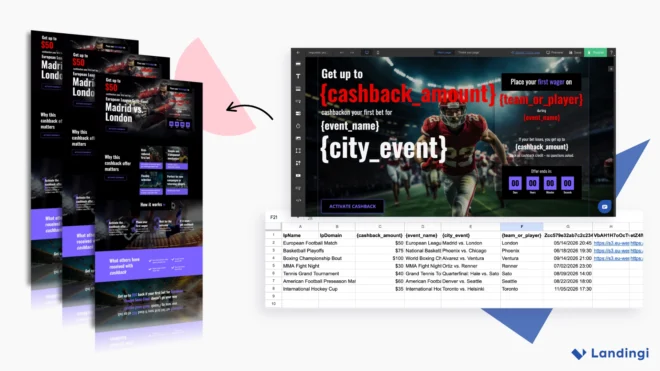
Everything starts with a single, flexible landing page template. Instead of hard-coded text, the template uses dynamic placeholders. Each placeholder represents a variable that changes across campaigns, such as the event name, team or player, odds, bonus value, promo code, or deadline.
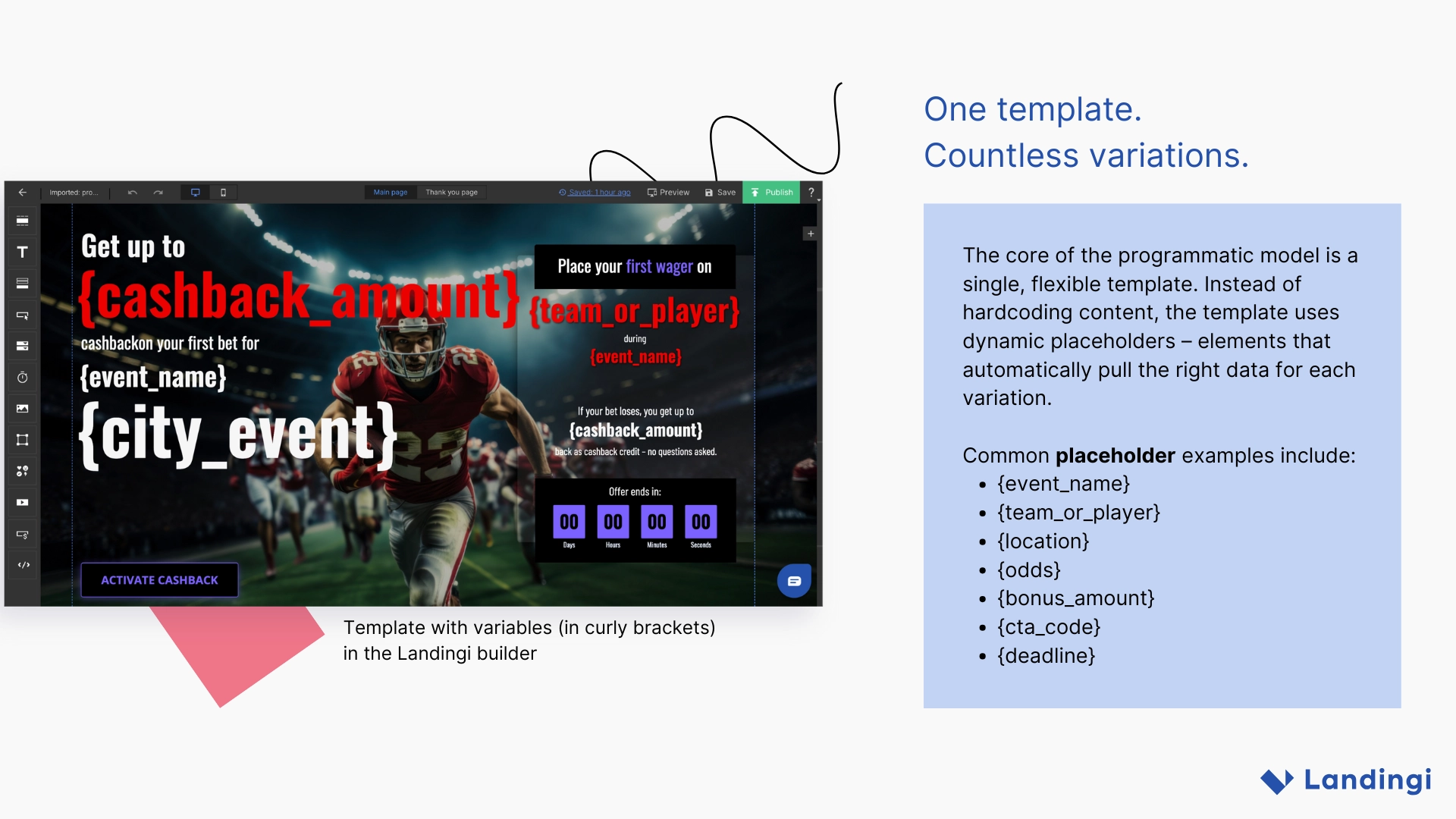
These variables are not edited inside the page. They live in a structured data file, usually a spreadsheet. Each column defines a variable. Each row represents one landing page variation. When the system combines the template with the data file, it generates all pages in bulk.
Updating an offer no longer means editing dozens of pages. You update the data file, regenerate the pages, and the changes apply everywhere. The same logic works for content, CTAs, and even visuals. Images or backgrounds can change automatically based on the event, keeping each page relevant and aligned with the ad.
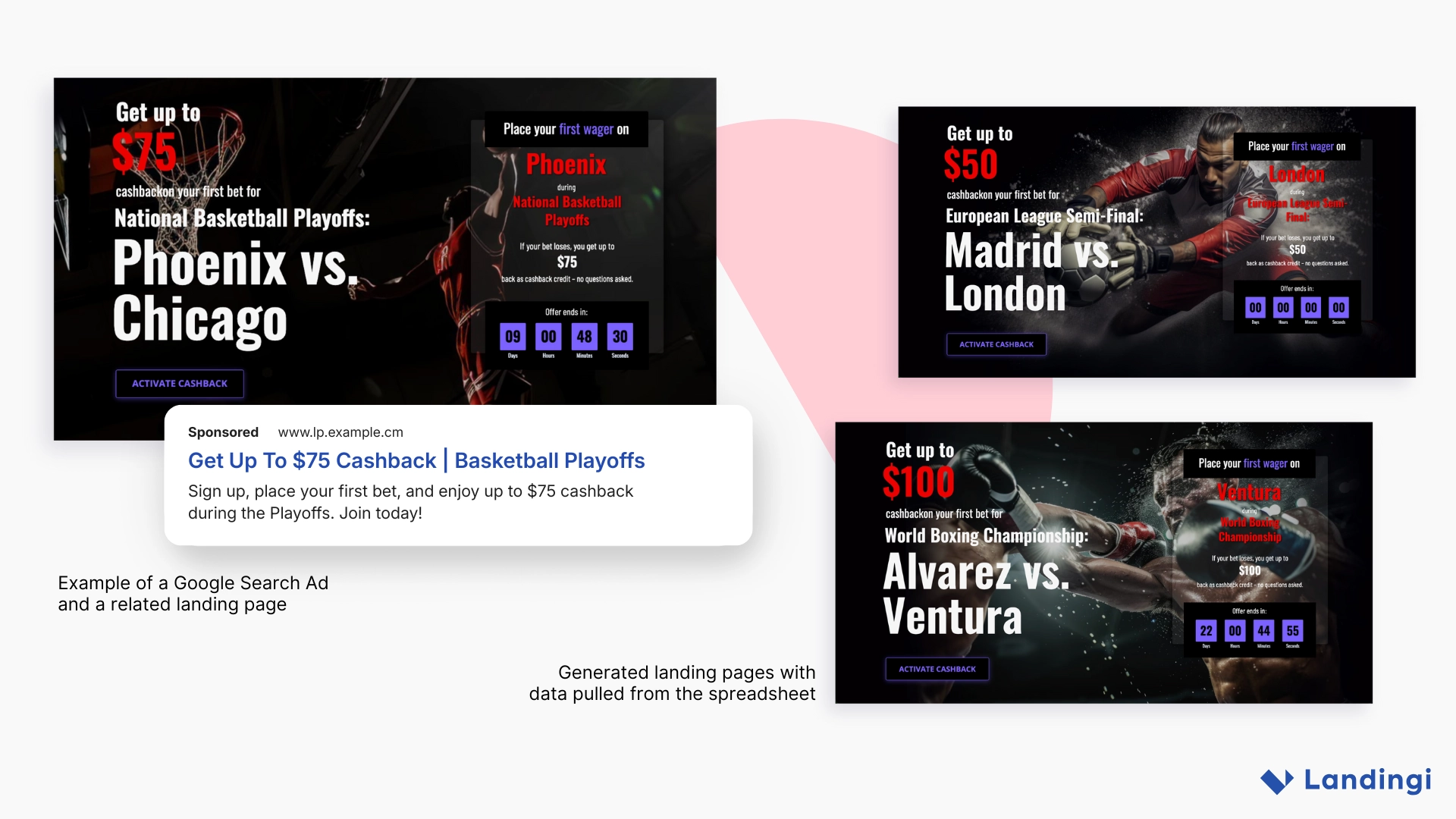
Landingi supports different workflows, depending on how teams prefer to work:
- API – Best for teams that want full automation or need to connect landing page generation with internal systems. Pages can be created, updated, and published programmatically.
- CSV file – A simple file-based approach. Upload a spreadsheet, and each row becomes a new landing page based on the template.
- Google Sheets – A collaborative option for marketing teams. Pages are generated directly from a shared spreadsheet without exporting files.
The interface changes, but the model stays the same. One template, one data source, and automated page creation at scale.
The same logic also simplifies ongoing maintenance. If something breaks in the layout, such as a long team name or unusual odds format, the fix happens once in the template. Regenerating pages updates every variation instantly. Teams do not have to review or edit hundreds of URLs by hand, which keeps campaigns stable even under tight timelines.
Why This Model Fits Sportsbook Campaigns
Most sportsbook funnels rely on urgency and relevance. Users respond to offers that feel tied to a specific moment, event, or outcome.
Registration is rarely instant. It often involves multiple steps, verification, and a deposit. Incentives help reduce that friction, but only if they feel concrete and easy to understand.
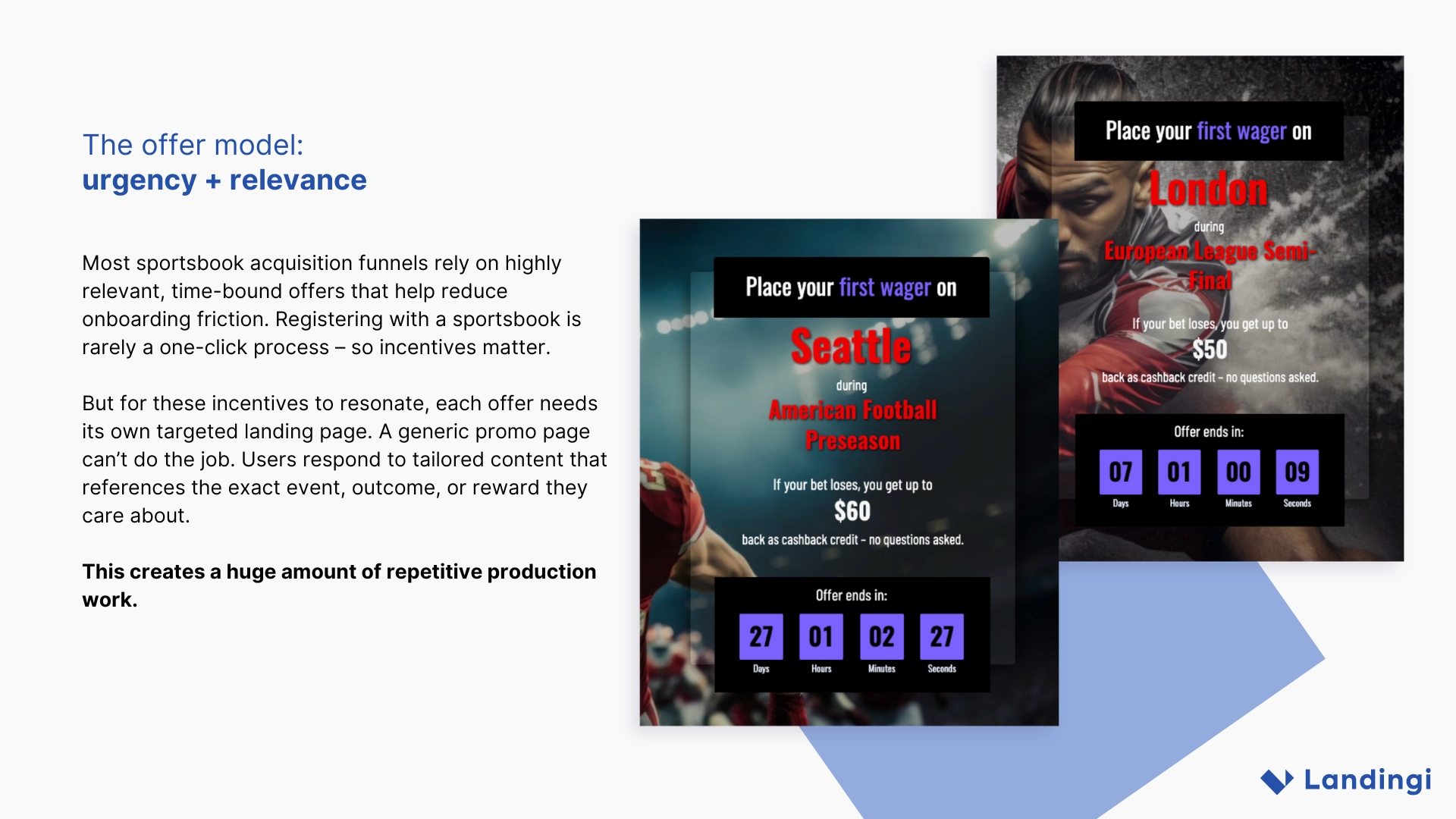
These incentives are usually event-based. A boosted odd for a single match, a welcome bonus linked to a tournament, or a short-term promo code works because it feels specific. Generic offers struggle to create the same push.
For this to convert, the landing page has to match the promise from the ad. When users land on a generic promo page, doubt appears. They start checking the fine print or looking for confirmation. That hesitation often stops the funnel.
Programmatic Landing Pages close this gap. Each incentive gets its own landing page without adding manual work. The page reflects the event, repeats the reward clearly, and supports the same message across the entire funnel.
At scale, this model makes incentive-driven campaigns easier to manage. Teams can run multiple offers at the same time without slowing down launches or sacrificing accuracy. Urgency and relevance stay intact, even across hundreds of variations.
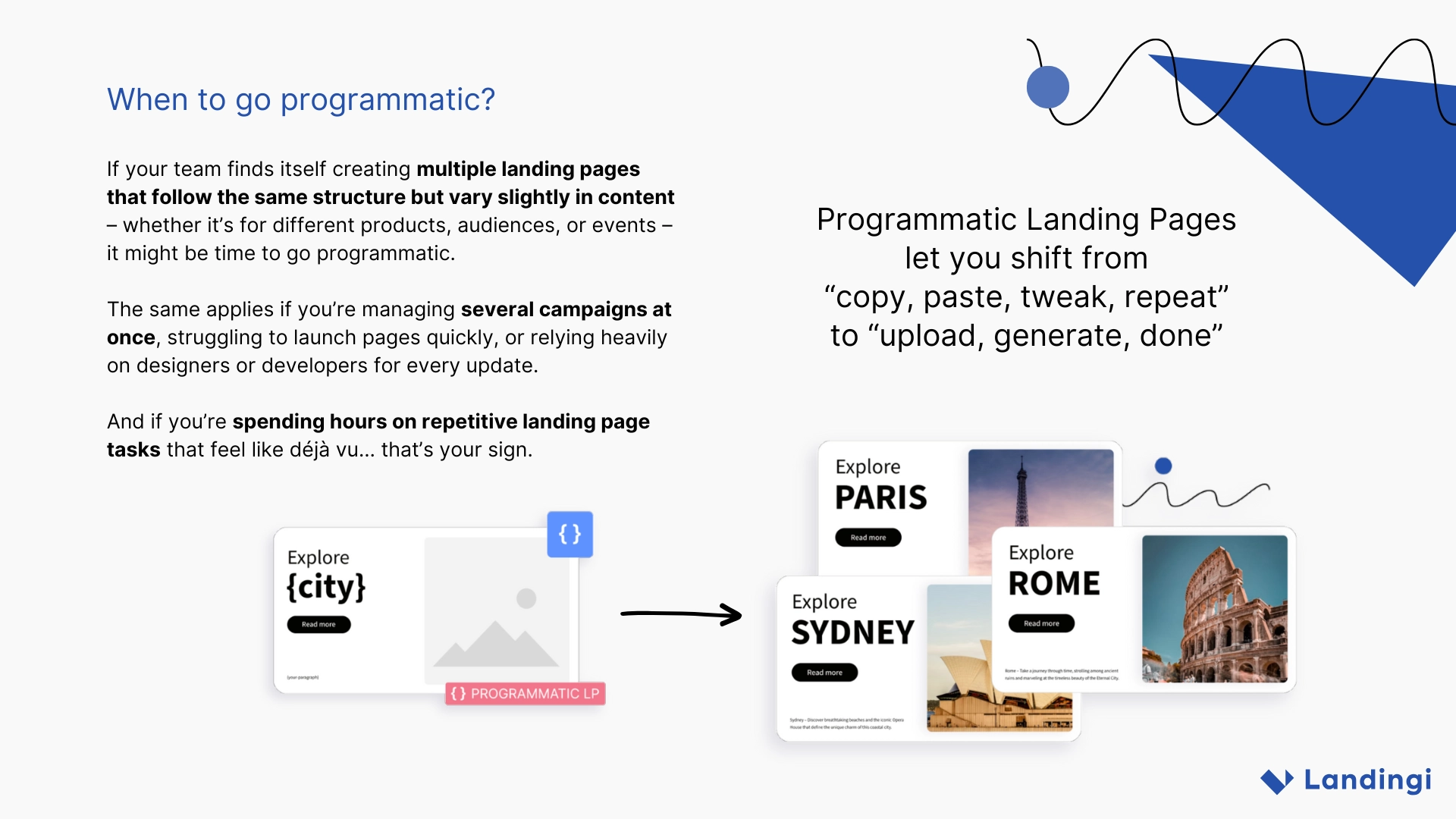
What Sportsbook Teams Gain in Practice
Speed is the most visible benefit. Pages go live while interest is still high and events are still relevant. Consistency follows closely, with ads, keywords, and landing pages staying aligned across campaigns.
Teams also gain control. They know which pages are live, which are expired, and how each variation is generated. The same system supports acquisition campaigns, match-specific promos, and cross-sell offers at the same time.
For sportsbook brands running high-volume campaigns, this approach is no longer optional. Programmatic Landing Pages make scale predictable, repeatable, and manageable without overloading the marketing team.