Choosing between Instapage, Heyflow, and Landingi usually means balancing cost, flexibility, and scalability. Each tool solves a different problem and targets a different stage of growth. This comparison focuses on real differences that matter in daily work, based on features, pricing, and user feedback.
The goal of this article is to help you decide which platform fits your team, campaigns, and long-term plans in 2026. The analysis below is based on verified reviews from G2, Trustpilot, Capterra, Reddit, and internal competitive research.
Key Differences Between Instapage, Heyflow, and Landingi
Differences between Instapage, Heyflow, and Landingi appear mainly in pricing models, customization depth, and scalability for teams. Instapage focuses on enterprise PPC teams, Heyflow on interactive lead funnels, and Landingi on flexible landing page automation. These differences directly affect cost predictability, design freedom, and campaign velocity.
The table below highlights the most practical distinctions. It summarizes strengths and limitations without marketing bias. Each tool serves a different type of organization and workflow.
| Tool | Pros | Cons | Pricing | Ease of Use | Notable Clients |
|---|---|---|---|---|---|
| Instapage | Pixel-perfect editor, AdMap, strong A/B testing, fast hosting | Very high price, feature gating, vendor lock-in | From ~$199/month, no free plan | Medium | Verizon, Shopify |
| Heyflow | Interactive funnels, strong logic, drop-off analytics | Pay-per-lead model, limited layout control | From €19/month + paid add-ons | Medium | AXA, Fortune 500 |
| Landingi | Full layout control, automation, free plan, scalability | Mobile views need manual tuning | Free, paid from $24/month | High | Sony, PayU, Bonduelle |
Not every tool fits every team. Landingi adapts. Try it free!
1. Instapage
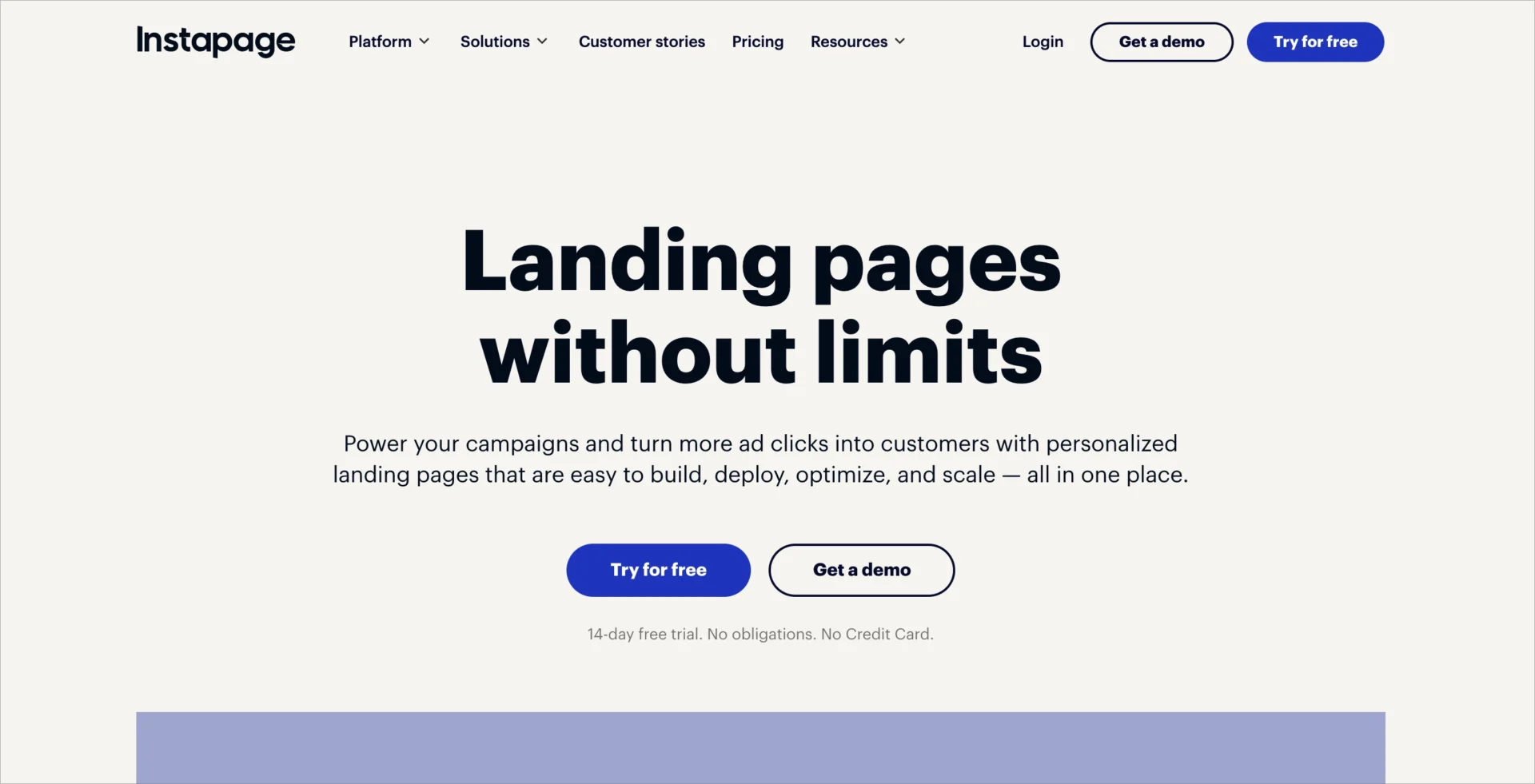
Instapage is a landing page platform designed primarily for paid traffic campaigns and large-scale optimization workflows. It focuses on precision editing, testing, and PPC alignment.
Instapage is best for large PPC teams and agencies managing high-budget ad campaigns.
Pricing
Instapage pricing starts at around $199 per month for the core Business plan, with costs rising for additional team seats, traffic, and advanced features like AdMap and collaboration tools. Enterprise plans are custom quoted and can reach many hundreds per month, depending on traffic requirements and SLA commitments. There is no free tier, and optional add-ons are often priced separately.
Key features
Key features include a pixel-perfect drag-and-drop editor, Instablocks, Global Blocks, AdMap, built-in A/B testing, and heatmaps. The platform also offers strong collaboration tools and very stable hosting.
Ratings
- G2: 4.3/5
- Capterra: 4.5/5
- Trustpilot: 4.5/5
Cons
Cons mentioned by users include frequent price increases, lack of HTML export, vendor lock-in, and limitations in mobile editing. Users also report restrictive plan limits and difficult cancellation processes.
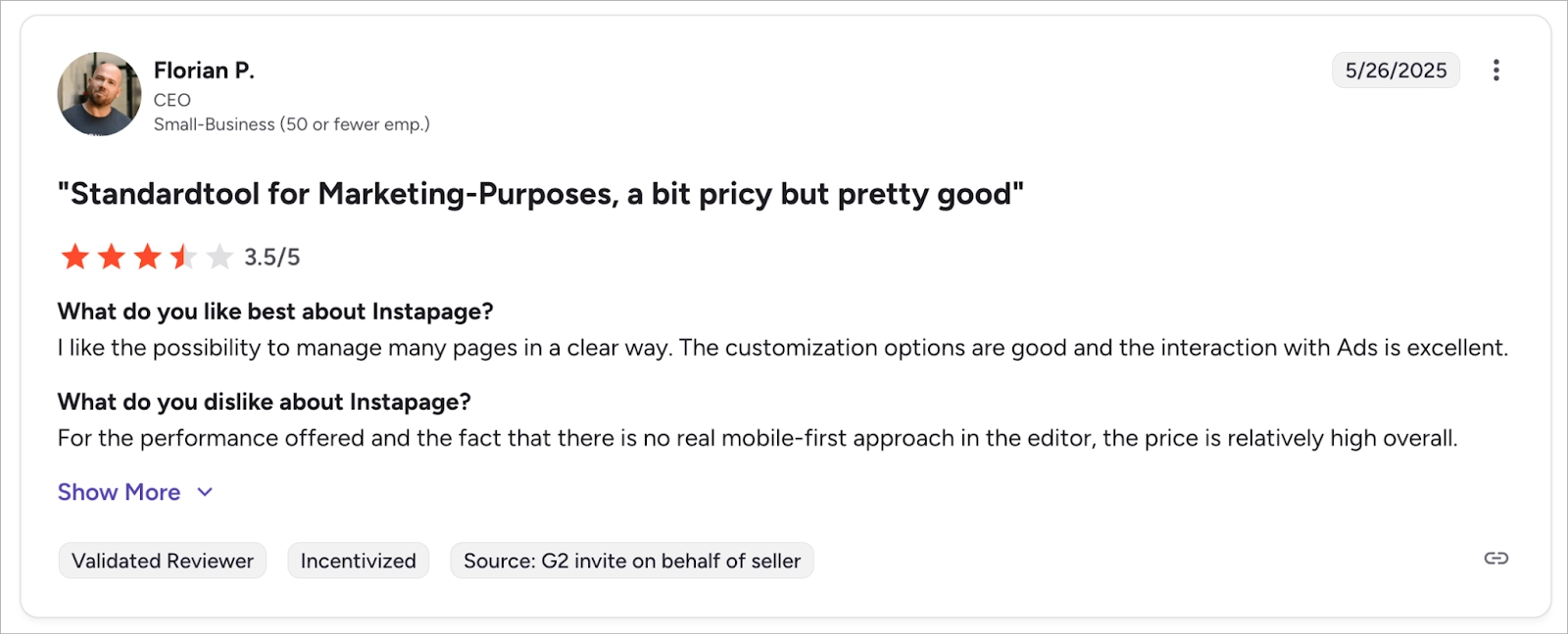
From my perspective, these limitations make Instapage risky for teams that need cost predictability and long-term flexibility as campaigns scale.
Pros
Pros include high-quality templates, fast page speed, reliable A/B testing, and strong PPC integrations. Teams appreciate AdMap and reusable blocks for large-scale campaigns.
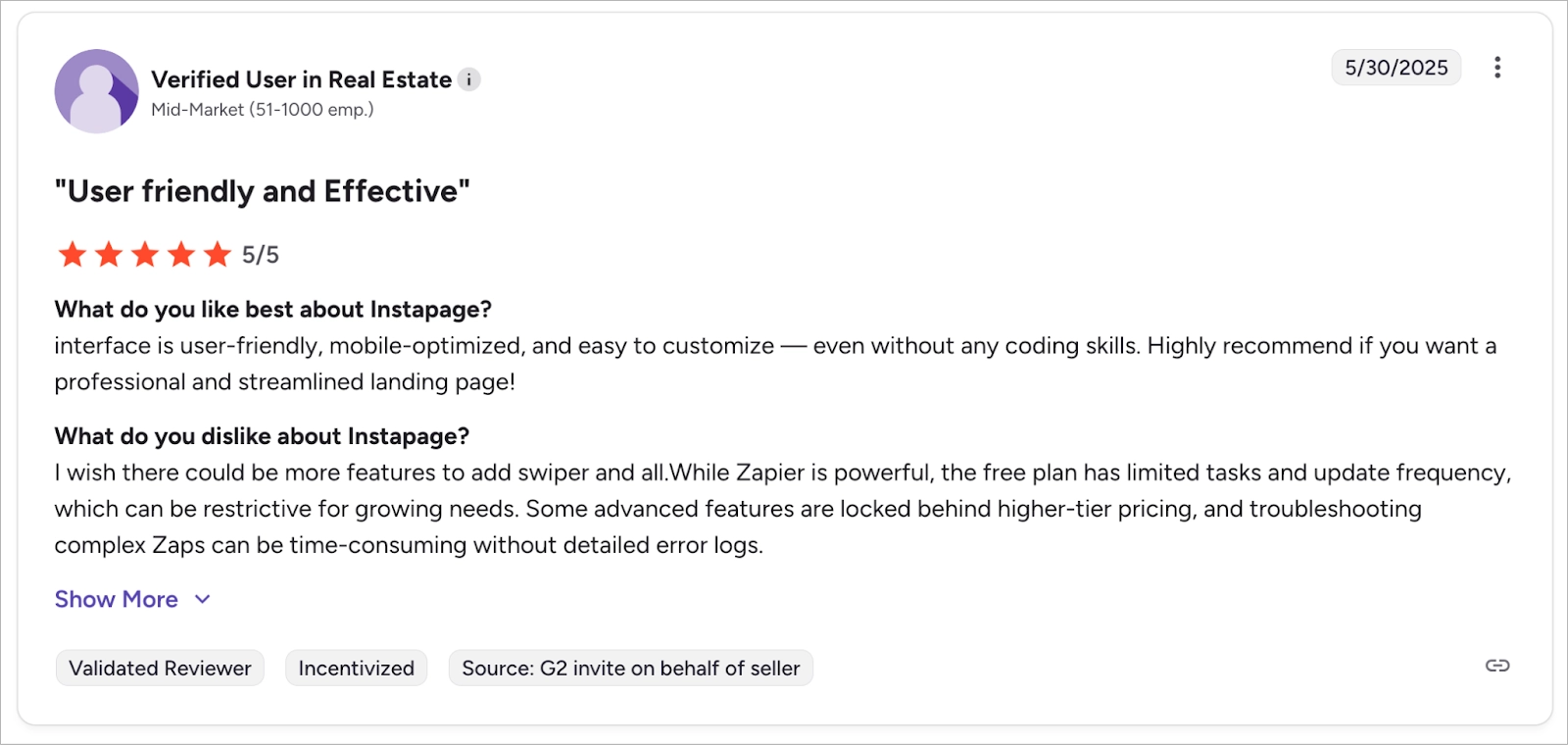
Personally, I see Instapage as a strong choice for PPC-heavy teams, but its strengths come at the cost of flexibility and pricing freedom.
Best for
Instapage fits enterprises and agencies with large ad budgets and dedicated optimization teams.
2. Heyflow
Heyflow is an interactive funnel and form builder that emphasizes multi-step user flows and lead qualification. It is positioned more as a conversion-focused form experience than a full landing page platform, which shapes both its strengths and its limitations.
Heyflow is best for teams that prioritize interactive lead capture over classic landing pages.
Pricing
Heyflow starts at around €19 per month, but pricing is unique: you pay based on monthly responses, with additional fees as your traffic grows. Many advanced features (integrations, payment steps, analytics exports) require higher-tier subscriptions or add-on purchases. This makes price predictability more difficult if you scale campaigns.
Key features
Key features focus on interactive, multi-step funnels with conditional logic, drop-off analytics, and mobile-first flows. The tool supports payments, bookings, and lead qualification.
Ratings
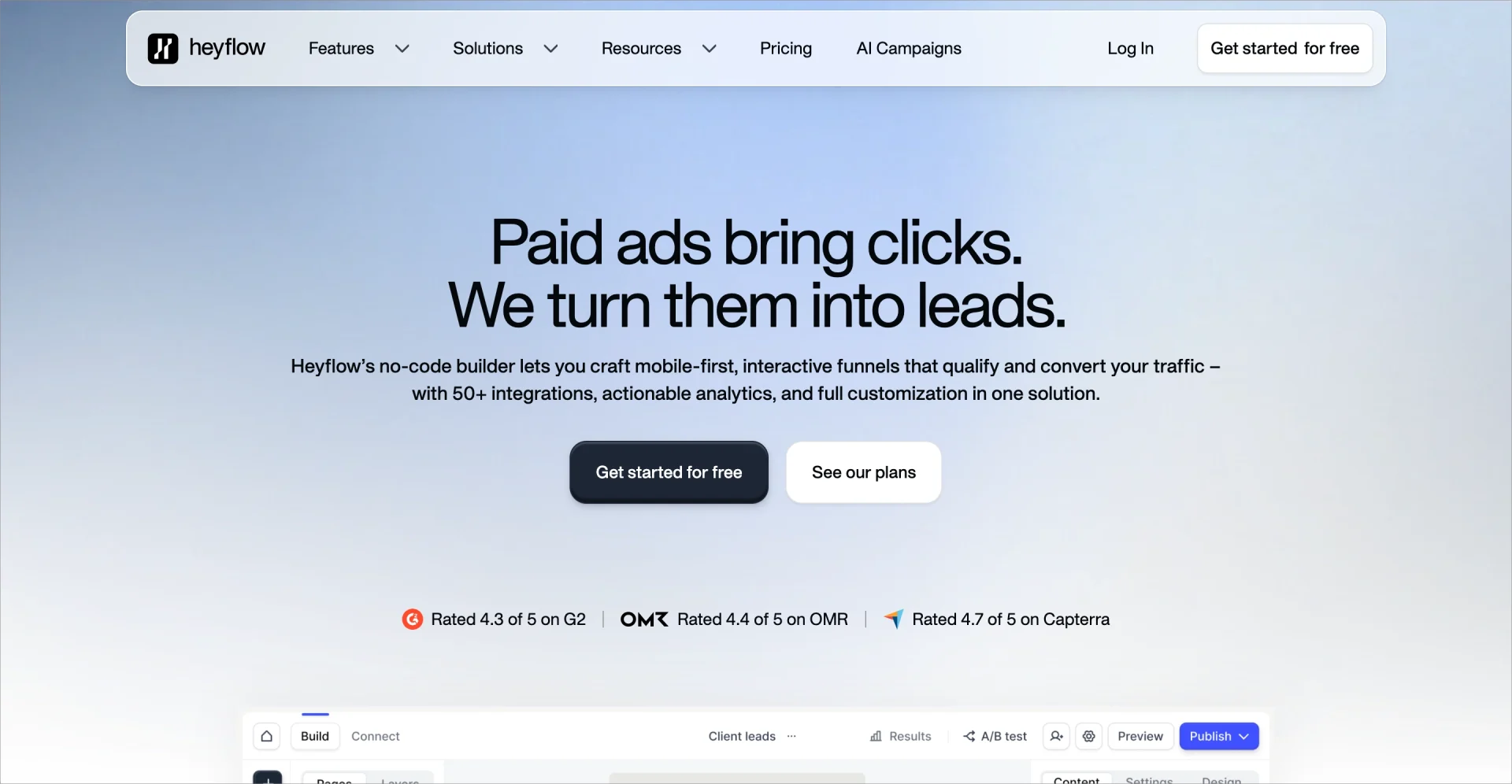
- G2: 4.4/5
- Capterra: 4.7/5
- Trustpilot: 2.6/5
Cons
Cons include limited pixel-level layout control, expensive add-ons, iframe-based embedding issues, and restricted email customization in lower plans.
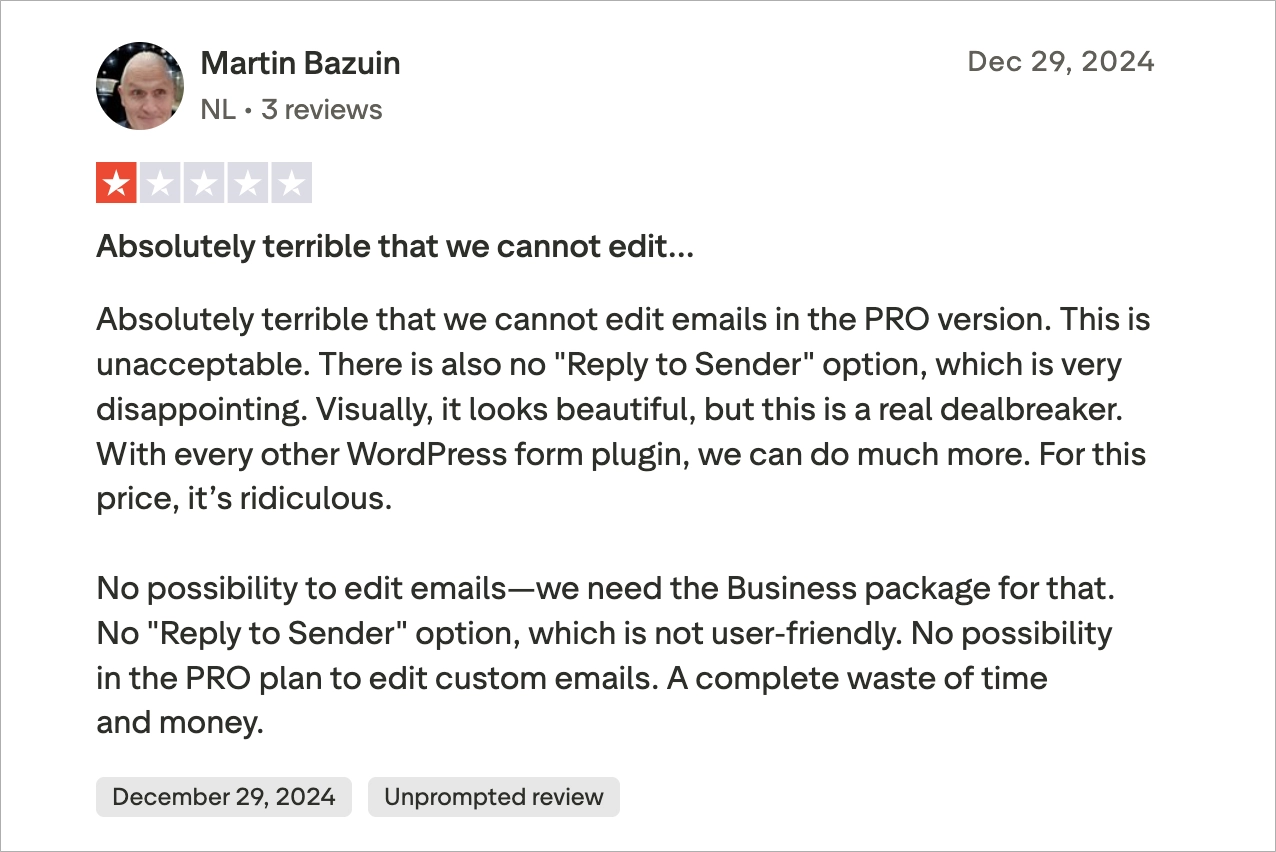
In my view, Heyflow’s limitations in layout control and its add-on–driven pricing can quickly become a bottleneck for teams that need strong branding and predictable costs.
Pros
Pros include high engagement rates, strong logic rules, clear analytics, and fast setup for quizzes and calculators. Users often report better conversion quality than static forms.
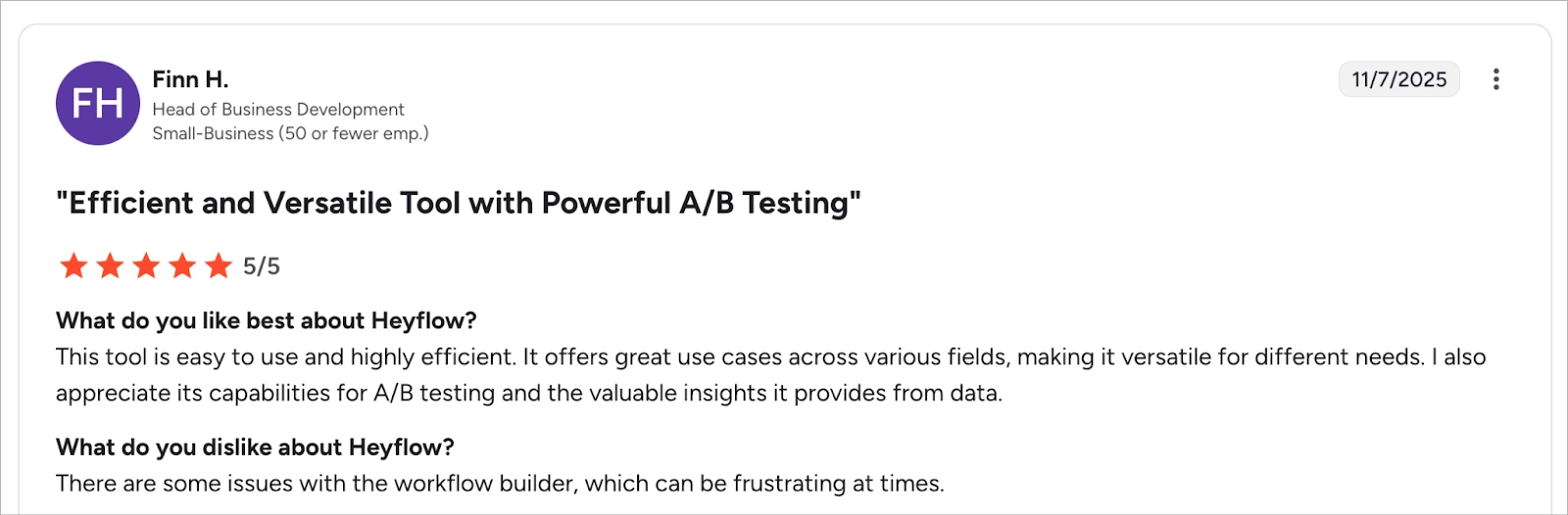
Personally, I find Heyflow very effective for qualification-heavy funnels, but far less suitable as a foundation for a full landing page ecosystem.
Best for
Heyflow suits B2C brands, recruiters, and agencies building interactive forms and surveys.
3. Landingi
Landingi is a versatile landing page builder focused on full layout control, automation, and team scalability. It supports broad campaign types and long-term growth.
Landingi is best for teams that need flexibility, automation, and long-term scalability.

Pricing
Landingi stands out with a free plan that allows basic page publishing and testing. Paid plans start around $24 per month, with incremental increases for unlimited domains, automation, team seats, and advanced analytics. Unlike Instapage’s high entry point and Heyflow’s usage fees, Landingi’s pricing scales predictably and transparently as needs grow.
Free today, powerful tomorrow. Start building with Landingi now!
Key features
Key features include a pixel-perfect drag-and-drop editor, Programmatic Landing Pages, Smart Sections, server-side A/B testing, and advanced EventTracker analytics. The platform supports automation and multi-user access.
Ratings
- G2: 4.5/5
- Capterra: 4.8/5
- Trustpilot: 4.5/5
Cons
Cons include manual work for mobile views and a learning curve for advanced features. Some users mention slower editor performance on very complex pages.

From my perspective, these drawbacks are manageable and expected in exchange for full layout control and advanced customization.
Pros
Pros include full customization, built-in analytics, A/B testing, wide integrations, and strong automation options. Users value the free plan, scalability without vendor lock-in, and the WordPress plugin.

I find Landingi the most scalable option: flexible enough for design-focused teams, yet structured for agencies and companies running dozens of campaigns in parallel.
Best for
Landingi fits marketing teams, agencies, and growing companies that want to scale campaigns without losing flexibility or budget control.
Pricing Comparison: Instapage vs. Heyflow vs. Landingi
Pricing between Instapage, Heyflow, and Landingi differs not only in amounts but also in billing logic. Instapage charges a high flat fee with traffic limits, Heyflow prices by responses and add-ons, while Landingi uses tiered plans with predictable scaling.
The table below compares monthly pricing (annual billing), included features, and key limitations. It shows how quickly costs can grow as traffic, teams, or campaigns expand.
| Tool | Entry Plan (Annual Billing) | What’s Included | Key Limitations |
|---|---|---|---|
| Instapage | ~$199/month | Unlimited pages, A/B testing, Instablocks, basic analytics | Traffic caps, no free plan, many features Enterprise-only |
| Heyflow | €19/month | 50 responses, basic funnels, limited blocks | Pay-per-response, paid feature bundles |
| Landingi | Free / $24/month | Landing pages, forms, pop-ups, A/B tests, integrations | Visit limits per plan |
Instapage’s pricing model assumes high-budget paid campaigns and makes sense only when conversion gains offset cost. Heyflow looks affordable at first but becomes expensive as response volume grows. Landingi offers the lowest entry barrier and the most transparent cost progression.

Comparison by Use Case
Comparison by use case shows how each platform supports specific campaign goals, from lead capture to optimization. The tools differ significantly in how flexible and scalable they are across scenarios.
Lead Generation Capabilities
Lead generation is supported by all three platforms, but in different ways. Instapage focuses on classic landing pages with forms and PPC alignment, while Heyflow emphasizes conversational, multi-step data capture. Landingi combines standard forms, pop-ups, and automation with flexible layout control.
Landingi’s built-in forms, pop-ups, and integrations with email and CRM tools make it suitable for newsletter signups and lead magnets. Heyflow performs well for qualification-heavy flows, but is less suited to simple, fast campaigns.
Product Sales
Product sales require payment integrations, trust signals, and layout control. Instapage supports sales pages mainly through custom code and integrations, which often requires technical work. Heyflow includes native Stripe payments but limits layout freedom.
Landingi supports product sales through integrations, dynamic content, and optional e-commerce add-ons. This makes it easier to build product-focused pages without locking users into one flow format.
Make sales the easy way! From dynamic content to payment buttons – Landingi is built to sell.
Event Promotion
Event promotion depends on registrations, RSVPs, and fast publishing. Instapage works well for high-budget event campaigns tied to ads, but costs can be high for one-off events. Heyflow supports registration flows but may feel heavy for simple RSVP pages. Landingi allows quick duplication, scheduling, and multi-language pages, which suits recurring events and webinars. Teams can reuse sections and update details without rebuilding pages.
Testing and Optimization
Testing and optimization are core differentiators between these tools. Instapage offers strong A/B testing and heatmaps, but advanced features are often gated behind Enterprise plans. Heyflow supports A/B tests, but only for limited variants.
Landingi includes A/B/x testing and EventTracker analytics. EventTracker’s Scroll Map shows how far users scroll on a page, divided into six depth levels, with color-coded visibility. This helps teams identify drop-off points and optimize layout based on real behavior.
Your layout has a story. Let A/B/x testing and scroll depth reveal the ending.
Core Features Compared
Core features determine how quickly teams can build, adjust, and scale campaigns. Differences here affect daily workflows more than headline features.
Drag-and-drop Builder
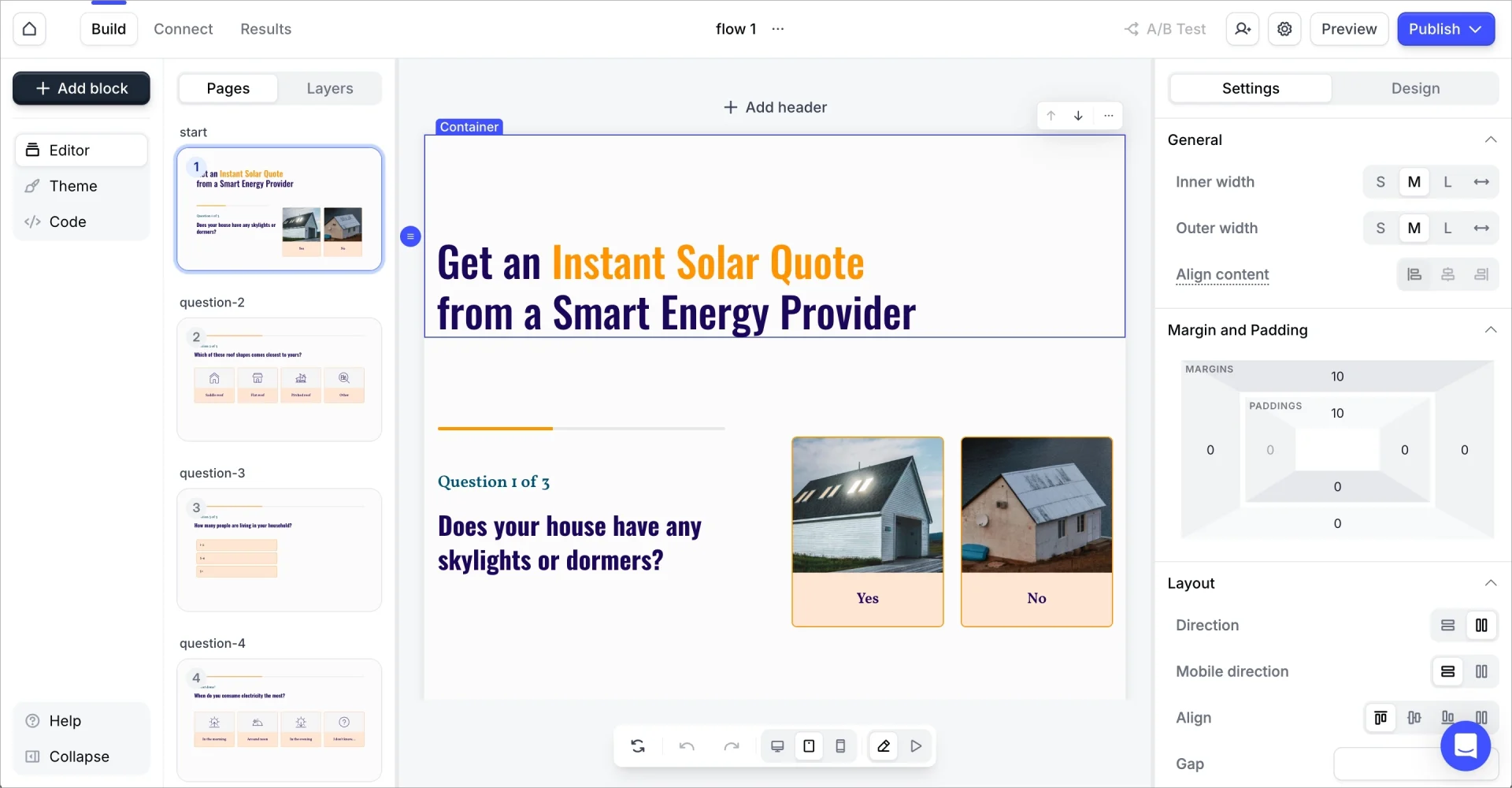
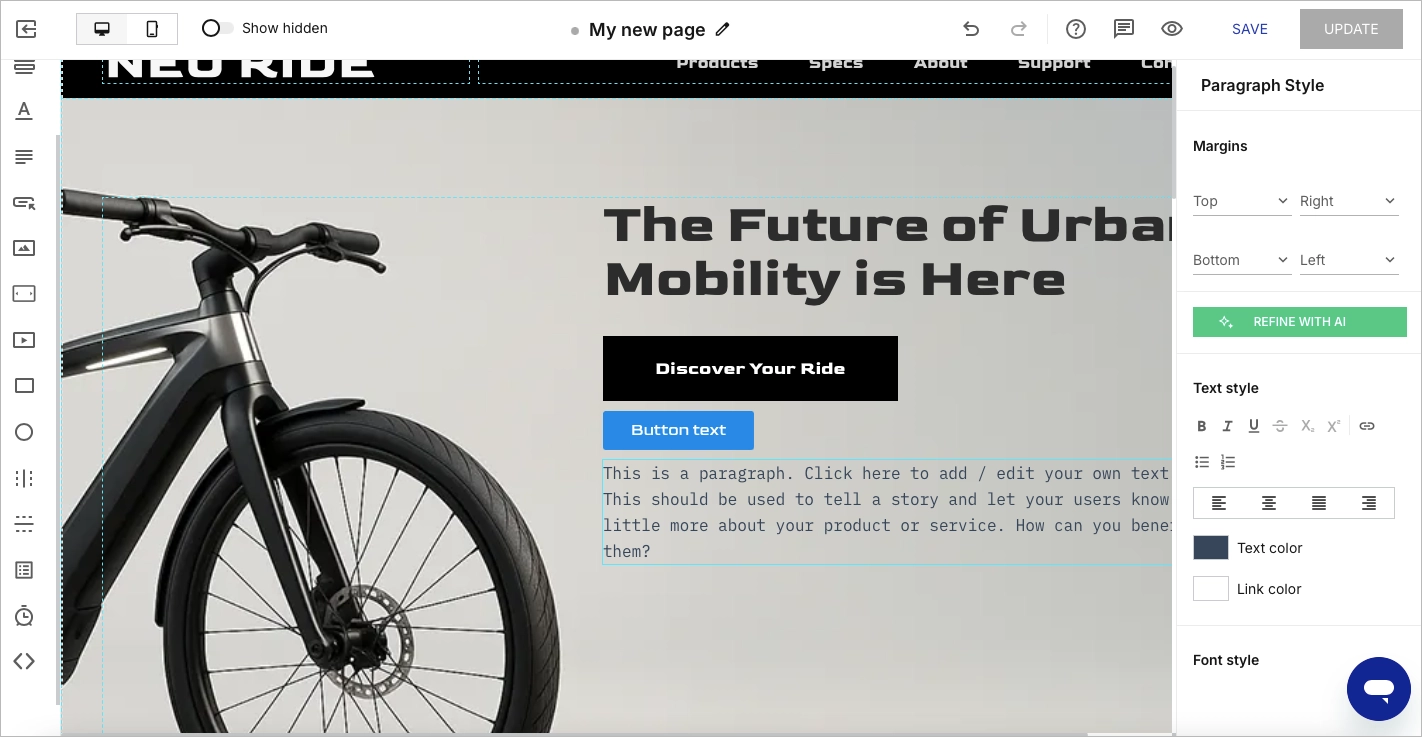
Drag-and-drop editing in Instapage and Landingi allows pixel-level control, while Heyflow uses structured blocks. Instapage and Landingi suit designers who need precise layouts, whereas Heyflow prioritizes consistency over freedom.
Landingi’s editor allows full positioning without grid constraints, which supports custom designs and experimentation.

Responsive Design
Responsive design is handled differently across tools. Instapage and Landingi provide separate desktop and mobile views that require manual adjustment. Heyflow is mobile-first by default, but at the cost of layout flexibility.
Landingi gives full control over mobile layouts, which helps teams fine-tune conversion elements for smaller screens.
Pre-built Templates
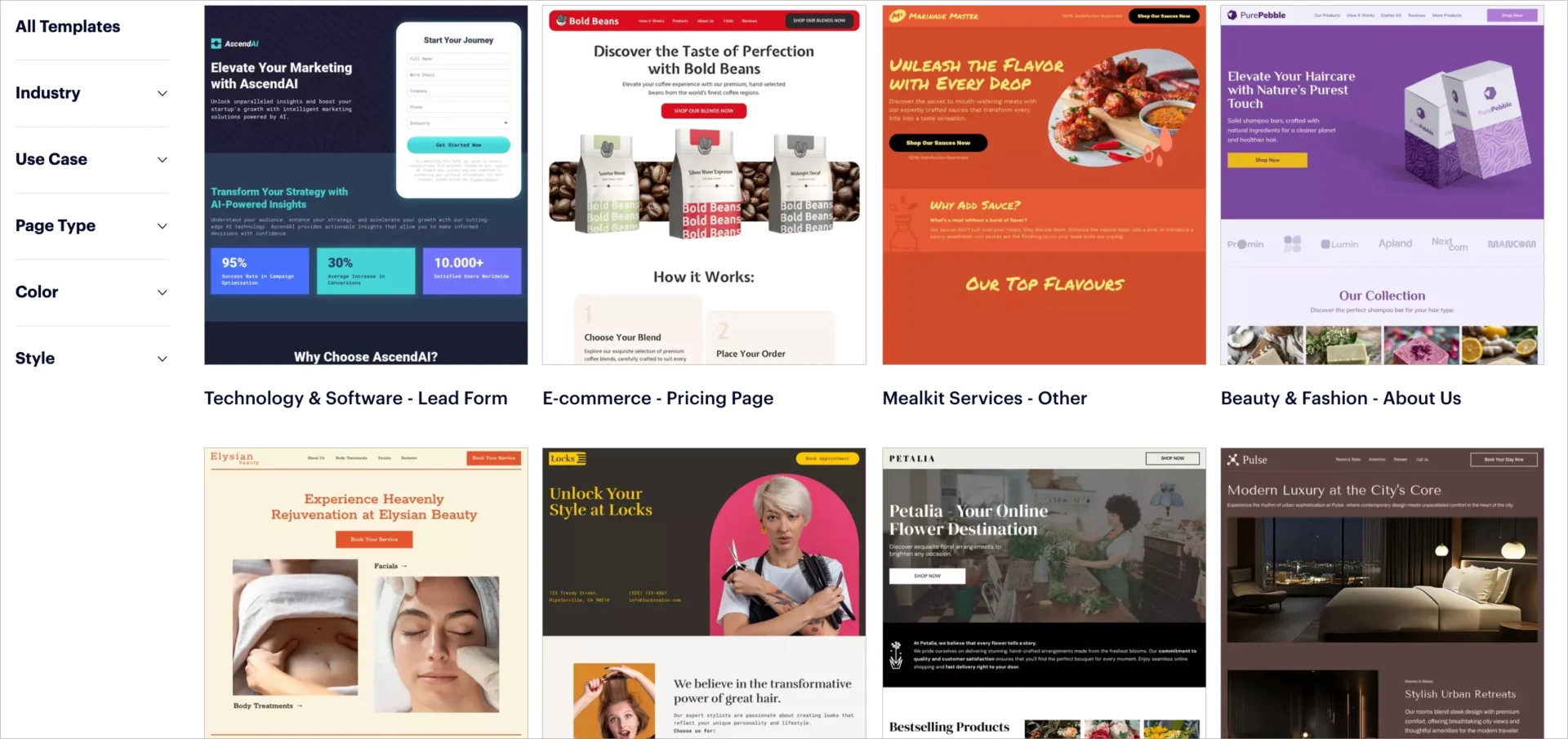
Pre-built templates speed up campaign launches. Instapage offers high-quality templates focused on PPC use cases. Heyflow provides fewer templates, mainly for funnels and surveys. Landingi offers over 400 templates across industries, including SaaS, e-commerce, and local services. Templates are fully editable and reusable.


Forms and Pop-ups
Forms and pop-ups are essential for lead capture. Instapage forms are functional but less flexible in styling. Heyflow forms are central to the product but limited in visual customization. Landingi includes a form builder and pop-up builder with full design control. This supports both simple lead forms and more complex setups.
Integrations
Integrations affect how landing pages connect to the rest of the stack. Instapage integrates well with ad platforms and major CRMs. Heyflow offers fewer native integrations and relies heavily on add-ons.
Landingi supports over 170 native integrations and works with Zapier. This reduces reliance on external tools and keeps automation inside one platform.
A/B Testing
A/B testing is available in all tools, but depth varies. Instapage offers strong testing workflows, mainly for enterprise users. Heyflow limits tests to two variants.
Landingi supports A/B/x testing, allowing teams to test multiple variants at once. This supports faster learning cycles.
Analytics
Analytics determine how well teams understand performance. Instapage provides core metrics and heatmaps. Heyflow focuses on drop-off and completion rates.

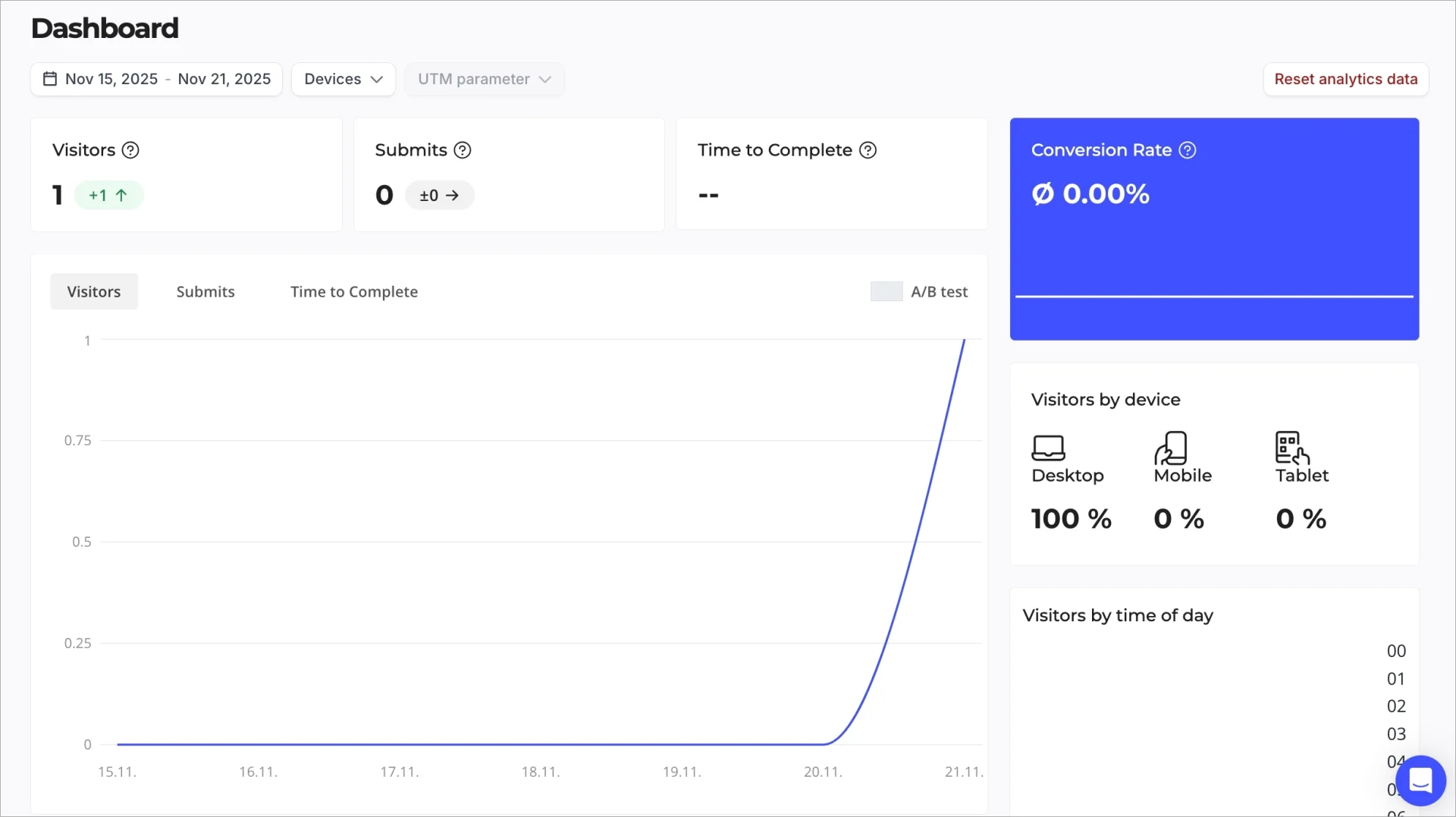
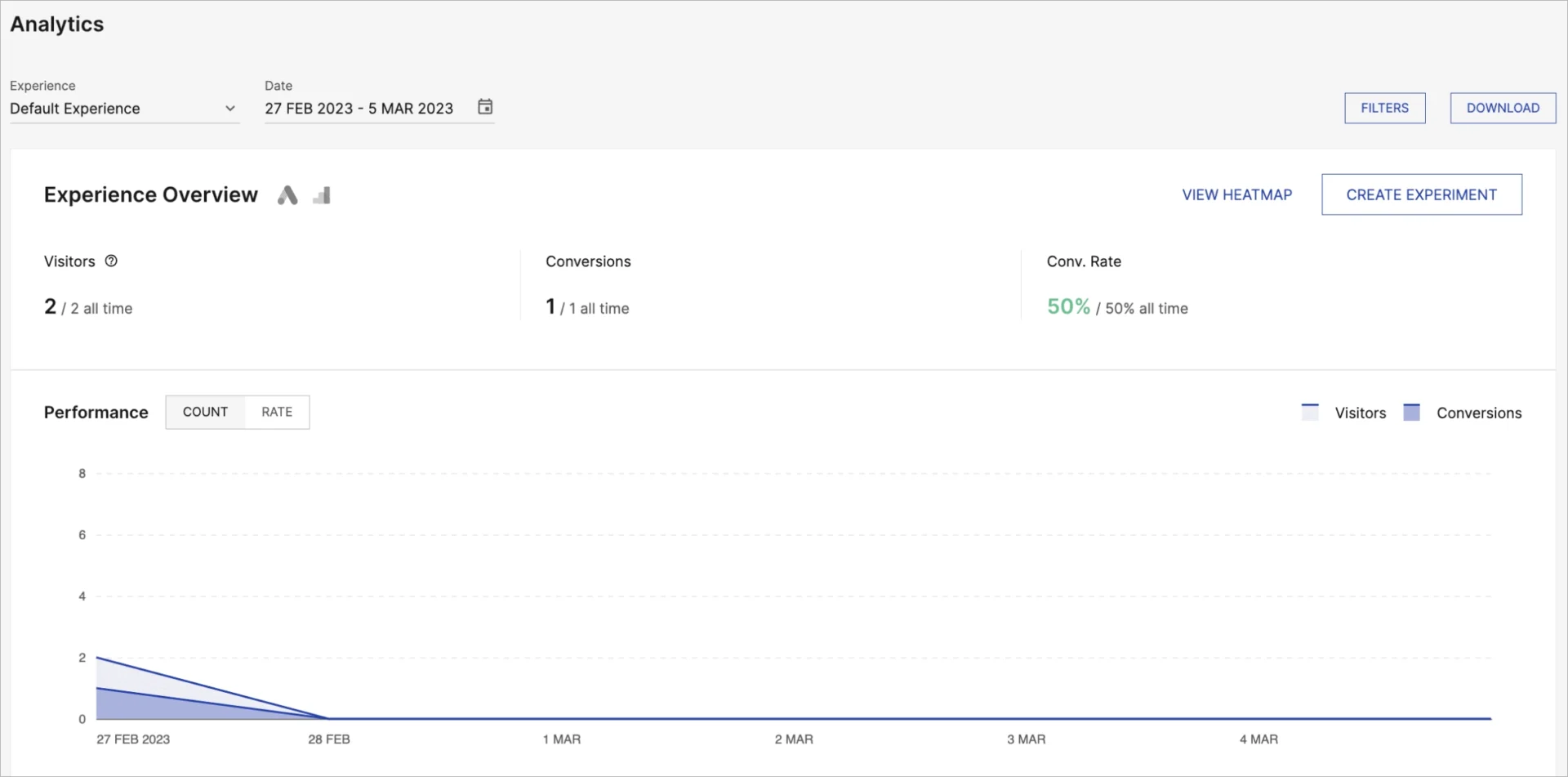
Landingi combines basic analytics with EventTracker, including click tracking and scroll analysis. This gives both overview and behavioral insight without external tools.


Customization and Scalability
Customization and scalability define how well a platform grows with your organization. The differences here often decide long-term suitability.
Can you fully customize templates, colors, and layout?
Full customization is possible in Instapage and Landingi, while Heyflow restricts layout changes to predefined structures.
Landingi allows pixel-perfect positioning, global colors, and reusable sections across pages. This level of control helps teams maintain brand consistency at scale.
Start building, start growing! Explore the tools behind high-converting landing pages.
Does the tool support custom code (HTML/CSS/JS) if needed?
Custom code support exists in all three tools, but access varies by plan. Instapage and Heyflow often restrict custom code to higher tiers.
Landingi supports custom HTML, CSS, and JavaScript across all plans, which helps advanced teams extend functionality without the need for immediate upgrades.
Is it scalable for multiple campaigns, teams, or clients?
Scalability is where differences become clear. Instapage scales well for enterprises, but at a high cost. Heyflow scales in complexity but becomes expensive with volume.
Landingi supports subaccounts, user roles, and automation. This makes it suitable for agencies and large teams managing many campaigns without friction.
FAQ about Instapage Vs. Heyflow Vs. Landingi
The questions below address common decision points teams face when comparing these platforms. Each answer focuses on what the tool actually does well and where it may fall short in practice.
What is Instapage?
Instapage is a landing page platform built mainly for paid advertising and conversion optimization teams. It focuses on precise layout control, A/B testing, and tight alignment with PPC campaigns, especially for large budgets.
In practice, Instapage works best when landing pages are a small but critical part of a broader paid acquisition machine. For smaller teams or mixed campaign types, its pricing and feature gating can become limiting.
What is Heyflow?
Heyflow is an interactive funnel and form builder designed to capture and qualify leads through multi-step flows. It emphasizes engagement, logic-based paths, and mobile-first experiences rather than classic landing page layouts.
This makes Heyflow effective for surveys, calculators, and qualification funnels. At the same time, it is less suited for full landing page ecosystems or campaigns that require broad layout freedom and brand control.
What is Landingi?
Landingi is a landing page builder and automation platform designed to support a wide range of campaign types. It combines full layout control, testing, analytics, and integrations in one scalable environment.
Unlike tools focused on a single use case, Landingi supports both simple pages and complex, automated campaign structures. This flexibility makes it suitable for long-term use across teams and projects.
More than a builder – it’s your growth engine. Sign up free and launch your first landing page today.
Choose the Right Landing Page Tool and Boost Your Campaign Conversion Rates
Choosing the right landing page tool depends on how you plan to grow and manage campaigns over time. Instapage fits enterprise PPC teams with high budgets, while Heyflow works best for interactive lead qualification. Landingi covers the widest range of scenarios with predictable pricing and fewer structural limits.
Landingi stands out as the right landing page builder for teams that want control, scalability, and automation without locking themselves into a narrow workflow. It supports experimentation, collaboration, and growth without forcing early upgrades or complex billing models.
If your goal is to build, test, and scale landing pages across multiple campaigns and teams, Landingi offers the most balanced path forward. Try Landingi for free and see how quickly you can turn ideas into high-converting pages.