
Online advertising costs in 2026 shift more than many marketers expect. A click that costs a few cents on one platform can exceed a hundred dollars on another, and the gap keeps widening as competition grows. Social channels still offer low-cost traffic, while industries like legal or insurance treat each click as a high-stakes investment. CPM follows the same pattern – some placements stay in the $2–$4 range, while premium inventory reaches $70+ without blinking. Many shifts come from how advertisers choose and balance online advertising platforms across their funnels.
These differences aren’t random. They come from how people behave on each platform, how strong the commercial intent is, and which online ads pricing models you choose. As automation gets smarter and creative expectations rise, website advertising costs become more sensitive to relevance and user experience. That’s why understanding where the money goes – and why – is now as important as the campaigns themselves, especially when comparing traditional advertising to modern digital channels.
Summary of key facts:
- Average CPC on Google Ads across industries: $1.63–$5.26, depending on the calculation method.
- Average CPM for display ranges from $2–$15+, but certain categories exceed $70+.
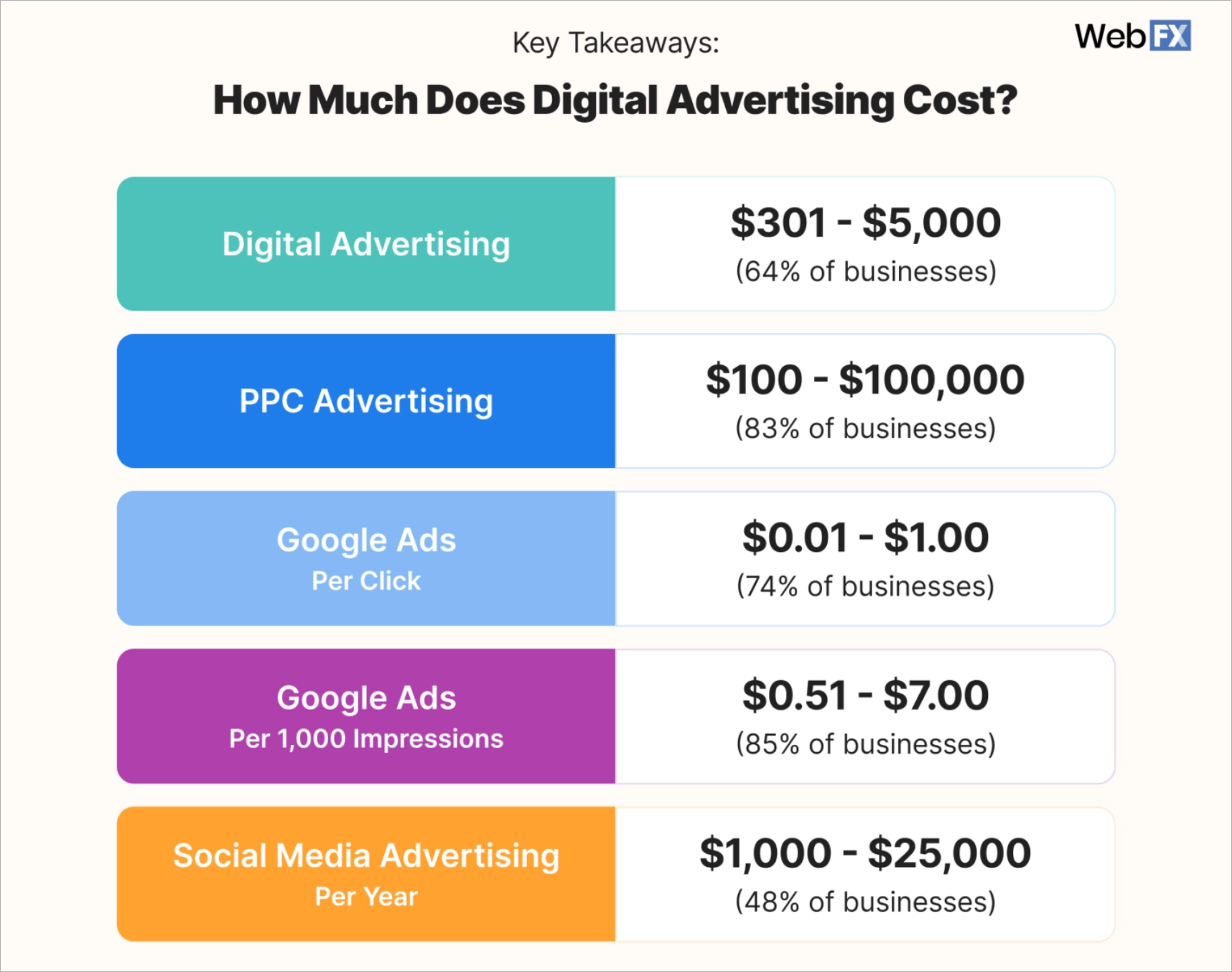
- Most businesses spend $1,000–$10,000 per month on digital advertising.
- Programmatic accounts for 83% of all digital ad spend globally.
- Social and search dominate budgets, but CPM increases are visible across Meta, TikTok, and premium placements.
- Industry, relevance, bidding strategy, and audience targeting are the strongest cost drivers.

What is the Average Cost of Digital Advertising?
The average cost of digital advertising is about $1.63 per click on Google Ads. Premium placements can exceed $30 to $40 per thousand impressions (eCPM). The average cost per conversion across industries is around $32.21.
Ad costs vary widely by industry and placement. Google Ads uses an auction system, so prices depend on demand and competitiveness. Some industries (like legal or insurance) can see cost-per-click (CPC) rates above $60 or even $100. These high rates come from intense competition for high-value leads.
On the other hand, e-commerce advertisers often pay much less per click, usually under $2.50. Their lower CPCs reflect broader targeting and less aggressive bidding.
This is especially true when choosing the right digital marketing channels for your objectives.
Across channels, digital advertising costs are shaped by:
- Competition for the same keywords or audiences
- Expected click-through rate and relevance
- Landing page quality
- Seasonality and bid strategy
- Historical performance and available conversion data
Businesses that manage these factors well typically achieve lower CPCs and better conversion rates even in competitive sectors. This often includes integrating social media marketing into broader acquisition and retention strategies.
Stop burning money on clicks. Build smarter landing pages that actually convert.
What is the Average CPM for Online Advertising?
The average CPM for online advertising ranges from $2 to $15 on most platforms. In premium environments, CPMs can climb as high as $78.64, based on Google Display benchmarks.
CPM varies most on:
- Targeting precision (remarketing CPM is higher)
- Ad format (video CPM typically exceeds image CPM)
- Placement quality (YouTube non-skippable ads or premium display inventory)
- Industry demand in a given period
Below is a summary table combining CPM and CPC ranges for key marketing platforms. These ranges help advertisers plan advertising campaigns that align with budget and ROI expectations.
| Marketing Platform | Average CPM | Average CPC |
|---|---|---|
| Google Display | $2–$4 | $0.11–$0.50 |
| Meta (Facebook/Instagram) | $10–$15 (broad), $15–$25 (narrow custom audiences) | $0.72 (Facebook), $0.01–$0.25 (Instagram) |
| $5.01–$8.00 | $2.00–$3.00 | |
| TikTok | $4.20–$9.00 | $0.17–$1.00 |
| YouTube | $4–$12 | N/A (CPV $0.04–$0.30) |
| Twitter/X | $2.09–$6.50 | $0.18–$0.74 |
| $3.50–$15 | $0.50–$12 (format-specific) | |
| $2–$5 | $0.10–$1.50 | |
| Microsoft Ads | $6–$9 | $1.50–$2.80 |
| Amazon Ads | $4–$12 | $0.80–$2.50+ (by ad type) |
What are the Different Online Advertising Pricing Models?
The different online advertising pricing models include CPC, CPM, CPA, CPV, CPL, CPE, Flat Rate, and RevShare. Each model supports different goals.
Here’s a practical breakdown:
- CPC (Cost Per Click): You pay when someone clicks your ad. Average cost per click varies widely – from $0.10 on social platforms to $10+ in competitive search sectors, making social media ads a cost-effective option for many businesses.
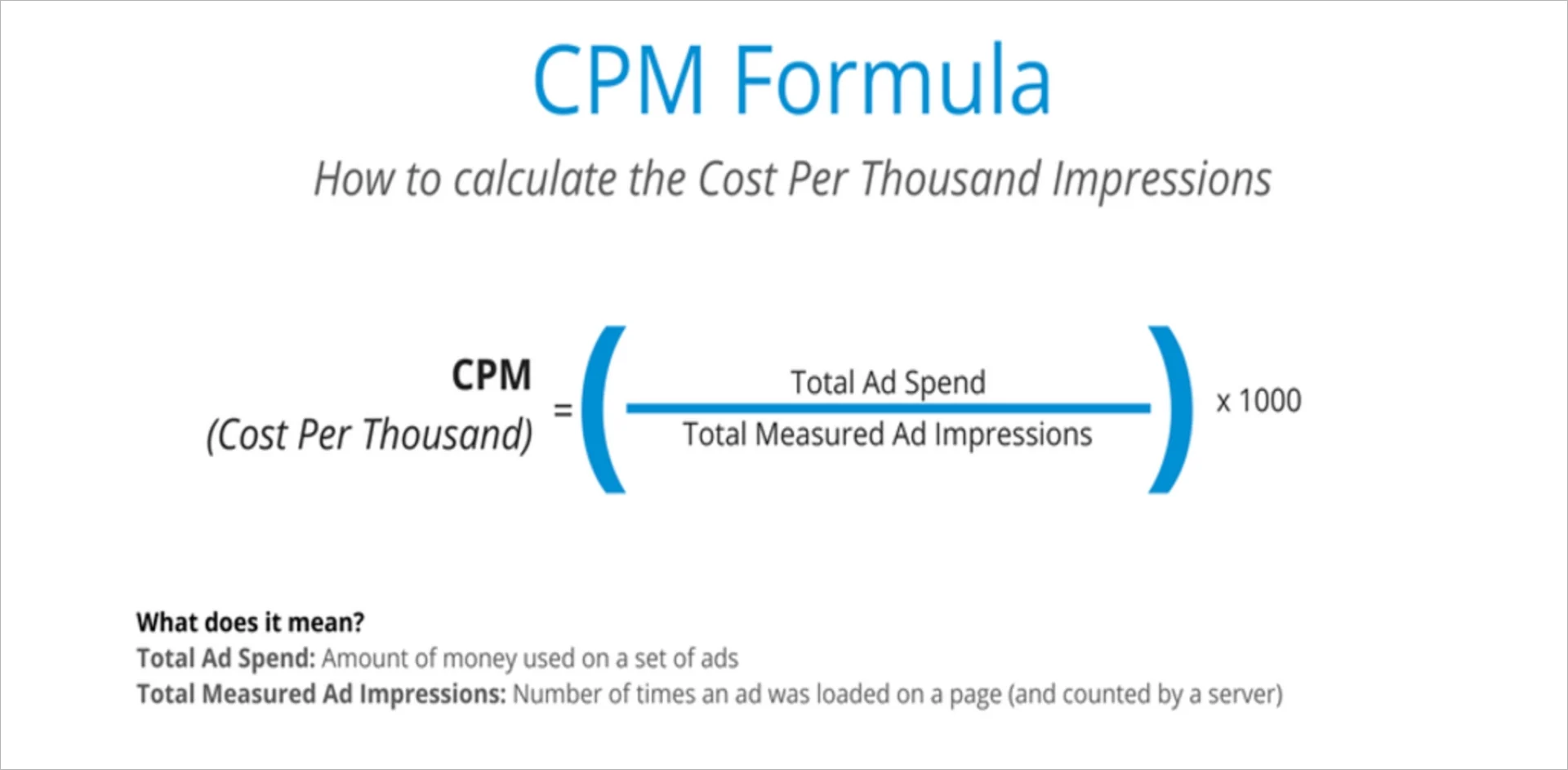
- CPM (Cost Per Mille): You pay for every 1,000 impressions. CPM ranges from $2–$15+, though some networks and industries exceed that level.
- CPA (Cost Per Action): You pay when a defined action takes place (purchase, form fill, signup). CPA ranges from $5–$70+, depending on the action.
- CPV (Cost Per View): Used mostly in video ads. YouTube CPV ranges $0.04–$0.30.
- CPL (Cost Per Lead): Payment occurs for lead capture. Lead-focused formats, like Meta Lead Ads, often carry CPMs of $45–$60.
- CPE (Cost Per Engagement): Payment happens when someone engages – common for video or interactive units. Some platforms report $0.05–$0.30 per engagement.
- Flat Rate: A fixed amount paid for placement, often used for takeovers or sponsored sections. Rates can range from $1,000 to $500,000+, depending on the quality of placement.
- RevShare (Revenue Share): A performance model where publishers or agencies earn based on campaign-driven revenue.
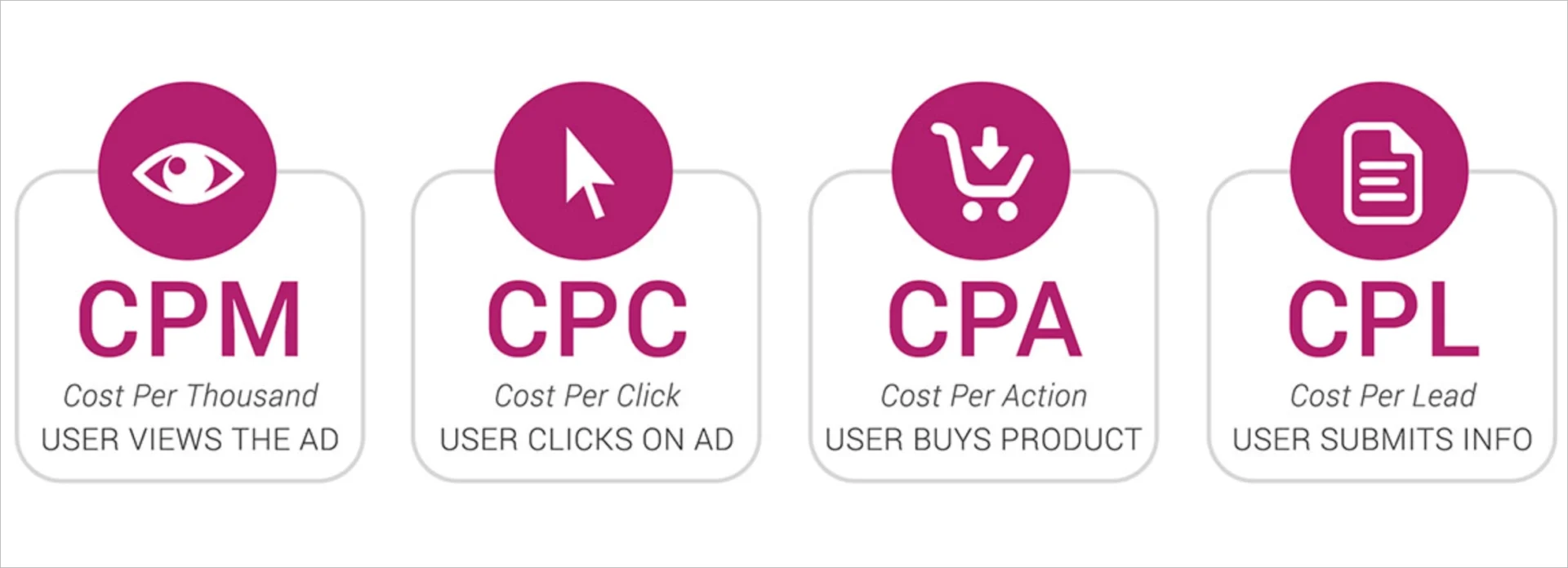
These models give businesses flexibility, allowing them to optimize for visibility, engagement, or conversions – and allocate marketing efforts more efficiently across the full funnel.
How Much Does Digital Advertising Cost Based on the Business Size?
Digital advertising cost based on business size ranges from $300–$3,000 per month for small businesses to $20,000+ monthly for large enterprises. Typically, companies allocate 5 to 12% of their revenue for advertising, depending on their maturity.
Smaller companies usually need to prioritize high-impact, lower-cost channels, while enterprise advertisers can afford multi-channel investments, AI-driven optimization, and premium inventory.
| Business Size | Cost Per Month | % of Businesses |
|---|---|---|
| Under $5,000/month | 26% spend this amount | 26% |
| $5,001–$10,000/month | 27% spend this amount | 27% |
| $10,001–$50,000/month | 18% spend this amount | 18% |
| $50,000+/month | 29% spend this amount | 29% |
Beyond these benchmarks, it’s important to consider the following strategic recommendations:
- Small businesses: $300–$3,000 monthly, typically 10–12% of revenue.
- Medium businesses: $3,000–$15,000 monthly, often 8–10% of revenue.
- Large companies: $20,000+ monthly with 5% or lower revenue allocation as volume grows.
Medium and large companies spread budgets across Google, Meta, LinkedIn, YouTube, programmatic display, and retail media networks, while smaller advertisers focus on search, paid social, and remarketing. The choice of social media platform plays a major role in determining both cost and reach.
Max your ROI at any ad budget. Build, test & launch landing pages that convert.
Digital Advertising Cost in Different Popular Ad Platforms
Digital advertising costs vary by platform because of audience intent, competition, and ad format. Search engines like Google typically show higher cost-per-click (CPC) rates because users are actively searching for products or services. Social platforms often deliver lower CPCs but higher and more variable CPMs.
Formats like video, Stories, and premium placements tend to cost more because they capture more attention or target narrower audiences. Broad-reach campaigns usually have lower CPM but may convert at lower rates.
These differences reflect how digital advertising pricing models work across platforms. Each model (CPC, CPM, or even CPA) is shaped by how users interact with ads and how advertisers value those interactions. Understanding this helps marketers choose the right platform and format for their goals and budget.
1. Google Ads
Google Ads costs vary by ad type. CPC for ad campaigns typically ranges from low-cost display placements to high-value search and industry-specific keywords. Google continues to dominate global ad revenue, and its pricing reflects strong advertiser competition across both search and shopping formats.
| Ad Type | Avg CPC | Avg CPM |
|---|---|---|
| Google Search Ads | $1–$4 (general), $10+ for competitive industries; precise average $5.26 | eCPM $30–$40 |
| Shopping Ads (PLA) | $0.46–$1.20; precise average $0.66 | N/A |
| Display Ads (GDN) | $0.11–$0.50 | $2–$4 (up to $6–$15 in premium niches) |
| YouTube Ads (video) | CPV $0.04–$0.30 | $4–$12 |
| Discovery Ads | $0.68 | $4–$10 |
| Performance Max | $0.68 (lower than standard search) | CPE $0.25–$0.37 |
Google Search Ads
Google Search Ads cost between $1–$4 CPC for most industries, but highly competitive sectors can exceed $10 per click. Some industries (including legal, insurance, and finance) regularly see CPCs from $6 to over $60. In highly competitive cases, clicks can cost more than $100. These high rates reflect strong bidding pressure for valuable leads.
Search ads remain the most conversion-focused Google format due to high user intent. While CPCs can be steep, quality score improvements reduce costs significantly: a one-point gain can reduce CPC by 16%, and top-tier relevance can cut costs by 50%.
Shopping Ads (PLA)
Shopping Ads cost between $0.46–$1.20 CPC, with a precise average of $0.66. They typically outperform search ads in cost-efficiency for e-commerce brands because product images and pricing attract more qualified clicks.
Conversion rates vary by category but tend to be strong for retail, thanks to comparison visibility and lower CPC. Shopping campaigns also benefit from data-rich product feeds, which help match ads to high-intent shoppers.
Display Ads (GDN)
Display Ads on the Google Display Network cost $0.11–$0.50 CPC and $2–$4 CPM, with higher CPM ranges such as $6–$15 for premium placements in finance or legal audiences. Broader retail campaigns often fall below $2 CPM.
Display is typically used to build brand awareness or support remarketing. While lower intent means lower conversion rates, the reach is significantly broader, and CPMs are some of the most affordable in digital advertising.
YouTube Ads (video)
YouTube Ads cost $4–$12 CPM and $0.04–$0.30 CPV, with some views priced as low as $0.01–$0.03 depending on format. Non-skippable video ads can reach $8–$16 CPM, and Shorts Ads typically sit at $0.10–$0.30 CPV with an average $4 CPM.
Budgets vary widely:
- Small businesses: $500–$2,000/month
- Mid-sized companies: $3,000–$10,000/month
- Enterprises: $8,000+ monthly
YouTube offers some of the broadest reach in digital advertising, especially for demographic and interest targeting.
Don’t let your YouTube views go cold. Turn video clicks into customers with on-brand landing pages.
Discovery Ads
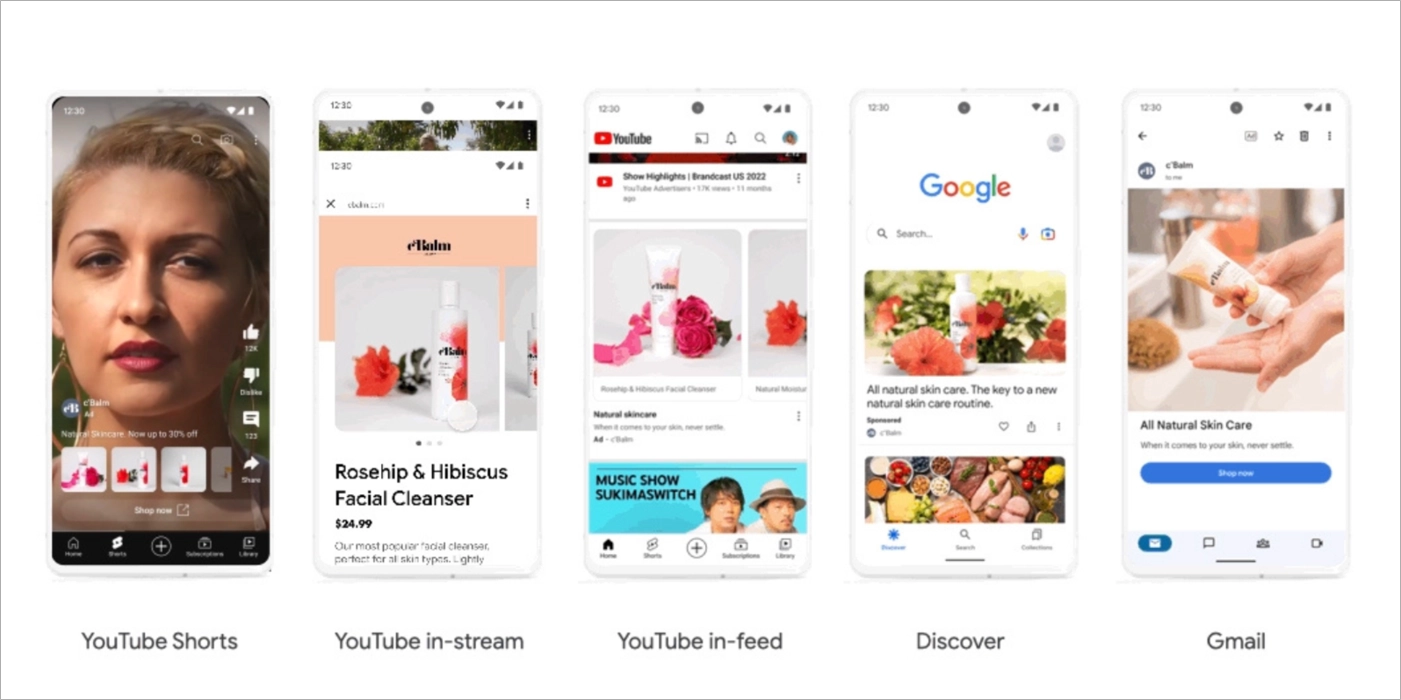
Discovery Ads typically cost around $0.68 CPC and $4–$10 CPM, making them more affordable than standard search placements. These ads appear across Google surfaces, including YouTube Home, Gmail, and Discover feed, which expands reach beyond active search behavior.
Discovery Ads often perform well in upper-funnel and mid-funnel campaigns due to their visual format and broad exposure.
Performance Max
Performance Max campaigns average $0.68 CPC and $0.25–$0.37 CPE, depending on the bidding strategy. They require a larger learning budget (usually $1,000–$2,000 per month) because the algorithm optimizes performance across Search, Display, YouTube, Discovery, and Gmail.
Marketers benefit from automation but need strong conversion tracking for consistent results. While CPCs tend to be lower than traditional search, PMax works best when the account already has conversion volume to guide machine learning.
2. Microsoft Ads (Bing)
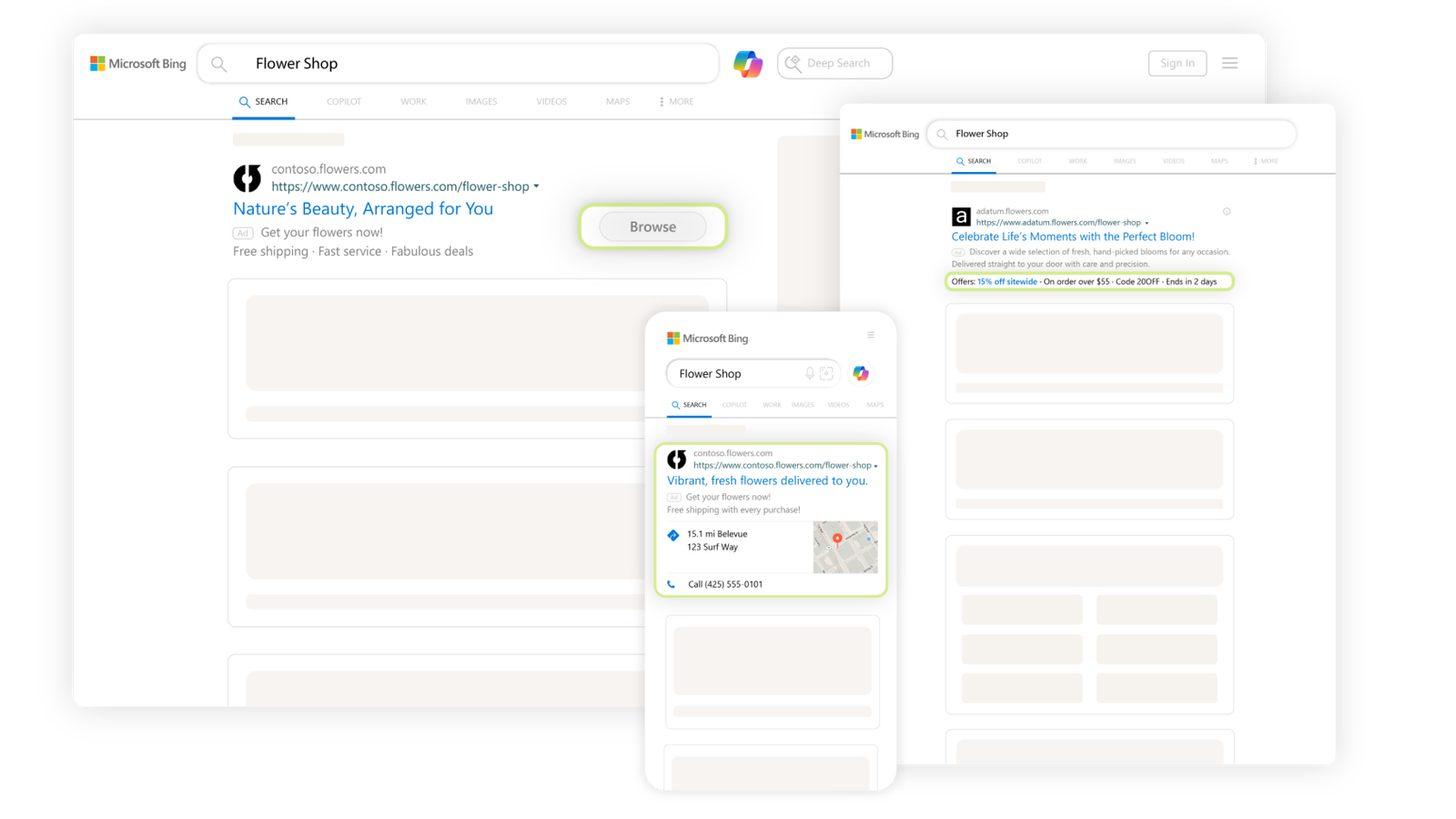
Microsoft Ads generally cost 30–40% less than Google Ads. CPCs often fall between $1.50 and $2.80. Bing users tend to skew older, more established, and more B2B-focused, making the platform attractive for software, professional services, and high-value lead generation.
| Ad Type | Avg CPC | Avg CPM |
|---|---|---|
| Microsoft Search Ads | $1.50–$2.80 (average $1.54) | $6–$9 |
| Shopping Ads | $0.33–$1.54 | $6–$9 |
| Audience Ads (display) | $1.50–$2.80 | $6–$9 |
Microsoft Search Ads
Microsoft Search Ads generally cost between $1.50–$2.80 CPC. It is significantly lower than Google. The platform’s average CPC of $1.54 provides strong value for advertisers targeting B2B, software, and enterprise services.
Microsoft’s lower competition produces steady traffic at a reduced cost, and advertisers benefit from similar keyword targeting and campaign structures as Google.
Shopping Ads
Shopping Ads on Microsoft run at costs similar to Google Shopping but benefit from lower competition. Advertisers can use the same product feed across both Google and Microsoft, reducing operational workload.
CPC typically sits at a discount compared to Google, and CPMs remain between $6–$9. For e-commerce brands, Microsoft offers incremental ROI with minimal setup cost.
Audience Ads (display)
Audience Ads cost $6–$9 CPM, with lower competition than GDN. CPC is around $1.50–$2.80. These placements appear across Microsoft’s partner network, including MSN, Outlook, and syndicated publishers.
Audience Ads work well for remarketing and mid-funnel awareness campaigns, especially when reaching users not active on Google.
3. Meta Ads (Facebook & Instagram)
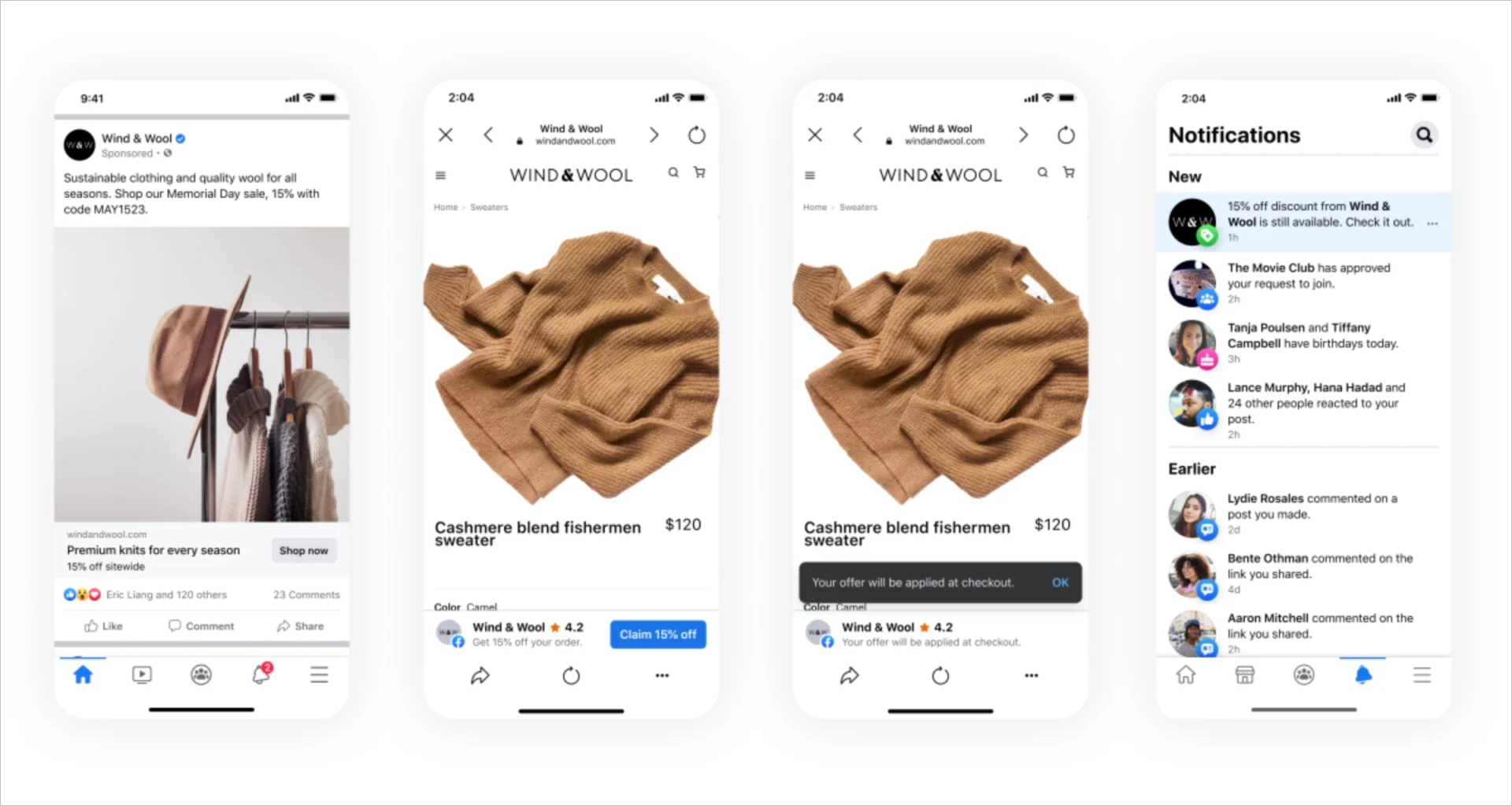
Social media advertising costs on Meta platforms usually show low CPC, while CPM has risen due to increased competition and precise targeting. Facebook and Instagram run on the same ad system, allowing for clear cost comparisons and unified performance tracking across placements.
| Ad Type | Avg CPC | Avg CPM |
|---|---|---|
| Image Ads | $0.72 (Facebook), $0.01–$0.25 (Instagram) | CPM varies: $10–$15 (broad), $15–$25 (narrow audiences) |
| Video Ads | $0.40–$3.00 (avg ~$0.70 for traffic) | 20–30% higher than image ads |
| Carousel Ads | 20–30% lower CPC than single-image; typically within $0.70–$2.00+ | $10–$15 |
| Reels Ads | $0.40–$1.25 | $2.50–$10 CPM, often ~$4.29; can reach $15–$25+ |
| Stories Ads | $0.70–$1.30 | $10–$15 |
| Lead Ads | $1.88–$1.92 | N/A |
| Dynamic Product Ads (DPA) | $0.72 or lower depending on audience | $10–$50 depending on new vs. remarketing audiences |
Image Ads
Image Ads typically cost around $0.72 CPC on Facebook and $0.01–$0.25 CPC on Instagram. CPM ranges fall into $10–$15 for broad audiences and $15–$25 for narrow custom and remarketing segments.
Image creatives remain one of the most cost-efficient formats for both engagement and traffic campaigns. Their performance depends heavily on clarity, contrast, and a direct call to action.
Video Ads
Video CPC ranges widely – from $0.40 to over $3.00 – depending on length, placement, and objective. Campaigns optimized for traffic often land near $0.70 CPC.
Cost increases are offset by stronger engagement and higher dwell time, which often results in better conversion rates in retargeting funnels.
Meta rewards high-engagement video content with stronger distribution, which improves impressions and smooths CPC for well-performing creatives.
Carousel Ads
Carousel Ads usually achieve 20–30% lower CPCs than single-image formats, aligning with Meta-wide averages of $0.70–$2.00+ CPC. They perform well for product showcases and storytelling sequences. Many brands use carousel ads for catalog-driven promotions or narratives that require multiple frames.
This format often generates stronger engagement metrics, especially when showing multiple products or step-by-step visuals.
Reels Ads
Reels Ads offer strong cost efficiency, typically delivering lower results costs than standard placements. Average CPC falls between $0.40 and $1.25.
Reels CPMs generally range from $2.50 to $10, with sources showing averages around $4.29 for Instagram Reels. Competition can push CPMs to $15–$25+, while Advantage+ optimization can bring CPM under $4.
Short-form video continues to be one of the fastest-growing content types, making Reels an important channel for both mid-funnel and lower-funnel campaigns.
Reels work. Landing pages seal the deal. Build your first page in minutes!
Stories Ads
Stories Ads typically fall into the $10–$15 CPM range and benefit from vertical, full-screen placement. Their completion rate tends to be relatively high due to the quick, sequential nature of the format. Stories CPC typically ranges from $0.70 to $1.30.
Stories placements often complement Reels and Feed ads, delivering broad reach and reinforcing key messaging through visual repetition.
Lead Ads
Meta Lead Generation Ads average CPC is around $1.88–$1.92. This format reduces friction because users submit the form directly inside Facebook or Instagram, often using pre-filled fields.
The built-in form experience improves conversion rates, although the lead quality depends on how effectively fields and follow-up sequences are configured.
Dynamic Product Ads
Dynamic Product Ads typically range from $10–$15 CPM for new audiences and $30–$50 CPM for remarketing segments. CPC is often comparable to or lower than image ad benchmarks because of strong purchase intent.
DPAs automatically show users products they viewed or interacted with, which makes them ideal for e-commerce retargeting across catalog inventories.
4. LinkedIn Ads
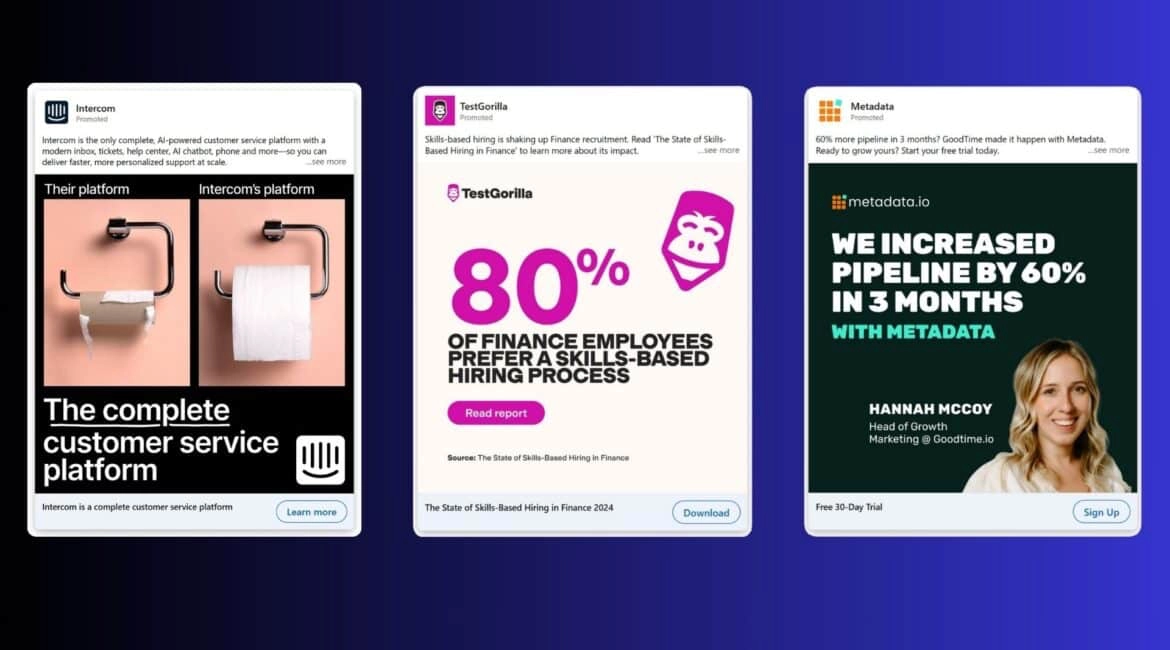
LinkedIn Ads have higher social media advertising costs due to targeting professional audiences and decision-makers. CPC and CPM rates are typically premium, especially in competitive B2B sectors like SaaS, consulting, and recruiting.
| Ad Type | Avg CPC | Avg CPM |
|---|---|---|
| Sponsored Content (image, video, carousel) | $2.00–$3.00 | $5.01–$8.00 |
| Message Ads (InMail) | $2–$3 CPC equivalent; $0.26–$0.50+ per send (CPS) | N/A |
| Text Ads | $2.00–$3.00 | $3–$10+ |
| Dynamic Ads | $2–$7 CPC typical; can reach $10–$16 | $20–$45 |
| Lead Gen Forms | $5–$15+ CPC depending on industry | Same CPM as Sponsored Content; CPL often $35–$150+ |
Sponsored Content (image, video, carousel)
Sponsored Content costs generally range from $2–$3 CPC and $5.01–$8.00 CPM. This format is the core of most LinkedIn campaigns due to its flexibility and visibility within the feed.
The pricing reflects the value of reaching professionals in targeted job titles, industries, and seniority levels.
Message Ads (InMail)
Message Ads feature a $0.26 to $0.50 cost per send (CPS), with certain regions exceeding this range. CPC equivalents often fall between $2–$3, depending on engagement. These ads achieve strong engagement for event invitations, personalized offers, and direct outreach.
While costs differ from CPC or CPM models, the effectiveness depends on message clarity, audience quality, and personalization.
Text Ads
Text Ads typically cost around $2–$3 CPC, similar to Sponsored Content. LinkedIn Text Ads CPM generally falls between $3 and $10+. While their sidebar placement is less prominent, they offer cost-efficient traffic and brand visibility.
This format works well for advertisers with specific niche targeting who want predictable CPC levels while maintaining brand exposure.
Dynamic Ads
Dynamic Ads on LinkedIn have CPM ranges between $20 and $45 due to their personalized format and premium placement. Typical CPC ranges from $2 to $7, but competitive sectors may see $10–$16 CPC. These online ads use LinkedIn profile data to generate customized visuals and messages for each viewer.
As a result, they are frequently used for recruitment, B2B lead generation, and account-based marketing.
Lead Gen Forms
Lead Gen Forms use CPC bidding, commonly ranging from $5–$15+ per click/lead, depending on industry and targeting. CPL often ranges from $35 to $150+. CPM is inherited from the underlying ad format (Sponsored Content, Message Ads, etc.).
Because the form experience stays within LinkedIn, Lead Gen placements are often part of multi-step nurturing workflows.
FAQ About Online Advertising Cost
Digital advertising costs raise plenty of practical questions, especially for teams trying to plan marketing budgets or understand why their paid ad campaigns fluctuate from month to month. Below you’ll find clear, direct answers to the questions marketers ask most often.
How much should I budget for online advertising?
You should budget between $500 and over $20,000 per month for online advertising based on business size and goals. Small businesses usually spend between $500 and $2,000 monthly. Mid-sized companies often invest $3,000 to $15,000 per month. Large companies typically spend more than $20,000 each month, especially if they run ads across multiple platforms.
Your revenue also shapes your ad budget. Many companies spend 5% to 15% of total revenue on marketing. Of that, 50% to 60% often goes to paid advertising. If you’re focused on growth, you’ll likely need to invest more to test and scale campaigns effectively.
Set your advertising budget based on your goals – every business goal requires a tailored approach to bidding, targeting, and channel selection.
- Brand awareness → prioritize higher spending on CPM-focused platforms like YouTube, Meta, or TikTok
- Lead generation → use a balanced approach with CPC or CPA bidding
- Sales-focused campaigns → invest in Google Search, Shopping, and remarketing for direct performance
Review your budget every quarter. Adjust it based on seasonality, performance data, and competitor activity to stay efficient and competitive.
Spending $500 or $20,000? Doesn’t matter. Landingi helps any budget perform like a pro.
What is the most important online advertising cost factor?
The most important online advertising cost factor is relevance, because it affects every major pricing signal. Platforms like Google Ads reward higher relevance with lower costs, better ad placements, and higher conversion rates.
Several other factors also influence how much you’ll pay:
- Industry competition: Legal, insurance, and finance have the highest CPCs; retail and lifestyle are usually lower.
- Audience specificity: Niche targeting often costs more, but it usually delivers better conversions.
- Creative quality: Strong video and image assets reduce CPM and CPC over time.
- Seasonality: During peak retail periods, CPMs can double or even triple.
- Conversion data: Campaigns with more historical data help machine learning optimize performance faster and more efficiently.
You can’t change market competition, but you can improve the user experience. Fast pages, engaging creative, and clear messaging lower costs and boost performance on most platforms.
Cut Your Ad Costs with High-Converting Landing Pages Built with Landingi
High-converting landing pages reduce online advertising costs because they improve relevance, user engagement, and conversion rates across every paid channel. By effectively addressing the needs of your target audience, better landing pages mean higher Quality Scores, lower CPCs, and more efficient CPA – whether you’re advertising on Google, Meta, LinkedIn, or Microsoft Ads. Even a small improvement in conversion rate has a measurable impact on ROI and helps you make the most of your marketing budget, especially when you’re working within specific online ads pricing models.
Landingi helps marketers achieve these gains by making it easy to build focused, fast-loading landing pages without developers. You can create variants for different keywords, audiences, and campaigns, run experiments, and plug your results directly into your CRM or analytics stack. Faster testing cycles and cleaner funnels translate into more conversions from the same advertising budget – a crucial advantage when you monitor benchmarks such as average CPC by platform.
If you want to improve performance, eliminate wasted marketing spend, and make every click count, start using high-converting landing pages built with Landingi. Try Landingi for free and see how much more your ads can achieve.