
Contextual advertising places ads on web pages based on page topics, themes, or keywords rather than personal user data. The contextual advertising model matches ad messages to the surrounding page content to maintain topical relevance. Brands use contextual advertising to reach users who actively consume content related to a specific subject, reflecting natural consumer behavior during content consumption. The contextual advertising approach has gained popularity as privacy regulations restrict the use of third-party cookies and behavioral tracking.
Industry performance data supports the effectiveness of contextual advertising. According to Aerospike, contextual ads are approximately 50% more likely to receive clicks and generate about 30% higher conversion rates compared with non-contextual ad placements.
Key facts about contextual advertising:
- Contextual advertising systems analyze page-level signals such as keywords, topics, and content structure to determine ad placement.
- Contextual advertisements respect user privacy by avoiding the need to track user behavior or collect individual-level data.
- Advertisers often see higher engagement rates when contextual ads align with the user’s current content focus rather than relying on past browsing behavior.
- Contextual targeting reduces the risk of ads appearing next to inappropriate or brand-unsafe content by focusing on where contextual advertising focuses – the content environment itself.
- Lower media waste and improved relevance can lead to lower acquisition costs and stronger return on investment across digital advertising campaigns.

What is Contextual Advertising?
Contextual advertising is a targeted marketing method that displays ads based on the content of a specific web page rather than user behavior or personal data, unlike traditional advertising models that rely on broad audience assumptions. Contextual advertising systems evaluate page-level signals such as keywords, topics, themes, headings, and metadata to determine which advertisements are relevant to that page. For example, a coffee brand can place an advertisement on a recipe blog page that contains latte-related content.
At its core, contextual targeting involves analyzing the content environment rather than the individual user.
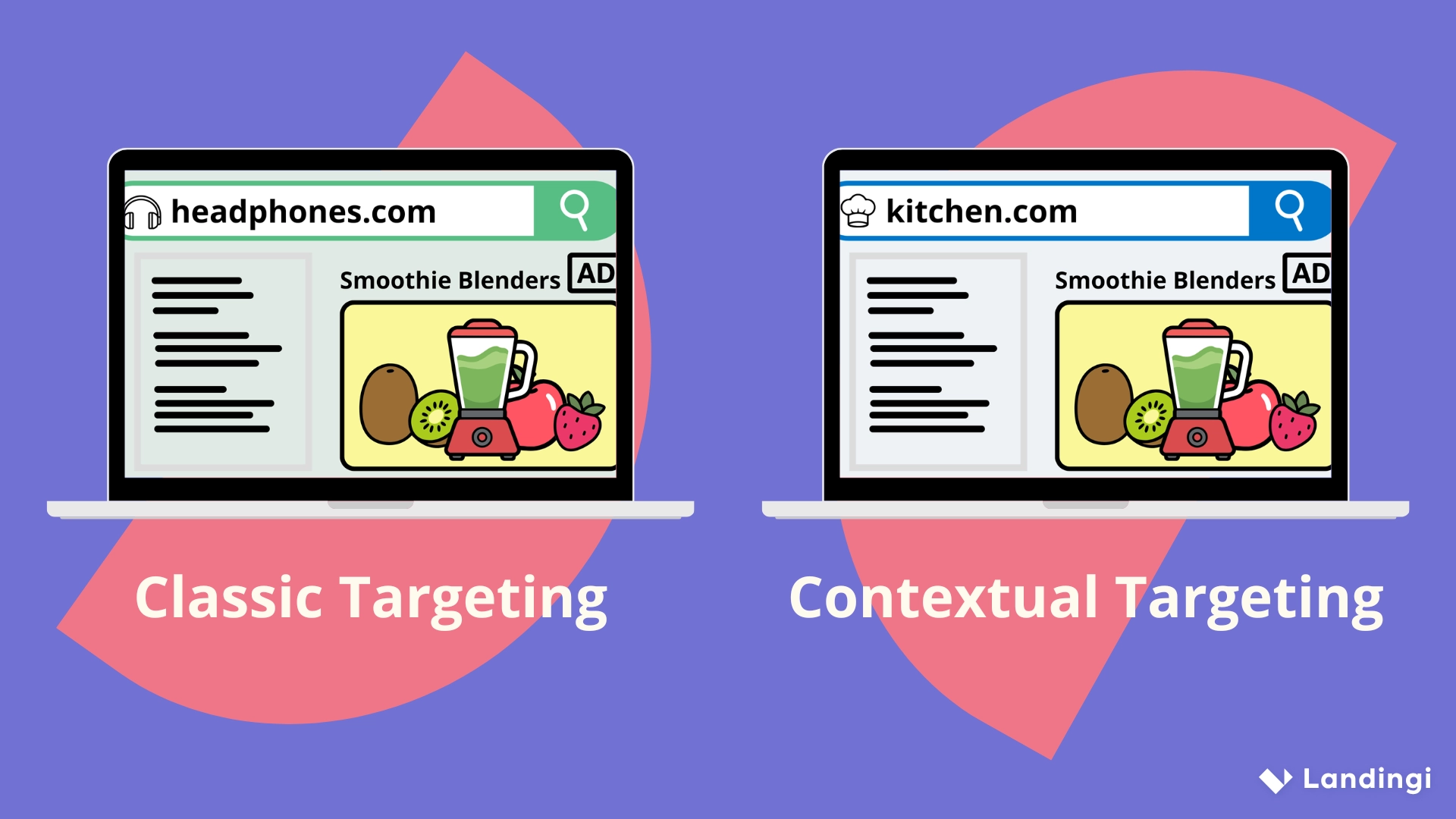
The contextual advertising process works by scanning the text, structure, and metadata of a webpage at the moment the page loads. Advertising platforms use signals such as keyword relevance, topic classification, and content categorization to select an advertisement aligned with the webpage subject, sometimes down to a particular link or article section. Content-based ad selection ensures that the displayed advertisement aligns with the information the user is currently viewing.
Modern contextual advertising systems increasingly rely on machine learning to analyze digital environments in real time. AI-based contextual analysis evaluates multiple content signals, including written text, images, audio elements, and overall sentiment, to classify the meaning and intent of a webpage.
Create landing pages that match the moment. Start now – no guesswork.
Advancements in AI have significantly improved contextual accuracy. Unlike keyword targeting alone, sentiment-aware systems can distinguish between identical terms used in different emotional or commercial contexts. This capability increases ad relevance and brand safety by preventing placements in environments that conflict with the advertiser’s intent. Context-aware classification enables ads to appear in environments that genuinely align with user intent rather than relying solely on surface-level keyword matching.
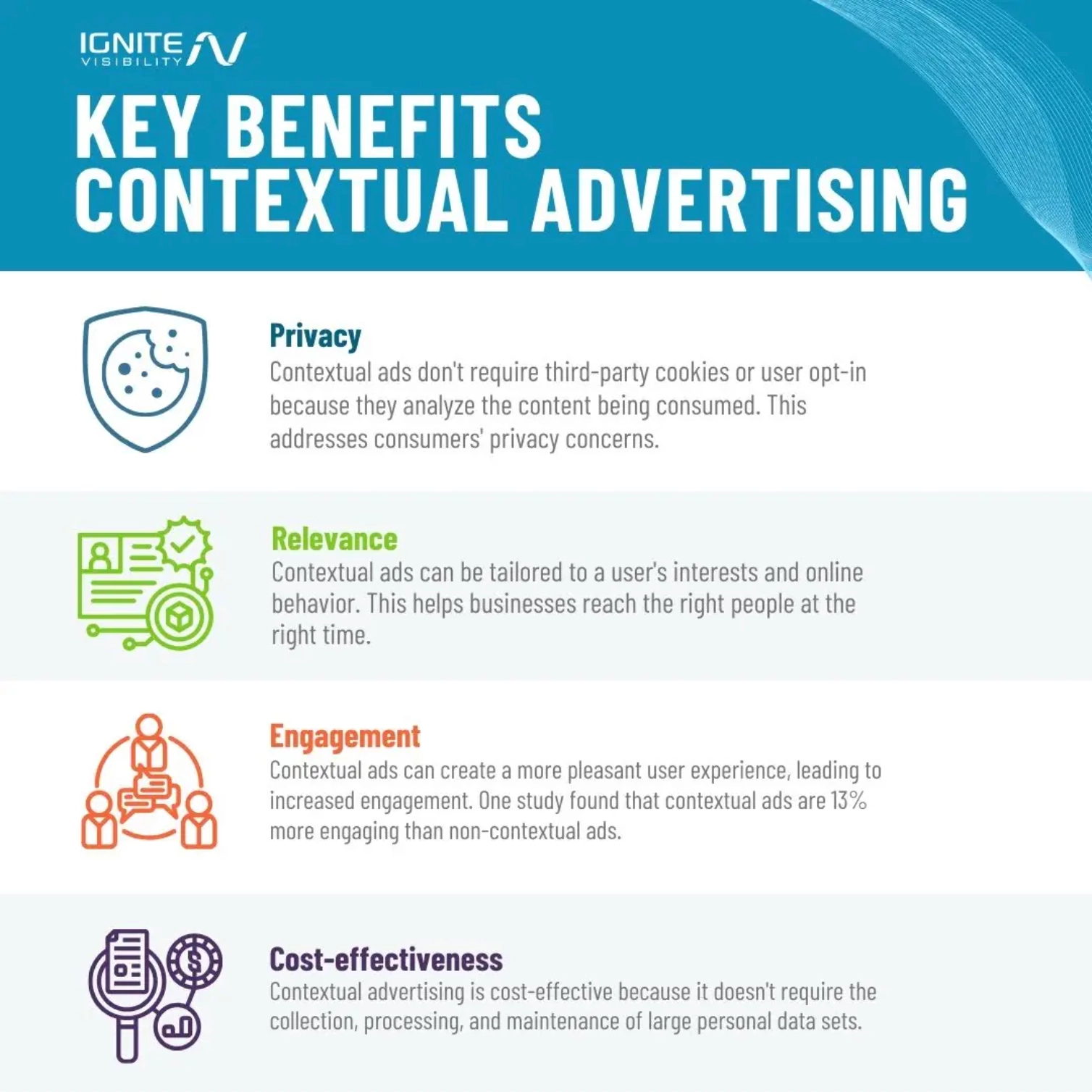
Marketers often choose contextual advertising because this targeting model does not depend on third-party cookies or individual behavior tracking. As third-party cookies decline, many advertisers are shifting from behavioral ads to contextual targeting to maintain effective reach. Content-driven ad targeting supports user privacy while still delivering relevant advertising messages at the moment of content consumption.
What are the Benefits of Contextual Advertising?
The benefits of contextual advertising include higher engagement rates, improved brand safety, and lower implementation complexity.
Contextual advertising increases engagement by placing sponsored ads next to content that matches the user’s current reading topic or activity. Content-aligned ad placements feel less intrusive because the advertisement relates directly to the surrounding information. This contextual relevance leads to higher click-through rates, stronger conversion performance, and lower adoption of ad-blocking tools.
When ads promote relevant products tied directly to the surrounding content, they feel helpful rather than disruptive.
Make every click feel natural! Start building landing pages that blend in – and convert more.
From a cost-efficiency perspective, contextual campaigns often outperform behavioral ones. According to Xapads, contextual campaigns can cost up to 20% less per conversion than behavioral advertising due to reduced data and technology overhead. Contextual advertising does not require advanced audience profiling, analyzing past behavior, third-party data purchases, or long-term user tracking infrastructure commonly used by social media platforms and large ad networks.
Contextual ad targeting also improves brand safety by limiting ad placements to suitable content environments. Advertisers maintain control over placements by defining approved content themes, keyword groups, and topic exclusions. This placement control reduces the risk of ads appearing next to offensive, misleading, or brand-damaging content.
Contextual advertising is generally easier to implement than behavioral advertising. Behavioral targeting depends on large volumes of user data, identity resolution, and cross-site tracking tools. Contextual advertising relies on page-level content analysis, which simplifies campaign setup and ongoing management.
As privacy regulations continue to evolve, contextual advertising provides a sustainable and compliant solution. Research on cookieless advertising shows that brands transitioning to contextual strategies in 2024 saw an average 23% improvement in ad relevance scores compared to their previous cookie-based campaigns.
How to Implement Contextual Advertising Into Marketing Strategy?
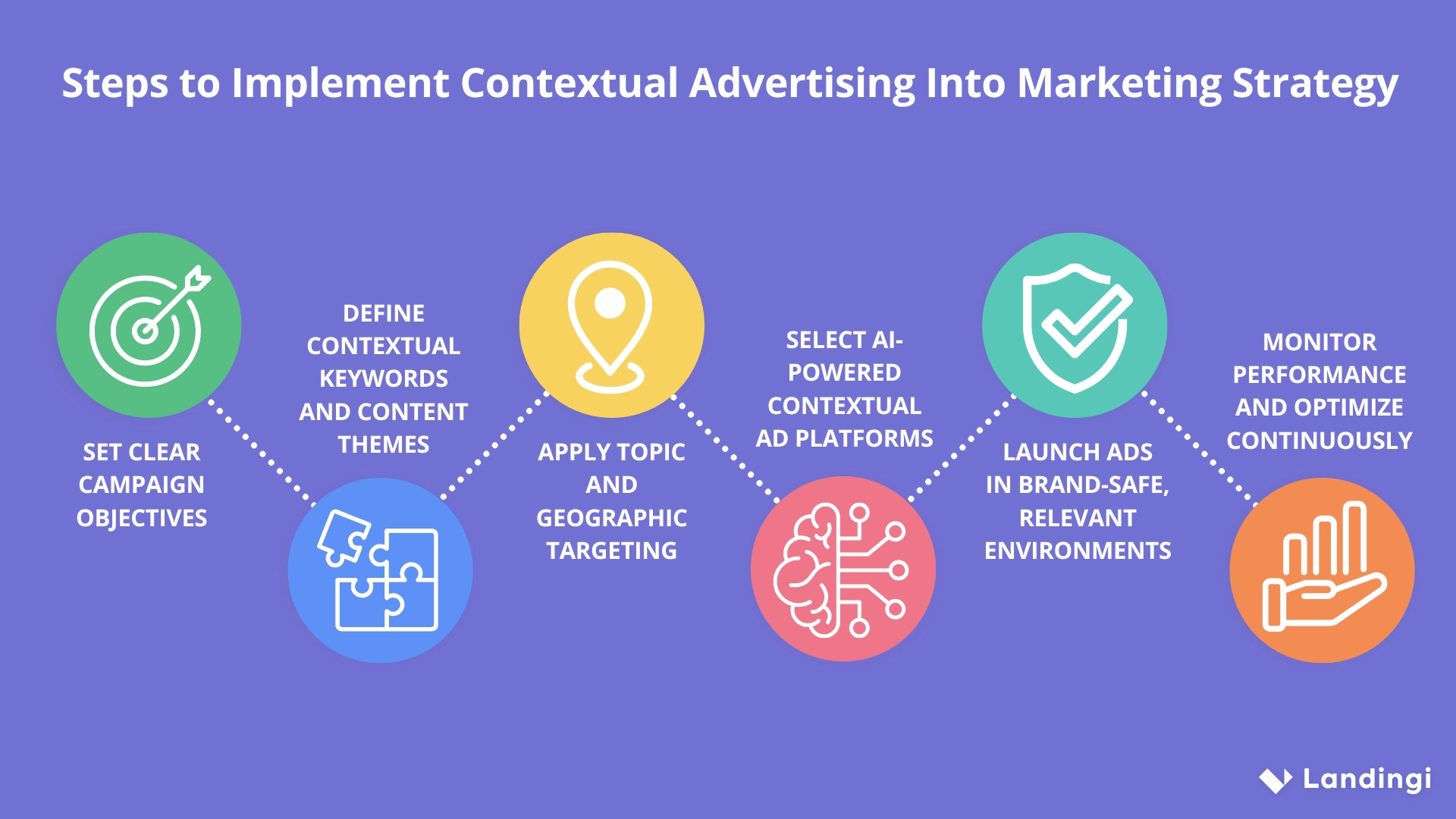
Implementing contextual advertising into a marketing strategy involves defining campaign goals and selecting keywords related to page topics.
Campaign goals should specify whether the primary objective is sales generation or brand awareness. Based on the selected objective, marketers choose content themes that align with the articles, guides, and resources consumed by the target audience. Topic-based targeting ensures that contextual ads appear on websites naturally related to the promoted product or service. Adding geographic filters further improves efficiency by concentrating ad spend on relevant local markets.
The next implementation stage involves selecting contextual advertising platforms that use artificial intelligence to analyze digital content in real time. AI-powered platforms evaluate text, images, structural elements, and sentiment to identify suitable ad placements. Advanced contextual systems move beyond basic keyword matching to interpret the actual meaning of a webpage. Automated content analysis places ads in brand-safe environments without relying on personal data or behavioral tracking. Platform-level automation also enables scalable reach across large networks of niche and topic-specific web pages.
Effective contextual advertising implementation requires continuous performance monitoring and refinement. Marketers should analyze performance metrics such as click-through rate, engagement rate, and conversion rate to identify which content themes generate the strongest response. Regular keyword list updates and topic exclusions reduce exposure to irrelevant websites and limit media waste.
Each contextual ad should direct traffic to a landing page that mirrors the specific page topic and ad message. Topic-aligned landing pages reinforce relevance, build immediate trust, and increase the likelihood of purchase completion. You can build such pages in Landingi – the platform supports the creation of context-matched landing pages at scale. The platform simplifies personalized page creation through features such as dynamic text replacement, Smart Sections, Programmatic Landing Pages, and an advanced drag-and-drop editor.
Actions that support successful contextual advertising execution:
- Analyze webpage metadata and content structure to identify the most relevant topics for each contextual ad campaign.
- Use AI-driven contextual advertising tools to ensure ad placements appear only next to safe, appropriate, and brand-aligned content.
- Prioritize high-intent content environments such as product comparison pages, expert reviews, and instructional how-to guides.
- Create dedicated landing pages that match the theme and intent of each contextual ad group.
- Test multiple creative formats to evaluate which visual styles and messages perform best across different content environments.
Big campaigns need smart tools. Empower your marketing team to build, scale, and optimize.
5 Successful Examples of Contextual Advertising
Real-world success stories demonstrate how top brands utilize geo-fencing, sustainability themes, financial intent, and weather signals. These campaigns prove how well contextual advertising works by matching a message to a user’s current activity or location. By analyzing contextual advertising examples, marketing experts can see how contextual relevance builds immediate trust and delivers measurable growth.
1. Burger King’s Geo-Fencing Strategy
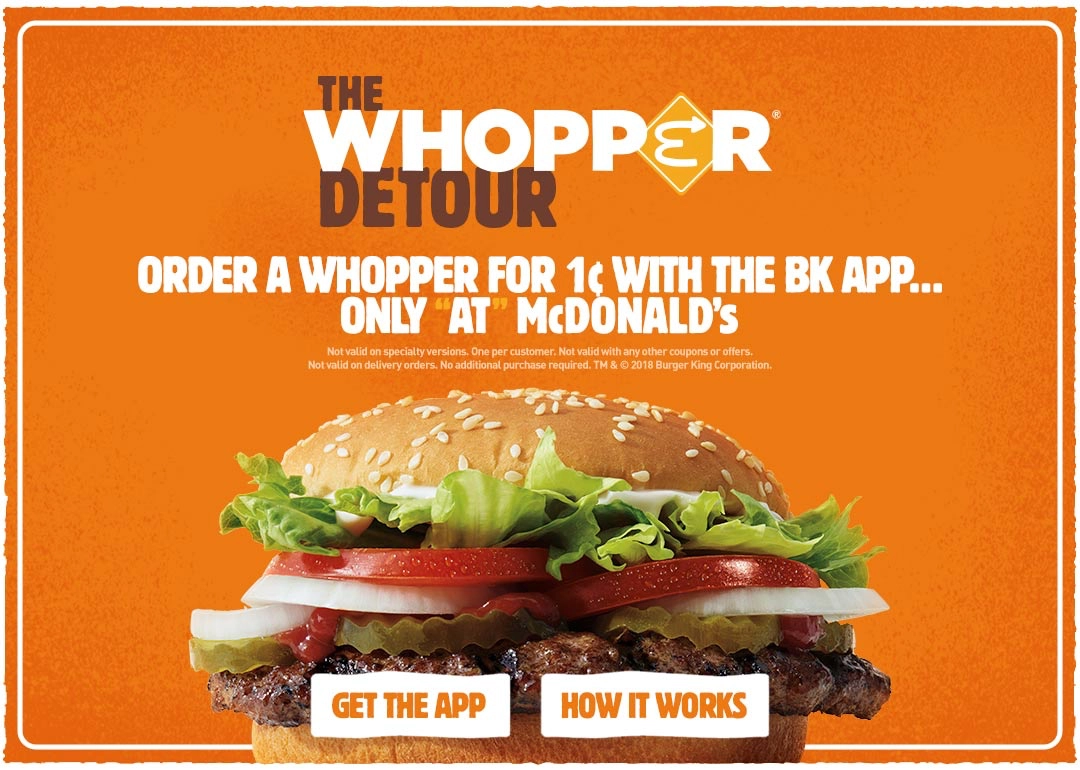
The Burger King Whopper Detour campaign is a famous example of location-based contextual advertising that used geo-fencing to target customers near competitor restaurants. Burger King offered its signature Whopper for just one penny, but only if the user opened the mobile app within 600 feet of a McDonald’s location. This strategy effectively hijacked the physical context of the customer’s journey, using real-time location data to drive high engagement. By placin$g the offer in a specific environment where a fast-food purchase was already likely, the brand turned a competitor’s location into a high-intent marketing opportunity.
The technical execution of this campaign relied on mobile technology to analyze the user’s surroundings and trigger the discount. Once the customer activated the offer near a McDonald’s, the app provided directions to the nearest Burger King to claim the meal. This approach resulted in a significant conversion lift and millions of app downloads by solving a specific need at exactly the right moment. Marketing experts view this as a successful contextual advertising strategy because it leveraged real-world context to create a memorable and highly relevant brand experience.
2. Waken Mouthcare Sustainability Ads
Waken Mouthcare successfully navigated a highly competitive dental market by focusing on high-intent contextual environments instead of broad behavioral tracking. The brand identified products with naturally high conversion rates and then deployed ads across Amazon using specific contextual targeting. By placing ads in environments focused on personal care, health, and sustainability, Waken reached consumers who were already in a “wellness” mindset.
This strategic shift to a full-funnel approach, which included both contextual and remarketing tactics, led to the brand’s highest-ever monthly profit. Ad-driven revenue jumped by 27%, and the brand saw a 24% increase in customers who were completely new to the brand. This case shows that matching a sustainable product to a relevant, content-rich environment builds immediate trust and drives measurable sales growth.

3. Swiss Bank Contextual Finance Targeting
A major Swiss bank demonstrated how contextual relevance can outperform traditional audience targeting in the financial sector. Instead of relying on third-party cookies, the bank placed ads next to premium financial and economic content – such as articles about investments, wealth management, and long-term financial planning. These placements ensured that ads appeared in moments when readers were already thinking about money, risk, and financial decisions.
By aligning its messaging with trusted editorial environments, the bank significantly reduced wasted impressions. This contextual approach helped lower the cost per page view by 44%, while maintaining high-quality traffic and strong engagement. The campaign shows that for highly regulated industries like banking, contextual advertising offers both performance and compliance benefits by matching financial intent with relevant content environments rather than personal user data.

4. Weather-Based Contextual Advertising
Weather-based contextual advertising uses real-time environmental signals to tailor ad messages to a user’s immediate situation. For example, apparel and retail brands adjust creative and placements depending on current or forecasted weather conditions. Ads for rain jackets, umbrellas, or waterproof shoes appear during rainy weather, while sunscreen, cold drinks, or outdoor furniture are promoted during heatwaves.
This strategy works because the weather strongly influences short-term consumer needs and purchasing intent. Instead of predicting behavior based on past data, advertisers respond to what is happening right now. Weather-triggered ads feel timely and helpful, as they reflect the user’s real-world context rather than assumptions about their interests. This makes weather targeting one of the most practical and privacy-safe forms of contextual advertising, especially in a cookieless environment.

5. Diet Plans Promoted on Recipe Blogs
Brands offering diet plans and nutritional programs often use contextual advertising on recipe blogs and cooking websites. A user browsing healthy meal ideas, low-calorie dinners, or plant-based recipes is already thinking about food choices, habits, and health goals. This makes recipe content a natural environment for promoting structured diet plans or meal programs.
By placing ads next to recipes aligned with specific dietary needs (such as weight loss, gluten-free eating, or balanced weekly menus), diet brands reach users at a moment of high relevance. The advertisement feels like an extension of the content rather than an interruption. Instead of pushing a generic offer, the brand appears at exactly the moment the reader is actively considering what and how to eat, which increases trust and the likelihood of engagement.

4 Proven Contextual Advertising Strategies & Best Practices
Effective contextual advertising campaigns rely on four core practices: AI-driven content analysis, environment-based audience segmentation, placement within high-intent content environments, and continuous performance measurement. These contextual advertising strategies form a practical framework for running effective ads in a digital ecosystem that no longer depends on third-party tracking technologies.
Successful ad campaigns focus on making contextual advertising scalable, accurate, and measurable without relying on personal identifiers.
1. Leverage AI for Content Analysis
Marketing experts should use AI tools to analyze content on websites to ensure high relevance. Advanced AI identifies themes, sentiment, and visual elements more accurately than simple keyword matching alone.
AI-driven contextual advertising technology scans text, images, and video content in real time to evaluate the suitability of a page for ad placement. Multi-modal content analysis allows advertising systems to select ad environments that align with brand intent and campaign goals. By understanding the full context, AI helps prevent ads from appearing next to content that is irrelevant or off-brand.
By understanding whether a page is a tutorial, a review, or a long-form blog post, AI helps advertisers avoid irrelevant placements. As a result, the system serves relevant ads without relying on personal identifiers or historical user data.
Landingi’s AI Assistant transforms insights into ready-to-go landing pages.
2. Segment Audiences by Location and Theme
Adding geographical context to your ads helps reach customers in specific local markets where they are most active. Local relevance can significantly boost the performance of a contextual campaign by matching offers to regional needs.
Marketers should also segment contextual advertising placements by clearly defined content themes. Examples of thematic segmentation include seasonal fashion guides for apparel brands or fitness-related content for sports equipment promotions. Combining geographic targeting with thematic segmentation creates a layered contextual targeting model. The layered contextual targeting approach concentrates advertising messages on high-interest content environments rather than broad, non-specific audiences.
Programmatic Landing Pages – dynamic landing pages built for every segment, in just one go.
3. Focus on High-Intent Environments
Advertisers should prioritize ad placements on content pages where users are actively evaluating a purchase decision based on the information being consumed. High-intent content environments, such as product reviews, comparison articles, and instructional “how-to” guides, offer the strongest conversion potential.
Placing a blender advertisement next to a smoothie recipe page addresses an immediate functional need related to the page content. Unlike behavioral ads, contextual ad placements aligned with the user’s current goal reduce decision friction and shorten the path from content consumption to purchase action.
Uncover how users behave on your pages – and turn insights into action.
4. Measure Performance and Post-Click Behavior
Regularly testing different ad placements helps marketers find the most effective web environments for their specific brand. Ongoing performance measurement of metrics like click-through rates and engagement allows for quick adjustments to improve campaign ROI.
Contextual advertising optimization remains an ongoing process rather than a one-time setup. Marketing teams should refine keyword lists, adjust topic categories, and update placement rules based on real-time performance signals. A/B testing different creative formats and messaging styles across defined contextual segments allows marketers to compare results and scale the most effective creative approaches.
Fine-tune your pages with A/B/x tests that actually move the needle.
What are the Popular Platforms for Contextual Advertising?
The popular platforms for contextual advertising include Google AdSense, Taboola, and specialized AI networks like GumGum. Google AdSense remains a top choice by scanning pages for keyword and image matches. Taboola and TripleLift focus on native placements that blend with the publisher’s content.
Other networks like SeedTag and Media.net offer precise targeting across thousands of partner websites. These platforms use advanced technology to ensure ads appear in brand-safe environments while efficiently showing ads that match page-level context. Publishers use these same tools to monetize their content with relevant advertisements.
Should I Use Contextual Advertising as a Marketing Expert?
Marketing experts should use contextual advertising to navigate a digital world without third-party cookies. Contextual targeting provides a privacy-compliant way to reach interested customers in real-time. Contextual ads are also highly cost-effective and easy to scale across different platforms.
Contextual targeting works well for both brand awareness and direct response campaigns. Experts can combine this strategy with other methods to create a layered marketing approach. Using contextual advertising helps a brand stay relevant while respecting the privacy of the audience.
Your ads found the right eyes… Now show them a landing page that seals the deal.
What are the Popular Companies That Offer Contextual Advertising Services?
The popular companies offering contextual advertising services include GumGum, Vibrant Media, and Digilant. GumGum is known for its AI-powered solutions for both display and video ads. Vibrant Media specializes in placing ads directly within articles and images for better visibility.
Digilant provides managed services that integrate contextual data into larger marketing plans. Media.net and SeedTag focus on helping publishers grow their revenue through contextual matches. These companies give advertisers the tools needed to succeed without using personal data.
What is the Difference Between Contextual Advertising and Behavioral Advertising?
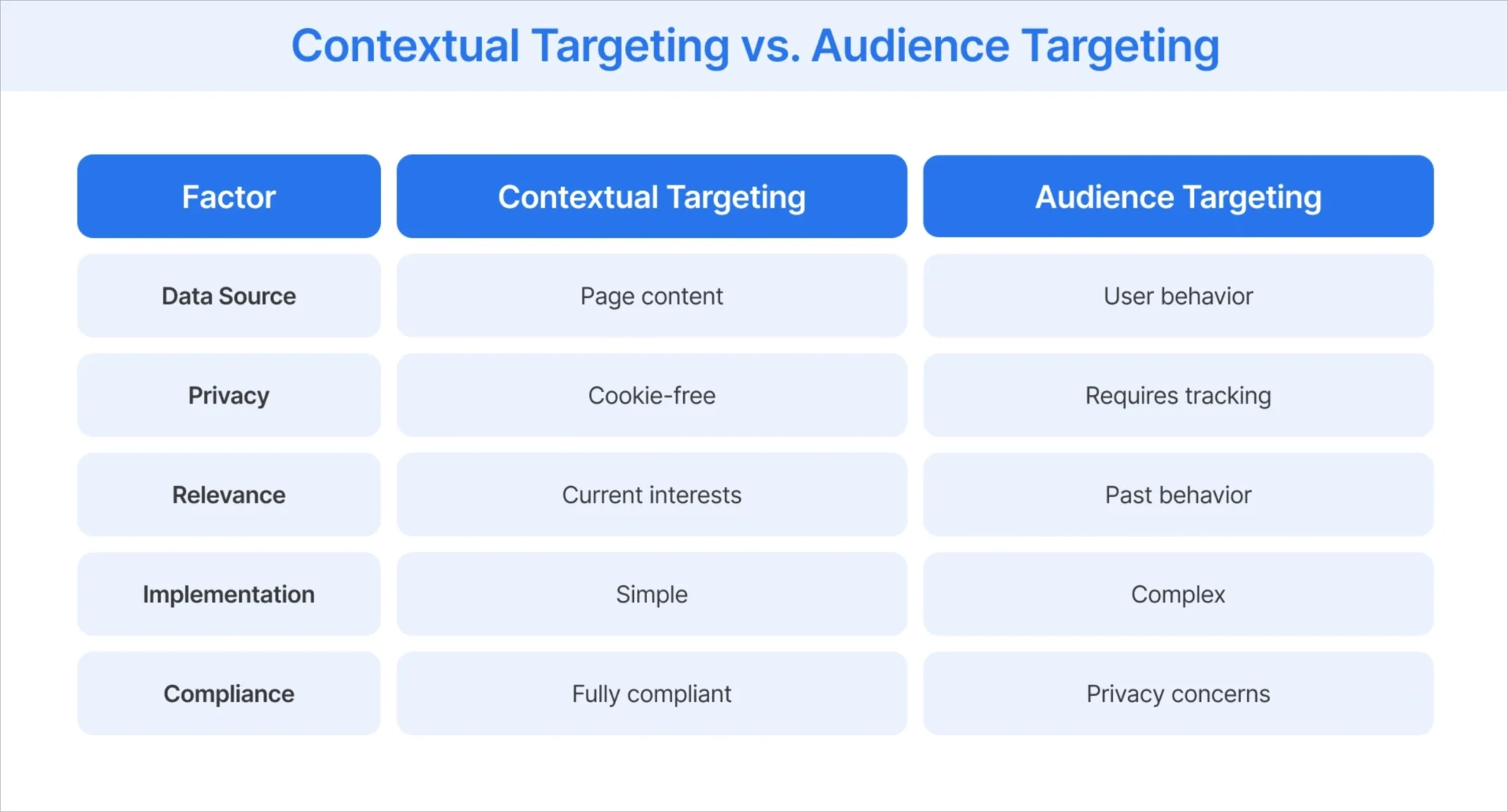
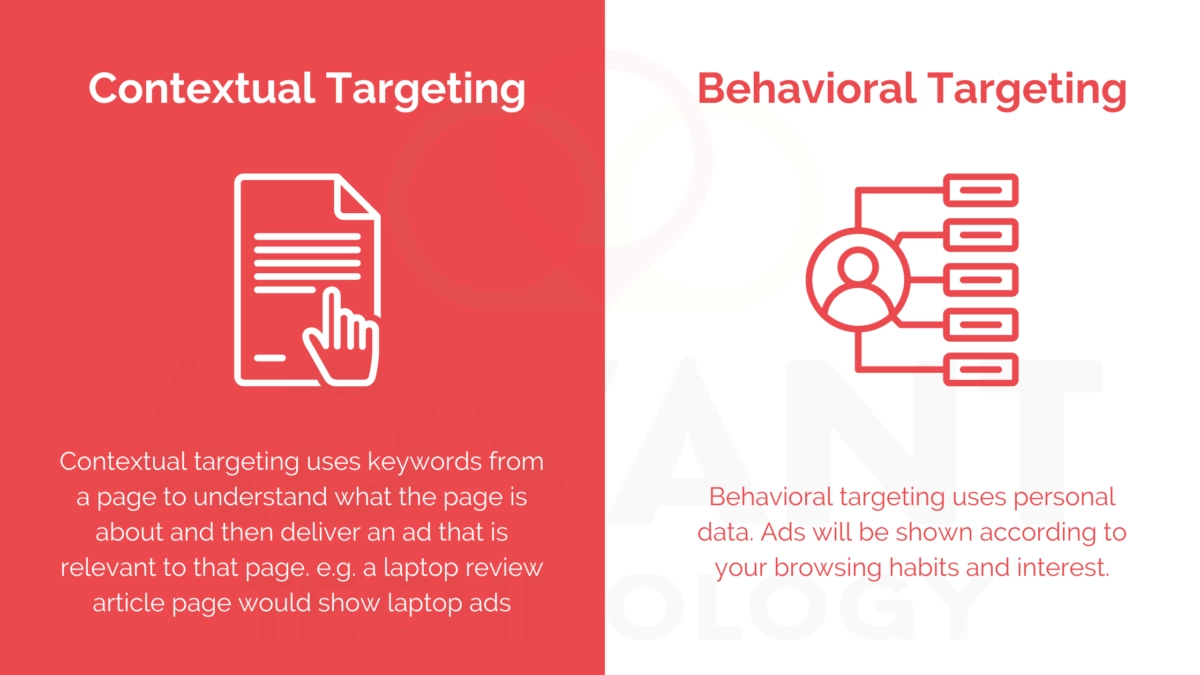
The difference between contextual and behavioral advertising lies in the targeting logic used by each model. Contextual advertising targets the content environment in which an ad appears, while behavioral advertising targets individual users based on past online activity.
Contextual advertising evaluates page-level signals such as page themes, topics, and content type, including environments like recipe pages or news articles. Behavioral advertising relies on tracking browsing history, search behavior, and interaction patterns to predict future purchase intent, often aiming for deeper personalization at the cost of transparency and compliance risk.
Contextual and behavioral advertising also differ in terms of privacy and compliance. Contextual advertising does not track individuals across websites, which makes the contextual model more privacy-friendly. Behavioral targeting faces increasing regulatory and technical limitations due to privacy regulations and third-party cookie restrictions.
While behavioral advertising delivers highly personalized targeting, contextual advertising provides stronger brand safety by controlling the content environments where ads appear.
What’s the Use of Landing Pages in Contextual Advertising?
The use of landing pages in contextual advertising is to maintain message consistency between the ad placement and the website destination. A context-matched landing page captures the user’s intent generated by the contextual ad and reduces cognitive effort during the decision-making process. Aligning landing page content with the ad environment increases the likelihood of conversion.
Contextual continuity strengthens user trust by confirming that the landing page content directly relates to the topic that triggered the ad click. Lower friction and higher trust contribute to improved conversion rates.
In practice, contextual advertising often requires creating multiple landing pages for different content themes, keywords, or environments. Managing this at scale is only feasible when marketers use tools that allow fast duplication, easy editing, and consistent structure across pages. Platforms like Landingi’s landing page builder support this process by enabling teams to build and manage context-matched landing pages efficiently without rebuilding each page from scratch.
For example, a birthday-themed contextual advertisement should direct users to a landing page focused on birthday gift ideas rather than a generic product catalog. A context-specific landing page confirms relevance and reassures users that the ad click led to the expected destination. In contextual advertising funnels, unique landing pages function as the final conversion step that turns a context-driven click into a completed purchase or lead action.

Create Effective Landing Pages for your Contextual Advertising
Contextual advertising helps you reach people based on their current interests and needs. A local landing page helps improve SEO and keeps the experience relevant for every visitor. Using contextual ad examples proves that a matching destination is vital for high conversion rates. In contextual advertising funnels, landing pages act as the primary mechanism for turning user interest into measurable revenue.
Marketing experts design contextual advertising funnels with a clear transition from ad exposure to conversion action. A dedicated landing page reduces user confusion by focusing on a single offer and a defined goal. A structured conversion path ensures that advertising budgets generate visits with a higher likelihood of conversion. High-quality landing pages function as a conversion bridge between a contextual ad click and a completed purchase or lead submission.
Landingi provides a specialized platform for building high-performing landing pages tailored to contextual advertising campaigns. The platform enables marketers to create dedicated landing page destinations that align precisely with contextual ad themes. Purpose-built landing page tools support higher conversion rates by simplifying page creation, testing, and optimization. Try Landingi for free to see how it can grow your brand.