
If you’ve ever debated how to spend your ad budget, you’ve probably searched for the difference between Google Ads and Facebook Ads. Marketers often ask this question: Google Ads vs. Facebook Ads, which one actually performs better?
Both platforms dominate digital advertising, yet they work in fundamentally different ways. Google captures users who are actively searching for what you sell, while Facebook helps you reach people who don’t know you yet but are likely to care. Choosing the right one (or combining both) can dramatically change your ROI.
Key Takeaways
- Google = users actively searching.
- Facebook = users discovering your brand.
- Costs differ across industries.
- Using both often delivers the strongest results.
Ready to choose the right setup for your goals? Let’s break down how each platform works and how to get the best performance from both.
What is Google Ads?
Google Ads is Google’s platform for PPC on Google and broader search engine advertising, allowing businesses to show ads to users who are actively searching for products, services, or solutions. Advertisers bid on keywords, and when someone types a relevant query on Google (or browses properties like YouTube or Maps), an ad can appear at the top of the search results, precisely at the moment of intent.
Google Ads goes beyond search and supports multiple campaign types, including:
- Display Network – Banner and responsive ads shown across millions of sites and apps; ideal for visual branding and retargeting.
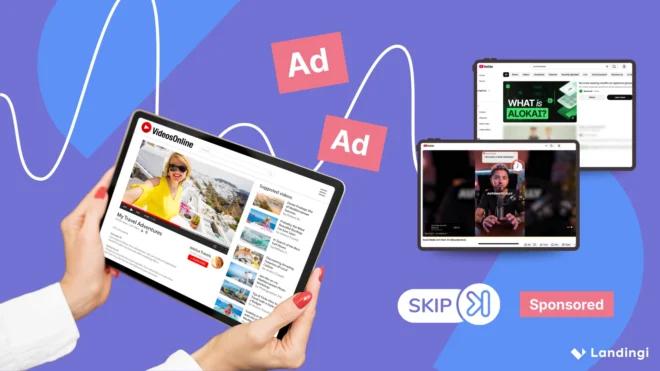
- YouTube Ads – Video ads delivered across YouTube.
- Shopping Ads – Product-based ads with images and pricing that appear directly in Google search results; perfect for e-commerce.
- Performance Max – AI-driven campaigns that run across all Google inventory (Search, Display, YouTube, Gmail, Maps) from a single setup.
The platform mainly uses a pay-per-click model, where your bid, relevance, and landing page experience determine whether your ad appears. You can target users by keywords, location, device, and dozens of audience signals to reach the right person at the right moment.
What are Facebook Ads?
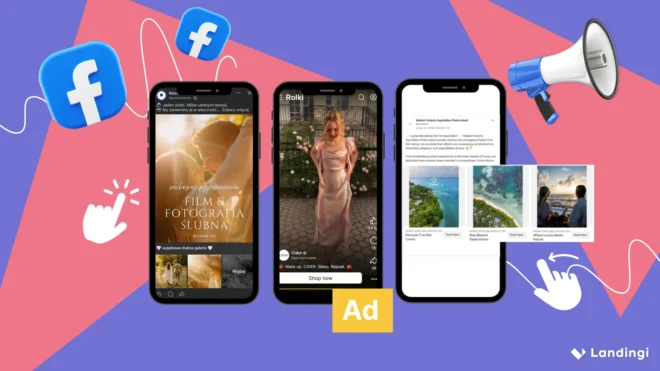
Facebook Ads is Meta’s platform for paid social advertising across Facebook, Instagram, Messenger, and WhatsApp. Instead of targeting people who are actively searching (like in Google search engine advertising), Facebook reaches users based on interests, behaviors, and demographics, meeting them where they spend time.
Facebook ads can take many visual forms: images, videos, carousels, Reels placements, and more. Once you publish an ad, Meta’s algorithm analyzes who is most likely to respond and delivers it to the right users across its ecosystem.
Example:
A realtor can target 30–45-year-olds in Denver who are “likely to move.”
An online store can show product videos to Instagram users who browsed similar items last week.
Facebook Ads runs on a bidding system and supports both CPC and CPM, depending on your campaign objective. Traffic campaigns optimize for clicks; awareness campaigns optimize for impressions. The platform automatically aligns delivery with your chosen goal.
5 Key Differences Between Google Ads and Facebook Ads
Google Ads and Facebook Ads both run on auction-based paid advertising, but they approach users in completely different ways. Here are the five differences that matter most.
| Aspect | Google Ads (Paid Search) | Facebook Ads (Paid Social) |
|---|---|---|
| User Intent | High intent – users search for solutions now | Low intent – ads shown during browsing |
| Targeting | Keywords + limited audience filters | Demographics, interests, behaviors, custom audiences |
| Creative | Mostly text; plus Display, YouTube, Shopping | Highly visual: image, video, carousel, Reels, Stories |
| Typical CPC | Higher (competitive keywords) | Lower (broader audience targeting) |
| Conversion Behavior | Stronger bottom-funnel conversions | Stronger top-/mid-funnel + retargeting |
| Best For | Capturing demand & quick leads/sales | Creating demand & brand building |
1. Intent vs. Discovery
Google Ads reaches people who intend to find something right now. They search “buy running shoes online” – and an ad meets them at the decision point.
Facebook Ads reach people who aren’t searching. They’re scrolling, browsing, killing time. Ads appear as part of content discovery, not problem-solving.
Why it matters:
High intent = higher conversion rates on Google.
Low intent = Facebook works better for awareness, interest, and storytelling.
2. How Targeting Works
Google targeting is built around keywords. You bid on phrases that match what people search for. It’s perfect when demand already exists, but if users don’t know they should search for your product, Google can’t surface it.
Facebook targeting is built around people: demographics, interests, behaviors, life events, job titles, and custom audiences you upload. This lets you reach ideal prospects even before they show intent.
Example:
Google = “best HVAC repair.”
Facebook = Homeowners, 35–55, interested in home improvement + browsing HVAC content on Instagram.
Google captures demand; Facebook creates demand.
3. Ad Formats & Creative Style
Google Search Ads are primarily text-based: headlines, descriptions, and extensions. Great for urgent, high-intent queries. Google also offers Display, YouTube, and Shopping ads for visual formats, but the core experience is still text-first.
Facebook Ads are inherently visual. Photos, videos, Reels, carousels, Stories: everything feels native to social feeds.
4. Cost Differences
Both platforms use auctions, but the economics differ.
Google typically has higher CPCs because advertisers compete for specific keywords – some industries pay several dollars per click, and highly competitive terms can reach $30–50+. Facebook often delivers lower CPCs because competition revolves around audience segments rather than exact intent. Even with rising CPMs, Facebook frequently remains more cost-effective for broad reach and testing.
Simple rule:
Google = pricier clicks, but warmer leads.
Facebook = cheaper clicks, but colder traffic.
Maximize your Google PPC results! Build perfect landing pages for your ads with Landingi today.
5. How They Convert & Deliver ROI
Google often drives immediate conversions because users arrive with a defined need. Search ads can capture bottom-of-funnel buyers who are ready to act.
Facebook excels at top- and mid-funnel impact: building awareness, sparking interest, nurturing leads, and retargeting warm users. Cold traffic converts lower, but retargeting campaigns often counterbalance that with strong ROI.
As you can see, it’s not that one platform is strictly “better” than the other – they’re different. Google Ads acts like an intent-based catch, while Facebook Ads is a discovery engine. Next, let’s talk money.
Google Ads vs Facebook Ads Cost Comparison
Ad budgets matter and even though both platforms use PPC models, their cost structures behave differently. Below is a simple breakdown of CPC, CPM, and CPA, plus how Google and Facebook compare based on industry benchmarks.
CPC (Cost Per Click)
CPC tells you how much you pay every time someone clicks your ad.
- Google Ads: Avg. CPC ≈ $5.26 (global benchmark; source: WordStream 2025).
In competitive industries (legal, finance), that number can climb much higher — up to $5–$10+ per click. - Facebook Ads: Avg. CPC ≈ $1.72 (WordStream 2025).
Many advertisers see $0.50–$1.00 for broad audiences.
What this means: Google clicks are pricier because they come from users with high intent. Facebook clicks are cheaper but colder – they require more nurturing.
CPM (Cost Per 1,000 Impressions)
CPM measures what you pay for every thousand times your ad is shown.
- Facebook CPM: Typically $8–$12 for News Feed
Broader targeting often lowers CPM to around $5–$8. - Google Display CPM: Around $3–$6
What this means: For pure reach or awareness campaigns, Facebook often delivers cheaper exposure than Google’s more premium placements.
CPA (Cost Per Acquisition)
CPA shows how much you spend to get a lead or sale – the true measure of efficiency.
- Google Ads average CPA: ≈ $$70.11 per lead (WordStream 2025).
This reflects higher CPC but strong conversion intent. - Facebook Ads CPA: usually $30–$60 depending on industry.
B2C tends to be cheaper; high-value B2B often costs more.
Example scenario:
- Google: $2.50 CPC with a 10% conversion rate → $25 CPA
- Facebook: $0.70 CPC with a 2% conversion rate → $35 CPA
Even cheaper clicks can lead to higher CPA if users are not ready to buy yet.
| Metric | Google Ads | Facebook Ads |
|---|---|---|
| Avg. CPC | ~$5.26 | ~$1.72 |
| Avg. CPM | Display: $3–$6 | $8–$12 |
| Avg. Conversion Rate | ~7.5% | ~9.2% |
| Avg. CPA | ~$70 | ~$19 |
Facebook’s CVR and CPA benchmarks often include optimized on-platform actions (e.g., leads or add-to-cart), while real e-commerce purchase conversion rates on websites are usually lower and closer to 1–3%. Google benchmarks reflect higher-intent traffic from Search.
Google Ads is more cost-effective when:
- You need high-intent leads who convert quickly.
- Your industry has strong search volume and clear keywords.
- You can afford higher CPCs for better-qualified traffic.
Facebook Ads is more cost-effective when:
- You want low-cost reach and broad awareness.
- Your product benefits from visual storytelling.
- You rely on retargeting, where Facebook’s ROAS often spikes.
Facebook is usually cheaper per click and per impression, making it ideal for awareness and top-of-funnel momentum. Google is usually more expensive but converts better, especially for bottom-of-funnel leads who already know what they want.
Most brands get the best results by combining both: Facebook fills the funnel with affordable traffic and nurtures interest, and Google captures ready buyers at the moment of intent.
Use Landingi to create landing pages that match your ads and maximize every click.
When Should I Use Google Ads Instead of Facebook Ads?
You should use Google Ads when you need high-intent traffic from people already searching for what you offer. Search campaigns work best in moments of urgency or clear demand – think “emergency plumber,” “best CRM for startups,” or “affordable HVAC repair.” That’s why Google is a strong fit for local services, professional services, SaaS, and any industry where customers actively look for solutions.
Google is also the right choice when your category has real search volume and you want to convert that demand efficiently. If people are already Googling your product or service, you can reach them with bottom-funnel ads such as Shopping campaigns, branded keywords, and competitor terms. These users arrive with intent, which typically means higher lead quality than Facebook’s discovery-based traffic.
Finally, choose Google Ads when lead quality and scalability matter more than low CPCs. Even though clicks cost more, they often turn into customers faster – leading to a lower CPA overall. And with search remarketing (RLSA), you can re-engage people who previously visited your site at the exact moment they search again, giving you one of the most efficient conversion paths in paid media.
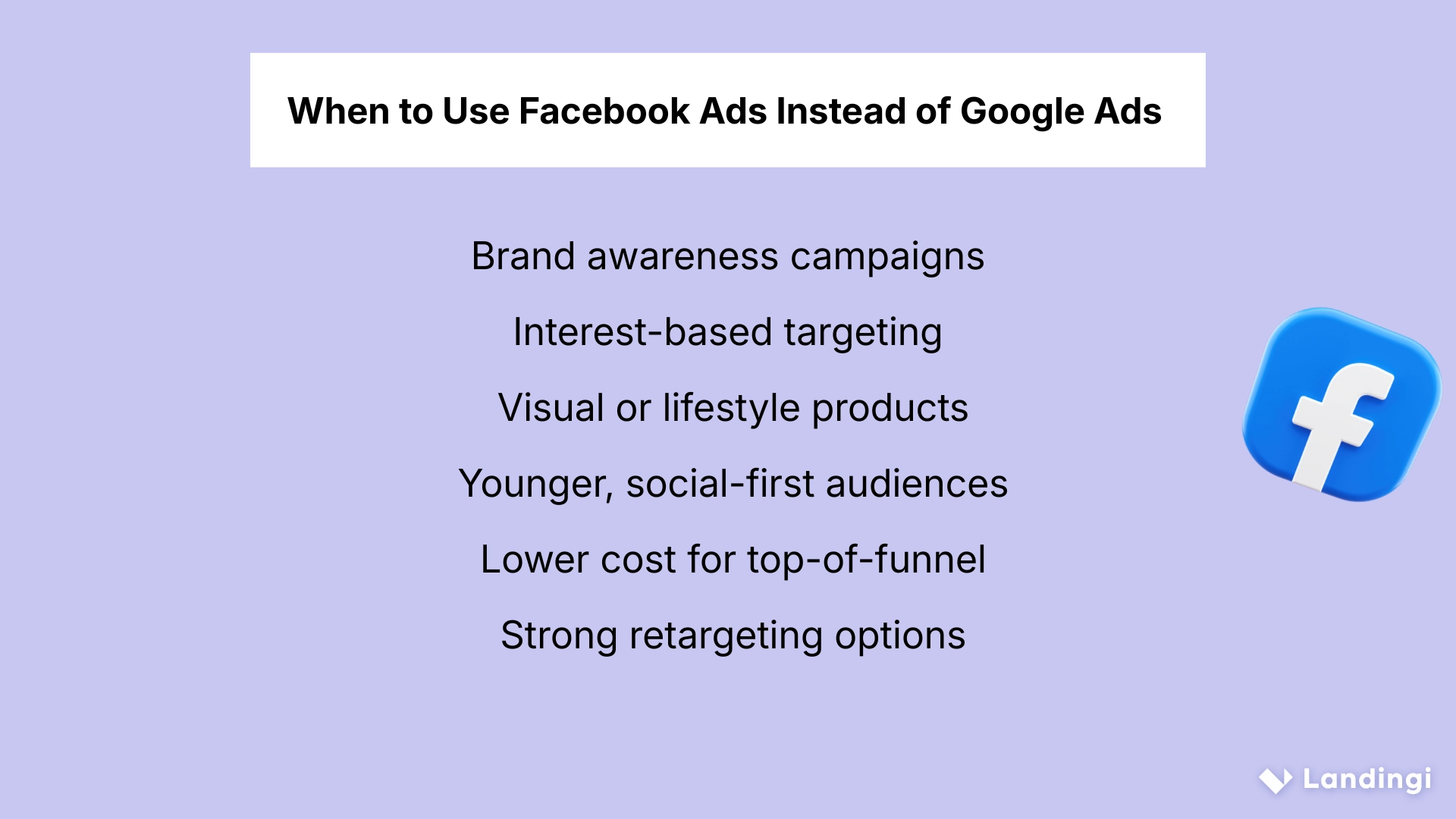
When Should I Use Facebook Ads Instead of Google Ads?
You should choose Facebook Ads over Google Ads when your goal is building brand awareness, reaching a highly defined target audience, or introducing a product people aren’t actively searching for on Google Search. Unlike Google’s paid search model, Meta Ads thrive on interest-based targeting, making them perfect for new products, startups, and campaigns where search intent is low. A fitness gadget no one Googles yet can immediately reach potential customers interested in “Gym Life” or wellness, something Google Search Ads can’t deliver without keyword searches.
Facebook and Instagram are also ideal when your product is visual or lifestyle-oriented, especially in categories like fashion, beauty, travel, home décor, fitness, or entertainment. These verticals benefit from visual ads like video ads, carousel ads, and Reels formats – ad formats that stop the scroll and create emotional appeal in a way text-based ads on the Search Network can’t. A clothing brand can showcase lookbooks, a beauty brand can demo a product, and even real estate agents can spark interest with a property tour long before someone types related search queries into a search engine. This is where Facebook Ads excel, especially with younger internet users who discover products socially rather than through Google Search Results.
Facebook is also the better advertising platform when you want to use advanced audience targeting. Features like Custom Audiences, retargeting via the Audience Network, and Lookalike Audiences allow brands to re-engage existing customers or find new ones who mirror their best buyers. E-commerce brands use Dynamic Product Ads to show people the exact items they viewed – something Google Ads can do through Shopping Ads, but the social identity layer of Meta Platforms gives Facebook an edge for ongoing engagement. With lower Facebook Ads cost compared to Google Ads cost, many advertisers use Facebook to fill the funnel before moving warm traffic into Google Ads Campaigns.
Finally, choose Facebook Ads when the people you want to reach simply don’t rely on search engines to discover products. Teenagers, young adults, hobby communities, creators, and lifestyle shoppers spend more time on social feeds than comparing search results. For these audiences, Facebook Advertising is not just cheaper, it’s more natural. It’s the place where ad campaigns can tell stories, encourage engagement, and spark conversations that Google Display Ads or Google Display Network banner ads can’t replicate.
Google Ads vs Facebook Ads – Which Is Better for Real Estate?
For real estate, Google Ads work best when you want high-intent leads from people already searching for homes or agents. A user typing “homes for sale in Austin” or “realtor near me” is close to taking action, which is why Google Search Ads typically deliver stronger lead quality and faster conversions. With average real estate CPCs around $2.53, Google is a reliable channel for capturing active buyers and sellers.
Facebook Ads, on the other hand, are better for local branding and early-funnel demand creation. Meta’s targeting (e.g., “likely to move,” newly married couples, Zillow followers) helps you reach future buyers before they start searching on Google. Visual formats like carousel ads and short video tours are perfect for showcasing listings and collecting low-cost leads that you can nurture over time.
Quick example:
Run a Facebook campaign promoting “Modern homes under $500k in Denver” to build an audience → retarget them with listing updates → capture them later with Google Search Ads when they finally look for an agent.
Most successful agents use both: Google to convert ready buyers, Facebook to stay top-of-mind in the community.
Google Ads vs Facebook Ads – Which Is Better for Ecommerce?
For e-commerce, Google Ads usually win when you want high-intent shoppers who are already searching for products.
Search and Shopping Ads capture users typing things like “buy running shoes online” or “best budget smartwatch,” which is why Google often delivers higher conversion rates, search ads avg. ~6–7% CVR, while Shopping Ads convert especially well on branded or product-specific queries. With Google Merchant Center syncing your product feed directly into Google, online stores on Shopify or WooCommerce can surface accurate prices, stock, variants, and reviews right inside the SERP. This makes acquisition costs predictable and very efficient for users ready to buy.
Facebook Ads shine in product discovery and demand creation. Instagram Reels, carousel ads, and lifestyle creatives help you reach people who would love your product but aren’t searching for it yet. Cold traffic may convert lower (~1–3% CVR), but retargeting, powered by the Meta Pixel and dynamic product catalogs, often climbs above 8–10%, especially for abandoned-cart recovery. Costs per click are generally lower on Facebook, so acquisition costs stay attractive as long as your creative and audience targeting hold up.
If your store relies on customers who search first (electronics, sports gear, branded items), Google is usually the better sales engine. If your brand wins through visuals, lifestyle storytelling, or impulse buys (fashion, beauty, home décor), Facebook/Instagram typically outperform on reach, engagement, and cost per acquisition.
Most successful Shopify and WooCommerce stores run both: Google to convert ready buyers, Facebook to grow the brand and recover lost carts.
Create a winning ad landing page with Landingi to drive better product results.
Google Ads vs Facebook Ads – Which Is Better for Dropshipping?
For dropshipping, Facebook Ads are usually the best place to start because they give you broad reach and the ability to create demand for products people aren’t yet searching for. Most dropshipping wins are impulse buys: gadgets, trendy accessories, problem-solving tools, and these shine in visual ad formats like video and carousel ads. With Meta Pixel tracking and interest-based targeting (“cooking enthusiasts,” “pet owners,” “tech lovers”), you can quickly test multiple products and creatives with a small ad budget, then scale the winners fast.
Google Ads, however, take over the moment people move from curiosity to purchase intent. When a product goes viral and shoppers begin searching for it (“buy LED sneakers,” “anti-snoring device review”), Google Search Ads and Google Shopping capture those ready-to-buy clicks. That makes Google especially powerful for dropshipping stores on Shopify or WooCommerce using Merchant Center to sync product feeds. High-intent search traffic often converts better – ideal for scaling a validated product.
A typical flow looks like this: A Facebook video ad goes viral → users start Googling the product → your Google Ad catches them at the top of the search results → sales climb on both platforms. Add in Google Display retargeting for users who clicked but didn’t buy, and you have a full-funnel setup built for e-commerce momentum.
What Is the Market Share for Google Ads vs Facebook Ads?
When it comes to digital advertising, Google Ads and Facebook Ads (Meta Ads) still dominate global ad budgets, even as new players like Amazon and TikTok grow.
According to eMarketer estimates, Google holds roughly 28% of worldwide digital ad spend, while Meta captures around 23%. In other words, more than half of all online advertising dollars still flow through these two platforms alone.
Google’s lead comes from its control of search advertising, where it owns over 90% of the global market, plus revenue from YouTube Ads, the Google Display Network, and Shopping Ads across Google properties. Meta’s share is driven by the sheer scale of Facebook and Instagram, where advertisers tap into personalized feeds, visual formats, and deep audience targeting.
Together, they form an advertising duopoly:
- Google = intent-driven ads (search, shopping, performance).
- Meta = audience-driven ads (social discovery, engagement, remarketing).
And while their combined slice has tightened slightly as Amazon and TikTok grow, Google + Meta still account for roughly 50% of all digital ad spending in the mid-2020s.
How to Combine Google Ads and Facebook Ads in a Digital Advertising Strategy
The smartest advertisers don’t choose Google Ads vs Facebook Ads. They use both as a complementary system. Here’s a simple framework that makes them work together instead of competing.
1. Define the role of each platform
Start by deciding what each channel should do:
- Facebook Ads = awareness + discovery. Great for reaching people who have never heard of you.
- Google Ads = intent + conversion. Perfect for users who are already searching for your product or solution.
This prevents overlap and keeps your ad budget focused.
2. Build a simple funnel (works for any business)
Assign each channel to the stage where it performs best:
Awareness (Facebook/Instagram)
Show visual ads that introduce your product and drive first visits.
Consideration (Facebook + Google Display)
Retarget people who visited your site: testimonials, social proof, reminders.
Purchase (Google Search Ads)
When those warmed-up users search for your brand or product, your search ad captures their purchase intent.
This is the cleanest way to combine both platforms without stepping on each other’s toes.
3. Split Test Creatives, Audiences, and Keywords
- On Facebook: test hooks, visuals, carousel ads, targeting options.
- On Google: test keywords, match types, search ad copy, Shopping feeds.
Then cross-apply insights. Winning Facebook angles often become strong Google Search Ads. High-performing Google keywords often become strong Facebook interest segments.
4. Scale the winners
Once you see what’s driving conversions:
- Increase Facebook spend on the creatives that bring the most qualified visitors.
- Increase Google spend on keywords with strong ROI.
- Keep remarketing active on both platforms – it’s often the highest-converting part of the funnel.
This creates a loop: Facebook sends traffic → Google converts → Facebook retargets → lifetime value grows.
You get the best results when Facebook introduces your brand and Google closes the sale. Together, they form a complete digital advertising strategy that reaches shoppers early, keeps them engaged, and catches them when they’re ready to buy.
Try Landingi now and build landing pages that turn clicks into meaningful actions.
Choose the Right Platform and Boost Your Google Ads and Facebook Ads Performance With Landingi Landing Pages
When you look at the difference between Google Ads and Facebook Ads – or compare Google Ads vs Facebook Ads cost – one thing becomes clear: the platforms may work differently, but both depend on what happens after the click. That’s why pairing your campaigns with strong, conversion-focused landing pages matters more than choosing a single “winner” in the Google Ads vs Facebook Ads debate.
Landingi gives you exactly that advantage. You can build fast, relevant, message-matched landing pages that fit each traffic source:
- Clear, intent-aligned pages for Google users actively searching.
- Visual, engaging pages for Facebook audiences discovering your brand for the first time.
With built-in A/B testing, mobile optimization, and easy tracking integrations, Landingi helps you turn more clicks into conversions, regardless of which platform brings the visitor.
If you want higher ROI from both Google Ads and Facebook Ads, the smartest move is simple: upgrade the page they land on. Start creating high-converting landing pages with Landingi.