
The history of digital advertising is a story of fast experiments, bold bets, and constant course correction. What began as simple online placements – static banners on early websites – quickly turned into a global, data-driven ecosystem shaped by ad tech, automation, and relentless optimization. Along the way, digital advertising learned how to target, measure, scale, and adapt, often faster than the rules around it could keep up.
Today, global digital ad spend is expected to reach nearly $876 billion by 2026, according to Statista. Digital advertising has become one of the most influential forces in modern marketing, not just because of its scale, but because of how deeply it shapes decision-making, attribution, and growth strategies.
Key facts:
- Digital advertising has shifted from visibility to intent, behavior, and prediction
- Targeting and measurement have become more precise but less transparent
- Privacy regulations reshaped data usage across the entire ecosystem
- Landing pages shape performance after the click, regardless of channel
This timeline walks through the key eras, innovations, and turning points that shaped the digital advertising ecosystem marketers work in today, showing not just what changed, but why those changes still matter.
Why the History of Digital Advertising Matters Today?
The history of digital advertising matters because it helps marketers make better decisions before they burn budget repeating mistakes that show up with every new platform cycle. Patterns repeat, only the interfaces change.
Every generation of digital ads tends to follow the same arc. Early adopters see outsized returns, costs stay low, and it feels like the rules have finally been rewritten. Then budgets scale, competition floods in, and platforms respond with automation that promises efficiency while gradually reducing transparency and control. We saw it with banners, search, social, and mobile. We’re watching the same dynamic play out again with AI-driven advertising.
That context matters more than ever. Global digital ad spend is heading toward $876 billion by 2026, according to Statista, while users push back through ad blockers, privacy regulations, and cookie restrictions. Ads are undeniably more sophisticated, but trust is thinner, and performance gaps increasingly appear after the click, not before it.
Marketers who understand this history stop chasing shiny formats and short-term hacks. They focus on what actually compounds over time: clear intent, honest messaging, and post-click experiences built to convert, regardless of platform, algorithm, or era.
Let AI help craft copy and visuals that match user intent and keep ads profitable after the click.
7 Eras of Digital Advertising Evolution
Digital advertising didn’t evolve in a straight line. It moved in waves, each shaped by new ways of reaching users, measuring impact, and scaling results. Every era brought a breakthrough that worked until costs rose, behavior changed, or users pushed back.
Understanding these phases explains why today’s advertising looks the way it does and why, despite new tools, many patterns keep repeating.
1. The Attention Era (1994–1998)
The digital advertising story starts simply. In the mid-90s, the internet wasn’t crowded, optimized, or skeptical. It was new. So when the first banner ad appeared, it didn’t need targeting, data, or strategy to work. It worked because it existed. Early banner ads pulled click-through rates that sound unreal today, not because they were brilliant, but because users were curious and the space was wide open.
That curiosity-driven moment had a very concrete visual form – the world’s first banner ad, launched in 1994, which asked a simple question and relied entirely on the novelty of the medium.

And this is where that click actually led – what users saw after interacting with the banner, an early example of what we’d now call a landing page, long before the term even existed.
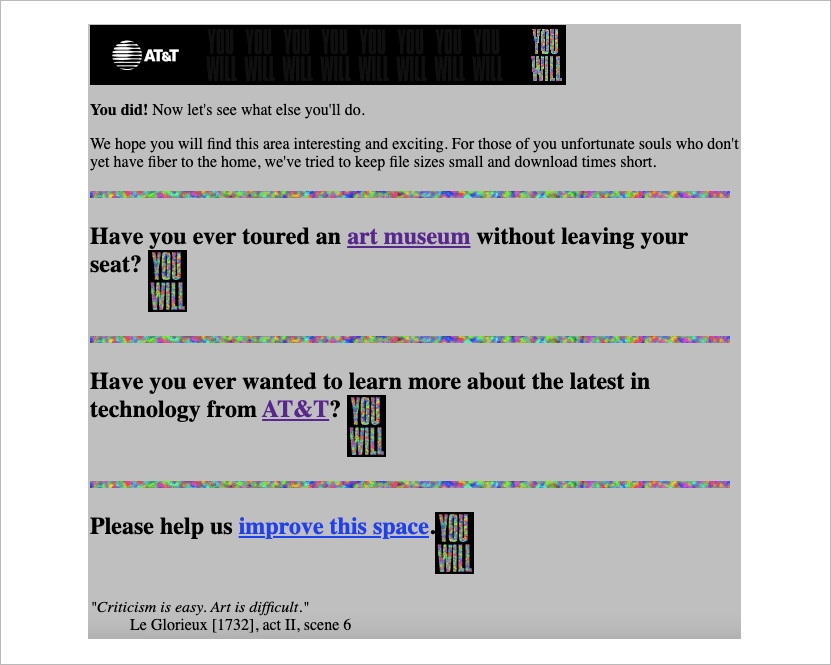
At that point, online advertising looked more like a digital billboard than a performance channel. Brands bought space, placed display ads, and hoped for the best. There were no ad platforms, no PPC logic, no audience refinement. You didn’t target users – you reached everyone. And for a brief moment, that was enough. Without feeds, algorithms, or ad blockers, attention was cheap and results felt effortless.

Of course, that simplicity didn’t last. As more companies rushed into the digital advertising world, banner fatigue kicked in, early pop up ads tested users’ patience, and clicks stopped coming for free. What began as a visual experiment in internet advertising quickly exposed its limits. But this era set the foundation for everything that followed – proof that digital ads could generate ad revenue, influence consumer behavior, and compete with traditional advertising. The industry just needed a smarter way to reach the right people.
Spoiler alert: search engines were already warming up.
2. The Intent Era (1999–2002)
The next shift in digital advertising history happened the moment marketers realized they didn’t have to interrupt users to reach them. They could simply show up when someone was already looking. As search engines became the internet’s default navigation layer, search advertising quietly changed the rules of the game. Instead of renting attention, brands could respond to intent and that was a big deal.
This is where pay per click (PPC) entered the chat. With the launch of Google AdWords (now Google Ads), advertisers only paid when users actually clicked. Suddenly, online ads weren’t about flashy visuals or clever placements. They were about relevance. Search ads appeared directly on the search engine results page, aligned with keywords users typed themselves. If someone searched, you could meet them there.
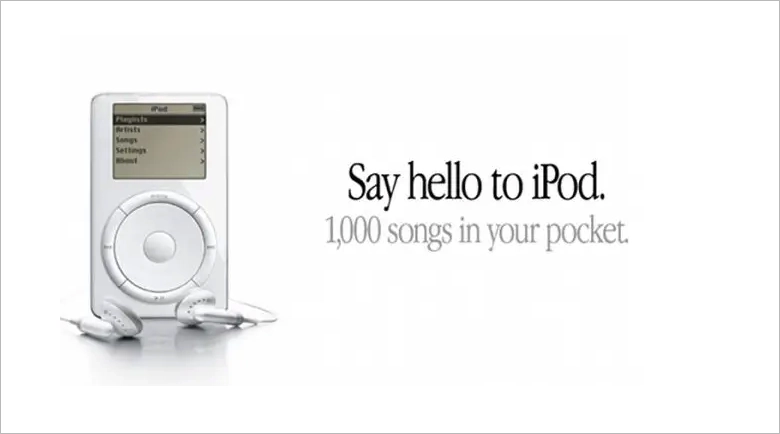
For the first time, digital marketing felt measurable, scalable, and defensible. Budgets could be tied to outcomes, advertising strategy became data-driven, and search engine advertising proved that targeting users based on intent could outperform even the most creative banner ad. It wasn’t perfect, but it worked. And once marketers saw what intent-based advertising could do, there was no going back.
3. The Social & Behavioral Era (2003–2008)
Search advertising proved that intent converts. Social media took that insight one step further and asked a different question: who is the user behind the query? As social media platforms grew into everyday digital spaces, digital advertising shifted from responding to searches to shaping discovery long before users typed anything into search engines.
This was the moment social media advertising became a serious performance channel. Platforms like Facebook and YouTube turned behavior into currency: likes, follows, interests, and interactions powered targeted ads that reached users based on who they were and how they behaved online. Sponsored posts, early video advertising, and feed-based placements blended naturally into social media, changing the advertising model from interruption to integration.
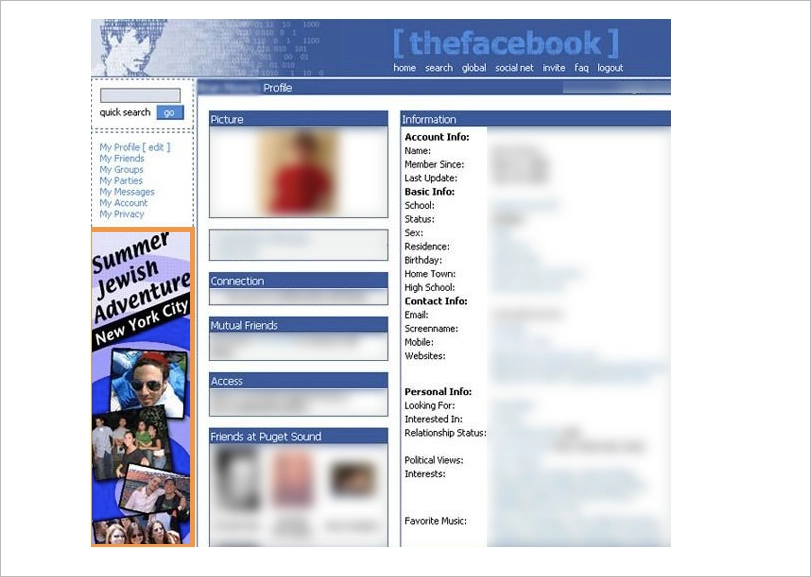
The results were hard to ignore. Ads felt more relevant, engagement climbed, and advertising effectiveness improved. But the groundwork for future tension was already there. The same data that made ads smarter also made users more aware of being tracked. Still, for marketers, this era rewired how online advertising worked and permanently expanded what targeting could mean in the digital advertising space.
4. The Native & Mobile Era (2009–2011)
By the end of the 2000s, one thing was clear: users were tired of being chased around the internet. Click-through rates on display ads kept sliding, pop up ads had worn out their welcome, and ad blockers were no longer a niche tool. At the same time, mobile devices were changing how people accessed the web. Shorter sessions, smaller screens, and constant connectivity forced digital advertising to adapt or get ignored.

The response was native advertising. Instead of fighting for attention, ads started to look like content. Native ads and sponsored posts blended into feeds, articles, and timelines, designed to match the target audience’s online experience rather than interrupt it. On mobile, this approach worked. As mobile internet usage exploded, brands followed users into apps and mobile feeds, discovering that relevance and context mattered more than sheer visibility.
This era reshaped the digital advertising space in a subtle but lasting way. Online advertisements became quieter, more contextual, and more dependent on understanding user behavior. While native formats improved engagement, they also set the stage for a bigger shift: advertising that needed data, scale, and automation to survive in a mobile-first world.
5. The Programmatic Era (2012–2017)
By the time the 2010s rolled in, digital advertising had become faster, busier, and far more crowded. Campaigns ran everywhere at once, users moved constantly between sites and devices, and expectations around speed and relevance kept rising. The old way of planning and buying online ads simply couldn’t keep up with how the internet actually worked anymore.
That’s when programmatic advertising quietly became the default. Ads began to appear based on signals, timing, and context, with systems learning how to optimize ad placements and reach the right users in the right moments. For marketers, it was a relief. Campaigns scaled more easily, performance became more consistent, and dashboards finally looked calm again.
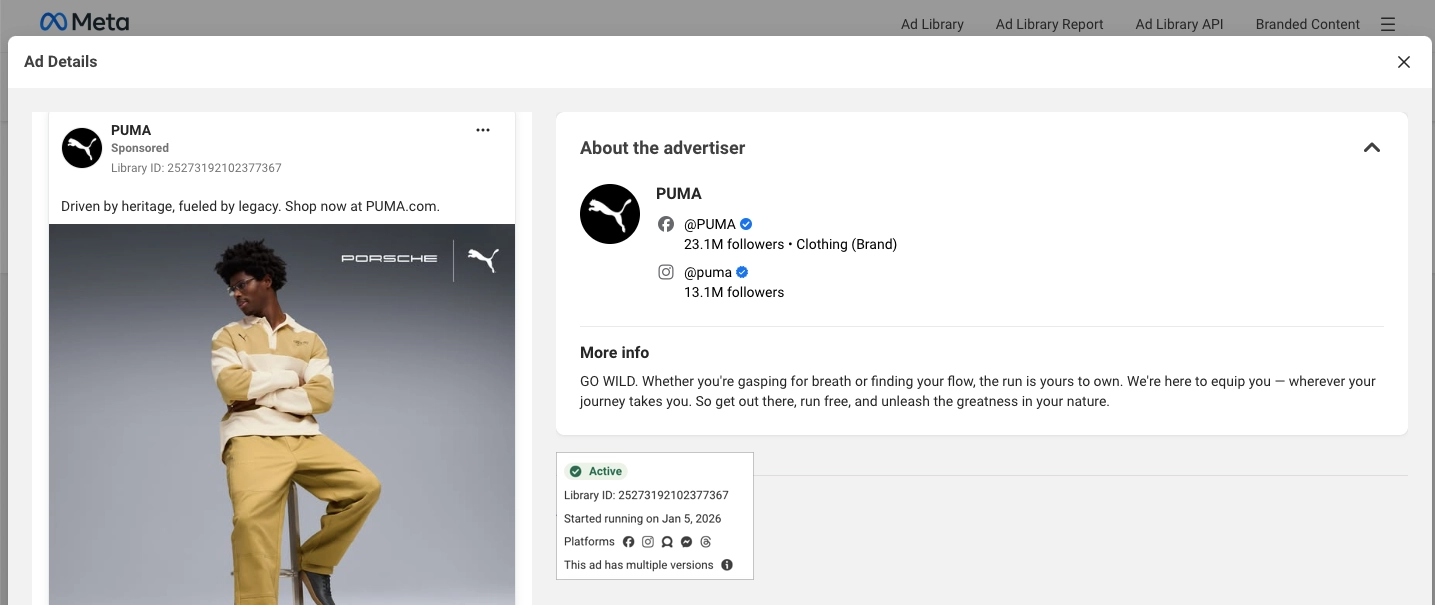
But this convenience changed how advertising felt. Decisions happened automatically, often in the background, while humans focused on strategy rather than execution. Results came in, yet the path behind them wasn’t always obvious. Programmatic didn’t take the marketer out of the process, it simply moved them a step back, closer to oversight than control. And that shift set the tone for what would come next.
Generate hundreds of hyper‑targeted pages from one template – reach every audience segment at speed.
6. The Privacy-First Era (2018–2020)
This era didn’t start with a new format or a shiny platform. It started with banners, but not the good kind. Cookie banners. Consent pop-ups. Long privacy notices no one really wanted to read, but everyone suddenly had to. Yes, I accept. No, wait—what am I accepting? Around 2018, digital advertising ran head-first into a reality check.
Users had grown tired of feeling followed. Ads knew too much, showed up too often, and felt a little too personal. Regulators stepped in with GDPR and CCPA, and overnight, things marketers had taken for granted – tracking, targeting, attribution – became fragile. Something clearly changed: audiences shrank, data went missing, and dashboards looked different.
User privacy became part of everyday conversation, not a footnote. Brands had to slow down, explain themselves, and rebuild trust. First-party data started to matter and transparency stopped being optional. Advertising still worked, but only when it respected the user’s space. It was uncomfortable, a little chaotic and necessary. Because once users learned they could say “no,” advertising had to learn how to earn a “yes.”
7. The AI & Predictive Era (2021–today)
This era is still unfolding, which makes it harder to define and easier to recognize. Digital advertising now runs on systems that automatically adjust bids, audiences, and creative delivery while campaigns are live. Machine learning powers search ads, social media ads, and programmatic platforms, helping ads react to signals in real time rather than relying on fixed rules or manual tweaks.
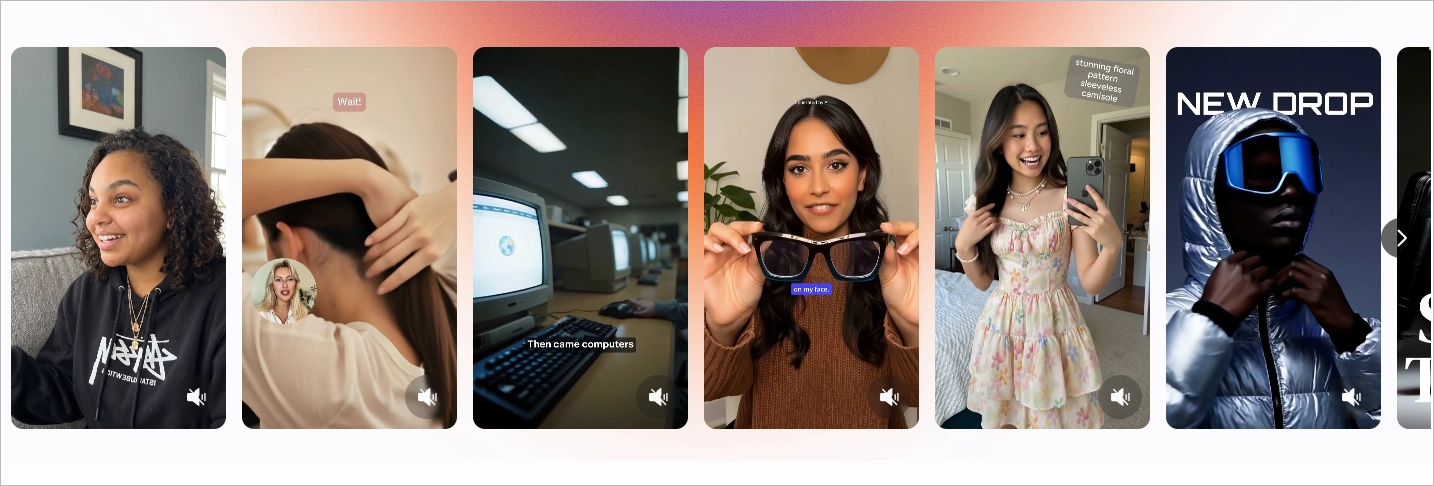
For marketers, this shift has changed how control feels. You still decide the goals, budgets, and messaging, but many execution-level choices happen behind the scenes. Platforms promise highly relevant ads and better efficiency, and often deliver on that promise, yet explaining why a specific ad reached a specific user at a specific moment isn’t always straightforward. The system works—but not always transparently.
What defines this phase is the trade-off it introduces. Speed and scale have improved, while visibility into the decision-making process has narrowed. Because this era is ongoing, the balance is still shifting. One thing is already clear, though: success depends less on micromanaging ads and more on shaping the inputs – intent signals, creative quality, and the experience users land on after the click.
Timeline Table: Key Milestones of Digital Advertising
This table summarizes how each era reshaped the way ads were delivered, measured, and optimized – highlighting the trade-offs that still influence modern advertising decisions.
| Era | Approx. timeframe | Key change | Dominant channels | Core metric | Risk & constraint |
|---|---|---|---|---|---|
| The Attention Era | 1994–1998 | First banner ads introduce online monetization | Display websites, early portals | Click-through rate (CTR) | Ad fatigue, zero targeting |
| The Intent Era | 1999–2002 | Search ads align ads with user intent | Search engines, sponsored search | Cost per click (CPC) | Keyword competition, rising costs |
| The Social & Behavioral Era | 2003–2008 | Targeting based on user behavior and interests | Social media platforms, video | Engagement rate | Privacy concerns, data overreach |
| The Native & Mobile Era | 2009–2011 | Ads blend into content and mobile feeds | Mobile apps, native placements | Time on content | User trust, format ambiguity |
| The Programmatic Era | 2012–2017 | Automated buying and real-time bidding | Programmatic networks, display | Cost per acquisition (CPA) | Transparency, brand safety |
| The Privacy-First Era | 2018–2020 | Regulation reshapes data collection and tracking | Consent-based platforms | First-party data quality | Limited targeting, data loss |
| The AI & Predictive Era | 2021–today | Machine learning optimizes ads in real time | Search, social, programmatic | Conversion probability | Black-box optimization |
How Ad Formats Evolved?
Ad formats changed because users stopped reacting to ads the way they used to. Banner ads worked when the internet was new, but lost impact as attention fragmented. Search ads answered this by placing ads where users were already looking, making relevance more important than design.
Social platforms pulled ads into content streams, turning formats into sponsored posts and video ads that had to earn attention alongside organic content. Mobile pushed this even further, favoring native, scroll-friendly formats. Today, programmatic advertising and machine learning quietly decide which format appears where, adapting delivery to behavior rather than relying on a single creative shape.
How Targeting Evolved?
Targeting evolved as digital advertising moved from reaching everyone to reaching the right people. Early banner ads filled whatever ad space was available and hoped the right people happened to see them. It was simple, inefficient, and for a short time, it worked. Then search engines stepped in and flipped the model. With search advertising (PPC) and Google AdWords, ads started following intent, showing up on the search results page exactly when users asked for something.
Social media advertising took that idea and stretched it further. Platforms began using user behavior (likes, follows, views) to reach people before they searched. Sponsored posts, video ads, and feed-based social media ads blended into everyday scrolling, turning targeting into a core advertising strategy. The results were strong, but the line between relevance and overreach started to blur, especially as pop up ads and aggressive tracking pushed users toward ad blockers.
Today, targeting runs largely on machine learning and artificial intelligence, quietly optimizing delivery across search ads, mobile, and programmatic systems. At the same time, privacy rules like GDPR and the California Consumer Privacy Act have forced the industry to slow down and be more deliberate. Targeting still matters, but now it works best when it feels earned, not imposed.
Create landing pages in minutes that turn post‑click attention into measurable with Landingi!
How Measurement Evolved?
Measurement evolved as digital advertising shifted from counting clicks to proving real impact. Early online ads focused on basic metrics like impressions and CTR, which worked when banner ads dominated and expectations were low. With pay per click (PPC) and search advertising, metrics became more tied to action – clicks, costs, and conversions started to shape advertising budgets.
As social media advertising and programmatic advertising grew, measurement became more complex. Platforms added layers of attribution, engagement metrics, and cross-channel reporting, powered by data analytics and machine learning. Today, marketers have more data than ever, yet less certainty about causality. Measurement became more strategic, shifting focus from volume to meaningful outcomes and long-term value.
AI and Automation in Modern Ad Platforms
AI and automation entered digital advertising quietly, then stayed. What began as bid adjustments and rule-based optimization has turned into systems that manage ad placements, budgets, targeting, and creative delivery in real time. Most major advertising platforms now rely on machine learning to evaluate signals, predict outcomes, and deliver highly relevant ads at a scale humans can’t match.
For many marketers, this has changed how advertising feels day to day. You spend less time tweaking settings and more time defining goals, audiences, and creative direction. The upside is scale and efficiency. The downside is that it’s not always obvious why an ad worked (or why it didn’t.) Automation hasn’t replaced marketers, but it has shifted the role. Success now depends less on controlling every detail and more on giving the system the right signals to work with.
What Digital Advertising History Teaches Marketers?
First, every breakthrough has an expiration date. Banner ads, search ads, social feeds, automation – each one worked brilliantly at the start, right up until everyone else copied it. If something feels too easy, history suggests it probably won’t stay that way for long. Sustainable results usually come later, when the hype fades and fundamentals matter again.
Second, users always adapt faster than platforms expect. The moment ads become louder, people learn to ignore them. When targeting becomes invasive, they push back with ad blockers, privacy settings, or simple indifference. The history of digital advertising is really a history of user behavior correcting the system, over and over again.
And finally, tools change, but leverage doesn’t. Formats rotate, algorithms evolve. What keeps working is understanding intent, respecting attention, and making the moment after the click count. Marketers who learn from the past don’t chase every new feature. They build strategies that still make sense once the novelty wears off.
Publish pages in 29+ languages and expand campaigns across markets with no extra dev work.
What’s the Role of Landing Pages in Digital Advertising over Time?
The role of landing pages in digital advertising has always been the same: turning attention into action after the click. While channels, formats, and targeting models kept changing, landing pages stayed where performance actually happens quietly doing the work that ads alone never could.
Over time, the mechanics became clearer. Message match ensures continuity between the ad and the page, reducing confusion and bounce. Mobile speed matters because more clicks come from mobile devices than desktops, and even small delays kill intent. A/B testing turns assumptions into data, allowing marketers to improve conversion rates regardless of traffic source. Tracking closes the loop, making performance measurable instead of assumed. And friction minimization – fewer fields, clearer CTAs, simpler flows – keeps momentum from breaking at the most critical moment.
Platforms automate reach and targeting, but landing pages anchor results. They are the one part of the system marketers still fully control, no matter how ads are bought or delivered. Trends come and go, algorithms change, but landing pages remain the steady layer that turns traffic into performance, era after era.
Create Conversion-Focused Landing Pages for any Ad Era
No matter how digital advertising evolves, conversions still happen in one place: on the landing page. When channels change and algorithms shift, a well-designed landing page keeps performance grounded by connecting ads to outcomes in a way marketers can actually control.
What makes it work is focus and consistency. Strong landing pages mirror the message of the ad, build trust through social proof, and guide users with clear CTAs and friction-free forms. They load fast on mobile, respect user intent, and make the next step obvious instead of overwhelming. Performance improves not through guesswork, but through tracking, monitoring, and steady A/B testing that turns small insights into measurable gains.
That’s why landing pages remain effective across every ad era. With tools like Landingi, marketers can quickly build, test, and optimize pages without slowing campaigns down. Platforms will keep changing how ads are delivered, but landing pages will keep doing the same job – quietly turning clicks into results. Try Landingi now!