
Programmatic advertising is the automated buying and selling of digital ad inventory using software, data, and real-time auctions within online advertising ecosystems. According to the Interactive Advertising Bureau (IAB), programmatic buying replaces manual insertion orders with algorithmic decisioning across impressions at scale.
Programmatic advertising relies on real-time bidding (RTB), demand-side platforms (DSP), and supply-side platforms (SSP) to match ads with users during each impression. This article explains how programmatic advertising works, outlines types of programmatic advertising, and clarifies benefits and risks using factual definitions and operational detail. It also helps you assess when programmatic advertising makes sense in practice, and what questions typically come next once the basics are clear.
Programmatic advertising accounted for 72% of U.S. digital display ad spend in 2023, according to eMarketer estimates cited by IAB reports, and is expected to approach $800 billion globally by 2028 as automation and AI-driven optimization continue to expand.
Key Takeaways
- Programmatic advertising automates media buying at the impression level using auctions and data.
- Programmatic buying executes through DSPs and SSPs connected by ad networks and exchanges.
- Real-time bidding (RTB) is the most common method for facilitating programmatic advertising transactions.
- Real-time bidding determines the winning ad for each impression in milliseconds.
- Measurement, consent, and fraud controls define campaign quality, campaign performance, and reliability.

What is Programmatic Advertising?
Programmatic advertising is the automated purchase and sale of digital advertising inventory through software platforms. It covers multiple types of programmatic, including auction-based and fixed-price buying models.
Often described as a core pillar of programmatic marketing, programmatic advertising executes media transactions using RTB auctions instead of human negotiations. These transactions determine how advertisers access ad space across publishers and devices.
Programmatic ads appear after algorithms evaluate customer data, inventory value, and bid price within milliseconds. Using data-driven insights allows marketers to refine their targeting strategies in programmatic advertising, improving relevance and reducing wasted impressions over time.
Programmatic ads appear across display ads, video ads, mobile ads, native ads, audio ads, and connected TV inventory. Programmatic buying evaluates user signals, context, budget rules, and bids before selecting a creative for each impression.
Programmatic advertising is most effective when scale, automation, and impression-level optimization are required. It is less suitable for campaigns that rely on fixed placements, limited inventory, or minimal data inputs.
How Does Programmatic Advertising Work?
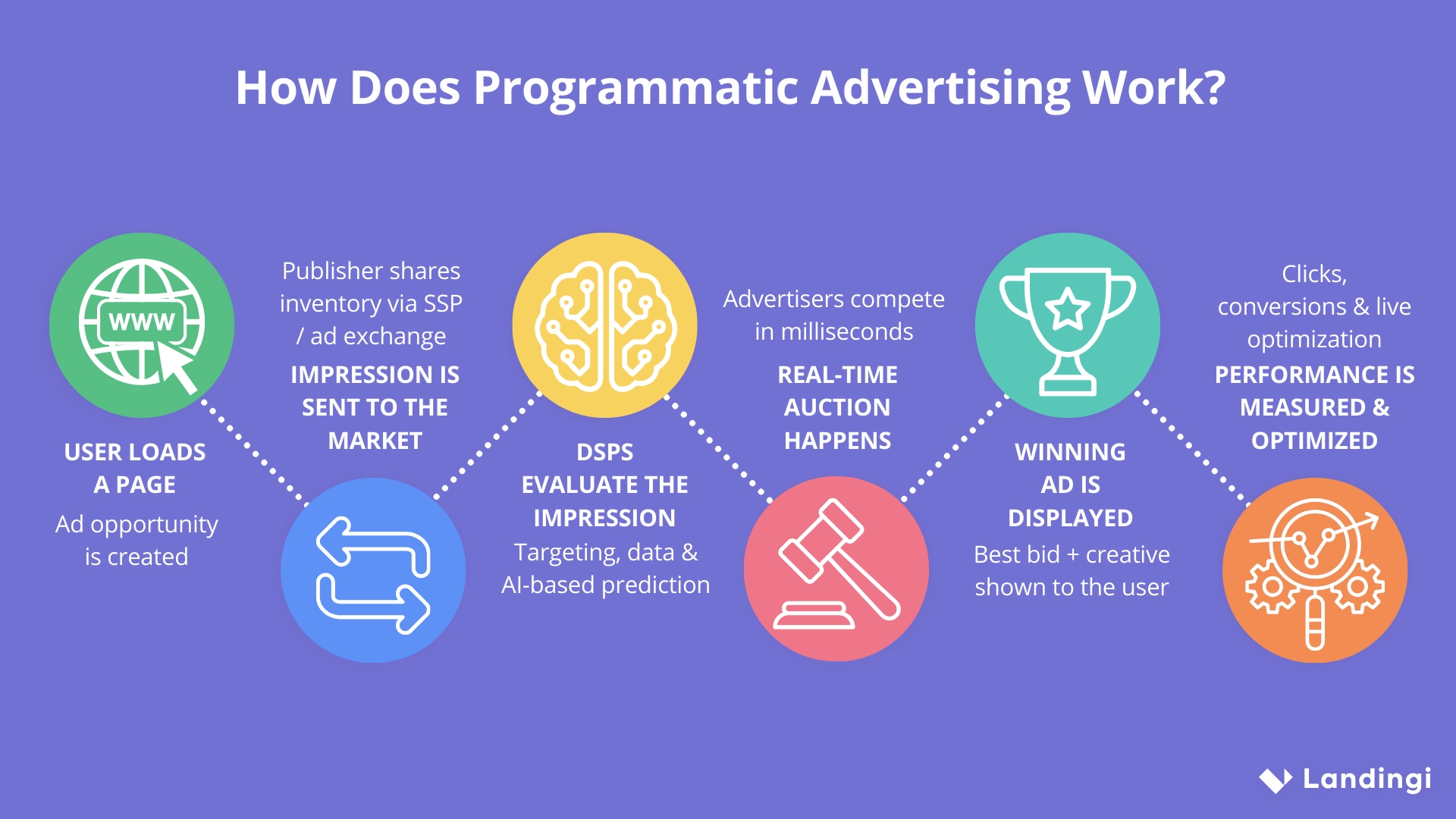
Programmatic advertising works through a real-time transaction that occurs when a user loads a website or application, including mobile apps. Each page load triggers an automated auction that decides which ad appears.
The website or application sends an available impression to a publisher ad server connected to an SSP or ad exchange. The SSP creates a bid request that describes the impression using placement data, device and browser signals, approximate location, consent status, and available audience attributes.
The ad exchange distributes the bid request to multiple DSPs acting on behalf of advertisers. Each DSP evaluates the impression against active campaigns by applying targeting rules, audience segments, frequency capping thresholds, and budget pacing logic.
Smarter targeting starts with smarter pages. Build landing pages that work as hard as your ads.
AI-powered optimization tools are reshaping campaign execution in programmatic advertising, as DSPs increasingly rely on machine learning models to predict conversion likelihood and value. Based on predicted performance and campaign objectives, the DSP generates a bid response that includes a bid price and a selected creative.
The ad exchange runs a real-time auction using a first-price model and selects the highest eligible bid that meets publisher requirements. The winning creative is returned through the SSP to the publisher ad server to deliver ads on the user’s screen within milliseconds.
After the ad is delivered, tracking systems record impression delivery, viewability, and engagement signals. Programmatic advertising enables advertisers to evaluate campaign and creative effectiveness mid-campaign through reporting on metrics such as CTR, CPC, overall spend, and conversions, allowing optimization decisions while campaigns are still live.
What usually comes next? Once marketers understand the ad auction flow, the next decision is not bidding strategy, but which parts of this process they actually control – data inputs, inventory access, creatives, or optimization logic.
9 Core Components of the Programmatic Ecosystem
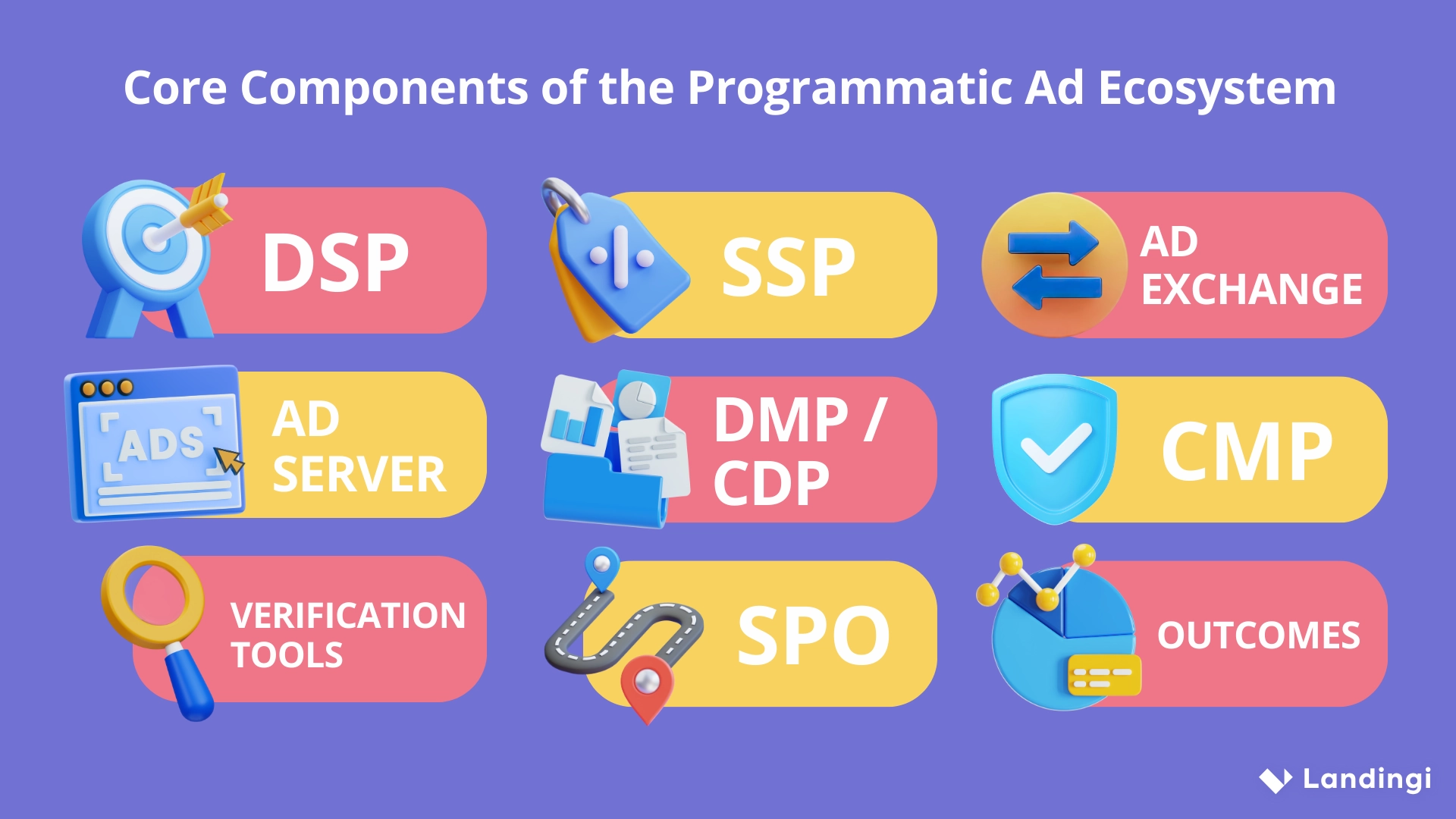
The programmatic ecosystem consists of specialized platforms and control systems that manage bidding, delivery, verification, and measurement for every ad impression. Each platform in the programmatic ecosystem performs a specific function within automated media buying and selling for active ad campaigns.
Understanding the programmatic ecosystem structure explains how programmatic advertising executes decisions, enforces constraints, and records outcomes across campaign setup and delivery. This system-level architecture also shows where data enters the transaction flow and where operational risks such as fraud or data leakage can occur.
Not every advertiser interacts directly with each component. Understanding which advertising platforms you actively manage versus which operate in the background helps determine operational complexity and risk exposure.
The following components enable automated buying, delivery, and measurement of ad impressions:
- Demand-Side Platform (DSP) – a DSP allows advertisers to bid on impressions and manage programmatic buying logic.
- Supply-Side Platform (SSP) – an SSP enables publishers to sell inventory programmatically and optimize yield.
- Ad Exchange – an ad exchange conducts RTB auctions between DSP and SSP platforms.
- Ad Server – an ad server delivers creatives such as banner ads and logs impressions and clicks.
- DMP or CDP – a DMP or CDP stores audience data used for targeting and segmentation.
- Consent Management Platform (CMP) – a CMP manages privacy preferences and consent signals.
- Ad Verification Tools – verification tools measure viewability and detect IVT and fraud.
- Supply Path Optimization (SPO) – supply path optimization reduces redundant intermediaries in the supply chain.
- Measurement and Attribution – measurement platforms calculate CPA, ROAS, and conversion outcomes.
What are the Benefits of Programmatic Advertising?
Programmatic advertising delivers operational efficiency, scalability, and performance control by automating how ad impressions are bought, optimized, and measured.
Key benefits of programmatic advertising include:
- Scale and reach
- Automation and efficiency
- Real-time optimization
- Cost efficiency
- Budget control and pacing
- Audience segmentation
- Omnichannel delivery
- Reporting and transparency
Control your campaigns – from ad to landing page. Create optimized, cost-efficient pages in minutes!
Programmatic advertising enables scale by providing access to millions of ad impressions across websites, applications, and connected devices, helping brands reach audiences without manual media negotiations. Programmatic advertising allows advertisers to reach a massive audience by serving ads on thousands of different websites, apps, and streaming services, without requiring individual publisher negotiations.
Automation reduces the operational workload associated with media buying and trafficking. Programmatic buying replaces manual insertion orders with rule-based bidding, delivery, and optimization executed by DSPs.
Real-time optimization improves performance by adjusting bids, targeting, and creatives during campaign delivery. Each impression informs future bidding decisions through continuous feedback loops.
Programmatic advertising cost efficiency results from auction-based pricing and impression-level bidding. Advertisers pay market-driven prices for each impression instead of fixed placements. Budget control and pacing ensure predictable spend across the campaign duration. DSP rules enforce daily budgets, bid limits, and frequency caps across active ad campaigns.
Audience segmentation increases relevance by using behavioral, contextual, and first-party data. Targeting rules align impressions with defined audience segments rather than broad placements.
Omnichannel delivery connects display, video, mobile, audio, and connected TV inventory within a single buying workflow. The unified execution supports consistent messaging across touchpoints.
Reporting and transparency provide impression-level visibility into delivery and performance. Measurement systems track impressions, clicks, conversions, CPA, and ROAS across channels.
When these benefits matter most?
Programmatic advertising delivers the strongest value when campaigns require continuous optimization, flexible budgets, and frequent creative or audience adjustments. For static campaigns with fixed placements and limited measurement needs, these benefits may not justify the added complexity.
Optimize beyond the bid! Learn how landing pages fuel better ROAS in programmatic advertising.
What are the Risks and Limitations of Programmatic Advertising?
The risks and limitations of programmatic advertising include operational, data, and measurement factors that affect cost efficiency, brand control, and performance accuracy.
Key risks and limitations of programmatic advertising are:
- Ad fraud and invalid traffic
- Brand safety exposure
- Complex supply chain
- Data quality limitations
- Privacy and consent compliance
- Cookie and addressability restrictions
- Walled garden constraints
- Creative fatigue
- Attribution inaccuracies
Ad fraud and invalid traffic increase wasted spend through non-human impressions and deceptive placements. Fraud detection tools reduce exposure but do not eliminate risk.
Brand safety exposure occurs when ads appear next to inappropriate or low-quality content. Maintaining brand safety by excluding inappropriate sites is a key strategy in programmatic advertising, typically enforced through blocklists, allowlists, and verification tools. The rise of AI in programmatic advertising has led to new brand safety risks as low-quality sites exploit algorithms optimizing for viewability metrics, requiring stricter quality controls.
A complex supply chain reduces transparency across intermediaries. Multiple resellers and exchanges obscure fees, inventory sources, and delivery paths.
Data quality limitations affect targeting and optimization accuracy. Inaccurate or incomplete data prevents reliable alignment between delivery logic, the target audience, and programmatic advertising goals.
Privacy and consent compliance restrict data usage under regulations such as GDPR and similar frameworks. Missing or invalid consent blocks user-level targeting and measurement. Cookie and addressability restrictions reduce cross-site tracking capabilities. Third-party cookie limitations weaken retargeting and frequency control on open web inventory.
Walled garden constraints limit data access and interoperability. Closed platforms restrict impression-level transparency and cross-channel attribution.
Creative fatigue lowers engagement when users see repeated ads. Limited creative rotation reduces click-through and conversion rates over time.
Attribution inaccuracies distort performance analysis across channels. Multi-touch attribution models depend on incomplete signals and inconsistent identifiers.
Practical implication:
Most programmatic risks do not disqualify the channel, but they shift effort from buying impressions to managing controls, data quality, and verification. Teams without these safeguards typically experience diminishing returns over time.
Don’t let your ads work alone. Pair them with landing pages designed for real-time performance.
How to Implement Programmatic Advertising Into a Marketing Strategy?
To implement programmatic advertising into a marketing strategy, define objectives, configure tracking, select data and inventory sources, and optimize delivery using measurable feedback loops.
A programmatic advertising strategy starts with clearly defined objectives and key performance indicators. Setting clear campaign goals is essential for successful programmatic advertising, as KPIs such as CPA, ROAS, reach, or frequency determine bidding logic, optimization signals, and reporting structure.
Once goals and KPIs are defined, configure bidding logic, optimization signals, and reporting structure for campaign execution.
After configuration, set up tracking and conversion events before launch. Implement post-click actions, engagement events, and conversion signals to support reliable optimization and attribution.
Then, build audience segments using first-party data, contextual signals, and behavioral criteria. Align impression delivery with the defined target audience and campaign intent.
Select inventory sources and deal types based on control and scale requirements. Choose between open exchange buying, private marketplace deals, preferred deals, programmatic direct, and programmatic guaranteed inventory.
Develop multiple creative variants to support rotation and testing. Match creative messaging with audience context and placement format.
Set bidding strategies and budget rules to control spend. Apply bid caps, pacing logic, and frequency limits to stabilize delivery over time.
Apply brand safety and fraud prevention controls across all inventory. Use allowlists, blocklists, and verification tools to reduce exposure to unsafe placements and invalid traffic.
Finally, analyze performance reports at the impression and campaign level. Use performance data to refine bidding, audience segments, creatives, and budget allocation.
After implementation, performance gaps usually reveal whether the primary constraint lies in data quality, inventory selection, or post-click experience – rather than bidding logic itself.
Don’t stop at the bid. Boost your ROAS by refining what happens after the ad.
8 Successful Programmatic Advertising Examples
Programmatic advertising examples show how automated media buying performs in real campaign conditions. Each case below demonstrates a specific execution lever (such as retail data activation, real-time context signals, dynamic creative optimization, or inventory-level control) and is supported by measurable results.
The focus is on how campaigns were executed. Each example explains how data sources, bidding logic, creatives, and inventory selection worked together to deliver outcomes reported by the campaign owners or technology partners.
These examples are not templates to copy directly. They illustrate which execution lever mattered most in each scenario: data, context, sequencing, or supply control.
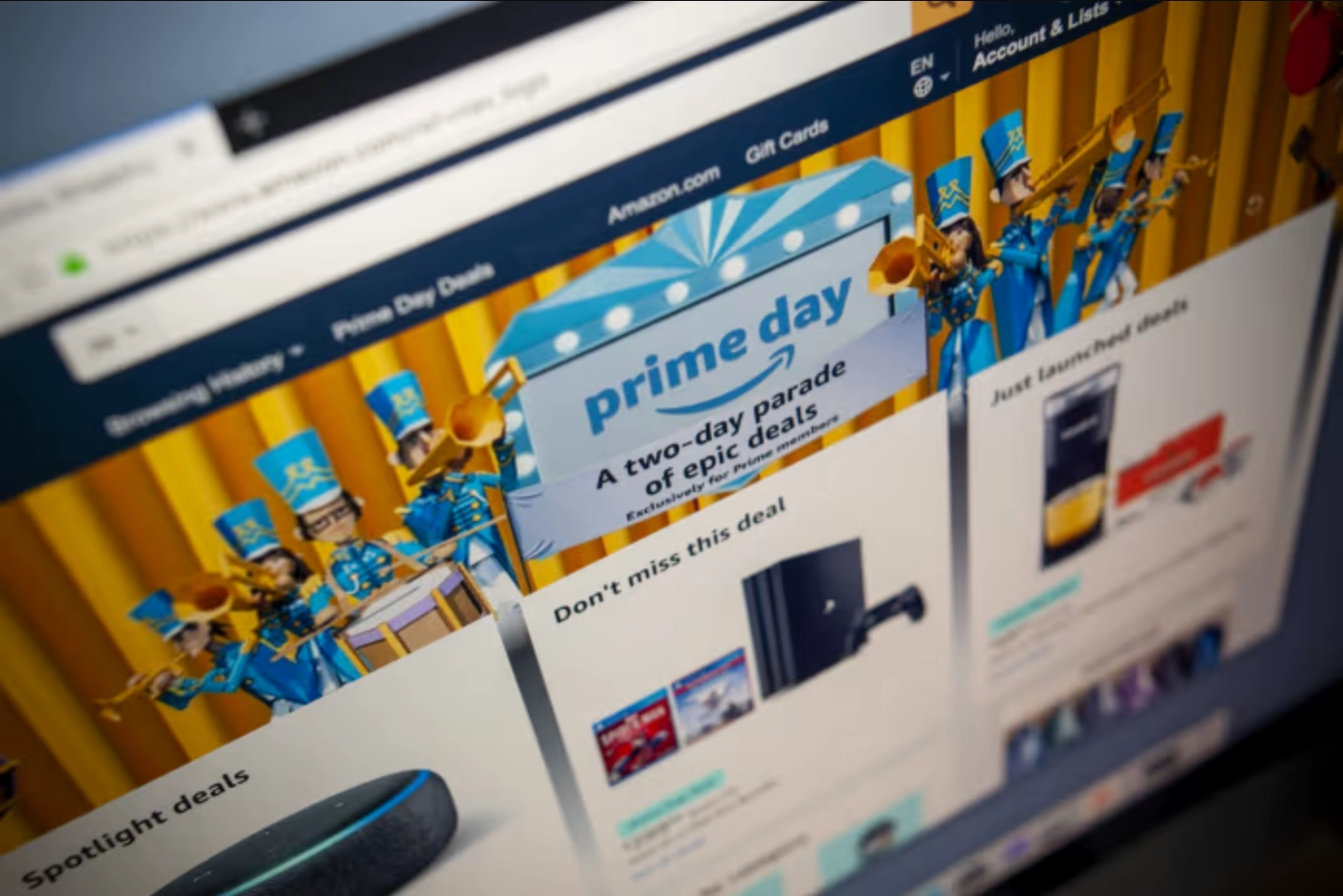
1. Amazon: First-Party Retail Data Activation for Prime Day at Scale
Amazon used programmatic display advertising to support Prime Day by activating its own first-party shopping and browsing data. Ads were personalized based on users’ previous product views and purchase behavior across Amazon’s ecosystem.
The programmatic setup enabled dynamic alignment between creatives and user intent, increasing relevance across large-scale display placements. Rather than optimizing for reach, the campaign focused on relevance driven by retail signals.
Amazon’s approach contributed to record-breaking Prime Day participation, high ad revenue, and a significant increase in sales. The personalization layer also helped build anticipation ahead of the event, amplifying performance during the Prime Day window.
Key mechanism: Activation of first-party shopping behavior to personalize programmatic display ads at scale and reduce irrelevant impressions.
2. McDonald’s: Real-Time Contextual OOH Messaging Based on Traffic Conditions
McDonald’s executed a programmatic out-of-home (OOH) campaign that dynamically changed billboard messaging based on live traffic data. The campaign integrated with the Google Traffic API to detect congestion levels in real time.
When traffic slowed, billboards displayed contextual messages such as “Stuck in a jam?”, directly addressing drivers’ current situation. Messaging shifted automatically as traffic conditions changed.
This execution allowed McDonald’s to cut through the clutter of highway advertising by using situational relevance instead of static messaging. The use of real-time external data made the ads feel timely and human, increasing attention and memorability among drivers.
Key mechanism: Real-time external data (Google Traffic API) triggered contextual creative changes in programmatic OOH inventory.

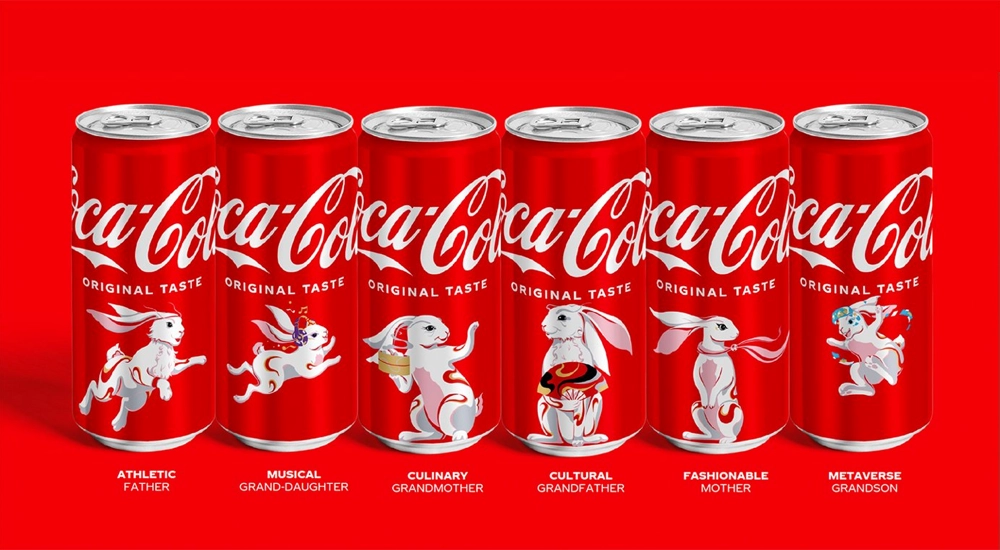
3. Coca-Cola: Retail Media Data Collaboration Driving a 189% Sales Increase
Coca-Cola expanded its programmatic strategy in Singapore through a retail data partnership with FairPrice Group, one of the country’s largest supermarket chains. The campaign was executed using The Trade Desk DSP.
Coca-Cola targeted FairPrice customers who had purchased Coca-Cola or related products within the previous one to three months. Ads were delivered across the open web, OTT, digital audio, and digital out-of-home during the Lunar New Year period (2022–2023).
Conversions were tracked directly within the FairPrice website and app environment after exposure to programmatic display ads. The campaign achieved a 189% increase in sales, with an average time to conversion of just 12 hours from first ad exposure.
Key mechanism: Activation of retailer first-party sales data through a DSP to run full-funnel, closed-loop programmatic campaigns.
4. Nike: Weather-Based Programmatic Ads Connecting Real-Time Conditions to Products
Nike partnered with The Weather Channel mobile app to deliver programmatic ads based on users’ current weather conditions. Product recommendations changed dynamically depending on local weather signals.
For example, rainy conditions triggered ads for rain jackets, while sunny weather activated breathable apparel creatives. Users could click through directly to Nike’s site to explore or purchase recommended products.
This execution connected real-world conditions with immediate product needs, shortening the distance between context and conversion. The campaign generated engagement rates exceeding benchmarks and outperformed static ads in conversion efficiency.
Key mechanism: Real-time weather data triggered dynamic product recommendations in programmatic mobile inventory.

5. ABC Stout Beer: In-Game Programmatic Advertising Achieving 86% Viewability
ABC Stout Beer, owned by Heineken, ran a programmatic in-game advertising campaign in Myanmar to reposition ABC Extra Stout among a younger audience aged 18–34.
Instead of standard in-game ads, the brand used in-game billboards designed to blend naturally into the gaming environment. Ad placements were selected to maximize exposure time and visibility without disrupting gameplay.
The campaign achieved 86% viewability, reached 68% of the target audience, delivered a CTR of 0.27%, and saw 10% of ads clicked. The results demonstrated that environment-native programmatic placements can drive attention without relying on personal data.
Key mechanism: Programmatic in-game inventory selection focused on high-viewability, contextually integrated placements.
No disruption. Just conversion. See how seamless personalization can power results!
6. Procter & Gamble: Hyper-Targeted Programmatic Ads to Reduce Wasted Spend
Procter & Gamble used programmatic advertising to deliver hyper-targeted messaging to specific audience segments, such as young mothers and environmentally conscious consumers.
The campaign relied on detailed audience data to align creative messaging with segment-specific needs and values. This precision reduced irrelevant impressions and improved both engagement and conversion rates.
As a result, P&G increased campaign efficiency while lowering wasted ad spend. The value came from targeting accuracy, not increased media volume.
Key mechanism: Segment-level audience data enabled precise targeting and reduced inefficiencies in large-scale programmatic campaigns.

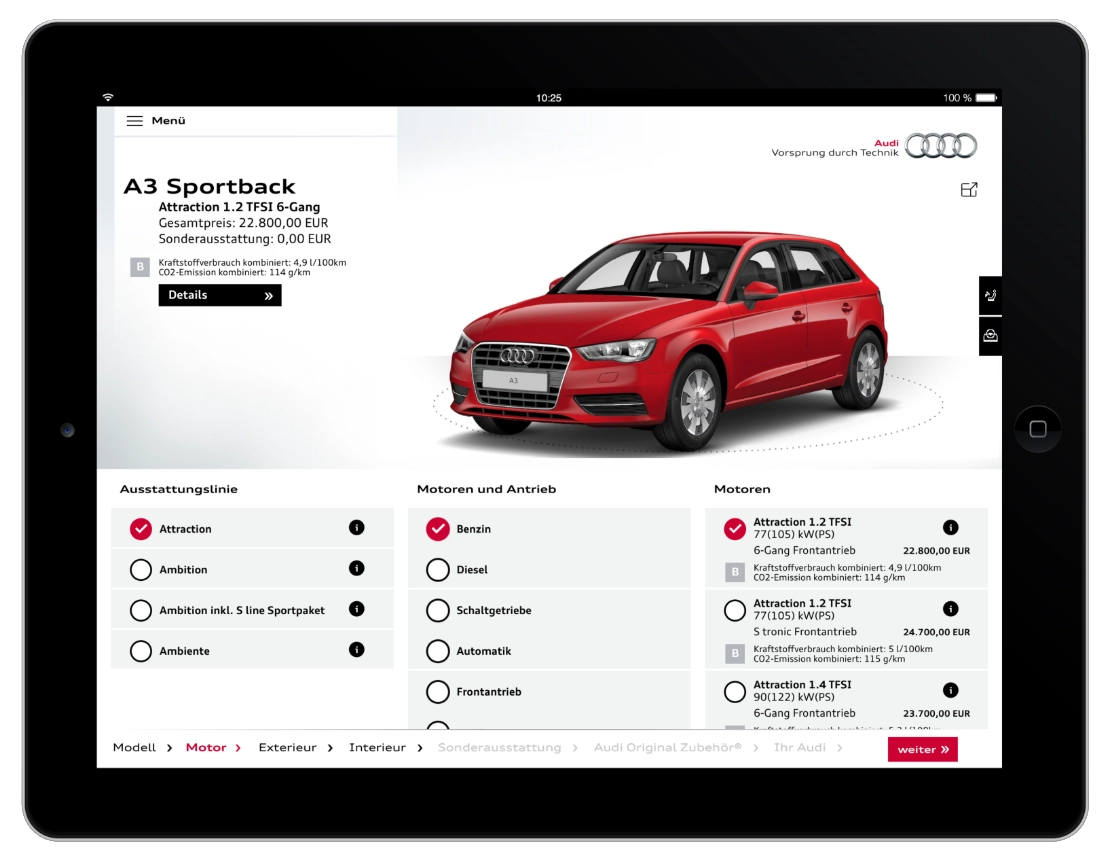
7. Audi: Dynamic Retargeting with 6,000+ Creative Variations from a Car Configurator
Audi launched a programmatic campaign to support the release of the highly customizable Audi Q2. The brand used data from its on-site car configurator tool, where users built their preferred vehicle versions.
Users who interacted with the configurator and had previously visited the site were retargeted with ads reflecting the specific configurations they created. Over 6,000 creative variations were generated dynamically to match user preferences and funnel stage.
This approach delivered a conversion rate four times higher than Audi’s previous, more traditional campaigns. The personalization felt individual without requiring infinite creative versions.
Key mechanism: Dynamic creative optimization powered by configurator data and funnel-stage retargeting.
8. Slalom and iProspect: Lower-Funnel Signal Optimization for a U.S. Telecommunications Brand
Slalom and iProspect supported a large U.S. telecommunications brand providing cable TV and broadband services to more than 6 million households and 335,000 businesses across 18 states. The brand held extensive offline and online first-party data, but frequent changes in its customer base made accurate audience suppression and signal activation difficult. The core challenge was reaching new, non-subscriber audiences at the lower funnel while excluding existing customers and reducing wasted media spend.
To address this, the teams restructured how first-party signals were matched and activated in programmatic campaigns. Offline customer data was uploaded and deterministically matched with platform-level signals, significantly improving addressability and audience accuracy. As a result, the brand increased usable first-party signal coverage to 80% of its total customer data and improved match quality from 60% to 90%, enabling more precise targeting and more reliable exclusion of current subscribers.
The optimized setup reduced inefficiencies across lower-funnel media and enabled predictive modeling based on both online and offline conversions, including call center and in-store sales. Compared to the brand’s previous lower-funnel approach, the campaign achieved a 40% reduction in cost per action, while improving reach to high-intent prospects. Closed-loop analysis allowed ongoing optimization during campaign flight, strengthening the link between audience quality, conversion outcomes, and media efficiency.
Key mechanism: First-party signal optimization and deterministic matching enabled accurate audience activation, reduced waste, and improved lower-funnel efficiency.
Reach smarter, convert faster. See how signal-driven landing pages reduce wasted clicks.
5 Proven Programmatic Advertising Strategies & Best Practices
Programmatic advertising strategies define how data, bidding, and creatives work together to achieve campaign goals. Each strategy focuses on controlling a different performance variable, such as relevance, cost efficiency, or message order. The following practices apply across industries and media channels.
1. Precise Targeting
Precise targeting uses clearly defined audience segments based on data signals rather than broad demographics. Effective targeting combines first-party data, contextual signals, and behavioral indicators aligned with campaign goals.
Segment definitions should reflect the intent level and funnel stage. Narrow segments reduce wasted impressions and improve bidding efficiency.
When to use: Apply precise targeting when budget efficiency and relevance matter more than maximum reach.
2. Dynamic Creative Optimization (DCO)
Dynamic Creative Optimization adjusts ad elements based on user, context, and placement signals. Creative components such as headlines, visuals, and CTAs change at the impression level.
DCO improves relevance without manual creative duplication. Performance gains come from matching message variants to situational context.
When to use: Use DCO when campaigns require multiple messages across audiences, products, or locations.
Make every visitor feel it’s made just for them. Build dynamic landing pages that adapt like your ads do.
3. Real-Time Bidding (RTB) and Optimization
RTB enables impression-level bidding decisions based on predicted performance value. Bidding logic evaluates price, probability of conversion, and competitive pressure.
Continuous optimization adjusts bids using live performance feedback. Effective setups prevent overspending on low-value impressions.
When to use: Rely on RTB when conversion value varies significantly across impressions.
4. Retargeting and Sequential Messaging
Retargeting reconnects with users who previously interacted with ads or landing pages. Sequential messaging controls message order based on prior exposure.
Structured sequencing supports gradual progression through awareness, consideration, and conversion stages. Frequency controls prevent overexposure.
When to use: Activate retargeting and sequencing when campaigns involve longer decision cycles.
5. A/B Testing and Omnichannel
A/B testing compares creatives, audiences, and bidding strategies under controlled conditions. Structured testing isolates variables to identify performance drivers.
Omnichannel execution ensures consistent exposure across devices and formats. Unified measurement connects performance data across channels.
When to use: Apply testing and omnichannel execution when scaling campaigns across multiple formats and devices.
Put your ideas to the test – build A/B landing pages that learn what works.
What are the Popular Platforms for Programmatic Advertising?
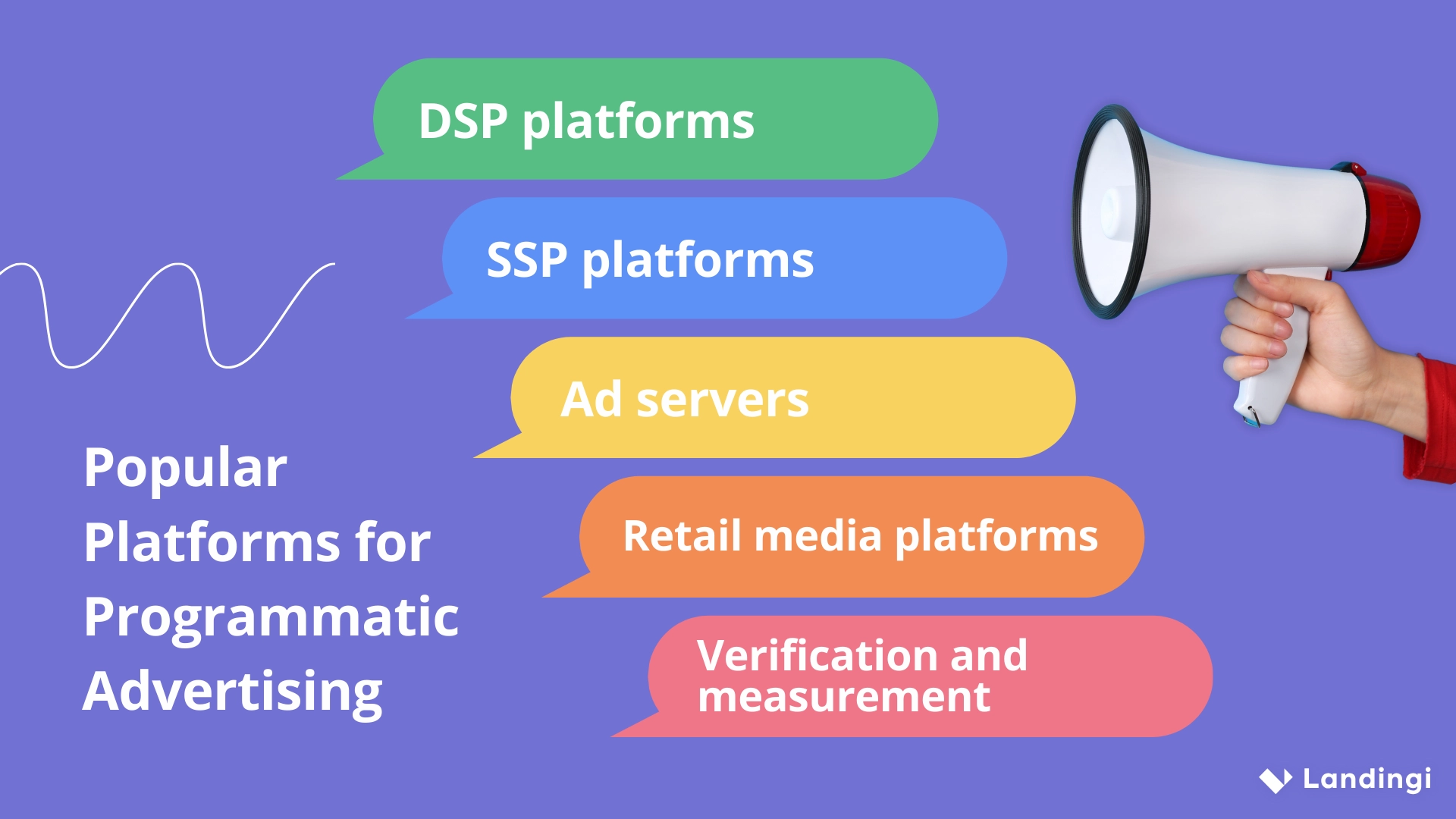
Popular platforms for programmatic advertising fall into functional categories based on how they buy, sell, serve, verify, or measure ad impressions. Each platform category supports a different stage of the programmatic transaction.
DSP platforms manage demand by enabling advertisers to bid on impressions, control budgets, define targeting rules, and optimize delivery. DSP selection determines inventory access, bidding flexibility, data usage, and reporting depth.
SSP platforms manage supply by allowing publishers to offer inventory, define floor prices, and control demand sources. SSP capabilities influence fill rates, yield optimization, and inventory transparency.
Ad servers deliver creatives and enforce delivery rules. Ad servers control frequency capping, creative rotation, and impression logging across channels.
Retail media platforms extend programmatic buying into commerce-driven environments. Retail media inventory uses first-party shopper data to support performance-oriented campaigns.
Verification and measurement platforms validate viewability, detect invalid traffic, and assess brand safety. These tools protect media quality and support reliable reporting.
Evaluate programmatic advertising platforms using the following criteria:
- Inventory access and scale
- Data integration and usage controls
- Technology integrations
- Fee structure and transparency
- Reporting granularity
- Quality and safety controls
Should I Use Programmatic Advertising as a Marketing Expert?
Marketing experts should use programmatic advertising when scale, automation, and data-driven optimization are required. Programmatic advertising supports complex media execution that manual buying cannot sustain efficiently.
Programmatic ad buying fits performance-driven strategies that depend on continuous testing, audience refinement, and measurable outcomes. Teams without tracking infrastructure or analytical capacity face higher operational risk.
Less manual, more measurable. Learn how Landingi helps marketers win with programmatic precision.
What are the Popular Companies That Offer Programmatic Advertising Services?
Programmatic advertising services are offered by technology vendors, media agencies, and hybrid providers. Service scope ranges from platform access to full campaign management.
Technology vendors provide self-service or managed access to DSPs, data tools, and reporting systems. Agencies deliver strategy, execution, optimization, and creative coordination. Hybrid providers combine platform technology with managed services.
What is the Difference Between Programmatic Advertising and Display Advertising?
The difference between programmatic advertising and display advertising lies in the buying mechanism versus the ad format. Programmatic advertising refers to the automated buying method, while display advertising refers to a visual ad format.
Programmatic advertising describes how ads are bought, not what ads look like. Display ads can be bought manually or programmatically.
Programmatic media buying can deliver display, video, native, audio, and connected TV formats. This distinction means display advertising defines creative appearance and placement type, while programmatic advertising defines the transaction and decision logic behind delivery.
A single display ad can appear in both programmatic and non-programmatic campaigns depending on the buying method.
What is the Difference Between Programmatic Advertising and Real-Time Bidding (RTB)?
The difference between programmatic advertising and real-time bidding lies in scope and execution. Programmatic advertising is the broader automation framework, while real-time bidding is one transaction method within that framework.
RTB executes impression-level auctions in real time using open exchange dynamics. Programmatic advertising also includes private marketplace deals and programmatic guaranteed buying, which do not rely on open auctions.
This distinction means RTB always involves an auction, while programmatic advertising can operate through fixed-price or pre-negotiated agreements. RTB represents one buying option inside programmatic buying rather than a standalone advertising model.
What’s the Use of Landing Pages in Programmatic Advertising?
Landing pages serve as the post-click conversion layer in programmatic advertising. Programmatic ads generate demand and clicks, while landing pages determine whether that demand converts into measurable outcomes.
Landing pages connect media execution with outcomes by tying impressions and clicks to conversions, supporting accurate campaign performance analysis.
Landing page platforms such as Landingi support this alignment by enabling fast duplication and editing of pages for different programmatic segments. Landing pages also adapt the offer to audience context. Segmented messaging aligns content with the target audience, campaign intent, and traffic source without changing the media setup.
Testing turns landing pages into optimization assets. A/B experiments on headlines, layouts, and forms identify variants that improve conversion rates and cost efficiency. In Landingi, teams can run A/B tests directly on landing pages to compare variants without rebuilding pages or disrupting ongoing programmatic delivery.
Measurement closes the loop between media and outcomes. Landing page tracking connects impressions and clicks to CPA and ROAS, enabling accurate evaluation of programmatic performance.
Without a conversion-focused landing page layer, programmatic optimization remains incomplete. Media decisions can only improve outcomes when post-click behavior feeds back into audience, creative, and bidding logic.
Don’t waste your ad budget. Close the loop with a landing page built to convert.
Create Effective Landing Pages for Your Programmatic Ads
Programmatic advertising decides who sees the ad and when, while landing pages decide what happens after the click. This post-click layer translates automated media decisions into real business outcomes.
Well-designed landing pages extend the logic of programmatic ad buying process. Message match between ad creatives and on-page content preserves relevance and justifies the bid placed for each impression.
Conversion-focused pages also protect the value of programmatic traffic. Fast load times, clear structure, and a single intent prevent drop-off caused by friction rather than lack of interest.
Optimization does not stop at bidding. Testing landing page variants reveals how different audiences respond after the click and exposes opportunities that media metrics alone cannot show.
When landing page performance feeds back into audience selection, creative decisions, and bidding logic, programmatic advertising becomes a closed optimization loop rather than a one-way traffic source.
If you want a practical way to connect programmatic ads with fast page creation, testing, and optimization in one place, try Landingi as your post-click layer.