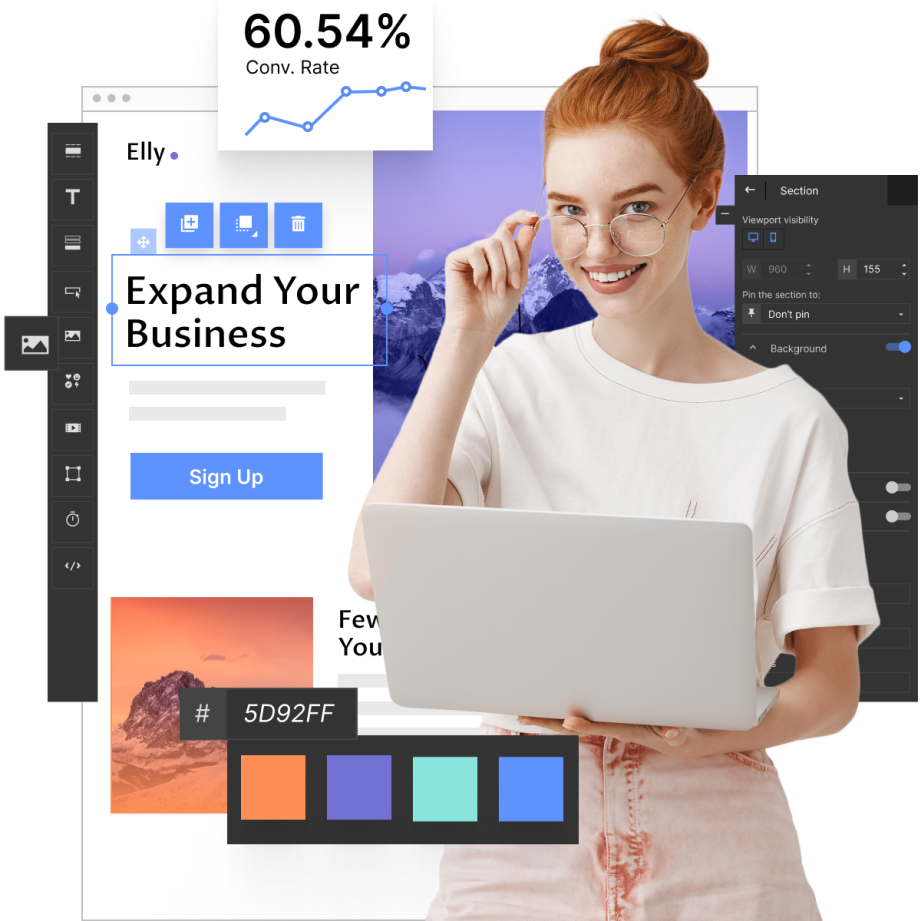
Your landing page is where the conversion happens, but social media is often where the first contact starts. Posts, ads, creator mentions, and profile links can bring people to the page before they search for your brand directly. Before you start posting, decide which social channel will bring the right visitors, what promise they will see in the post or ad, and whether the landing page repeats that promise clearly enough to earn the click.

Why Landing Pages and Social Media Need to Match Before You Promote the Offer
Social media can create demand, but the landing page has to capture it with the same offer, message, and next step. Used together, social posts and landing pages can shorten the path from attention to action: the post earns the click, and the page explains why the visitor should sign up, buy, book, or download.
Understanding the role of landing pages
A landing page, the digital version of a storefront, holds immense potential to convert prospects into customers. It is built around one offer and one next step, such as a signup, demo request, purchase, booking, or download.
For example, a SaaS company promoting a free trial on LinkedIn should send visitors to a page focused on that trial, not to a general homepage. The page should repeat the ad promise, show who the trial is for, and make the signup step visible without forcing users to search for it.
A focused landing page reduces the number of choices on the page and points visitors toward one action, such as buying a product, subscribing to a newsletter, booking a consultation, or requesting a demo.
How social media sends qualified traffic to a landing page
Social media can be a strong traffic source when your audience already uses the channel and the offer fits the format – for example, a visual product on Instagram, a B2B lead magnet on LinkedIn, or a limited-time deal on TikTok.
Comments, poll answers, saves, shares, and ad reactions can show which message people respond to before you commit budget to a landing page campaign. Social engagement is useful when it gives people a clear next step: comment for the guide, click the profile link, register for the webinar, or claim the offer on the landing page.
Social media, with its extensive reach and active user base, serves as a potent tool for social selling, empowering marketers to leverage platforms for lead generation, audience interaction, and customized strategies that drive traffic to landing pages.
Best Practices for Promoting Your Landing Page on Social Media
Use link shorteners
Use shortened links when the full landing page URL is too long for a caption, bio, or direct message. Add UTM parameters before shortening the link, so you can separate traffic from organic posts, paid ads, influencer mentions, and profile links.
Shortened links look cleaner, are more user-friendly, and can even provide valuable click data. Let’s consider an example. Suppose you’re promoting a landing page for a new eBook. Instead of a long, unwieldy link, you could use a short, custom link like ‘bit.ly/eBookDownload’. A custom short link can make the destination clearer, but avoid random-looking URLs in paid ads or cold outreach because they may reduce trust.
Employ social media ads
Social media ads help you test specific audience segments, but each segment should land on a page that matches its intent, pain point, or offer stage.
Tailored ad campaigns on platforms like Facebook and LinkedIn allow you to target users based on location, age, interests, and more. For example, if your landing page promotes pet-safe bug spray, a Facebook campaign could target pet owners who engage with outdoor, camping, or dog-walking content. The landing page should then repeat the safety claim, show proof, and answer the obvious concern: whether the product is safe around animals.
Leverage influencer marketing
Influencer traffic works best when the creator’s audience already has the problem your landing page solves and when the creator can explain the offer in their own words. Remember, influencers should align with your brand and audience. For example, if your landing page is geared towards promoting an eco-friendly product, partnering with an influencer known for advocating sustainability can lead to a surge in traffic and conversions. This way, you’re reaching an audience that’s already interested in what you’re offering. If your landing page promotes Procreate manga brush sets, partner with creators who publish manga tutorials, speed drawings, or brush comparison videos – not just broad lifestyle influencers.
Engage with interactive content
Use quizzes, polls, and challenges when the interaction naturally qualifies the visitor before the click. A quiz can route users to the right offer, while a poll can reveal which pain point should appear first on the landing page. For instance, a fitness brand could create a “30-day challenge” interactive post on Instagram, with the link to the challenge landing page in their bio. Participants have a clear reason to visit the landing page if it contains the challenge calendar, progress tracker, meal plan, or signup form.
Integrate social sharing buttons
Add social sharing buttons only when the landing page contains something people may actually want to share, such as a report, checklist, event, calculator, template, or public challenge. Let’s say a user found your landing page helpful and wishes to share it with their LinkedIn network. A LinkedIn share button removes a step: the visitor does not need to copy the URL, open LinkedIn, and write the post manually.
Offer exclusive discounts
Exclusive discounts work best for ecommerce, event tickets, subscriptions, and limited-time offers, but they can weaken the perceived value of premium B2B products if used too often. For instance, a post that reads “Click the link in our bio for 20% off your first order!” is likely to drive traffic from interested buyers looking to score a deal. On TikTok, the link in bio works only when the video gives viewers a clear reason to leave the feed, such as a discount code, quiz result, waiting list, template, or product drop. A social-only discount gives followers a specific reason to click now instead of saving the post and forgetting about the offer.
Use eye-catching visuals
Use visuals that show the offer, outcome, or problem before the user reads the caption. A product image, before-and-after, short demo, or screenshot of the resource usually works better than a generic branded graphic. If you promote a travel landing page, pair the image with a specific offer: “7-day Portugal itinerary under €900” will usually give users a clearer reason to click than a generic beach photo with “Wish you were here?”
Create click-worthy headlines
A social media headline should make the landing page promise specific before the click: what the visitor gets, who it is for, and why it is worth opening now. For a landing page promoting a charity event, a headline like “Join us and make a difference!” is both engaging and action-oriented, enticing users to click through and learn more.
If you publish video posts, add subtitles that repeat the landing page offer in plain language. This helps users understand the promise even when they watch without sound.
Schedule posts for peak engagement times
Schedule posts when your audience is likely to act, not only when engagement is highest. A lunchtime post may get likes, but an evening post may bring more landing page signups if users have time to compare the offer. For example, you can schedule Facebook posts manually or using a dedicated app. If the landing page promotes an online course for working professionals, test lunchtime posts against evening posts and compare not only clicks, but also completed registrations.
Optimize for mobile users
Because most social media clicks happen on mobile devices, the landing page should load quickly, keep the main CTA above the first long scroll, and make forms easy to complete with a thumb. Slow loading, tiny form fields, hidden CTA buttons, intrusive pop-ups, and unreadable pricing sections can make social traffic bounce before visitors understand the offer.
Encourage user-generated content
User-generated content supports a landing page when it shows real buyers using the product, completing the challenge, attending the event, or sharing the result they got. Encouraging satisfied customers to share their positive experiences on social media can attract potential customers. For example, if customers tag your product in Instagram posts, reuse selected posts on the landing page as social proof and link social ads to that version of the page.
What to Track When Promoting a Landing Page on Social Media
Tracking social traffic to a landing page should help you decide which channel, creative, audience, and offer deserve more budget — and which ones only generate clicks without conversions. Start by measuring traffic quality for each social source: sessions, click-through rate, bounce rate, scroll depth, conversion rate, and the final action that matters, such as a purchase, demo request, signup, download, or event registration.
Use UTM parameters to separate organic posts, paid ads, influencer links, profile bio links, stories, and retargeting campaigns. Then compare social engagement with landing page behavior: a post may get likes and comments but still bring visitors who do not convert. Before increasing the budget, check whether the landing page repeats the same promise as the post or ad, works well on mobile, and has a clear conversion goal.
Pre-Launch Checklist for Promoting a Landing Page on Social Media
Before choosing social channels and formats, answer a few questions that affect budget, workload, tracking, and message fit:
- Have you identified the audience segment for this landing page? Start with the platform where that segment already looks for advice, products, or recommendations, then test one secondary channel instead of spreading the same post everywhere.
- Do you have budget for paid reach, creator collaboration, design variants, tracking setup, and possible retargeting?
- Do you have channel-specific assets ready, such as feed graphics, short videos, story versions, ad copy, UTM links, preview images, and creator briefs?
- Who will handle publishing, comment replies, ad monitoring, creative updates, and landing page changes during the campaign?
- Do you need a project management tool, such as Asana, Jira, or Trello, to track creative versions, publishing dates, owners, approvals, and campaign results?
Once you answer these questions, you can choose the first channel, prepare tracking, and launch a controlled test instead of promoting the landing page everywhere at once. If you are still unsure where to start, begin with the audience segment most likely to convert.