Choosing the right platform for website creation becomes harder once you outgrow simple one-page websites. Carrd is fast and affordable, but many teams eventually need more flexibility, deeper customization, native analytics, and tools that scale across campaigns.
This overview will help you understand where Carrd fits, where it struggles, and which alternative gives your team the strongest path forward as your marketing needs grow.
Key Takeaways
- The article compares the top Carrd alternatives for 2026 based on features, pricing, reviews, and use cases.
- You’ll learn where Carrd works well, where its limits appear, and when a more advanced tool becomes necessary.
- Each alternative – Wix, Landingi, and Unbounce – fits different goals, budgets, and team sizes, helping you choose the best match for your work.

Why Should I Consider Carrd Alternatives?
You should consider Carrd alternatives when your projects require more features, deeper analytics, or the ability to scale beyond a single page. Carrd is great for creating simple sites, link-in-bio pages, or one page sites for a YouTube channel or personal online presence. But it struggles with advanced needs like A/B testing, dynamic content, integrations, and options to sell products or run e-commerce workflows.
Carrd stays strong for beginners, but teams often move on when they need:
- Full control over design elements to build a more stunning website
- Built-in analytics beyond basic visitor counts
- Scalable campaign setups, not just single-page outputs
- Flexibility to connect with CRMs, run experiments, or manage multiple links
- A website builder that supports enterprise workflows, not only simple sites
These gaps appear consistently in user reviews across G2, Captera, and Reddit, pointing to limited customization, performance issues with images, and no advanced optimization tools.
Move your pages to Landingi with expert support and free imports to get you started!
What are the Best Carrd Alternatives?
The best Carrd alternatives are Wix, Landingi, and Unbounce when it comes to page creation. These tools offer more flexibility, automation, and scalable website creation tools.
Here is a high-level comparison.
| Carrd Alternative | Stand-Out Feature | Cost | Free Plan |
|---|---|---|---|
| Wix | Full website builder with many design options | $0–$159/mo | Yes |
| Landingi | Advanced automation + A/B tests + EventTracker | $0–$1,150/mo | Yes |
| Unbounce | AI optimization + Smart Traffic | $99–$249/mo+ | No |
This article will now review each tool, including ratings, pros and cons, pricing, and how each compares to Carrd.
3 Top Carrd Alternatives in 2026
The top Carrd alternatives balance ease of use with advanced features and better scalability.
Below you’ll find which platform fits which type of user.
1. Wix
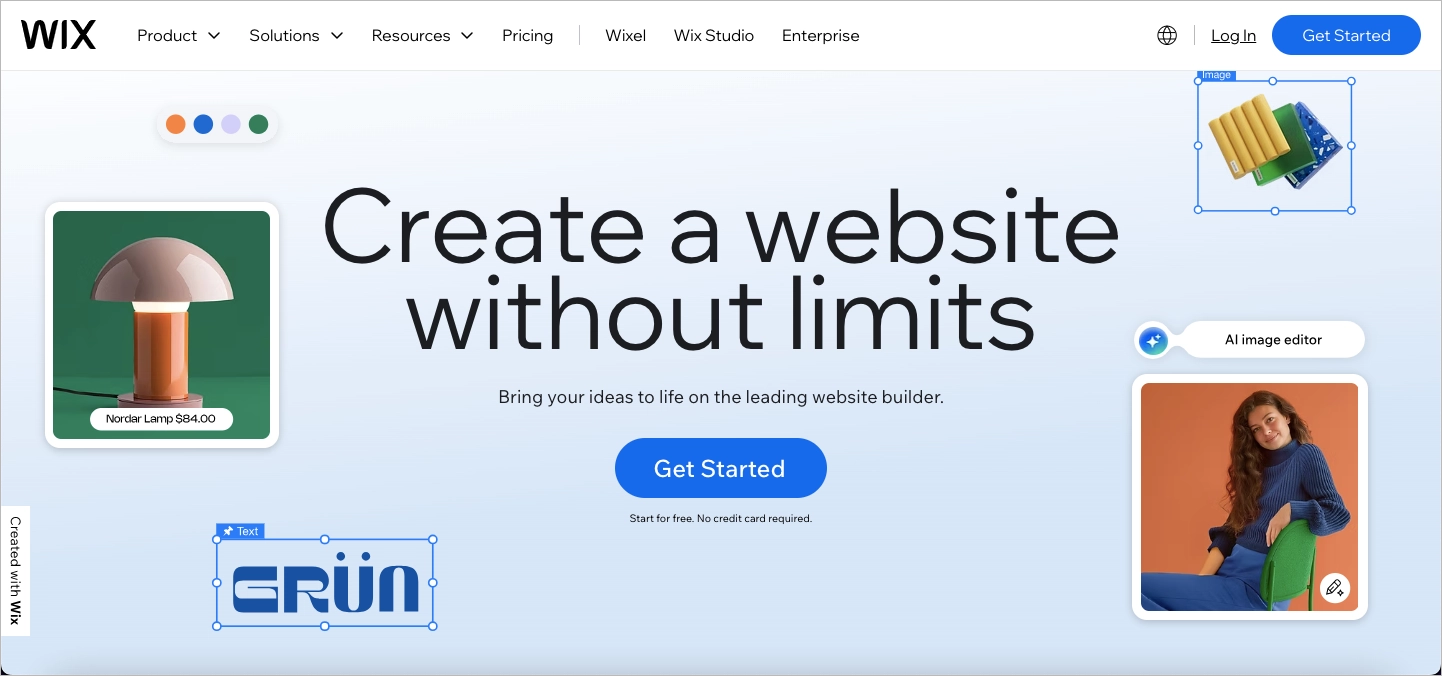
Wix is the best Carrd alternative for users who want a full website builder with hundreds of templates and flexible design elements. It works well for beginners, yet it supports complex website creation for small businesses, freelancers, and creators who want more features than Carrd offers. Wix offers visual freedom, a large template library, and tools to publish anything from one page websites to multi-page sites or online stores.
Pricing
Wix pricing ranges from a free forever plan to premium tiers from $17 to $159/month. Plans differ by storage, features, and the number of collaborators. Hosting, SSL, and a growing AI builder are included.
Key Features
Key features include a user-friendly interface, drag-and-drop editor, nearly 950 templates, and hundreds of integrations. Wix also offers Wix AI Website Builder, which auto-generates layouts based on prompts. Teams can add online stores, bookings, blogs, and more through built-in modules. In 2025, Wix expanded collaboration through Wix Studio, allowing real-time co-editing.
Notable features include:
- Pixel-perfect editing with Smart Grid
- Vast selection of site and section templates
- Built-in CRM and automations
- App Market with 350+ apps
- SEO enhancements and integrations with GA4, Meta, TikTok
- Hosting + SSL included in all plans
This makes Wix a robust platform for teams that want more flexibility than Carrd.
Best For
Wix is best for users who want a website builder capable of producing both landing pages and full websites, with strong templates and fewer technical skills required.
G2, Trustpilot, Capterra Ratings
- G2 – 4.2/5
- Trustpilot – 3.9/5
- Capterra – 4.4/5
What Advantages Do Users Point Out?
Users often point out that Wix is easy to use and makes building a nice-looking site feel simple, even for people with no technical background.
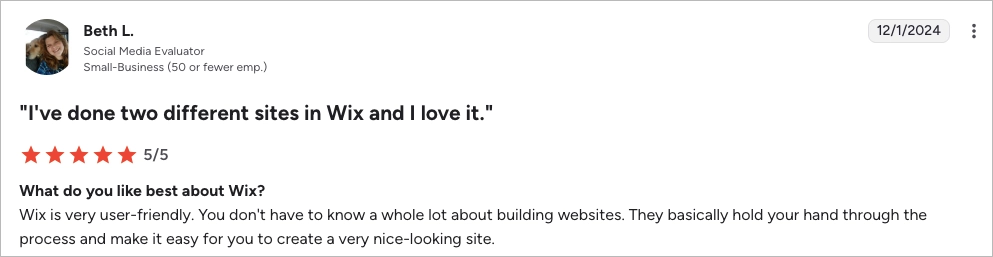
Many appreciate how the platform guides them through the process and helps them create polished pages without much effort. They also value the large template library, flexible design options, and the ability to add blogs or online stores without switching tools.
What Disadvantages Do Users Point Out?
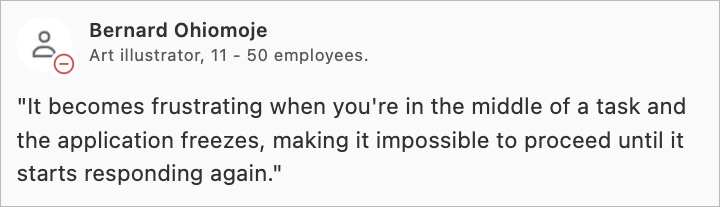
At the same time, several users report frustrations when the editor slows down or freezes in the middle of a task, forcing them to wait before they can continue. Others mention that mobile layouts sometimes require extra fixes and that managing billing or renewals can feel confusing. A few users also express that Wix lacks the funnel-building depth of tools designed specifically for landing page campaigns.
My Opinion
Wix’s biggest strength is the creative freedom it gives you. If you want a good-looking site without touching code, Wix makes that easy, and it handles everything from simple pages to digital products and small e-commerce setups. For solo creators or small businesses, that mix of freedom and guidance is hard not to like.
The downside shows up the moment you try to work like a marketer instead of a hobbyist. Wix can feel heavy, slow, and a bit chaotic when you need to produce a lot of landing pages quickly or keep campaigns consistent across many assets. It’s a website builder first and a marketing tool second – which is fine, as long as you’re not expecting it to behave like a platform built for high-volume marketing work.
Comparison: Carrd vs Wix
Carrd is better for creating simple, fast one page sites with a custom domain at a very low cost. But Wix outperforms Carrd in flexibility, template quality, and access to extra features.
Comparison Table: Carrd vs Wix
| Feature | Carrd | Wix |
|---|---|---|
| Ease of use | Very easy | Easy |
| Design flexibility | Limited | High |
| Pages | Single page | Unlimited pages |
| Templates | 100+ | 900+ |
| Integrations | Few | 350+ App Market |
| E-commerce | Basic embeds only | Full e-commerce features |
| Analytics | Basic | Full analytics + GA4 support |
| Pricing | $9–$49/year | $0–$159/month |
2. Landingi
Landingi is the best Carrd alternative for teams that need more features, automation, and scalable workflows. Unlike Carrd, which focuses on creating simple one page websites, Landingi is a platform built for marketers who need all the tools to build, test, and optimize landing pages and web pages at scale. It supports solo creators, small businesses, agencies, and enterprise teams handling many campaigns at once.

Pricing
- Free plan: $0/month – 5 pages, 100 visits/month
- Lite: $24/month – unlimited conversions, 5K visits – with 14-day free trial
- Professional: $57/month – 50K visits, 10 domains, A/B testing – with 14-day free trial
- Enterprise: $1,150/month – unlimited resources and SSO – with 14-day free trial
Key Features
- Pixel-perfect website builder with full drag-and-drop control
- 400+ templates for landing pages, pop-ups, and sections
- EventTracker for built-in analytics on scrolls, clicks, video views
- A/B tests (server-side)
- Smart Sections for mass-updating many pages
- Programmatic pages for dynamic content at scale
- AI Assistant for copy and SEO
- Reverse proxy, PHP export, WordPress plugin
- Multi-language personalization and dynamic text replacement
- Advanced integrations with CRMs, ad platforms, and Google Analytics
- 170+ tools connected through native integrations or Zapier
Enterprise features:
Landingi’s Enterprise tier adds the security, control, and collaboration features large organizations need. Enterprise SSO, audit logs, and domain whitelisting strengthen access management and compliance, while dedicated workspaces, subaccounts, and granular permissions keep teams and clients neatly separated across many projects.
EventTracker brings built-in behavioral analytics, tracking clicks, scrolls, and interaction, so teams can optimize performance without extra tools. Enterprise customers can also request custom development and get fast support through a dedicated Slack channel. Combined with GDPR, WCAG, and DORA compliance, these features make Landingi a strong fit for teams that need more than a standard website creation platform.
Best For
Landingi is best for marketers, agencies, and enterprises that create many campaigns, need fast iteration, and want built-in optimization.
G2, Trustpilot, Capterra Ratings: Landingi
- G2 – 4.5/5
- Trustpilot – 4.0/5
- Capterra – 4.8/5
What Advantages Do Users Point Out?
Users often say that Landingi is easy to learn and lets them publish landing pages very quickly, even without technical skills. They appreciate having full control over the layout, plenty of useful templates, and a builder that feels faster and more intuitive than many other landing page tools.

Several reviewers also note that support is responsive and helpful during setup, and that the platform feels affordable compared to larger competitors. Many call out how convenient it is to build pages in minutes and rely on built-in tools like A/B testing and EventTracker to improve results.
What Disadvantages Do Users Point Out?
Some users mention that certain design tasks – especially mobile layouts – can require extra manual adjustments. Others point out that the editor can slow down on very large or complex pages, and that more advanced questionnaires or multi-step forms may require external tools.
My Opinion
Landingi’s biggest strength is how fast you can work without outgrowing the platform. It’s simple enough for someone building their first landing page, yet it has the muscle and structure that agencies and enterprise teams need when they manage dozens or hundreds of pages.
The drawback is that full creative freedom comes with responsibility: mobile layouts often need a careful final pass. Still, that’s a familiar trade-off with any pixel-perfect editor – more control usually means a bit more polishing.
Boost your brand with a professionally designed landing page tailored to your needs.
Comparison: Carrd vs Landingi
Carrd works well for quick, simple one-page sites or basic bio pages, but it’s not built for growing marketing needs. Landingi lets teams create and optimize many landing pages, use dynamic content, run A/B tests, and track performance with built-in analytics all while integrating with more tools and supporting structured workflows.
Comparison Table: Carrd vs Landingi
| Feature | Carrd | Landingi |
|---|---|---|
| Ease of use | Very easy | Easy |
| Pages | One page websites | Unlimited landing pages |
| Templates | ~100 | 400+ |
| Analytics | Minimal | Built-in analytics + EventTracker |
| A/B tests | No | Yes |
| Automation | No | Smart Sections + programmatic pages |
| E-commerce | Embeds only | Buttons + integrations |
| Integrations | Simple + Zapier | 170+ integrations |
| Pricing | $9–$49/year | Free–$1,150/mo |
| Custom domain | Yes | Yes |
3. Unbounce
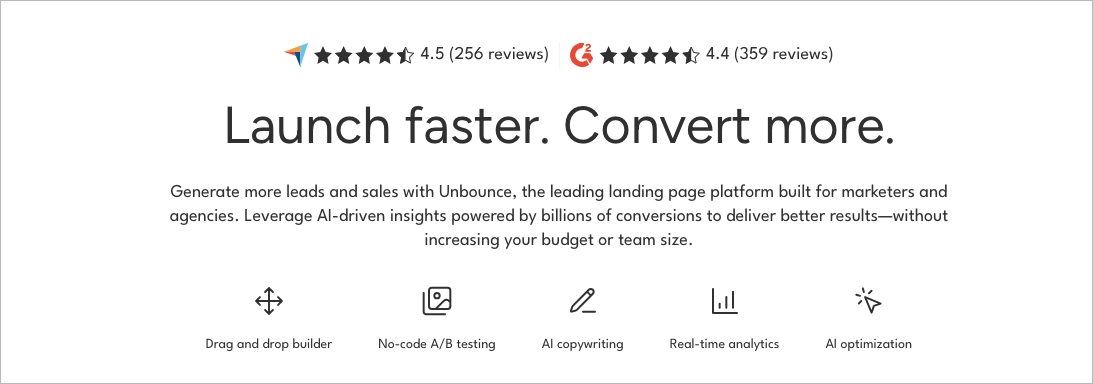
Unbounce is a strong Carrd alternative for teams focused on paid campaigns, optimization, and experimentation. It offers advanced testing tools, AI-driven routing, and a builder designed for marketers who want deep control without engineering support. Compared to Carrd’s simplicity, Unbounce delivers complex functionality but at a much higher cost.
Pricing
Unbounce pricing starts much higher than Carrd or Landingi:
- Build: $99/month
- Experiment: $149/month
- Optimize: $249/month
- Enterprise: Custom
Plans differ by monthly traffic limits, domains, number of users, and access to A/B testing or Smart Traffic.
Key Features
- Drag-and-drop website builder for landing pages
- A/B testing with unlimited variants (from Experiment plan)
- Smart Traffic, an AI system that routes visitors to the best-performing variant
- Dynamic Text Replacement for higher ad relevance
- 100+ templates optimized for PPC
- Custom HTML/CSS/JS
- Pop-ups and sticky bars
- Fast hosting, SSL, and 1,000+ integrations (via Zapier and native options)
Best For
Unbounce is best for performance-driven marketing teams that run paid advertising and prioritize conversion experiments over broader website creation.
G2, Trustpilot, Capterra Ratings: Unbounce
- G2: 4.3/5
- Capterra: 4.5/5
- Trustpilot: 1.9/5
What Advantages Do Users Point Out?
Many users praise Unbounce for its strong focus on conversion optimization. They often mention that the drag-and-drop builder feels intuitive and fast, making it easy to create polished, high-performing landing pages without coding.
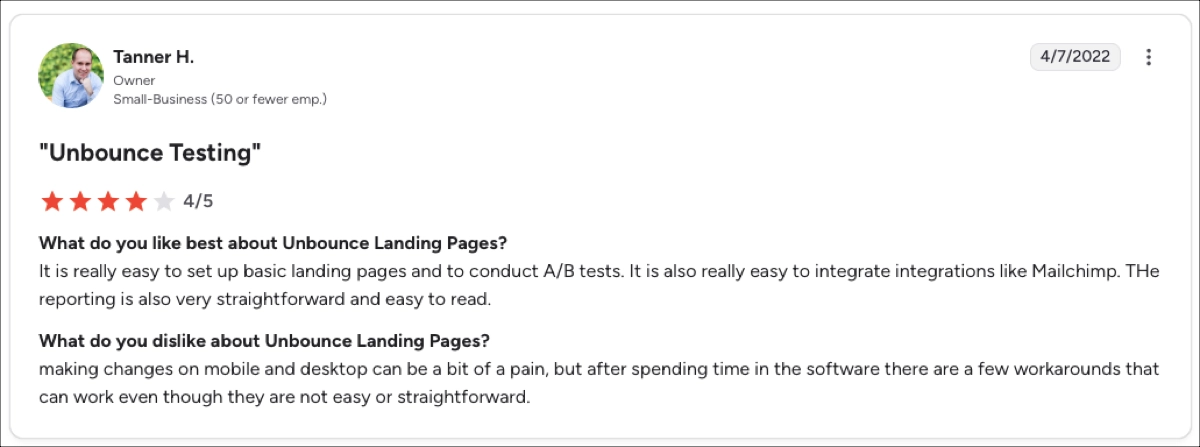
Reviewers also highlight the value of A/B testing, Smart Traffic, and dynamic text replacement, as well as the ability to integrate quickly with CRMs and common marketing tools. For PPC marketers, these features can make a noticeable difference in campaign performance.
What Disadvantages Do Users Point Out?
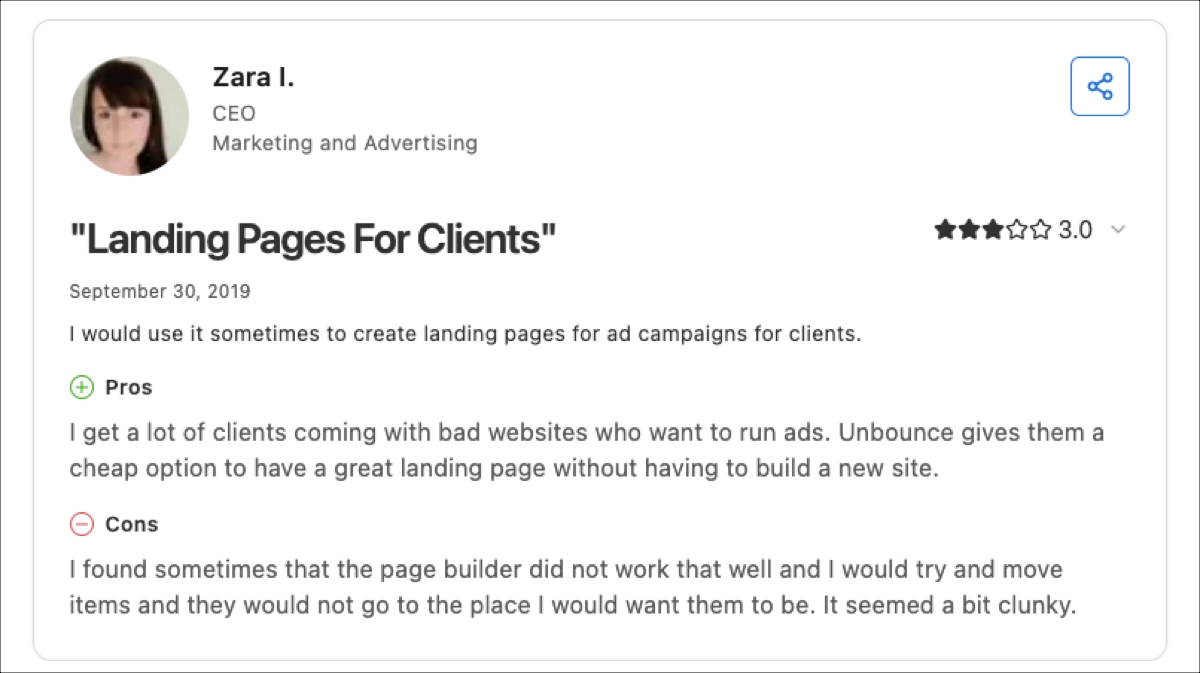
Several users note recurring pain points. Mobile responsiveness is a common struggle, with some reviewers saying it requires more effort than expected. Others mention periodic slowdowns or freezes in the editor, which interrupt workflow during busy campaigns. The cost is another frequent complaint – many feel the pricing is high compared to other builders, especially when combined with billing frustrations or unexpected renewals. And for teams without technical experience, the initial setup can feel more complex than they anticipated.
My Opinion
Unbounce’s biggest strength is its obsession with optimization. The testing engine, Smart Traffic, and conversion-focused tools make it one of the few builders that genuinely helps you squeeze more performance out of every click. If your world revolves around PPC and constant experimentation, Unbounce delivers exactly what you need.
The downside is that you pay heavily for that focus. The jump from Carrd’s pricing to Unbounce’s monthly fees is dramatic, and for many teams it’s hard to justify unless testing is the core of their strategy. It’s a great optimizer, but not a great all-rounder and the cost becomes a real barrier if you’re not running campaigns at scale.
Comparison: Carrd vs Unbounce (Including Pricing)
Carrd is easy, fast, and highly affordable. It is perfect for people who want a user friendly tool to build one page sites, use a custom domain, and publish a new website with minimal cost. Unbounce is the opposite: focused on CRO, testing, and conversion lift.
Comparison Table: Carrd vs Unbounce
| Feature | Carrd | Unbounce |
|---|---|---|
| Ease of use | Very easy | Easy but advanced |
| Pages | One-page websites | Unlimited landing pages |
| Optimization tools | None | A/B tests + Smart Traffic |
| Templates | 100+ | 100+ PPC-optimized |
| Analytics | Basic | Needs GA + internal insights |
| Integrations | Few | 1,000+ |
| Pricing | $9–$49/year | $99–$249/month |
| Best for | Simple sites | Performance-driven campaigns |
Choose the Best Carrd Alternative
The right Carrd alternative depends on how much flexibility and scalability you need. Wix works well when you want a broader website builder, and Unbounce fits teams focused on testing above everything else. Landingi, however, offers the most balanced approach – easy to start, powerful as you grow, and equipped with the workflows agencies and enterprise teams rely on.
Landingi brings creation, analytics, automation, and campaign governance into one platform, making it a strong upgrade from simple one-page tools. If you want a solution that grows with your business and helps you build and optimize pages fast, Landingi is the best choice. Start building with Landingi for free.