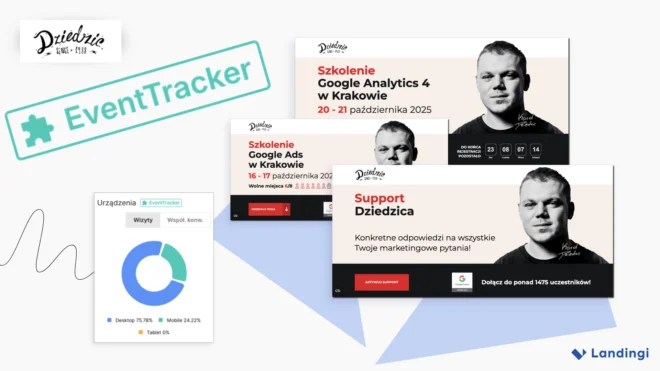

Who said you need a CMS, a developer, and a weekend lost to plugins to build a real website?
For Karol Dziedzic, the answer was simple: you don’t. Instead of going down the usual WordPress road, Karol built his entire online presence using landing pages and turned them into a fully functional, professional microsite.
No templates to wrestle with or late-night updates. Just speed, control, and pages designed to convert.
Karol Dziedzic is a digital marketing strategist known for combining SEM, SEO, and analytics to maximize ROI for his clients. He’s an experienced Google Ads and Analytics expert, a trainer who has worked with over 1,000 companies, and a lecturer at Collegium da Vinci and AGH in Poland.
Karol’s background shaped his expectations for a website. It had to look polished, reflect his personal brand, and, most importantly, be easy to update whenever a new idea, training, or offer came up.
Traditional CMS platforms didn’t fit that vision.
The Problem: When a CMS Slows You Down
Most personal websites start the same way: choose a CMS, install plugins, tweak themes, and hope nothing breaks after the next update.
For Karol, that setup felt like friction. Simple changes took too long. Flexibility came at the cost of complexity. And control over structure, SEO, and conversions was buried under layers of settings and add-ons.
He didn’t need a complicated system. He needed a site that could move as fast as his ideas.
The Idea: Turning Landing Pages Into a Website
Instead of forcing a CMS to behave the way he wanted, Karol flipped the model.
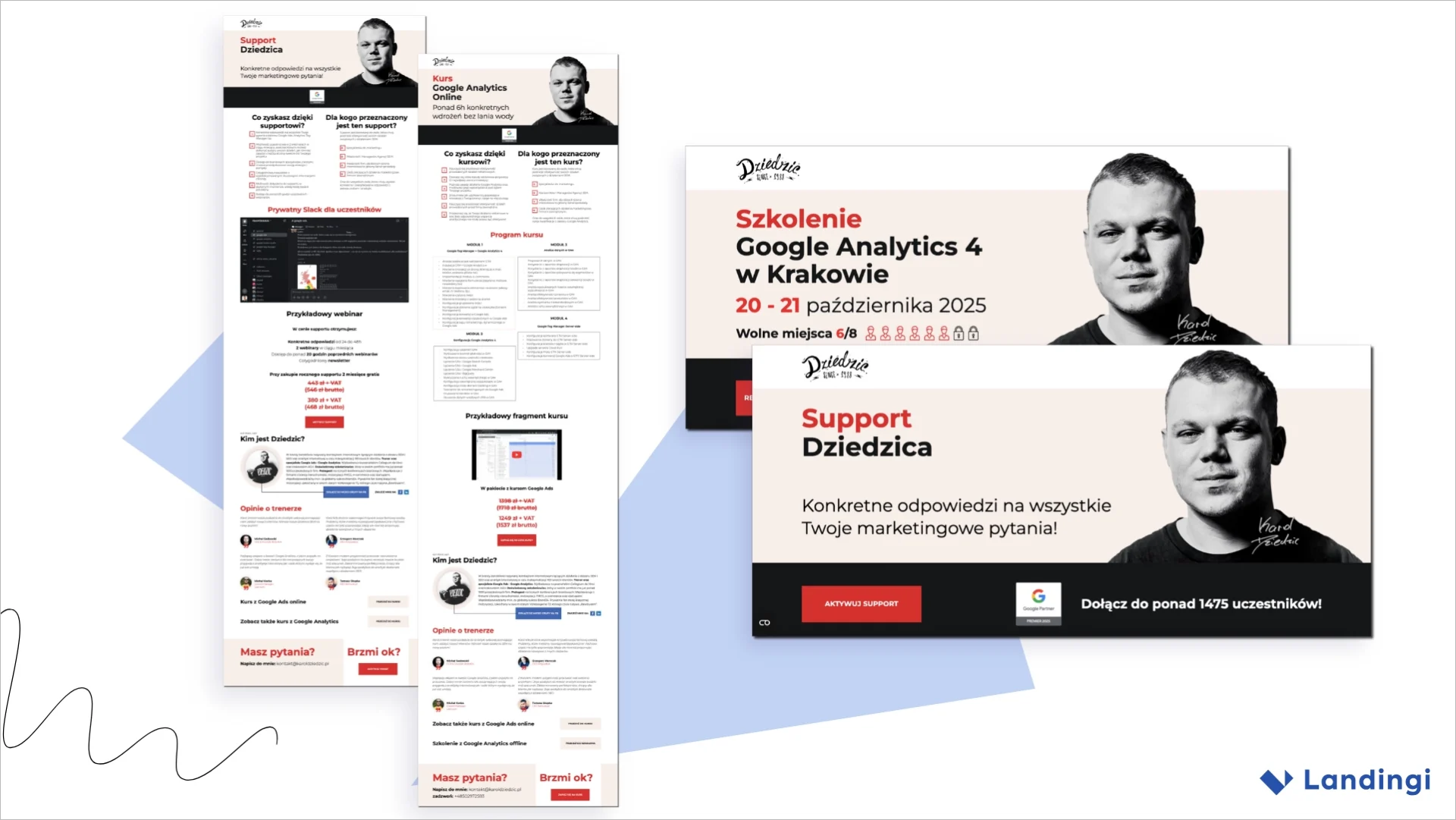
He treated landing pages like building blocks. One page for his homepage. Separate pages for trainings. Dedicated pages for policies, contact, and newsletters. All built in the same editor, using the same visual system.
Linked together, those pages formed a microsite: a focused website built for clarity, speed, and action. No CMS required.
Landingi allowed me to build a complete website in just a few days without frustration or never-ending setup. I had full control – from headlines to forms – without asking anyone for tech support.
Karol Dziedzic
The Setup: How the Microsite Actually Worked
Karol’s homepage looks like a classic landing page, and that’s intentional. The hero section introduces him instantly: name, face, expertise, and a clear call to action. Trust signals, including certifications and social proof, appear early, where they matter most.
From there, visitors can move naturally through the site. Training offers live on their own landing pages, each built around one goal: conversion. Navigation connects everything smoothly, so the experience feels like a single site, not a collection of standalone pages.
Even the “boring” essentials privacy policy, terms, confirmations are landing pages too. The result is consistency from top to bottom, both visually and structurally.
The Tools That Made It Scalable
What made this setup work wasn’t just the idea; it was the execution.
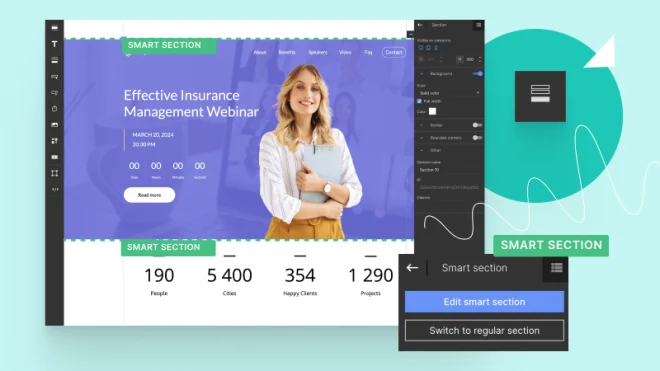
Reusable sections kept headers and footers consistent across every page. Forms were simple, branded, and connected directly to CRM and email tools. Thank-you pages weren’t an afterthought; they were part of the flow, guiding visitors toward the next step.
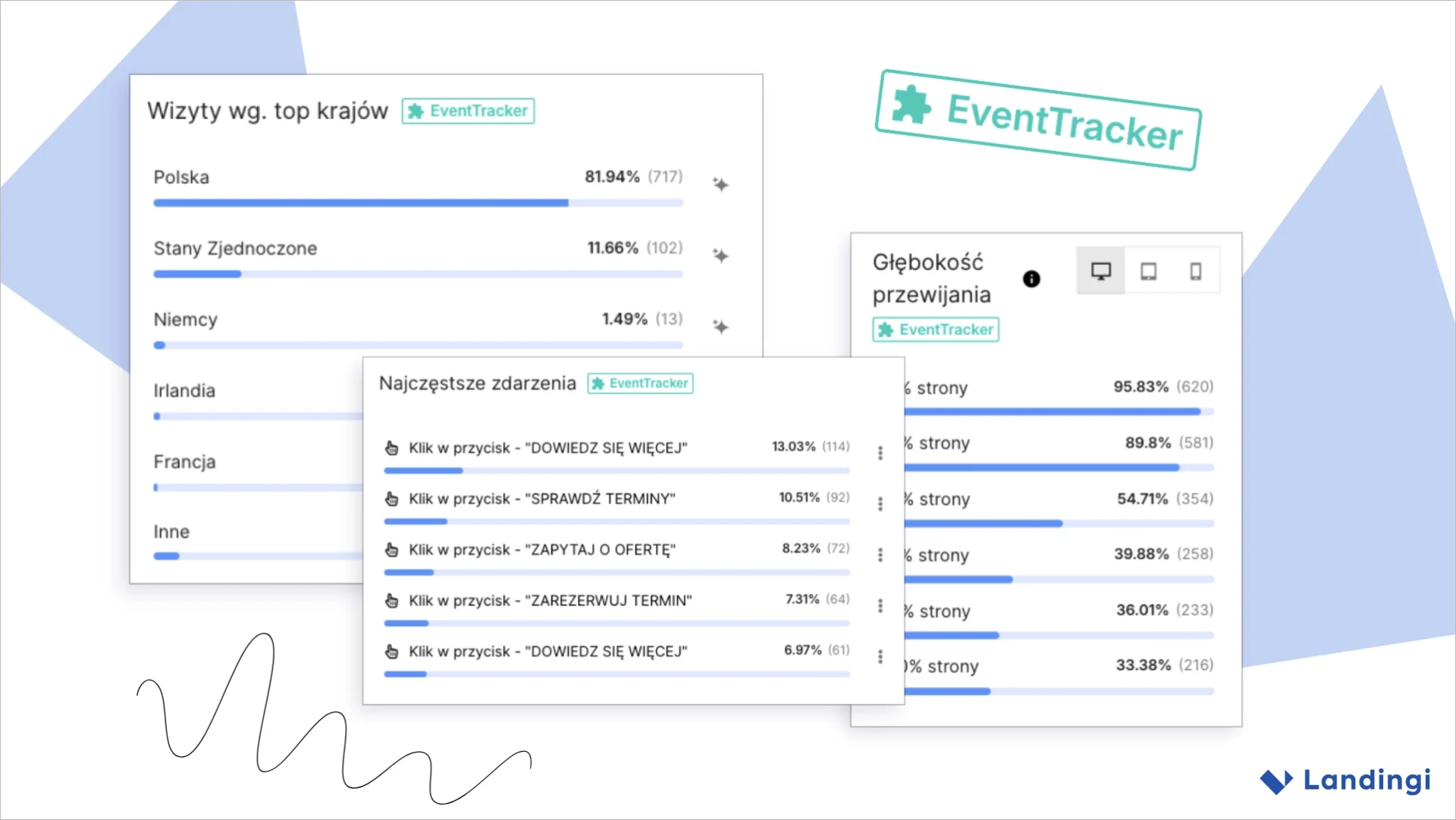
EventTracker showed me how people actually use my site. I didn’t just see numbers, I saw behaviors: where they clicked, where they dropped off. That made it easy to improve my pages and see results fast.
Karol Dziedzic
Most importantly, Karol could see how people actually used the site. Clicks, scroll depth, form behavior – real data replaced guesswork. When something didn’t work, he adjusted it and saw the impact immediately.
The Payoff: Speed, Control, and a Site That Converts
Karol created a system. Pages could be launched in hours, not days. Updates took minutes. Every element served a purpose, and every page was built to support action, not just exist online.
Instead of maintaining a CMS, Karol focused on refining offers, improving messaging, and responding quickly to what his audience needed. The site grew alongside his business, without ever getting in the way.
What You Can Borrow From This Case
If you want speed without sacrificing quality, modular landing pages can replace an entire website. If consistency matters, reusable sections beat patchwork design. And if conversions matter, pages built with intent will always outperform pages built by habit.
Sometimes, the simplest setup turns out to be the most powerful one.
Because a website doesn’t need to be complex to be effective. It just needs to work – fast, clearly, and on your terms.
Karol Dziedzic used the following Landingi features to reach their goals. Curious to learn more?
EventTracker
Landing Page Builder