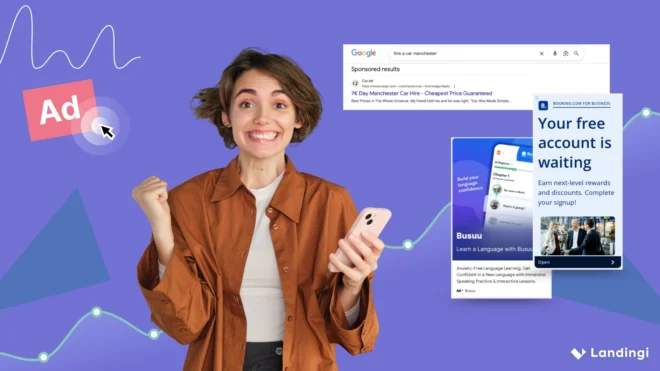

The difference between display ads and search ads comes down to how and when they reach users. Display ads are visual, shown across websites and apps to spark interest. Search ads appear in Google’s search results when someone types a relevant query – perfect for capturing users ready to take action.
If we compare display ads vs search ads cost, display tends to be cheaper per impression, while search delivers more value per click. Both ad types work best when used together with the right strategy and a strong landing page behind every click.
Key facts:
- Search ads convert better – 3.17% average conversion rate vs 0.46% for display ads
- Display ads win on reach: they appear on over 2 million websites and reach 90% of internet users
- The best ROI comes from combining both, using display for visibility and retargeting, and search for capturing ready-to-buy users
- Landing pages are critical for both ad types – they turn clicks into conversions by matching the message of your display or search ad.
Learn when to use each, what they cost, and how to make them work together effectively.

What is Display Ads?
Display advertising is defined by Google as visual ads shown across websites, apps, and online platforms within the advertising networks, such as Google Display Network (GDN), designed to reach people based on their interests and online behavior. It’s used to build brand awareness, re-engage potential customers, and support your digital marketing funnel, even when users aren’t actively searching.

Also called banner ads, programmatic display, or just display ads, this ad type works differently from search advertising, which targets specific keywords in search engine results. Display ads appear where your audience spends time – not just when they search.
The most common display ad formats include:
- Banners – static or animated image placements
- Responsive display – auto-adjusting creatives for different screen sizes
- Rich media – interactive or motion-based ads
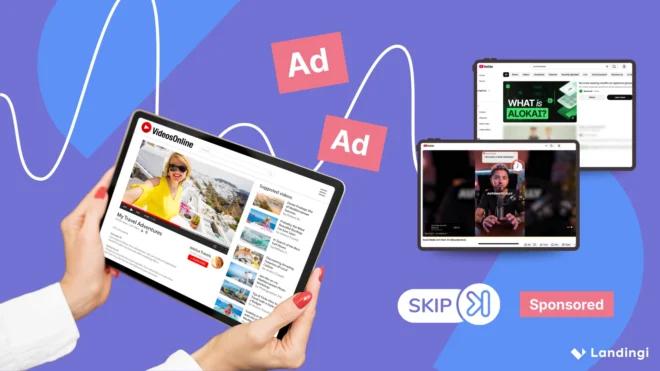
- Video placements – short video ads on websites, YouTube, or apps
Whether you’re combining search and display ads or running standalone display campaigns, these visual formats help you stay visible, relevant, and top-of-mind across the web.
What is Search Ads?
Search advertising is defined by Google as paid ads that appear in Google search results when users enter queries related to your chosen keywords. It works best when you want to reach people who are actively searching for your product, service, or offer.
Also known as paid search, PPC search ads, Google Search Ads, or search engine advertising, these ads show up above or below organic search results, targeting users at the exact moment they express intent.
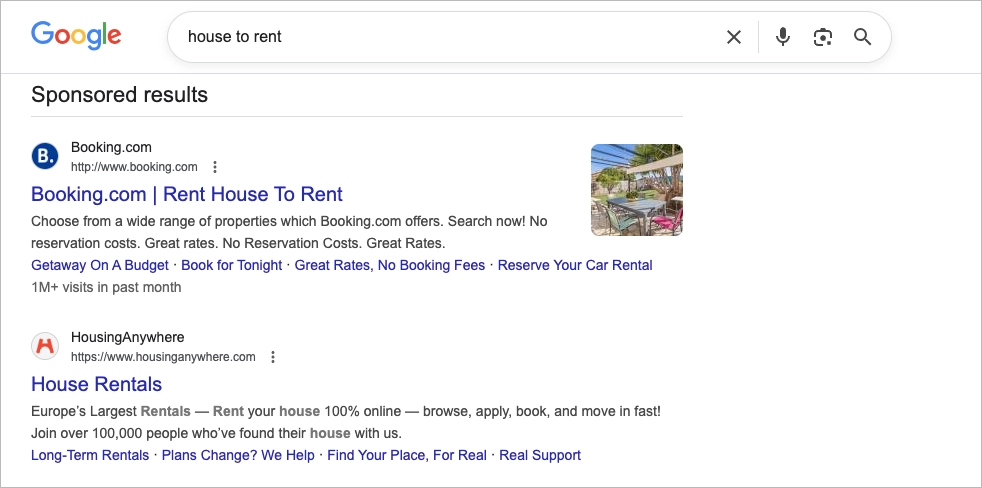
Each search ad campaign is built around four core elements:
- Keyword – the search terms you want your ad to trigger for
- Match type – how closely a user’s query must match your keyword
- Ad copy – the text users see in search engine results
- Landing page – the destination where users are taken after clicking
Unlike display ads, which focus on visibility, search ads work by capturing demand already in motion, making them one of the most efficient tools for short sales cycles and bottom-of-funnel conversions.
5 Key Differences between Display Ads and Search Ads
The core difference between display ads and search ads lies in how and when they reach your audience. Search ads show up when people are actively looking for something on Google. Display ads appear when people are simply browsing the web, watching videos, or checking the weather – based on who they are, not what they’re searching for.
Both ad types are part of Google Ads, but they run on different networks: Search Network vs Display Network. They differ in intent, format, targeting, pricing, and campaign goals. Understanding those differences is key to building an effective digital advertising strategy.
1. User Intent
Search ads target users with clear, high intent. These people are actively searching for a product, service, or answer, making them ready to click and convert.
Display ads target users who aren’t searching at all. Instead, they’re shown based on interests, behavior, or past visits, which is great for building awareness or re-engaging.
Scale your campaigns effortlessly with Programmatic Landing Pages that generate hundreds of personalized landing pages in minutes.
2. Targeting
Search engine advertising uses specific keywords and match types to decide when your ad appears in Google’s search results.
Display advertising relies on audience targeting, based on demographics, online behavior, custom intent, and remarketing lists.
3. Ad Format
Search ads are text-based, with optional ad extensions like callouts or sitelinks. They look similar to organic search engine results, but are labeled as ads.
Display ads are visual, ranging from static banners to interactive ads or video ads, shown across websites, YouTube, and apps.
4. Pricing Model
Search ads follow a PPC (pay-per-click) model, where you only pay when someone clicks.
Display ads may run on PPC or CPM (cost per thousand impressions), depending on your objective, clicks or views.
5. Campaign Goal
Search ad campaigns are built for immediate conversions, like purchases, sign-ups, or leads.
Display campaigns are better for building brand awareness, nurturing leads, and retargeting potential customers who didn’t convert.
| Feature | Search Ads | Display Ads |
|---|---|---|
| User Intent | Actively searching on Google | Browsing, not looking for anything specific |
| Targeting | Keywords + match types | Interests, demographics, behavior, retargeting |
| Ad Format | Text ads | Visual: banners, video, rich media |
| Pricing Model | PPC (pay-per-click) | PPC or CPM (cost-per-thousand-impressions) |
| Campaign Goal | Immediate action: leads, sales, sign-ups | Awareness, retargeting, staying top-of-mind |
| Network | Google Search Network | Google Display Network |
| Ad Appearance | On Google’s search engine results pages | Across websites, YouTube, Gmail, mobile apps |
Display Ads vs Search Ads Cost Comparison
Digital advertising costs vary depending on how you’re charged (CPC, CPM, CPA), which network you’re using, and how competitive your industry is. According to data from WordStream, StoreGrowers, and Google Ads benchmarks, the average CPC for search ads is around $2.69, while display CPCs often stay below $0.63.
When we look at CPM, display wins on efficiency, averaging $2–$4, while the effective CPM for search can exceed $30–$40. As for CPA, search still leads, especially in eCommerce, where typical conversion costs range from $45 to $50, compared to $65 to $75 on display.
Here’s how that plays out across a few key industries:
| Industry | Avg. CPC (Search) | Avg. CPM (Display) | Avg. CPA (Typical) |
|---|---|---|---|
| Retail & eCommerce | $1.16 – $2.50 | $2 – $4 | $45 – $65 |
| Legal Services | $6.00 – $12.00+ | $6 – $15 (premium) | $90 – $150+ |
| SaaS / B2B | $3.00 – $6.00 | $4 – $8 | $80 – $120 |
| Health & Wellness | $2.00 – $4.00 | $2 – $5 | $60 – $90 |
| Finance & Insurance | $5.00 – $10.00+ | $5 – $12 (niche) | $100 – $140 |
Search ads usually have higher CPC but stronger purchase intent, while display ads often have lower CPM and scale, making both essential in a full-funnel paid strategy.
When should I Use Display Ads instead of Search Ads?
Use display ads when your goal isn’t immediate conversions, but visibility, awareness, or retargeting. Display ads work best when you’re launching a new product, entering a new market, or want to keep your brand visible across relevant websites, YouTube, or apps. They also wins when you’re retargeting users who visited your site but didn’t convert. And if you’ve got strong visuals – product images, promo videos, or branded creatives – display advertising lets you actually show your offer, not just describe it in text.
It’s also a better fit when you want to reach broader or niche audiences without relying on specific keywords. With targeting based on demographics, browsing habits, or intent signals, you can find people before they find you.
When should I Use Search Ads instead of Display Ads?
Use search ads when your audience is actively looking for something specific and you want to be exactly where they’re searching. These ads appear in Google’s search results when someone types in keywords related to your offer, which means they already have intent to buy, sign up, or take action.
They’re the better choice when your goal is driving conversions like purchases, leads, demo requests, or bookings. If you’re working with a tight budget, search is often more efficient too: every click comes from someone who searched for something relevant, making it easier to get measurable ROI.
Search ads also work well for time-sensitive offers or services with a short sales cycle, where users are ready to act now. They’re ideal when you know what keywords matter and want to appear above organic search results.
Display Ads vs. Search Ads: Which Is Better for Real Estate?
Search ads are usually more effective for real estate when your goal is to generate direct leads from high-intent buyers or renters. They show up when someone actively searches for phrases like “2-bedroom apartment in Chicago” or “houses for sale near me,” which makes them ideal for driving traffic to listings, contact forms, or booking pages.
That said, display ads play a key supporting role, especially when you’re marketing new developments, luxury properties, or trying to build brand presence in a specific area. With strong visuals, display campaigns can grab attention, increase visibility on relevant websites, and retarget people who’ve already visited your site.
For most real estate marketers, the best results come from combining both: use display ads to attract and warm up interest, then capture that intent with search ads when users are ready to take the next step.
Winning ads start with winning landing pages. Get more from every search click!
Display Ads vs. Search Ads: Which Is Better for eCommerce?
Search ads are generally more effective for eCommerce when you’re focused on driving immediate sales from users who are ready to buy. They target people actively searching for specific products, like “wireless earbuds under $50” or “best running shoes” making them ideal for high-intent traffic and quick conversions.
However, display ads are great for generating demand, especially for new or visually appealing products. They’re perfect for retargeting, upselling, or showcasing seasonal deals through banners or video ads across the Google Display Network. They also help build awareness during peak shopping periods when consumers are browsing but not yet ready to commit.
Display Ads vs. Search Ads: Which Is Better for Dropshipping?
Display ads are often a better fit for dropshipping, especially when you’re launching a new product and need to generate demand from scratch. Since dropshipping relies heavily on impulse buys and trending products, visual formats like banners or video ads help grab attention and drive clicks from people who weren’t actively searching.
That said, search ads can still work, but mostly for proven, high-demand items where people already know what they want. In those cases, you’re competing on keywords, price, and delivery time, which can drive up PPC costs quickly if you’re not careful.
If you’re running a dropshipping store, the winning move is usually to start with display ads for awareness and retarget with both display and search ads once users have interacted with your site. This way, you cover both impulse and intent.
Let AI Landing Pages auto‑generate copy and layouts that match your ad intent and boost conversions.
What is the Market Share for Display Ads vs Search Ads?
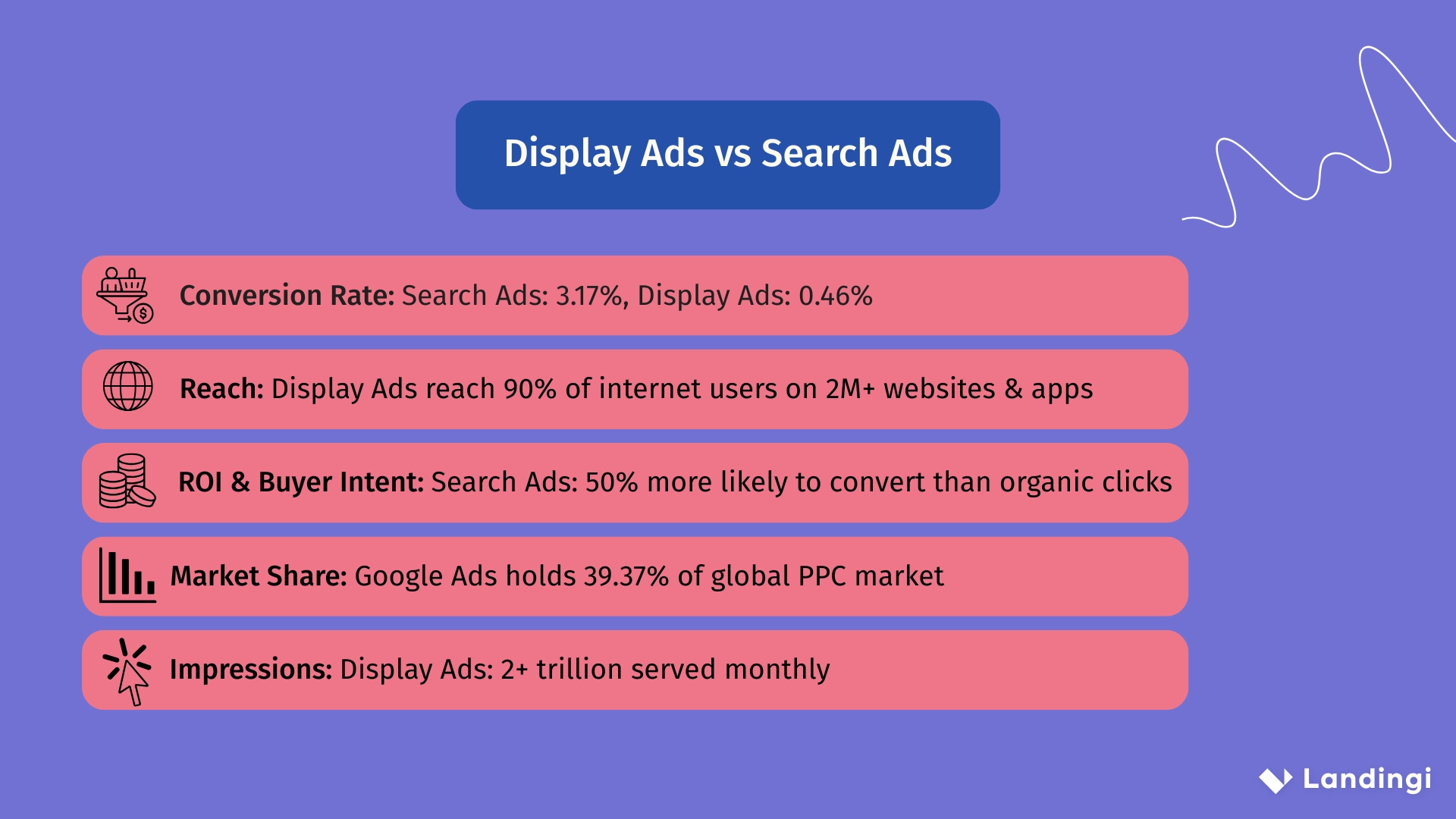
As of 2026, Google Search Ads hold a stronger performance edge, but Display Ads dominate in reach and volume. According to DemandSage, Google Search Ads have an average conversion rate of 3.17%, while Display Ads convert at 0.46%, making search ads far more efficient for direct-response goals.
However, Google Display Ads reach over 90% of internet users worldwide, across more than 2 million websites, apps, and platforms like YouTube. That reach gives display a serious advantage in brand awareness and retargeting campaigns.
In terms of market share, Google Ads owns 39.37% of the global PPC market, but that includes both display and search formats. According to platform data:
- Search campaigns are stronger in ROI, with users being 50% more likely to buy after clicking a search ad than via organic results.
- Display campaigns dominate in scale, serving over 2 trillion ad impressions monthly.
So while search ads outperform on intent and conversions, display ads lead on reach, frequency, and top-of-funnel visibility. For most brands, it’s not a matter of choosing one or the other but about using both strategically to guide users through the full marketing funnel.
How to Combine Display Ads and Search Ads in a Digital Advertising Strategy?
The smartest digital ad strategies don’t pick sides – they connect display ads and search ads to cover the full customer journey. While each format has its strengths, combining them lets you build awareness, stay visible, and convert with intent, all in one cohesive flow.
- Start with display campaigns to reach cold audiences. Use eye-catching visuals to introduce your brand, promote offers, or drive traffic to a landing page. From there, retarget visitors with display ads to stay top-of-mind, even if they didn’t convert right away.
- Next, capture active intent with search ads. When those same users later Google your brand, product, or related keywords, your PPC search campaign is ready to meet them with relevant messaging and optimized landing pages. This is where you convert attention into action.
- You can also flip the sequence: start with search advertising to attract high-intent clicks, then use display ads to retarget visitors who bounced or didn’t complete a purchase.
The key is alignment, matching your ad formats, targeting, and goals across both networks. With a synced setup, search and display ads don’t compete – they amplify each other.
Create landing pages that turn your search and display ad clicks into conversions with Landingi!
Choose the Right Platform and Boost Your Display Ads and Search Ads Performance with Landingi Landing Pages
The difference between display ads and search ads leans heavily on user intent. Display ads help you build awareness, reach new audiences, and retarget those who didn’t convert – ideal when your audience isn’t actively searching yet. Search ads, on the other hand, connect you with users who are already looking for your product or service, making them a better fit for driving direct conversions.
If we compare display ads vs search ads cost, display often comes with a lower price per impression and broader reach, while search typically costs more per click but delivers higher intent and stronger ROI. That’s why many businesses combine both using display to generate interest, and search to close the deal when the timing is right.
No matter which format you choose, your landing page is where the conversion happens. With Landingi, you can quickly build and optimize landing pages tailored to both display campaigns and search ad campaigns, ensuring every click lands exactly where it should. Try it out now!