
Search engine advertising is one of the fastest ways to appear in front of people who are actively searching for specific products or services. SEA marketing allows brands to reach people exactly when they are looking for a product, service, or solution, making search engine advertising one of the most intent-driven and measurable forms of online promotion.
For digital marketers, search engine ads are a core performance channel used to test demand, control visibility, and scale conversions. For beginners, Google search engine advertisements are usually the most accessible way to start paid promotion, because results are fast, costs are predictable, and performance is easy to track.
This article explains search engine advertising from the ground up. It covers what it is, how it works, why businesses use it, which platforms matter most, and how landing pages influence results.
What is Search Engine Advertising?
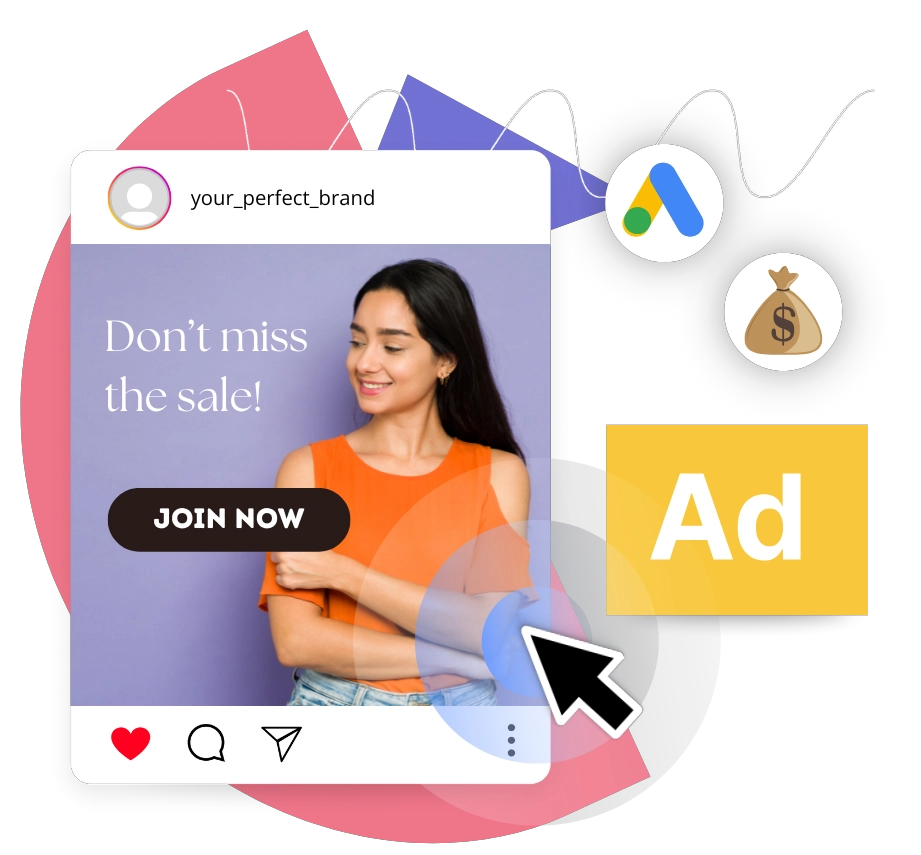
Search engine advertising is a paid marketing model where ads appear in search engine results when users search for specific keywords, and advertisers pay mainly for clicks. According to Google and industry publications such as HubSpot, it is a form of paid search that places sponsored results above or next to organic listings.
Search engine advertising is usually part of a broader marketing or branding strategy, where the primary objective is to increase click-through rate and drive qualified traffic to specific pages.
Search engine advertising is sometimes referred to as:
- SEA marketing
- search engine ads
- paid search
- PPC (pay-per-click)
Launch your first page in minutes! Boost every SEA campaign with high-converting landing pages.
SEA is different from SEO strategy because SEO focuses on earning organic rankings over time, while SEA buys immediate visibility. It also differs from SEM, which is a broader term that includes both paid search (SEA) and organic optimization (SEO). In practice, SEA is the paid part of SEM.
In short, SEO earns visibility, SEA buys visibility, and SEM combines both.
How Does Search Engine Advertising Work?
Search engine advertising works through automated ad auctions that decide which ads appear, where they show, and how much each click costs.
Ads appear mainly on:
- Google Search and its search partners
- Microsoft networks such as Bing and Yahoo
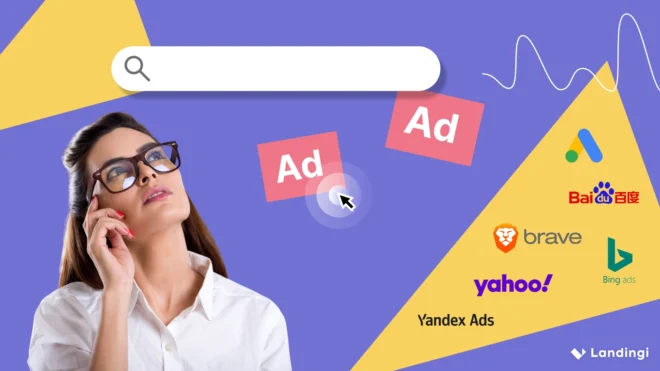
- Other search engines like Baidu, Yandex, or Brave
- Search engine results pages (SERPs), usually above organic listings
Every time a user enters a query, an auction happens in real time. Advertisers bid on keywords and define how much they are willing to pay for a click. The search engine then evaluates ads using factors such as bid amount, relevance, and landing page quality.
Winning ads start with winning landing pages. Get more from every search click!
Keyword selection determines which searches trigger your ads, so without in-depth keyword research, you risk missing a significant part of your target audience.
This auction process can be presented by four key elements:
- Keyword bidding. Advertisers choose the right keywords and set a maximum amount they are willing to pay for a click (max CPC).
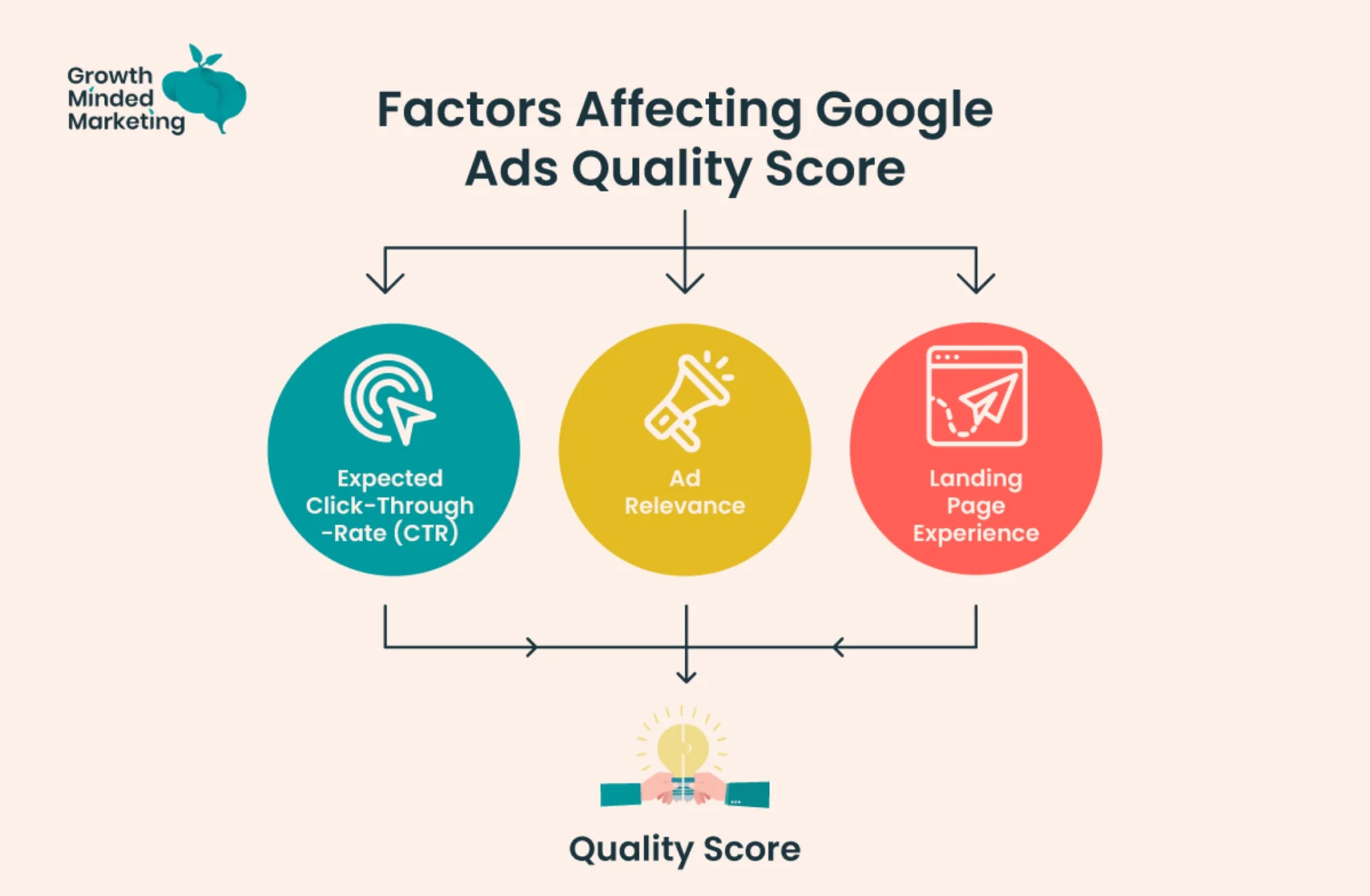
- Quality Score. Search engines assess ad quality based on: expected click-through rate, relevance of the ad to the keyword, and landing page experience.
- Ad Rank calculation. Ad Rank is calculated using the advertiser’s bid and Quality Score. Higher Ad Rank means better placement.
- Actual cost per click. Advertisers usually pay less than their maximum bid. The final CPC depends on the Ad Rank of competitors below them.
The final position of an ad is based on Ad Rank, which is influenced by:
- Maximum bid
- Quality Score (expected CTR, keyword relevance, landing page experience)
Most search engine ads use a CPC (Cost Per Click) model, meaning advertisers pay only when someone clicks. Other models exist, such as CPM (Cost Per Thousand Impressions) for impressions (mainly used in display campaigns), or CPA (Cost Per Action) for completed conversions, but CPC is the standard for search campaigns.
Advertisers pay. Users never pay to see ads in search results.
Beyond the core auction mechanics, search engine advertising is increasingly shaped by automation and changes in how people search.
AI-powered systems are now used for real-time bid adjustments in search engine advertising campaigns, allowing platforms to react instantly to changes in competition and user intent. As automation becomes more common, the future of search engine advertising will involve more personalized and targeted ads based on user data and behaviors. Advertisers will also need to optimize their campaigns for natural language to accommodate longer, conversational queries, which are increasingly common in voice search.
Explore how AI + Landingi builds pages that convert, not just exist.
7 Key Benefits of Search Engine Advertising
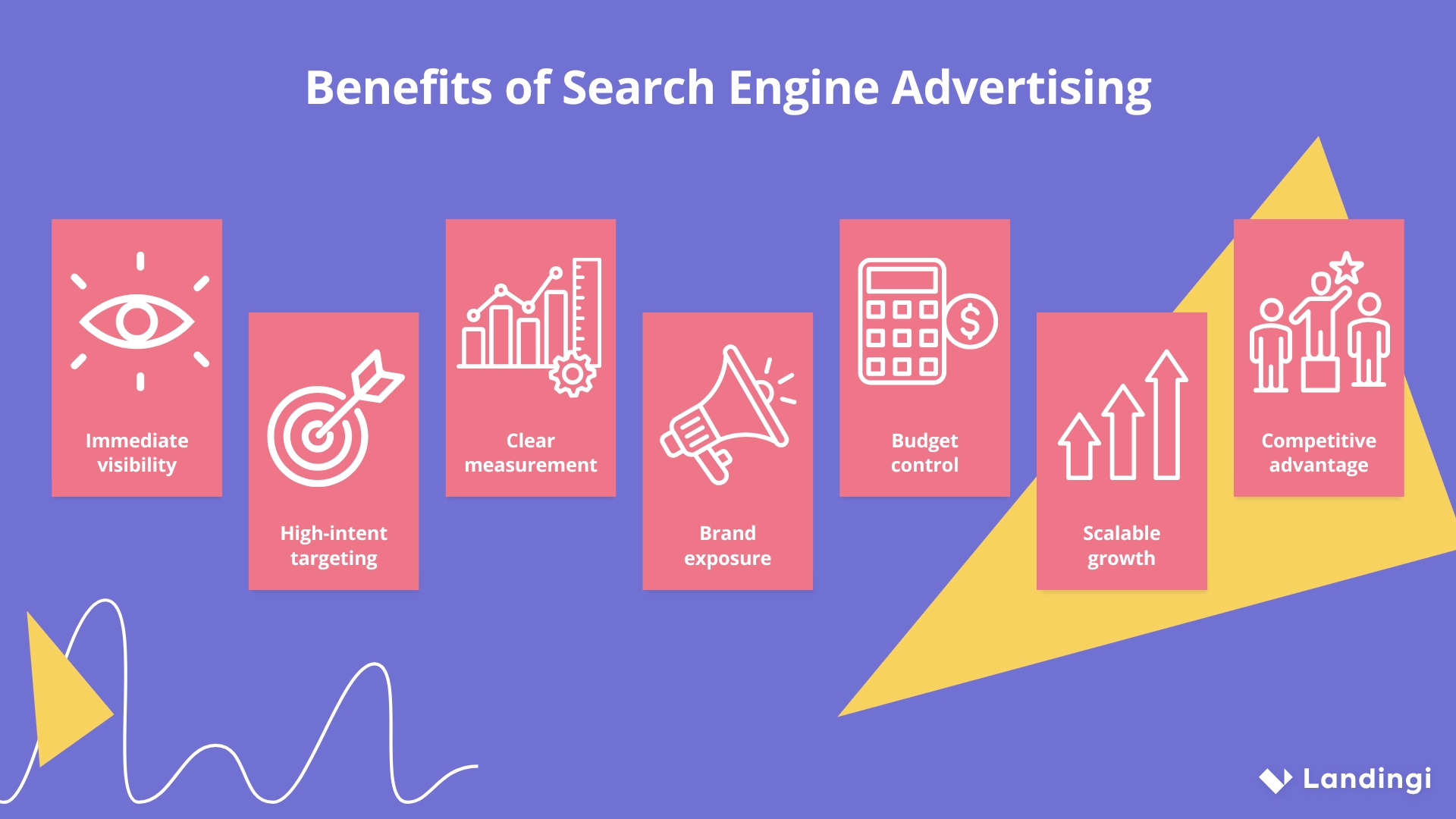
The key benefits of search engine advertising include immediate visibility, precise targeting, clear measurement, brand exposure, budget control, scalability, and competitive advantage. Together, these benefits make SEA marketing especially effective for lead generation, e-commerce, and time-sensitive campaigns where speed and intent matter most.
1. Immediate visibility in search results
Immediate visibility in search results means ads can start showing minutes after launch, without waiting weeks or months for rankings. This is especially useful for new websites, product launches, or time-sensitive offers.
Unlike SEO, which builds gradually, search engine ads put your message directly in front of people who are already searching for related terms.
2. High-intent audience targeting
High-intent targeting means ads reach users who actively express interest through their search queries. Keywords reflect intent, whether someone is researching, comparing, or ready to buy.
You can refine targeting further using:
- Location
- Language
- Device
- Time of day
This reduces wasted spend compared to broad awareness channels.
3. Full control over budget and spend
Full budget control means you decide daily limits, bids, and campaign pacing. Campaigns can be paused, scaled, or adjusted at any time.
This flexibility works for small businesses testing with limited budgets and for larger teams managing high monthly spend.
4. Measurable and transparent results
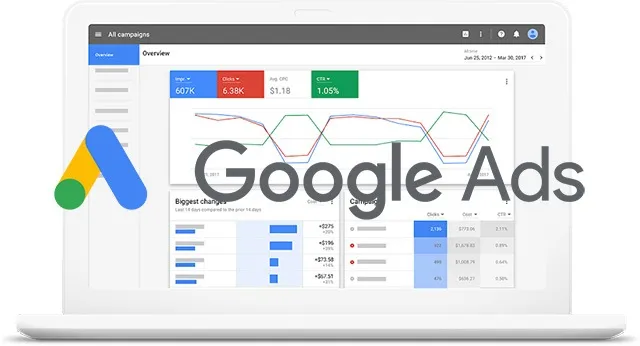
Measurable results mean every click, conversion, and cost is tracked. Platforms like Google Ads show exactly which keywords and ads drive performance.
You can optimize based on:
- CPC
- CTR
- conversion rate
- CPA
- ROAS
Search advertising provides businesses with more options for tracking and measuring data compared to traditional SEO techniques, because every click, cost, and conversion is recorded in real time. This makes SEA one of the most accountable marketing channels.
5. Strong support for testing and optimization
Support for testing means ads, keywords, and landing pages can be tested quickly. You can compare messaging, offers, pricing, or formats without long delays.
This makes SEA especially useful for validating assumptions before committing time and resources to search engine optimization or larger, long-term campaigns.
6. Scalable growth potential
Scalable growth means campaigns can expand as long as results remain profitable. You can add keywords, increase bids, enter new markets, or launch new ad groups without rebuilding the entire setup.
Scaling is incremental and data-driven.
7. Competitive advantage on crowded keywords
Competitive advantage means ads can appear above organic results, even if competitors rank well organically. This is especially important in competitive industries where SEO alone may not secure top visibility.
Paid search advertising gives you a way to compete immediately.
Go live with purpose-built pages. Capture ready-to-buy visitors today!
6 Best Search Engine Advertising Platforms
The best search engine advertising platforms include Google Ads, Microsoft Advertising, Yandex Ads, Baidu, Yahoo Search Ads, and Brave Search Ads. Each platform is tied to a specific search engine provider and operates on similar auction-based principles, but differs in reach, audience profiles, targeting options, and cost dynamics, which affects how and where it should be used.
1. Google Ads
Google Ads is the largest and most widely used search engine advertising platform, offering access to the majority of global search traffic. According to Statista, Google holds around 89.7% global market share in search and reaches over 4.7 billion users, which makes it the default choice for most SEA marketing strategies.
Google Ads works mainly on a CPC model and supports keyword-based targeting, audience signals, demographics, devices, and locations. Ads appear on Google Search, Shopping, YouTube, Gmail, and partner sites.
Google Ads is worth using when you need maximum reach, operate in competitive markets, or run e-commerce and lead generation campaigns at scale.
In terms of cost, average CPC ranges from about $2.30 to $8.30, depending on industry and competition. Highly competitive sectors such as legal services or finance can exceed $20 per click, while e-commerce keywords often stay below $1 CPC.
2. Microsoft Advertising (Bing Ads)
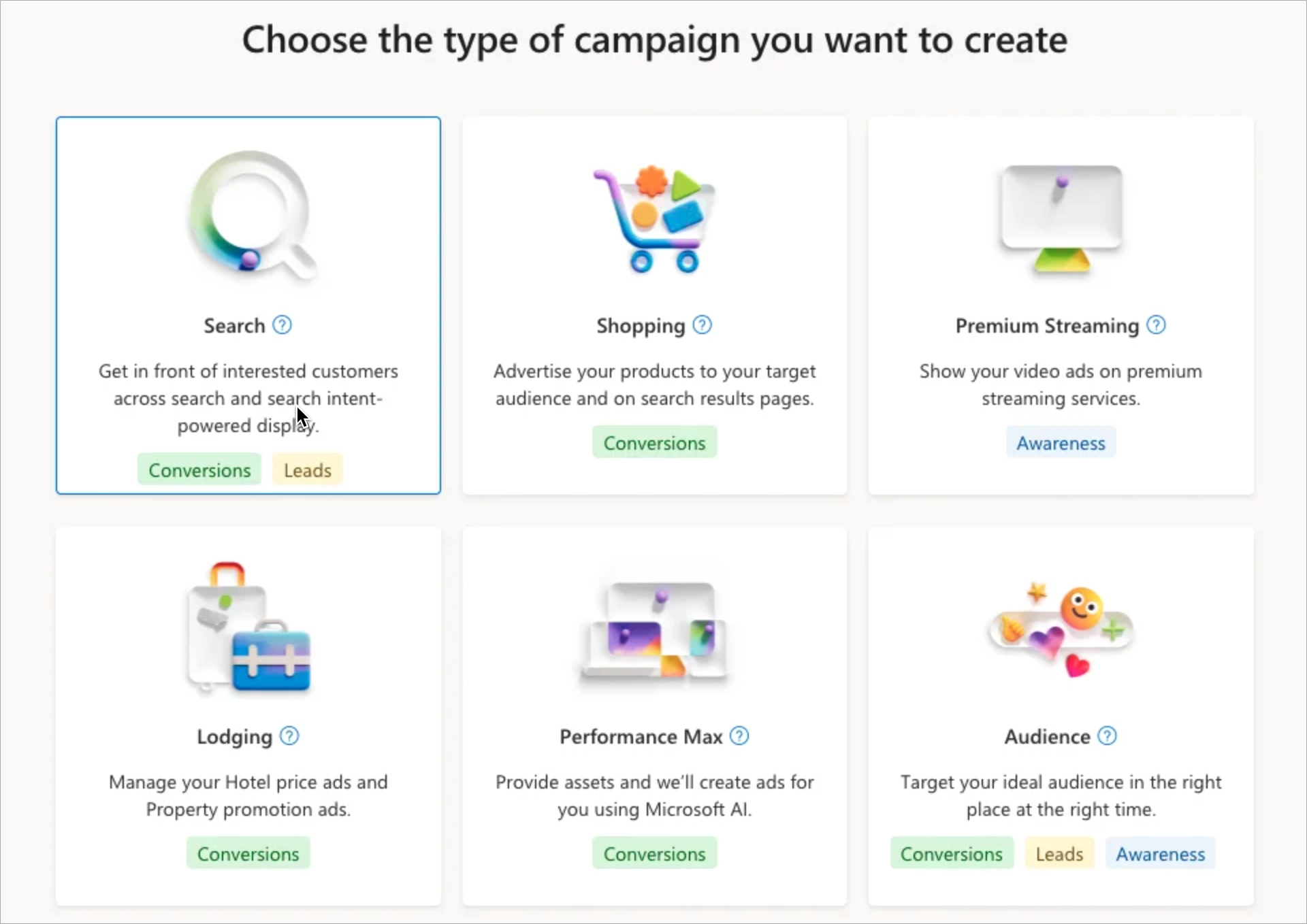
Microsoft Advertising is a paid search platform that serves ads on Bing, Yahoo, and AOL. While Bing’s standalone market share is smaller, the combined network reaches around 1 billion unique users per month, with particularly strong adoption in the US and other English-speaking markets.
It works similarly to Google Ads, using CPC bidding and keyword targeting. A key difference is LinkedIn profile targeting, which is especially useful for B2B campaigns.
Microsoft Advertising is worth using when budgets are smaller, CPCs are high on Google, or when targeting professional audiences in markets where Bing has stronger adoption.
Costs are typically lower than Google Ads. Average CPC is about $1.50, which is roughly 30–35% cheaper than Google, while CTR is often slightly higher due to lower competition.
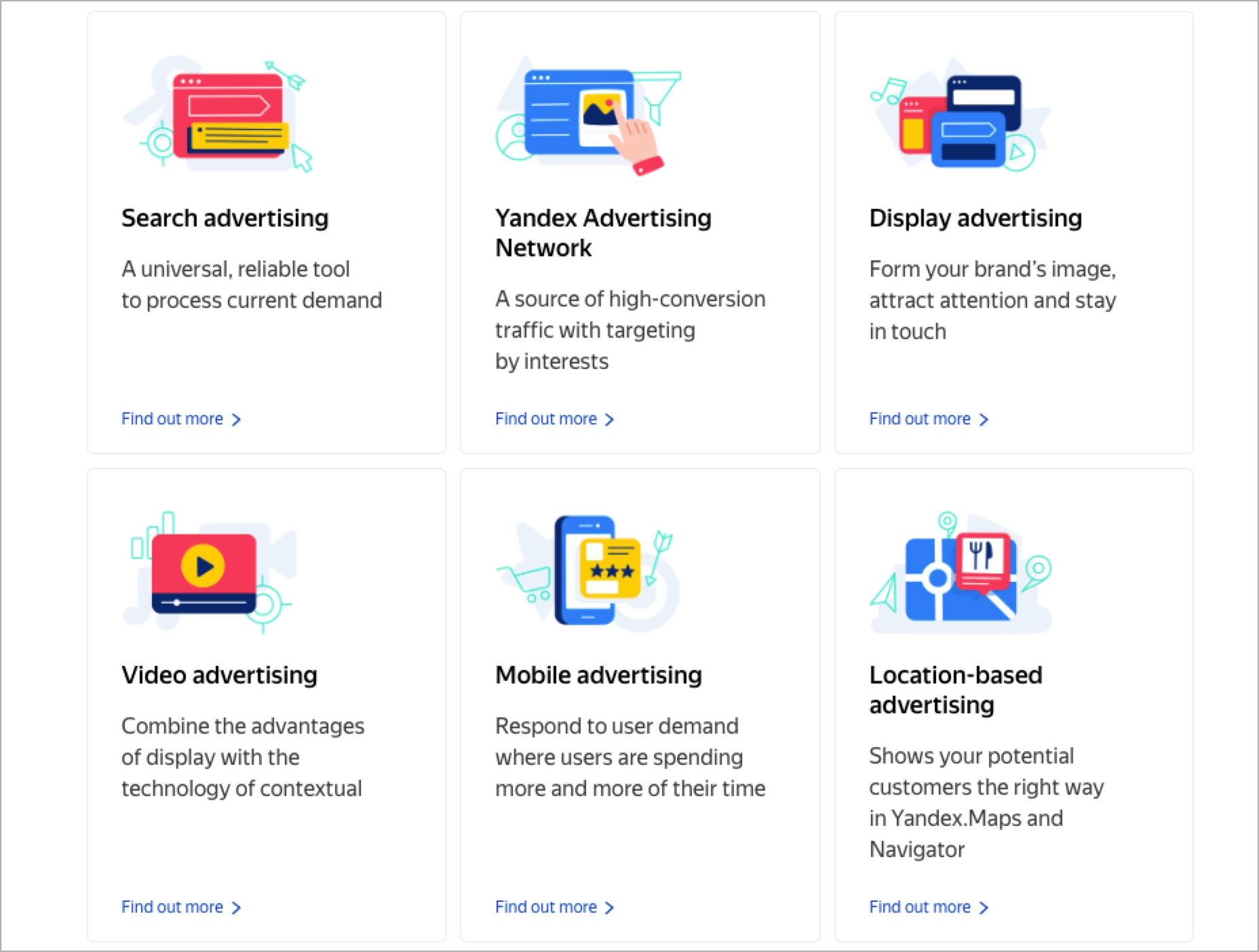
3. Yandex Ads
Yandex Ads is a search advertising platform focused mainly on Russia and parts of Eastern Europe and Central Asia, where Yandex holds over 70% market share in some regions. Globally, Yandex represents about 2.6% of the search market, but its regional importance is significant.
It supports CPC and CPM models and offers keyword and geographic targeting. Ads appear on Yandex Search and partner sites.
Yandex Ads is worth using when targeting audiences in regions where Yandex dominates, and Google coverage is limited.
Costs are generally lower than Google Ads, though they vary by industry and region. Access may be restricted for companies from certain countries due to regulatory and sanction-related limitations.
4. Baidu
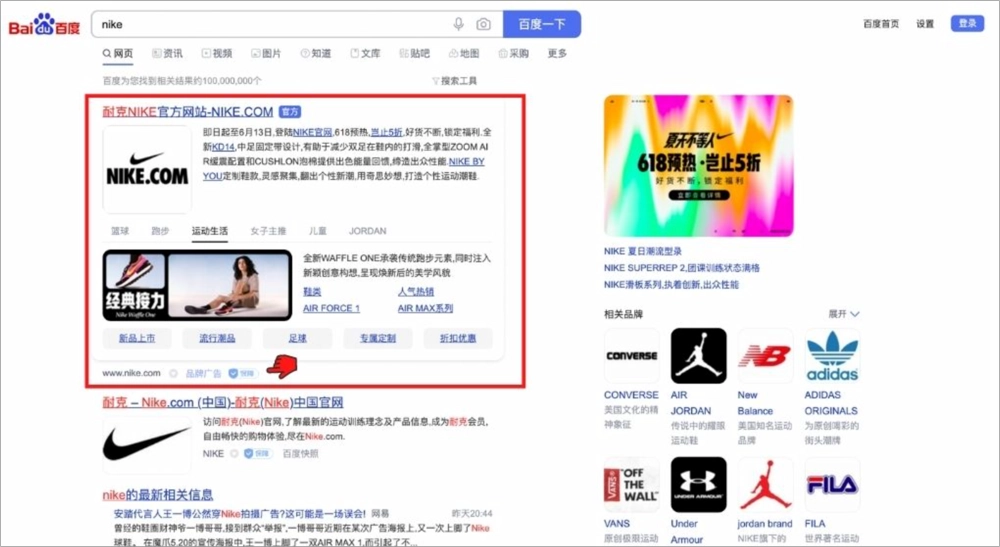
Baidu is the leading search engine in China, with over 54% market share and the largest local search audience in the country. For businesses entering the Chinese market, Baidu is the primary alternative to Google, which is largely unavailable.
Baidu Ads operates on a CPC model and focuses on keyword targeting in Mandarin Chinese. Ads appear in Baidu search results and its content ecosystem. Campaign setup and approval processes are stricter and require compliance with local regulations.
Baidu is worth using when expanding e-commerce, technology, or consumer brands into China and when campaigns are localized linguistically and culturally.
Costs are competitive within the Chinese market but vary widely depending on keyword demand and industry.
5. Yahoo Search Ads
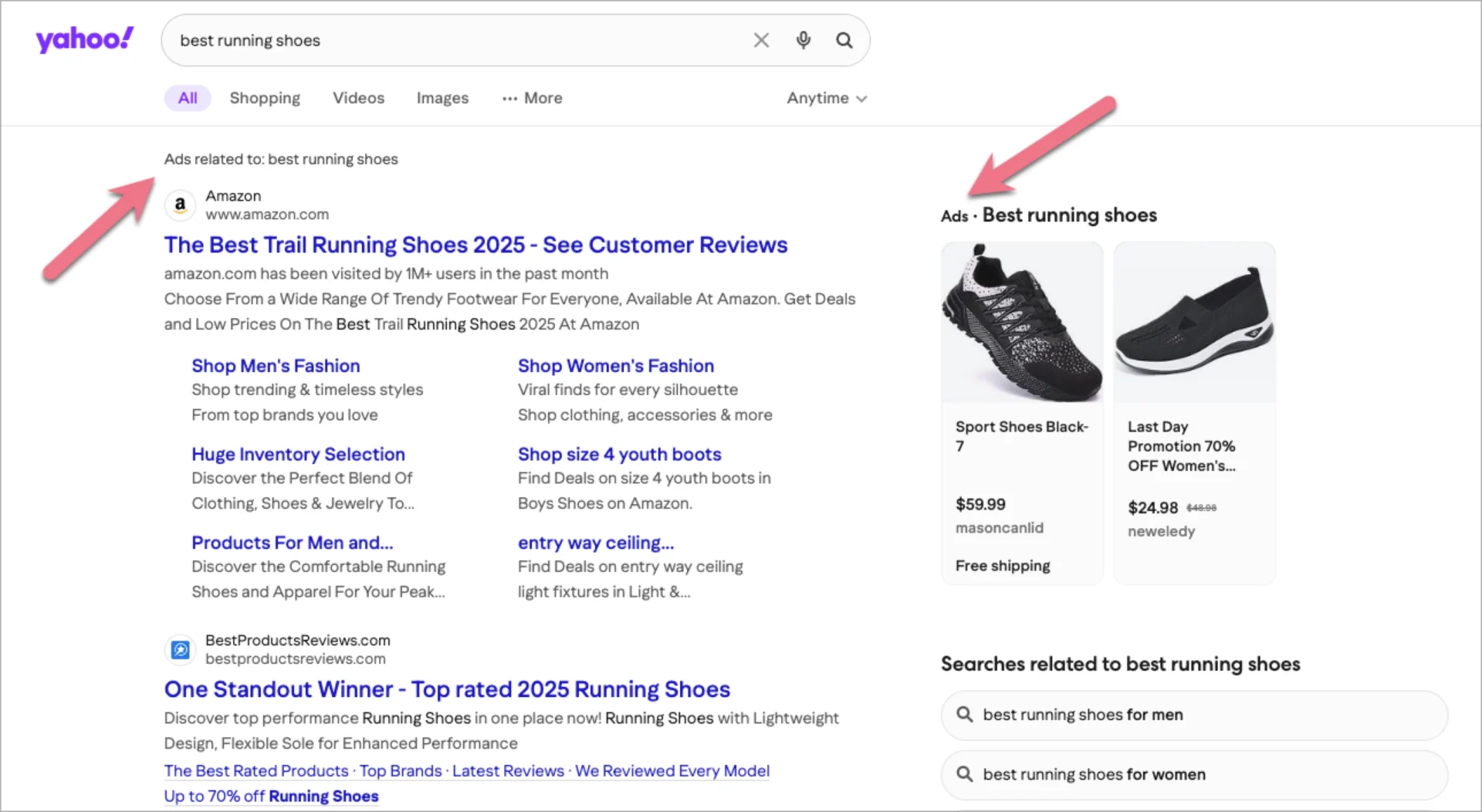
Yahoo Search Ads run on Microsoft Advertising technology and appear on Yahoo search results. While Yahoo’s independent market share is small (around 1–1.5% globally), it still contributes meaningful incremental reach through the Bing network.
The platform uses a CPC model and supports standard keyword and demographic targeting. Campaigns are managed through Microsoft Advertising, which means setup and optimization require minimal extra effort.
Yahoo Search Ads are worth using as a complementary channel to Bing Ads to capture additional clicks without increasing platform complexity or management time.
6. Brave Search Ads
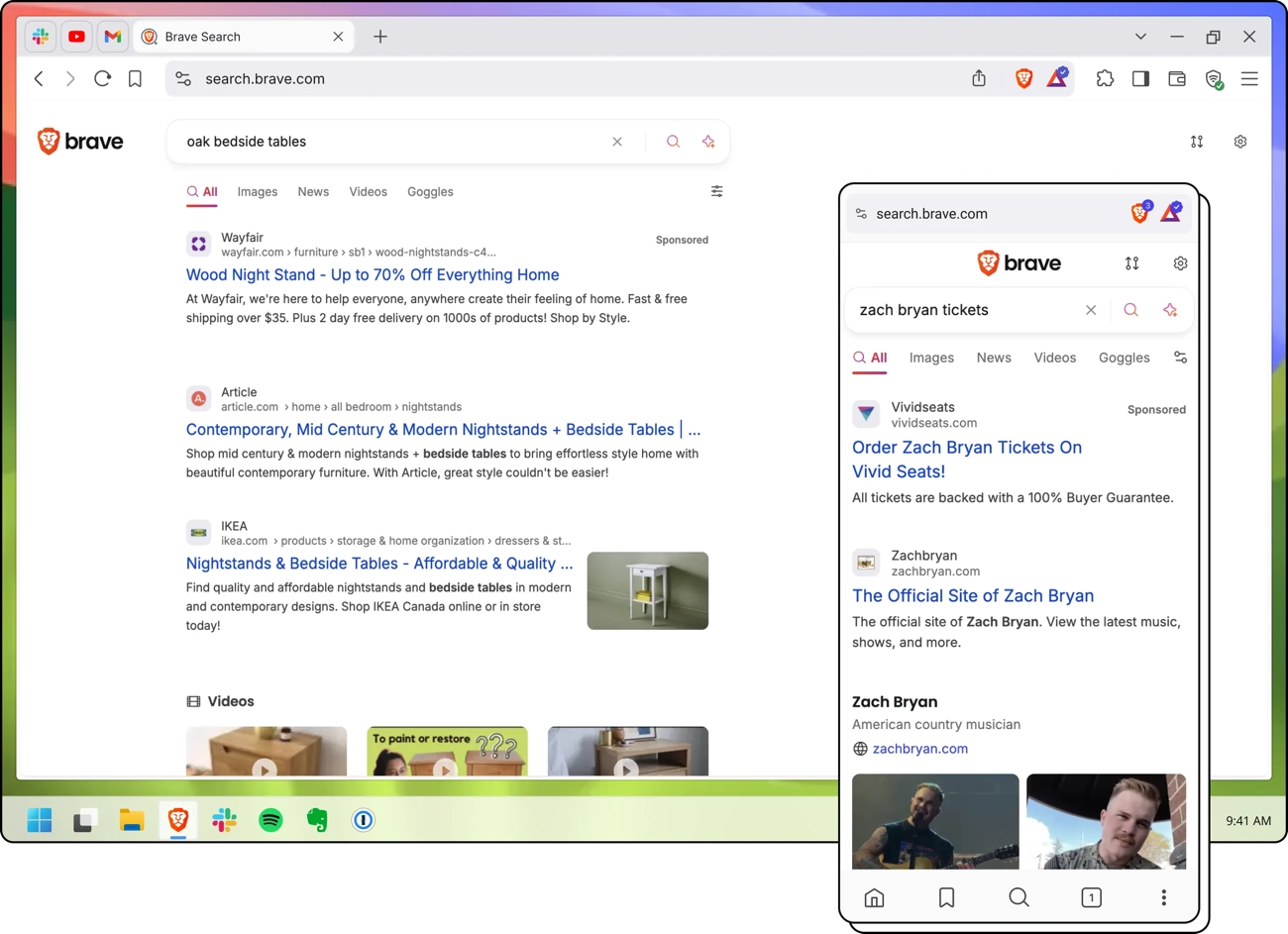
Brave Search Ads operate within Brave Search, a privacy-focused search engine with a growing base of tech-aware and privacy-conscious users. Brave uses its own independent search index, rather than relying on Google or Bing.
Ads are keyword-based and do not rely on behavioral tracking or personal data. This limits targeting depth but aligns with strict privacy expectations.
Brave Search Ads are worth using when targeting privacy-focused audiences, early adopters, or users resistant to traditional tracking-based advertising. Competition is lower, which can result in lower CPCs, though overall reach remains smaller compared to mainstream platforms.
FAQ about Search Engine Advertising
The FAQ below addresses the questions marketers ask most often when planning or running internet search advertising campaigns. It focuses on practical concerns such as costs, benefits, formats, terminology, and tools, helping you make informed decisions without unnecessary theory.
How much does search engine advertising cost?
Search engine advertising usually costs between $0.50 and $10 per click, with average search CPCs most often falling in the $2–$5 range, while highly competitive industries such as finance, legal services, or insurance can exceed $20 per click.
The final cost depends on keyword competition, market, Quality Score, and campaign setup, which means the same keyword can be cheap in one account and expensive in another.
What are the benefits of search engine marketing?
The benefits of search engine marketing include fast traffic, strong intent targeting, measurable performance, and flexibility. SEM combines SEA for immediate results with SEO for long-term visibility, giving marketers short-term control and long-term stability.
Smarter landing pages = better ad results. Unlock the formula now!
What are the different types of search engine marketing?
The different types of search engine marketing include paid search ads, shopping ads, display ads, remarketing, video ads, and organic search optimization. Together, these paid ads cover both direct response and visibility goals across search ecosystems.
What are the main differences between SEA, SEM, and SEO?
The main differences between SEA, SEM, and SEO relate to payment, timing, and control. SEA focuses on paid clicks and instant visibility, SEO focuses on organic rankings built over time, and SEM combines both approaches into one strategy.
What are the best SEA tools?
The best SEA tools include Google Ads, Microsoft Advertising, Google Keyword Planner, SEMrush, Ahrefs, and Looker Studio, as they cover campaign management, keyword research, competitor analysis, and performance reporting. In practice, marketers combine these tools to plan, run, and optimize search engine advertising campaigns efficiently, adjusting the setup based on budget size and campaign complexity.
Below is a practical comparison of widely used SEA tools and their primary use cases:
| Tool | Main purpose | Best used for |
|---|---|---|
| Google Ads | Campaign creation and management | Running and optimizing search engine ads |
| Microsoft Advertising | Paid search campaigns | Advertising on Bing, Yahoo, and partner networks |
| Google Keyword Planner | Keyword research | Estimating search volume and CPC |
| SEMrush | PPC and competitor analysis | Keyword research, ad copy insights, market analysis |
| Ahrefs | Paid keyword intelligence | Competitor keyword and ad research |
| Looker Studio | Reporting and dashboards | Visualizing SEA performance data |
Boost Your SEA Results with Landingi Landing Pages
Effective SEA marketing depends on what happens after the click. Search engine ads drive traffic, but landing pages decide whether that traffic converts.
A strong landing page improves Quality Score, lowers CPC, and increases conversion rate. It aligns the keyword, ad message, and offer in one focused experience. Without this alignment, even the best Google search engine advertisement will struggle to deliver results.
Landingi helps marketers build and test landing pages without development work. It supports fast page creation, A/B testing, integrations with ad platforms, and clear conversion tracking. This makes it easier to turn search engine advertising traffic into leads or sales.
Online search advertising works best when ads and landing pages are treated as one system. If you want to improve results from search engine ads and SEA marketing, try Landingi for free and see how optimized landing pages change your performance.