
In digital advertising, clicks and conversions only tell part of the story. To understand how your campaigns perform financially, you need to look at both ROI and ROAS. ROAS (Return on Ad Spend) measures the revenue generated from advertising spend, while ROI (Return on Investment) measures profit after all relevant costs – such as ad spend, product costs, tools, staffing, and fulfillment – are accounted for.
ROAS is primarily an advertising efficiency metric, while ROI measures profitability. A campaign can have a strong ROAS and still produce a weak or even negative ROI once the remaining costs are included. Landing page performance can influence both. A higher conversion rate can generate more revenue from the same traffic and advertising budget, improving ROAS and potentially ROI without requiring additional media spend.
This guide explains how to calculate ROI vs ROAS, when to use each metric, and how to interpret them together to make better advertising decisions.

What Is the Difference Between ROI and ROAS?
The difference between ROI and ROAS comes down to revenue versus profit. ROAS tells you how much revenue your advertising generated compared with what you spent on ads. ROI goes further: it compares the profit from an investment with its total relevant cost. That means a campaign can look highly effective through the ROAS lens and still be unprofitable once the costs of delivering what you sold are taken into account.
This is why the two metrics answer different questions. ROAS is primarily an advertising performance metric: is the money spent on ads producing enough revenue? ROI is a profitability metric: after the relevant costs are covered, was the investment financially worthwhile?
| ROI | ROAS | |
| Measures | Profitability of an investment | Revenue generated relative to ad spend |
| Includes | Revenue and all relevant costs associated with the investment | Revenue attributed to advertising and ad spend |
| Formula | (Revenue – total relevant costs) ÷ total relevant costs × 100 | Revenue attributed to ads ÷ ad spend × 100 |
| Best used for | Evaluating profitability, budgeting, and broader business decisions | Comparing and optimizing advertising performance |
| Shows profit? | Yes | No |
Neither metric replaces the other. A strong advertising ROAS can tell you that paid media is generating revenue efficiently, but it can’t tell you how much of that revenue remains after product costs, fulfillment, software, staffing, or other relevant expenses. ROI fills that gap. For marketers, looking at ROI vs ROAS together makes it easier to distinguish a campaign that performs well in an ad platform from one that also makes financial sense for the business.
What is ROI?
ROI (Return on Investment) is a profitability metric that compares the net profit generated by an investment with the total relevant cost of that investment. In digital marketing, it can be used to evaluate a campaign, channel, or broader marketing initiative once the costs needed to generate and fulfill the resulting revenue are taken into account.
The ROI formula is:
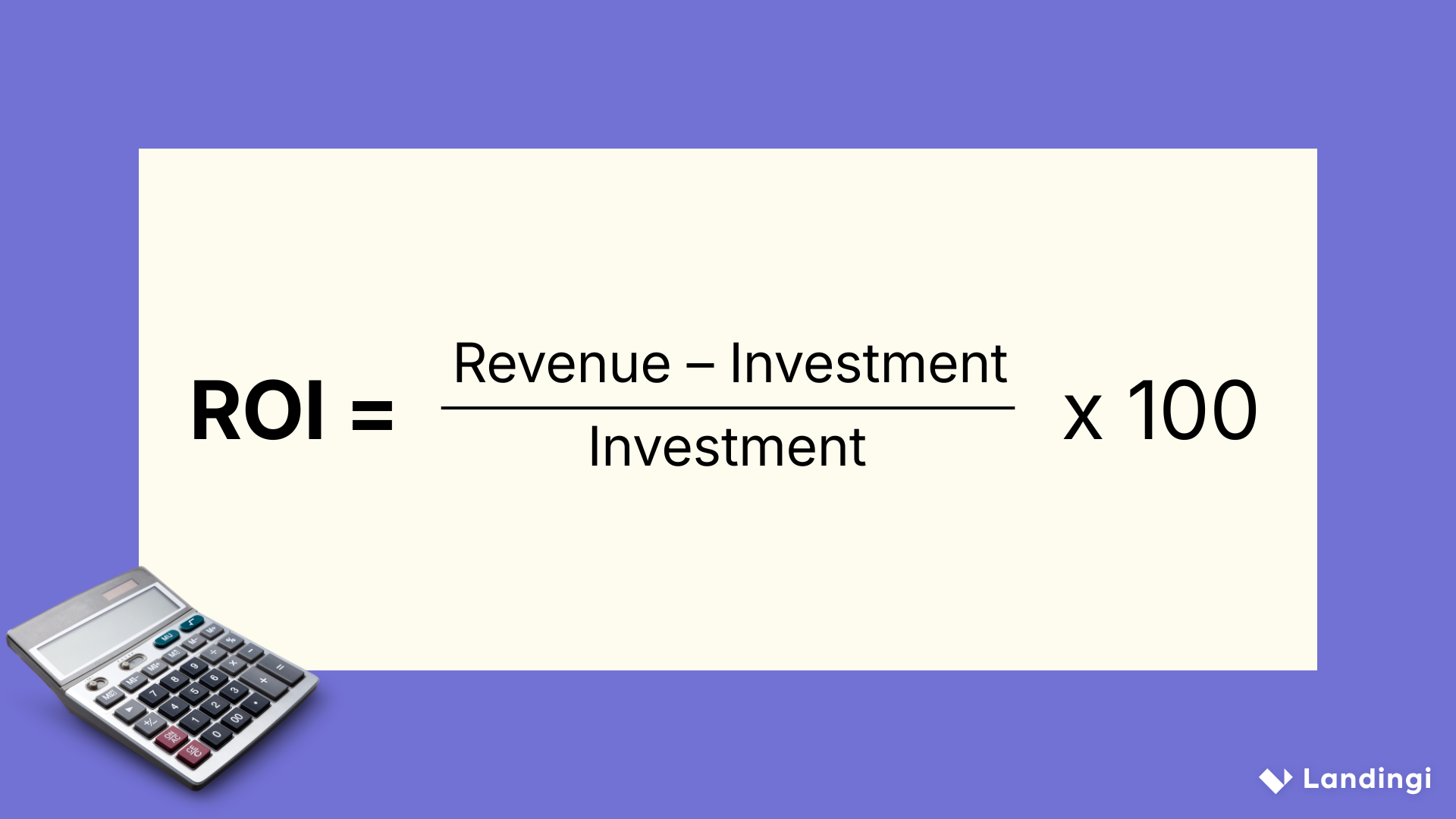
Suppose a campaign generates $5,000 in revenue and its total relevant costs are $1,000:
($5,000 – $1,000) ÷ $1,000 × 100 = 400% ROI
The campaign produced $4,000 in net profit relative to $1,000 invested, resulting in a 400% return on investment.
What counts as a relevant cost depends on the scope of the calculation. For a paid campaign, that might include media spend, cost of goods sold, fulfillment, creative production, agency fees, software, or attributable labor costs. The important thing is to define the scope consistently. Leaving significant costs out can make ROI look better than the actual economics of the investment.
What is ROAS?
ROAS (Return on Ad Spend) is an advertising efficiency metric that compares revenue attributed to advertising with the amount spent on those ads. It tells marketers how effectively the media budget is generating revenue and is commonly used to evaluate campaigns, channels, audiences, and other paid advertising activities.
The ROAS formula is:
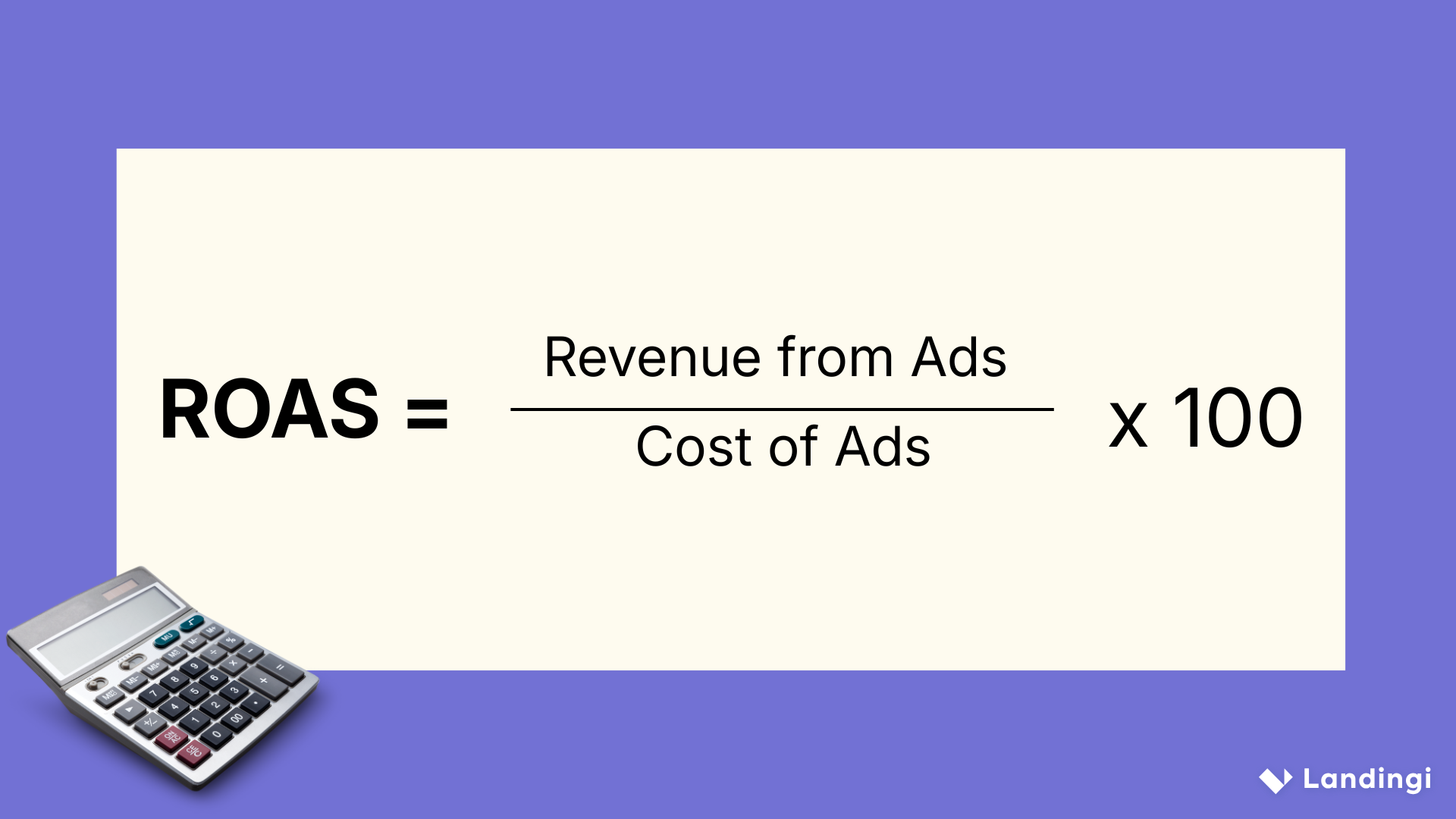
If you spend $1,000 on ads and attribute $4,000 in revenue to them:
$4,000 ÷ $1,000 = 4.0 ROAS
That can also be expressed as 4:1 or 400% ROAS: every $1 of ad spend generated $4 in attributed revenue.
The word revenue matters here. A 4:1 ROAS doesn’t mean the business earned $3 in profit for every advertising dollar. Standard ROAS doesn’t subtract the cost of producing the product, fulfilling the order, paying the team, or running the tools behind the campaign. It measures the relationship between attributed advertising revenue and ad spend.
That’s why a high return on ad spend can coexist with a low or even negative ROI. ROAS can show that the ads are doing their job efficiently; ROI determines whether the economics surrounding those ads ultimately leave the business with a profit.
ROI Vs ROAS Examples
Let’s say you’re running a paid campaign for your ecommerce store. You’ve launched a promotion for a new product line, invested in Meta Ads, and now you’re reviewing the results. Two numbers stand out: ROAS and ROI. One makes the campaign look highly effective. The other tells a very different story.
Here’s how ROI vs ROAS can look for the exact same campaign.
ROI example
Your campaign brings in $100,000 in revenue, and you’ve spent $25,000 on ads to generate it. But that’s not the full cost of the investment. You also spent $80,000 on product manufacturing, your team, packaging, software, shipping, and other costs tied to the campaign.
That puts your total relevant costs at $105,000.
Now let’s do the math:
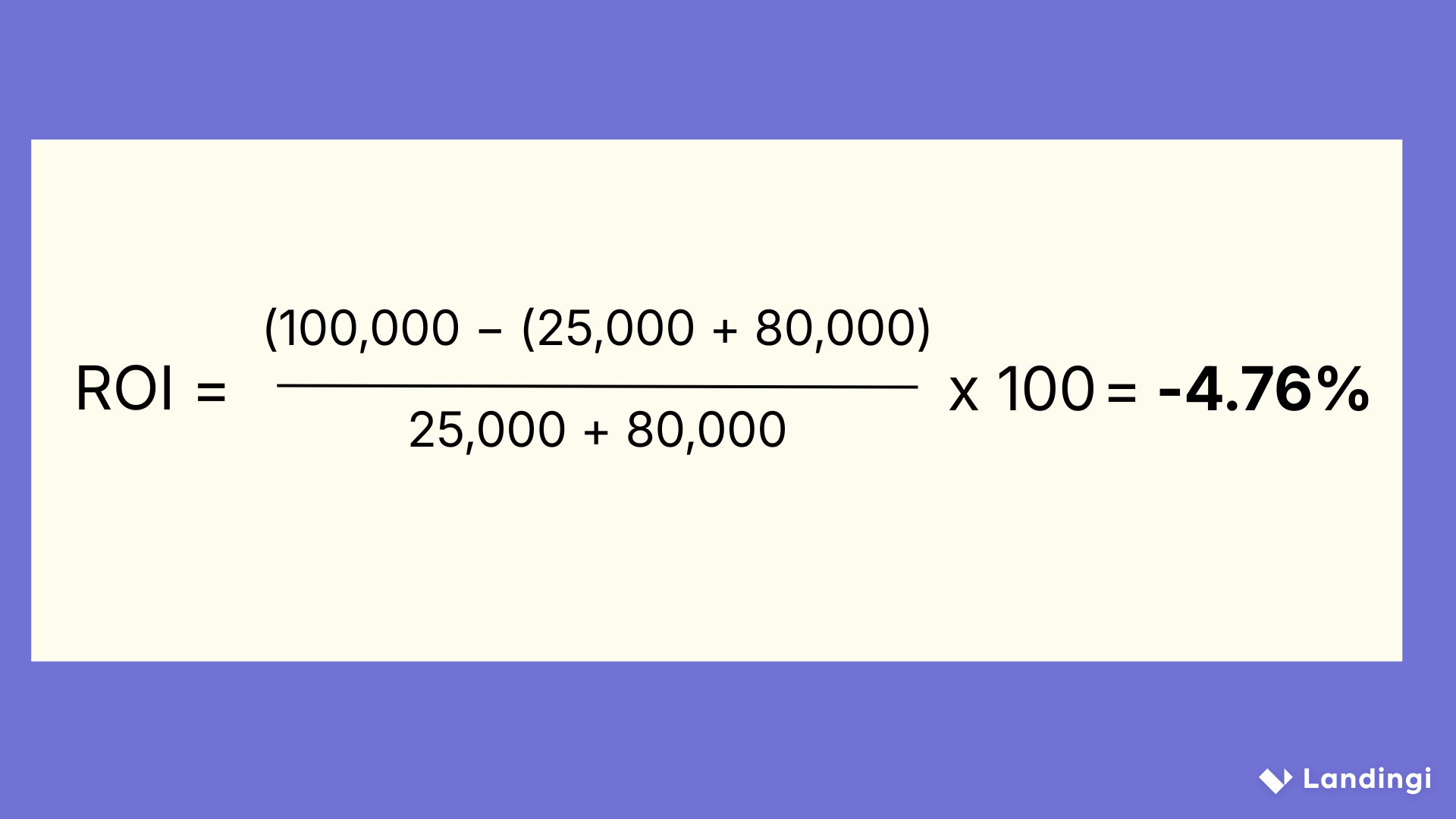
Despite strong revenue, the campaign loses $5,000. Its ROI is –4.76%, which means the investment wasn’t profitable once all relevant costs were included.
ROAS example
Now let’s calculate the return on ad spend for that same campaign. ROAS only compares the $100,000 in revenue attributed to the ads with the $25,000 spent on advertising:
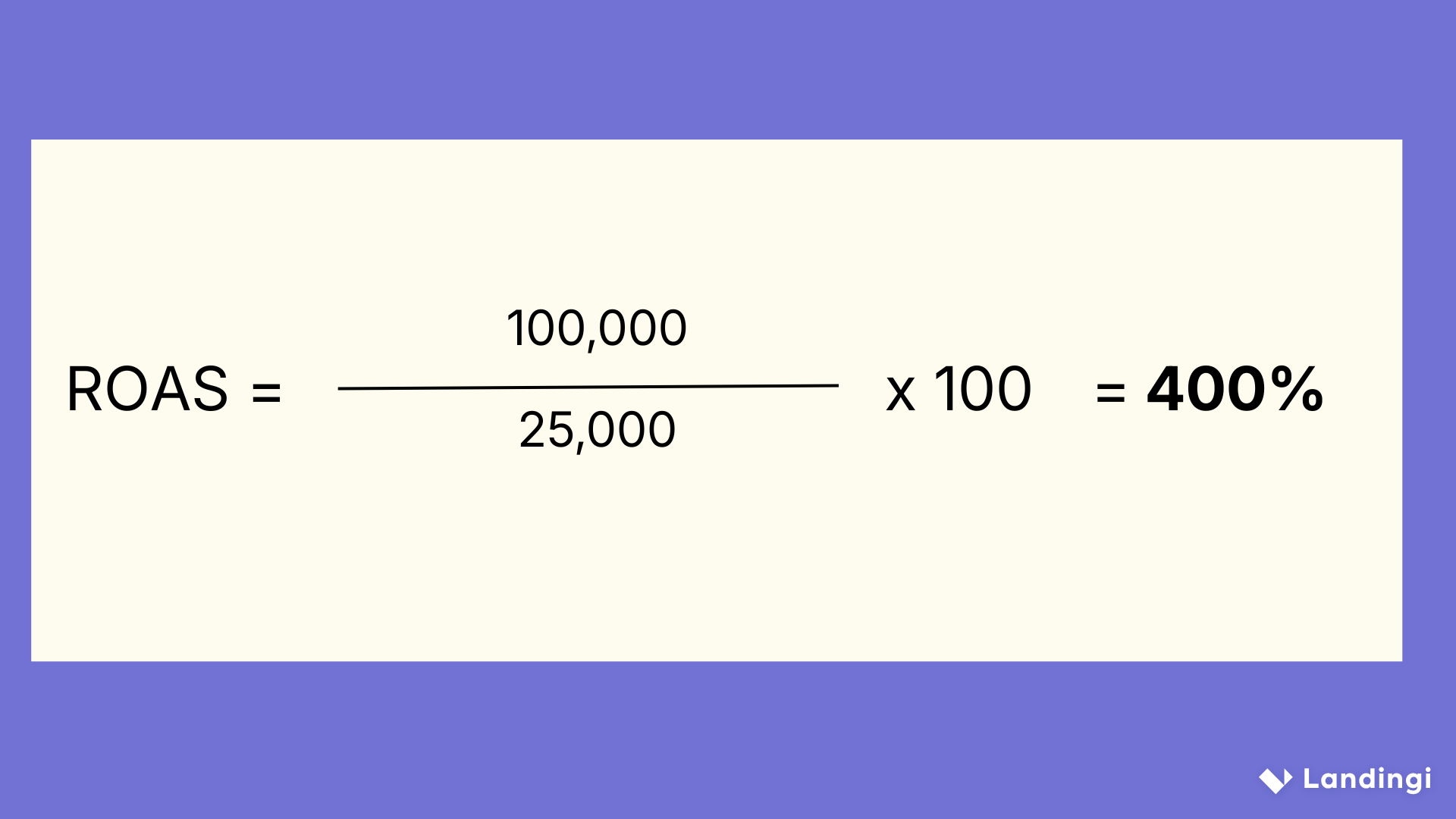
That gives you a 4:1 ROAS, or 400%. In other words, every $1 spent on ads generated $4 in revenue.
That sounds like a win – and from a pure advertising standpoint, it is. The ads generated substantial revenue relative to media spend. But the ROAS formula doesn’t include the additional $80,000 in costs that turned the overall investment into a loss.
Takeaway: ROAS tells you whether your ads are generating revenue efficiently. ROI tells you whether the investment is actually profitable. You need both to see the full picture. Otherwise, you could end up scaling a campaign with an impressive advertising ROAS that is quietly losing money.
When Should Marketers Use ROI Instead of ROAS?
Marketers should use ROI instead of ROAS when they need to measure profitability, not just advertising efficiency. ROI accounts for the relevant costs behind an investment, so it shows whether the revenue generated actually leaves the business with a profit. ROAS has a narrower job: it shows how much revenue advertising generates relative to ad spend.
That doesn’t mean marketers need to choose one and ignore the other. ROAS is better for evaluating and optimizing paid advertising, while ROI is better for profitability and broader business decisions. In many cases, the clearest picture comes from using both.
Use ROAS for advertising performance
Use ROAS when you want to understand how efficiently your advertising budget generates revenue. Because it compares attributed revenue directly with ad spend, it works well for campaign-level decisions such as comparing paid channels, audiences, campaigns, or periods of performance.
For example, if one campaign delivers a 5:1 ROAS and another delivers 2.5:1, you immediately know which one is generating more revenue per advertising dollar. That makes return on ad spend useful for optimization and budget allocation within paid advertising.
Just remember what ROAS doesn’t tell you: whether those sales are profitable after the remaining costs are paid.
Use ROI for profitability and business decisions
Use ROI when you need to know whether an investment creates real financial value after relevant costs are included. This becomes especially important when campaigns involve substantial costs beyond media spend, such as manufacturing, fulfillment, staffing, creative production, software, or agency fees.
ROI is also more useful when evaluating broader marketing investments that aren’t limited to paid ads. SEO, content marketing, email, influencer partnerships, and multi-channel campaigns can’t always be meaningfully assessed through ROAS because there may be no single advertising spend figure to compare with revenue.
For budgeting, stakeholder reporting, long-term investment decisions, and assessing overall digital advertising ROI, profitability matters more than revenue efficiency alone.
Use ROI and ROAS together
In most paid campaigns, the most useful approach is to track ROI and ROAS together. ROAS helps you understand what is happening at the advertising level, while ROI shows whether that performance still makes sense once the wider economics are considered.
For example, improving targeting, creative, or landing page conversion rates may increase revenue without requiring the same increase in ad spend, pushing ROAS higher. But before scaling the campaign, ROI can tell you whether the additional sales still leave enough margin after fulfillment and other costs.
That gives marketers a much safer basis for growth: use ROAS to find efficient advertising, then use ROI to make sure that efficiency translates into profitable business.
FAQ About ROI and ROAS
ROI and ROAS are easy to calculate, but interpreting them correctly requires context. These answers cover the most common questions about profitability, advertising efficiency, benchmarks, conversion rates, and campaign analysis.
What is the main difference between ROI and ROAS?
The main difference between ROI and ROAS is that ROI measures profitability, while ROAS measures advertising efficiency. ROI compares profit with the total relevant cost of an investment. ROAS compares revenue attributed to advertising with ad spend.
A campaign can therefore have a high ROAS and a negative ROI. The ads may generate revenue efficiently while product, fulfillment, staffing, software, and other costs make the overall investment unprofitable.
What is considered a good ROI and ROAS benchmark in e-commerce?
A good ROI or ROAS benchmark in e-commerce depends on margins, operating costs, average order value, repeat purchases, and the way revenue is attributed. There is no single ROI or ROAS target that indicates a profitable campaign for every ecommerce business.
For ROAS, the more useful benchmark is often your break-even ROAS. A business with a 25% contribution margin needs a higher ROAS to break even than one with a 60% margin. A 4:1 ROAS, for example, may be excellent for one store and unprofitable for another.
The same applies to ROI. Rather than relying on a universal percentage, compare return on investment with your costs, margins, historical performance, and required return.
How can landing pages improve ROI and ROAS?
Landing pages can improve ROI and ROAS by converting more of the traffic you’ve already paid for into leads or customers. If conversion rate increases while traffic and ad spend remain the same, the campaign can generate more revenue without requiring a larger media budget. That can raise ROAS and, when the additional revenue produces sufficient profit after costs, ROI as well.
The biggest gains often come from fixing friction between the ad and the page. Strong message match, a clear offer, fast loading, mobile-friendly design, focused forms, and an obvious CTA make it easier for visitors to complete the action promised in the ad.
Landing page optimization also shouldn’t stop after launch. Testing headlines, offers, forms, CTAs, and page variants against actual visitor behavior can help identify which changes generate more conversions from the same paid traffic.
Use AI-powered landing page optimization to uncover conversion opportunities and get more revenue from the traffic and ad budget you already have.
What’s the best way to analyze overall campaign performance?
The best way to analyze overall campaign performance is to combine advertising, conversion, acquisition, and profitability metrics rather than relying on a single KPI. CTR can show whether an ad earns attention, conversion rate shows what happens after the click, ROAS measures revenue relative to ad spend, and ROI shows whether the investment ultimately produces profit.
CAC adds the cost of acquiring a customer, while customer lifetime value can provide useful context when customers make repeat purchases. Attribution also matters: the revenue assigned to a campaign depends partly on how credit for conversions is distributed across touchpoints.
For landing pages, behavioral data adds another layer. Tracking clicks, scrolling, form interactions, and conversions can show where visitors engage and where they drop out, giving marketers something concrete to investigate and test rather than optimizing from aggregate conversion numbers alone.
How can improving conversion rates increase ROI and ROAS?
Improving conversion rates can increase ROI and ROAS by generating more conversions and revenue from the same traffic and advertising spend. If 10,000 paid visits produce 200 purchases instead of 150 without an increase in ad spend, the campaign is extracting more value from the traffic it already has.
Higher revenue at the same ad spend improves ROAS. ROI can improve as well if the additional conversions generate enough profit to outweigh the costs associated with producing and fulfilling them. That’s why conversion rate optimization can be an important lever for both advertising ROAS and digital advertising ROI.
What tools help track ROI and ROAS automatically?
Tools that help track ROI and ROAS include advertising platforms, analytics tools, CRM systems, and attribution or campaign-tracking platforms. Google Ads and Meta Ads Manager provide campaign-level spend and attributed conversion value, while Google Analytics 4 can connect traffic sources with ecommerce revenue and other conversion data.
CRM and revenue platforms such as HubSpot can connect marketing activity with leads, customers, and sales. Specialized attribution and tracking platforms can provide additional cross-channel analysis.
For the post-click part of the campaign, Landingi adds another layer of analysis. Solis, its AI landing page optimization tool, analyzes behavioral data collected from landing pages in the context of the page and campaign, surfacing discoveries, alerts, and recommendations that can help marketers identify conversion opportunities. While it doesn’t calculate ROI or ROAS itself, its insights can help improve the landing page performance that feeds into both metrics.
Build, optimize, and manage landing pages that help you get more value from every advertising dollar.
What are the common mistakes marketers make when analyzing ROI and ROAS?
The most common mistakes are confusing revenue with profit, comparing metrics calculated on different scopes, and treating attribution data as absolute truth. A high ROAS doesn’t automatically mean a campaign is profitable, and a positive ROI calculation isn’t meaningful if important costs that belong within its defined scope have been omitted.
Another mistake is adding production, software, staffing, and fulfillment costs to standard ROAS and then comparing the result with a ROAS calculated from media spend alone. ROAS normally uses ad spend as its cost base; those broader costs belong in the ROI calculation. If a business uses a custom version of either metric, the methodology should be clearly defined and applied consistently.
Attribution can create another blind spot. Last-click reporting may undervalue earlier touchpoints, while platform-reported revenue can overlap when several advertising systems claim credit for the same conversion. Refunds, cancellations, repeat purchases, and customer lifetime value can also materially change the economics.
The safest approach is simple: use ROAS to judge advertising efficiency, ROI to judge profitability, and make sure you know exactly what data sits behind each number.
Use Landingi to turn more paid clicks into conversions without simply increasing your ad budget.
Improve Your Advertising ROI and ROAS with Landingi
Knowing the difference between ROI and ROAS helps you understand what your campaigns are actually delivering. ROAS shows how efficiently ad spend turns into revenue, while ROI tells you whether the investment is profitable once the relevant costs are included. But measuring both is only useful if you know what to improve next.
One of the biggest opportunities sits right after the click: your landing page. If more visitors convert without an increase in traffic or ad spend, you’re generating more value from the budget you’ve already committed. That can mean higher advertising ROAS, lower acquisition costs, and ultimately a stronger ROI.
With Landingi, an AI landing page operation system, you can create, test, and optimize campaign-specific pages in one place. Lunar can generate a complete, editable landing page from your campaign brief in minutes, so you can quickly match pages to different ads and offers. Once traffic starts coming in, Solis analyzes behavioral data collected by EventTracker and surfaces discoveries, alerts, and recommendations that show where there may be room to improve conversion performance.
You already paid for the click. Make sure the page after it gives that investment the best chance to pay back. Start with Landingi and turn more of your advertising traffic into real returns.