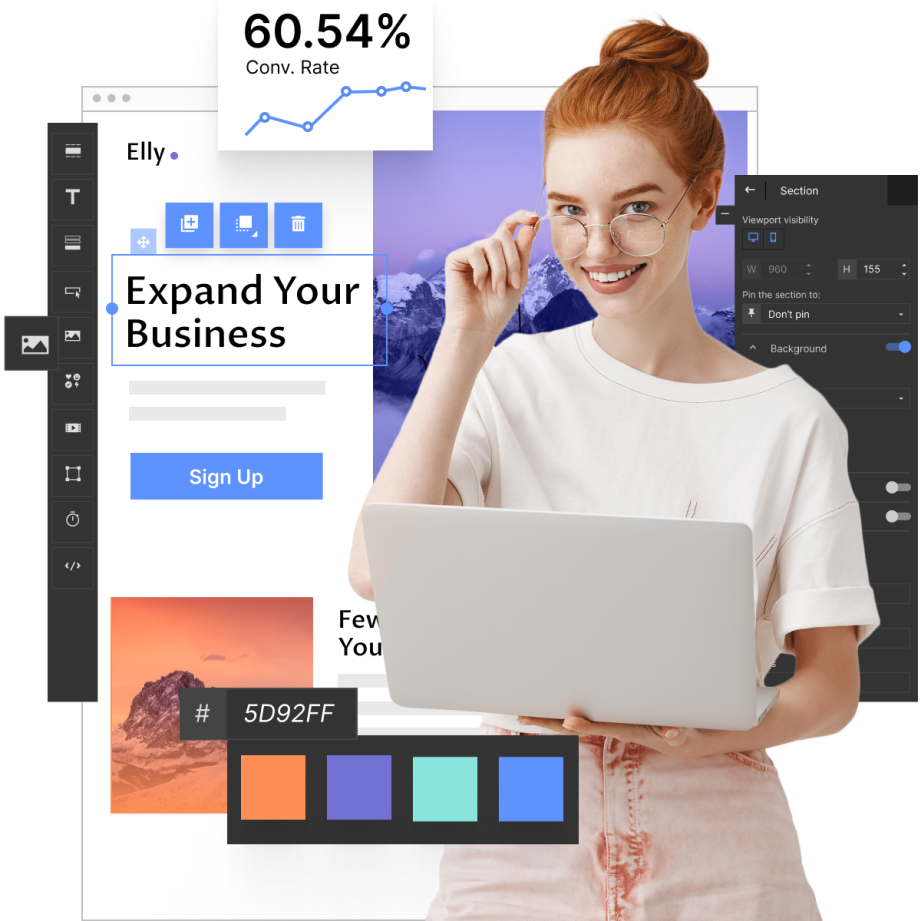
Landing page optimization (LPO) is a structured process of improving every element of a landing page to increase conversions. It combines A/B testing, user behavior analysis, and performance analytics to turn traffic into measurable results. Instead of treating a landing page as a static asset, LPO treats it as an evolving system that improves through continuous testing and data-driven adjustments.
Effective landing page optimization requires the right tools. According to HubSpot, companies using optimization software see an average conversion increase of 30%. Platforms like Landingi support optimization process by combining page building, testing, and analytics in one environment. This allows marketers to launch landing pages faster, track user behavior, and optimize performance without relying on multiple disconnected tools.
This article covers proven landing page optimization best practices and presents 7 case studies that show how these principles work in real campaigns. Each example highlights practical changes that improve conversion rates and user experience. Read on to discover actionable insights and learn how to turn landing pages into high-performing conversion assets.
What is Landing Page Optimization?
Landing page optimization is a strategy for enhancing the user experience, increasing the page’s visibility in organic search, and thus increasing conversions. The optimization approach focuses on refining key page elements based on real user behavior and performance data.
The goal of landing page optimization is to guide users toward a specific action, such as submitting a form, signing up, or making a purchase. This requires precise, data-driven adjustments to elements that directly influence decisions, including headlines, calls to action, layouts, and content structure. Continuous improvement of these components turns passive visitors into active users.
A core part of landing page optimization is experimentation. Techniques such as A/B testing compare different versions of a page to identify which one performs better. This process applies to essential elements like headlines, form fields, visuals, and page layout. Each test provides insights that help refine the page further.
Effective landing page optimization creates a clear, consistent, and frictionless user experience. When content, design, and intent are aligned, users are more likely to engage, which leads to higher conversion rates and stronger marketing outcomes.
What is Landing Page Optimization in Digital Marketing?
Landing page optimization in digital marketing is the continuous, repeatable process of enhancing the effectiveness of a landing page to increase conversions and achieve specific business objectives. This involves analyzing user behavior, running experiments, and refining various landing page elements to maximize its efficiency. The ultimate goal of this ongoing process is to encourage visitors to take a desired action, whatever the landing page’s objective is.
The main areas covered by landing page optimization include:
- A/B testing – running controlled tests to compare different page versions to see which performs better.
- User experience (UX) design – improving the page’s layout, navigation, and visual elements to make it more user-friendly.
- Content refinement – enhancing the text, headlines, and calls to action to be more compelling and clear.
- Visual elements – optimizing images, videos, and graphics to attract and hold the user’s attention.
- Conversion rate optimization (CRO)– focusing on increasing the percentage of visitors who complete the desired action.
- Page speed optimization – ensuring the page loads quickly to reduce bounce rates and improve user satisfaction.
- SEO alignment – incorporating SEO best practices to improve the visibility of the landing page in search engines.
By focusing on these areas, digital marketers can create more effective and engaging landing pages that drive conversions and contribute significantly to the success of their marketing campaigns.
How to Optimize Landing Page?
To optimize a landing page, start by selecting the right analytics tools and a flexible page builder that allows fast, data-driven changes. Then analyze user behavior, define your target audience, and align optimization efforts with clear marketing goals. Effective optimization focuses on five core areas: user experience, content, calls to action, page speed, and mobile responsiveness.
Follow this structured process to improve landing page performance:
#1 Choose a flexible landing page builder
Start by selecting a page builder that supports fast iteration and testing. Tools like Landingi, Unbounce, Leadpages, or Instapage allow you to create and adjust landing pages without coding.
A flexible builder should enable:
- Drag-and-drop editing
- Quick updates to headlines, visuals, and CTAs
- Built-in A/B testing
- Easy integrations with marketing tools
Landingi stands out by combining page creation, testing, and AI analytics in one environment, which reduces setup time and supports continuous optimization.
#2 Select the Right Analytics Tools
Next, implement analytics tools to collect and interpret user behavior data. Platforms like Google Analytics, Hotjar, or Crazy Egg provide insights into traffic, engagement, and conversion patterns.
However, external tools often require integrations and technical setup. Landingi simplifies this process with its built-in EventTracker, which monitors:
- Click behavior
- Scroll depth
- Section engagement
- Exit points
Collecting landing page data is only the first step. Interpreting it is what drives results. AI-powered features such as Solis (within Landingi) analyze behavior patterns and suggest optimization directions, helping marketers move from raw data to actionable improvements faster.
#3 Implement A/B testing
Run A/B tests to compare different versions of your landing page and identify which elements perform best. Test headlines, calls to action, forms, visuals, and layouts to find the highest-converting combination.
A/B testing replaces assumptions with measurable results. However, building strong test hypotheses can still be challenging. Tools like Solis within Landingi help generate landingtest ideas by suggesting improvements in copy, layout, and value propositions page based on performance patterns.
#4 Focus on user experience (UX)
Optimize user experience by making the page intuitive, clear, and easy to navigate. A well-structured layout should guide visitors toward the conversion goal without distractions.
Focus on:
- Clear visual hierarchy
- Readable structure
- Logical flow from headline to CTA
Test different layouts and adjust them based on real user behavior. Even small UX improvements can significantly impact conversion rates.
#5 Refine the content
Refine landing page content to be concise, targeted, and benefit-driven. Strong messaging should clearly communicate value and match the visitor’s intent.
Focus on:
- Clear, specific headlines
- Benefits instead of features
- Consistent message across the page
Align content with your target audience and campaign context. Test different versions of landing page headlines and copy to identify what drives engagement and conversions.
AI tools such as Solis in Landingi can support faster content creation and iteration, helping maintain consistency while improving landing page clarity and persuasion.
Use a flexible builder like Landingi to design, test, and refine landing pages that convert based on real data.
#6 Optimize CTAs and forms
Calls to action and forms directly impact landing page conversions, so they require continuous testing and refinement. CTA buttons should be clearly visible, visually distinct, and placed in strategic locations across the page.
Focus on:
- Action-oriented messaging (e.g., “Get Started,” “Download Now”)
- Strong contrast in color and size
- Clear placement aligned with user flow
There is no universal CTA formula. Call-to-action performance depends on audience, industry, and offer, so test multiple variations.
Landing page forms should be simple and frictionless. Limit fields to essential information, such as name and email. Test form layout, field number, placement, and submit button copy to improve completion rates. Behavioral insights from tools like EventTracker in Landingi help identify drop-off points and optimize form performance.
#7 Improve loading speed
Landing page speed directly affects user experience, conversion rate, and SEO performance. Slow-loading pages increase bounce rates and reduce engagement.
Improve loading speed by:
- Compressing images
- Reducing heavy scripts
- Using browser caching
Search engines such as Google include page speed as a ranking factor, so faster pages are more likely to rank higher and retain users.
#8 Ensure mobile optimization
Optimize your landing page for mobile devices to ensure usability across all screen sizes. A mobile-friendly page should be easy to navigate, fast, and adapted to touch interactions.
Editors like Landingi automatically adjust layouts for mobile, including spacing, button sizes, and content structure. You can further refine the design manually by simplifying layouts, reducing text, and enlarging clickable elements.
Mobile optimization is essential for landing pages, as a large share of traffic comes from smartphones.
#9 Track and analyze performance
Continuously monitor landing page performance to identify trends and improvement opportunities. Track key metrics such as:
- Conversion rate
- Bounce rate
- Time on page
Use analytics tools to evaluate how users interact with your page and where friction occurs. Data-driven insights allow you to refine landing page layout, messaging, and UX over time.
Landing page optimization is an ongoing process. Regular analysis and iteration ensure that your page stays aligned with user expectations and delivers consistent conversion growth.
How can I make my landing page more effective?
To make your landing page more effective and increase conversion rates, focus on three key strategies: social proof, dynamic content, and clarity.
Social proof builds trust and reduces hesitation on landing pages. Add customer testimonials, reviews, case studies, and recognizable brand logos. Highlight numbers such as total users, years of experience, or completed projects to strengthen credibility and reassure visitors.
Dynamic content improves relevance by adapting the landing page to each visitor. Adjust messaging based on location, referral source, or behavior. Personalize offers, language, and visuals to match user intent. Use triggers such as scroll depth or time on page to display tailored content or incentives.
Clarity ensures users understand your offer instantly. Place a clear value proposition at the top of the landing page, simplify layout and content, and guide attention toward the main action. Use whitespace to reduce distractions and keep the design focused. Combine this with fast loading speed by optimizing images and minimizing code.
These three landing page elements work together: social proof builds trust, dynamic content increases relevance, and clarity removes friction. When aligned, they significantly improve engagement and conversion performance.
13 Landing Page Optimization Best Practices
Meet the 13 landing page optimization best practices that perfectly supplement general optimization methods by refining the key landing page elements for better user engagement, increased visibility in search engines, and, ultimately, boosted conversion rates. These proven techniques’ conversion-centric approach focuses on fine-tuning the page’s content, design, and functionality to align closely with the target audience’s expectations and needs.
In a big short, optimizing a landing page involves a meticulous blend of art and science. The process may seem complex, but once you understand the page optimization mechanism, you can better manage your marketing strategies.
Fix the leaks in your funnel! Discover the key tweaks that make your landing pages convert like never before.
Landing page optimization is a dependency mechanism: marketers leverage A/B testing and user feedback to iterate on elements that work best for their audience. Improved user experience stems from creating intuitive navigation and engaging content that resonates with visitors, reducing bounce rates, and increasing the time spent on the site. Such enhancements not only lead to higher conversion rates but also signal to search engines that the page is valuable to users, thereby improving SEO rankings.
The synergy of these optimizations ensures that a landing page meets and exceeds the expectations of both visitors and search engines, setting the stage for sustained digital success. Understanding user behavior patterns and search engine ranking rules takes a lot of effort. Fortunately, marketing is now a field of science, so the fundamental knowledge is supplemented with wide studies that provide useful key takeaways. You can easily boost your page’s effectiveness by combining data insights with your landing page goals.
The 13 landing page optimization best practices below are the proven recipe for success:
- Craft a strong CTA,
- Create relevant content,
- Optimize layout,
- Incorporate relevant visuals,
- Leverage social proof,
- Create an irresistible offer,
- Optimize form,
- Optimize page speed,
- Focus on page access,
- Respond to objections proactively,
- Incorporate directional cues,
- Optimize content for localization,
- Conduct SEO optimization.
#1 Craft a strong CTA
The first landing page optimization best practice is to craft a strong CTA, arguably the most crucial aspect of landing page optimization, serving as the direct link between user engagement and conversion. A compelling CTA doesn’t just tell visitors what to do next – it motivates them to take that step, bridging the gap between their interest and your offering. To maximize the impact of your CTA, it’s essential to consider its design and content meticulously.
It should be action-oriented, using verbs that provoke enthusiasm and excitement. The language should create a sense of urgency or explain why acting now is in the visitor’s best interest.
The visual appeal of your CTA can significantly affect its effectiveness. It should be outstanding, using bold colors that contrast with the background to catch the eye instantly. The button itself should be large enough to be easily clickable, particularly on mobile devices, where finger-friendliness is a key consideration.
Placement also plays a major role – ideally, the CTA should be positioned above the fold to ensure it’s seen without scrolling, yet it can also be repeated lower on the page for visitors who need more information before they’re ready to commit.
As the CXL report shows, Michael Aagaard, a CRO specialist, boosted the conversion rate of a lengthy landing page by an impressive 304% simply by positioning the CTA button at the bottom of the page. Why did it work? A scrolling test conducted by Huge shows that at least 91% of users scroll below the fold, and at least 71% reach the bottom of the page.
It means your CTA should be repeated in strategic sections and placed not only in the hero section or on a sticky bar but also at the bottom of your page.
Even with a well-designed CTA, there’s always room for improvement. Regular A/B testing is crucial to refining every aspect of your CTA, as the data-driven approach ensures that your CTA looks appealing and performs at its best to convert visitors into leads or customers.
#2 Create relevant content
The second landing page optimization best practice is to create relevant content – it ensures that the information provided on your landing page resonates with the intended audience and aligns with their expectations based on how they arrived at the page, whether through a search engine, an email campaign, or social media.
With a clear picture of your audience’s needs and desires, you can tailor your content to speak directly to their specific situations or problems. Personalization makes the content more engaging and relatable, increasing the likelihood that visitors will feel a connection to your brand and consider your offer.
Your landing page should use clear, concise language that communicates value efficiently. Remember that landing pages are intended to be focused on a single goal, so the strategic content should be informative and well-structured. Use bullet points, break lengthy text into short sections, and support written content with adequate visuals.
As one of VWO’s articles proves, brands that incorporate visual content typically experience conversion rates 7 times higher than those that do not use visuals.
Another thing to consider: if a campaign promises a particular offer, the landing page must deliver on that promise without any discrepancies. Ensure that the messaging and tone on the landing page are consistent with what’s presented in all marketing materials that lead users there. Consistency builds trust and reinforces the user’s expectation that they are in the right place.
#3 Optimize the layout
The third landing page optimization best practice is to optimize the layout. A well-structured layout guides visitors through the content logically and intuitively, highlights key information and calls to action, and makes it easier for users to understand the value proposition and take the desired action.
Your landing page layout should be designed with the visitor’s journey in mind. Important elements like headlines, key benefits, and CTAs should be placed prominently, ideally above the fold, where they can capture immediate attention.
Focus on simplicity and clarity. Use whitespace effectively to create a clean, uncluttered environment that makes it easy for visitors to navigate the content. Then, establish a clear visual hierarchy that directs attention to the most important information and actions. Use size, color, and contrast to differentiate between more and less critical elements, ensuring that visitors naturally flow from one section to another in a way that logically leads to conversion.
#4 Incorporate relevant visuals
The fourth landing page optimization best practice is to incorporate relevant visuals. They attract attention and aid in communicating information, making complex ideas more accessible and engaging for visitors.
Select images that resonate with your target audience and align with your page’s message. High-quality, relevant images can evoke the desired emotional response and help establish a connection with potential customers.
Put your faith in videos. They can be a dynamic addition to your landing page, offering an immersive experience that text and static images cannot match. Use well-produced videos to summarize your offer, demonstrate a product in action, or include testimonials in a compelling and digestible format.
However, it’s important to use videos strategically — ensure they are optimally placed (possibly above the fold for higher engagement), not too long (ideally 45-90 sec.), and have a clear call to action at the end.
Further, HubSpot’s statistics show that 91% of consumers are interested in seeing more online video content from brands. It’s a clear tip for you – video content can be a real game-changer in optimizing your page.
Your chosen visuals should be consistent with your brand’s aesthetic and values, as it helps build trust and recognition, making your page feel like a natural extension of your brand. Use your brand’s color scheme, typography, and style of imagery to create a cohesive look and feel that enhances brand recall.
Remember about compressing multimedia – while visuals are crucial, they should not compromise the loading speed of your landing page. Optimize image and video file sizes to ensure your page loads quickly across all devices.
#5 Leverage social proof
The fifth landing page optimization best practice is to leverage social proof. As it capitalizes on the idea that people are influenced by the actions and approvals of others, it’s a powerful tool to sway potential customers.
Showcasing testimonials and reviews from satisfied customers is the best strategy for influencing the decision-making process of potential buyers. These should be authentic and relatable, highlighting specific benefits that resonate with your target audience.
Use detailed case studies and success stories to demonstrate how your product or service has effectively solved real problems for other customers. Keep them precise, include measurable results, and implement a narrative connecting emotionally with the audience.
Stick to numbers – showcasing the number of users who have signed up for your service or purchased your product can motivate new customers to join in. Similarly, displaying logos of well-known client companies, especially if they are recognizable within your industry, can enhance credibility and attest to your established presence and reliability.
#6 Create an irresistible offer
The sixth landing page optimization best practice is to create an irresistible offer that aligns perfectly with the needs and desires of your target audience and feels too good to pass up. To achieve this, your offer must have strong perceived value and be presented in a compelling, clear manner that prompts immediate action.
To achieve the best conversion results, you must start by deeply understanding what your target audience values most. Knowing their pain points, preferences, and what has historically motivated them to purchase will guide you in tailoring a personalized and relevant offer.
While crafting the offer, clearly articulate its value to the customer. This doesn’t just mean listing the product or service’s features but rather explaining how it solves a problem or improves the customer’s life, so use benefit-focused messaging.
Include bonuses or additional incentives to make your offer extremely enticing. These could be free trials, additional products, extended services, or exclusive content. Bonuses should complement the main offer and add to the overall package, making it feel exclusive and valuable.
Such tactics compel the audience to act swiftly to take advantage of the offer before it’s gone, leveraging the fear of missing out (FOMO). In the end, remember clarity – the offer should be simple to understand and easy to claim. Complex conditions or a confusing process can deter potential customers from taking action.
#7 Optimize form
The seventh landing page optimization best practice is to optimize form, improving your campaign’s overall effectiveness and conversion rates. A well-designed form facilitates a smooth user experience and encourages more visitors to complete it, thus capturing valuable leads.
Start form optimization by minimizing the number of fields in your form as much as possible. Each additional field can decrease the likelihood of completion, so only ask for absolutely necessary information. For instance, if a name and email are sufficient for your initial lead follow-up, there’s no need to request a phone number or address.
Craft your form to be intuitive and easy to navigate. Align fields logically and effectively, and use visual elements like labels and placeholders to guide users through the completion process. Then, prepare it for mobile traffic – it should be easily fillable on any device. Buttons and form fields must be adequately sized for touch inputs, and the form should adapt to different screen sizes without excessive zooming or scrolling.
To facilitate and speed up form filling further, incorporate autofill and input validation. Remember to include security assurances, especially when asking for sensitive information.
High-converting forms are also well-placed on the landing page, typically above the fold and in the direct line of sight. You can additionally use contrasting colors to draw attention to the form and differentiate it from other content.
#8 Optimize page speed
The eighth landing page optimization best practice is to optimize page speed, as it improves the user experience and positively affects search engine ranking, which can increase traffic to your site. Once your page loads fast, it directly influences user satisfaction and engagement and, at the same, affects higher conversion rates.
To provide a seamless user experience and reduce your landing page loading time, ensure all images are no larger than necessary. Large images are one of the biggest culprits in slowing down web pages. Use appropriate file formats and compress them without losing quality. Minimize HTTP requests and reduce the number of elements on your page, such as scripts, images, and CSS files.
You can also review and minimize redirects, as each time a page redirects to another page, your visitor faces additional time waiting for the HTTP request-response cycle to complete. Good advice in optimizing landing page loading time is also improving server response time, which is affected by the amount of traffic you receive, the resources each page uses, the software your server uses, and the hosting solution you choose. Look for performance bottlenecks like slow database queries, slow routing, or a lack of adequate memory and address them.
#9 Focus on page sccess
The ninth landing page optimization best practice is to focus on page access. Ensuring that your landing page is easily accessible to all users, regardless of their device or any potential disabilities they might have, is crucial not only for inclusivity but also for maximizing your potential audience and improving conversion rates.
Your landing page should look great and function flawlessly across all devices, including desktops, tablets, and smartphones. This involves responsive design practices that adapt the layout, images, and functionalities to fit the screen size and capabilities of different devices.
Accessibility should be a key consideration to ensure that users with disabilities can also interact with your landing page effectively. Implement accessible design by using sufficient color contrast, enabling keyboard navigation, and providing alternative text for images.
If your audience includes non-English speakers, offering multiple language options can significantly enhance accessibility. Providing translations or enabling users to switch languages ensures that more visitors can understand and engage with your content, thus broadening your reach and increasing potential conversions.
Always use clear layouts – avoid complex navigation structures or overly cluttered designs that can confuse users. Clear, logical navigation helps users find the information they need and take action without frustration.
#10 Respond to objections proactively
The tenth landing page optimization best practice is to respond to objections proactively. This strategy involves anticipating and addressing potential concerns or hesitations that visitors might have before they even arise. By tackling these objections head-on, you can significantly improve trust and credibility, which in turn can enhance the landing page conversion rate.
Start by gathering data from customer feedback, support queries, and sales interactions to pinpoint common concerns or questions that prospects might have about your product or service. Once you understand your target audience, you know the hurdles that might prevent a potential customer from converting.
Then, you can strategically incorporate objection responses into your landing page content through a FAQ section, detailed product information, testimonials, or comparison charts. If the objection concerns product complexity, include a simple how-to video or offer free training.
Put efforts into educating your audience – objections arise from misunderstandings or a lack of information about the product or service. Including educational resources like blog posts, videos, or downloadable guides can help clear up confusion and establish your authority, reducing skepticism.
Remember that money-back guarantees, free trials, or no-cost returns can help mitigate fears related to financial risk. Show confidence in your product’s value and use these strategic additional offers to reduce the perceived risk for the buyer.
#11 Incorporate directional cues
The eleventh landing page optimization best practice is to incorporate directional cues, which aim to guide visitors’ attention toward key elements and actions you want them to take. Visual or textual elements can subtly or overtly direct a user’s focus toward important information, CTAs, or other conversion elements.
You can, for example, use arrows or lines to effectively direct the viewer’s eye toward a specific area of your page, such as your call to action or a special offer. You can choose literal cues, like graphics pointing towards a button, or more subtle, such as lines or pathways created by the layout that lead the eye naturally.
Pay attention to crafting a sequential layout, and vary the size and style of your typography to highlight key benefits, special offers, or any data that might help convince visitors to convert. Don’t forget about strategic whitespace – use it around your main conversion goal, like a sign-up form or download button. It helps to eliminate distractions and focus the user’s attention where it’s most needed.
#12 Optimize content for localization
The twelfth landing page optimization best practice is to optimize content for localization. This goes beyond simple translation and encompasses a comprehensive approach to ensuring that your content resonates with local audiences in a way that feels native and relevant.
Tailor your content to reflect local cultural nuances, from the choice of colors and images to the type of humor or local expressions used. Understanding cultural preferences and sensitivities is crucial to avoid missteps and ensure that your content engages the target audience meaningfully.
Employ professional translators who are native speakers of the target language to ensure that translations are linguistically accurate and culturally appropriate. Incorporate local examples, case studies, testimonials, and references the local audience can relate to. Using familiar names, places, and scenarios can significantly enhance the relatability of your content.
Ensure that all monetary information is displayed in the local currency and that the payment methods offered are those commonly used in the region. This reduces friction in the purchasing process and increases the likelihood of conversion. In the end, make sure that your landing page content complies with local laws and regulations.
#13 Conduct SEO optimization
The last landing page optimization best practice is to conduct SEO optimization. Effective search engine optimization strategies enhance your landing page’s visibility in search engine results, driving organic traffic and increasing the potential for conversions. SEO optimization encompasses various elements, from keyword integration to technical enhancements, ensuring that your page attracts the right audience and provides an engaging experience that search engines recognize as valuable.
The principal rule of SEO optimization is choosing the right keywords. Start this process by identifying the keywords that your target audience uses when searching for products or services like yours. Use tools like Google Keyword Planner, Ahrefs, or SEMrush to conduct thorough keyword research.
Once you have identified relevant keywords, strategically integrate them into your landing page content, including the title, headers, and body content. However, it is important to use keywords naturally and avoid overstuffing, which can negatively impact your SEO efforts.
You must know that Google uses mobile-first indexing, which means it predominantly indexes and ranks the mobile version of the content. Ensure your landing page is optimized for mobile devices and offers a seamless user experience across all platforms.
7 Landing Page Optimization Examples
Discover 7 real-life examples of landing page optimization that contribute to higher conversion rates, better user experience, and high positions in SEO rankings. Behind each example stands a brand that implemented a data-based optimization strategy that brought it closer to the overall campaign’s success or allowed it to build a strong market position. Learn how to turn basic knowledge into powerful landing pages and inspire yourself by checking the top examples.
1. House Beautiful – optimized form
The House Beautiful landing page is an excellent example of optimized form design, primarily due to its user-friendly structure, concise yet compelling content, and strategic use of elements that enhance user experience and drive conversions. The form is designed to be straightforward, asking only for essential information – the user’s email address. In this case, the minimalistic approach reduces friction, making it quick and easy for users to complete the newsletter sign-up process.

The form is supplemented with a straightforward yet engaging headline and well-written, concise content presenting an offer attractive to the target audience. The CTA button is optimized to engage visitors with its clear messaging and outstanding color. Trust signals (Privacy Notice) reduce user hesitation. The form is surrounded by a high-quality, immersive background theme that aligns with the brand’s style. The last factor contributing to its efficiency is full responsiveness, ensuring it functions well on both desktop and mobile devices.
Why it works well:
- User-centric design,
- Minimal number of form fields,
- Simplicity,
- Clear yet engaging message,
- Outstanding CTA.
2. Forest – social proof
The Forest app’s landing page showcases highly optimized social proof elements that effectively reinforce the app’s credibility and encourage user engagement. The page prominently displays a large, updated count of trees planted. This specific and tangible metric provides clear evidence of the app’s impact, compelling users who want to contribute to environmental causes.

The page mentions the partnership with a reputable organization, Trees for the Future. By associating with a well-known entity in the environmental sector, Forest leverages this partner’s trust and credibility to enhance its reputation. Explaining how user actions (spending virtual coins) directly translate into real-world benefits (planting trees) makes the users feel their individual contributions matter. The background image of people actively engaged in tree-planting activities is a powerful visual confirmation of the impact.
Why it works well:
- Visible impact metrics
- Credibility through association
- User contribution
- Emotional appeal
3. Akuto Studio – intuitive layout
The Akuto Studio landing page for the Chord Machine AKT-0.1 is a prime example of a perfectly optimized layout. It’s designed to be intuitive and user-friendly, enhancing the overall user experience. A minimalistic design approach ensures the essential elements stand out without overwhelming the user. Simplicity helps in focusing user attention on key information and calls to action.

The page is built to be fully responsive, meaning it adjusts seamlessly to different screen sizes and devices. High-quality images and graphics are used strategically to complement the text and enhance the page’s visual appeal. All information is presented logically, starting with a compelling headline and then a detailed description, key features, and a clear call to action. This landing page works perfectly thanks to no navigation bar – this is one of the best landing page practices that helps to focus user attention on the main campaign goal.
Why it works well:
- Clean and minimalistic design,
- Visual hierarchy,
- High-quality images,
- Engaging content,
- Strategic use of whitespace,
- Consistency.
4. Epic Selfie – optimized CTA
The landing page for Epic Selfie showcases highly optimized calls to action, which are key elements driving user engagement and conversions. The CTAs “Get Started → it’s free” and “Create your Epic Selfie →” are prominently displayed in contrasting colors (bright green) against a dark background. This high contrast ensures that the CTAs are immediately noticeable to users.

The text in the CTAs is clear, concise, and action-oriented. Phrases directly tell the user exactly what to do next, eliminating ambiguity. The “Get Started” CTA includes an additional incentive by mentioning that it’s free, which lowers the barrier to entry and encourages users to take action without the fear of immediate cost. The CTAs are strategically placed where users’ eyes are likely to fall – the top-right corner, the hero section. These buttons are prominently repeated in other strategic page sections.
Why it works well:
- Simple language,
- Clear value proposition “It’s Free”,
- Psychological triggers,
- Strategic placement and repetition,
- Visual appeal.
5. Trime Studio – irresistible offer
The offer on the Trime Studio landing page is well-optimized and irresistible. It combines several elements that make it highly appealing to potential customers, like an enticing offer, strategic CTA, and an interesting combination of headline and visuals. The headline “Hop Into Shape.” is catchy and seasonal, leveraging the Easter theme to create relevance and urgency.

The offer highlights a substantial 30% discount on all bootcamps, a significant saving that can attract price-sensitive customers. The CTA is direct and action-oriented, clarifying what the user needs to do next to benefit from the discount. This offer structure subtly creates a sense of urgency and scarcity. Its design uses soft pastel colors that are pleasing to the eye and relevant to the Easter theme. The image of the rabbit adds a playful and festive touch, making the offer more engaging.
Why it works well:
- Strong value proposition,
- Clear messaging,
- Seasonal relevance,
- Subtle but effective urgency and exclusivity mentions,
- Effective use of visuals,
- Strong CTA.
6. Triibe – video content
The Triibe landing page features an explainer video that is a stellar example of optimized video content. The video is set to autoplay and muted, ensuring it starts playing without user intervention and keeps running. This grabs the visitor’s attention immediately and maintains engagement as they explore the page. The video content is high quality, with clear visuals that effectively demonstrate the features and benefits of the Triibe app.
The video content is directly related to the app’s core functionalities, showcasing dynamic features such as employee engagement, recognition, and feedback mechanisms. It’s seamlessly integrated into the landing page layout alongside concise and compelling text descriptions. This integration ensures that the video enhances rather than distracts from the overall message. The duration time matches the rule of creating video content no longer than 2 minutes.
Why it works well:
- Immediate engagement (autoplay),
- User-centric approach (muted, not disturbing)
- Concise messaging,
- Strategic position,
- Visual appeal,
- Duration time.
7. Droplette – mobile optimization
The Droplette landing page is an exemplary model of mobile optimization. It provides a seamless and user-friendly experience for visitors accessing the site from their smartphones or tablets. The landing page automatically adjusts its layout to fit different screen sizes and resolutions, ensuring all elements are easily readable and accessible on mobile devices. The site is optimized for quick loading times, which is essential for mobile users who may be on slower networks.
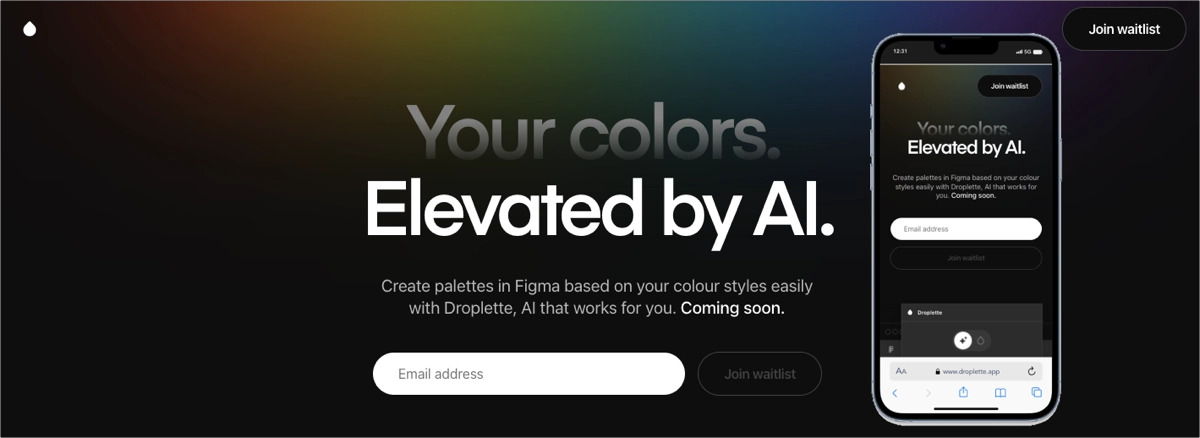
Interactive elements such as buttons and forms are designed to be touch-friendly, with adequate spacing to prevent accidental clicks. This improves usability and ensures a smoother interaction. The content on the mobile page is concise and to the point, focusing on key information and calls to action. This is important for mobile users who often prefer quick, digestible chunks of information.
Why it works well:
- Responsive design,
- Touch-friendly elements,
- Optimized load times,
- Simplified navigation,
- Concise content.
FAQ – Landing Page Optimization
Check answers for frequently asked questions about landing page optimization and allay your doubts about choosing the right tool or conducting the optimization process for various goals, and gather the necessary knowledge in an accessible nutshell.
What is the best landing page optimization tool?
The best landing page optimization tool is Landingi, a multifunctional platform that provides all the necessary features for easy page building, A/B testing, data gathering and analysis, and optimization. However, choosing the proper tool depends largely on specific needs, budget, and technical expertise. Still, Landingi was invented to streamline each digital marketing strategy based on landing pages. Its user-friendly interface, clear dashboard, and intuitive side features allow both marketing experts and novices to build, test, analyze, and optimize landing pages.
Additionally, Landingi’s ecosystem includes AI-powered tools like Solis, which support optimization directly within the platform.
You can also start optimizing your landing page with other valuable tools that excel in various phases of this process:
- Optimizely – renowned for its A/B testing capabilities, Optimizely allows marketers to test different versions of their landing pages to see which performs better. The platform offers extensive analytics to understand user behavior and integrates well with other marketing tools.
- Carrd – perfect for building landing pages. Its user-friendly editor and extensive template gallery allow users to create stunning page designs. It also provides various widgets and form creation features, which make achieving your marketing goals easier.
- Google Analytics – great for understanding landing page performance. While it doesn’t offer A/B testing or page-building capabilities, it excels in tracking visitor behavior, source of traffic, and conversion rates. This tool is invaluable for gaining insights into how users interact with your landing pages and where improvements can be made.
Choosing specific tools for each optimization method can be really expensive. Each tool has its strengths, but usability matters when it comes to selection. That’s why Landingi is a better choice – it’s a professional AI landing page builder with features that allow for effortless content creation and SEO optimization. Its extensive template gallery involves page designs that EventTracker, combined with A/B testing features, allows for experimenting with various page versions and gathering important data. Smart sections allow for implementing changes on multiple pages simultaneously. Landingi also provides a form builder, widgets, and over 170 integrations that can help you adjust the platform to your needs.
Which two actions are needed to optimize a landing page?
Optimizing a landing page effectively usually involves multiple strategies, but focusing on the following two key actions can lead to significant improvements in its performance:
- Enhancing user experience – as the user experience on a landing page is critical to its success, ensuring the page loads quickly, is easy to navigate, and is visually appealing can significantly boost the page’s visibility in search results and, ultimately, lead to higher conversion. Simplifying forms, using legible fonts, and ensuring the CTA is prominently displayed are all crucial. Additionally, ensuring the landing page is mobile-friendly is fundamental, as a significant amount of web traffic comes from mobile devices.
- Implementing A/B testing – to truly optimize a landing page, it’s essential to test various elements continuously. It involves creating two versions of your page (A and B) and comparing them to see which performs better. You can test headlines, CTAs, images, layouts, and content to determine what resonates most with your audience. This data-driven approach allows you to make informed decisions that can significantly enhance the effectiveness of your landing page.
These actions are foundational for improving a landing page’s effectiveness. By focusing on user experience and employing A/B testing, you can ensure that your landing page effectively attracts and converts visitors.
How can I make my landing page faster?
To speed up your landing page, focus on minimizing file sizes: compress images, reduce the use of heavy scripts, and streamline HTML, CSS, and JavaScript. Utilize content delivery networks (CDNs) to serve files quickly and enable browser caching to improve load times for returning visitors.
What are the 3 primary components of landing page on-page optimization?
The three primary components of landing page on-page optimization are:
- Content and copy – the text should be compelling, clearly communicate the value proposition, and directly target the intended audience. Headlines should grab attention and maintain a concise, persuasive copy to guide users toward conversion goals.
- Design and layout – aesthetics and functionality should combine to provide an intuitive user experience. This means keeping a clean design, strategically using colors and images, and crafting a clear call to action (CTA) that stands out. The layout must guide the user naturally through the content toward the conversion action.
- Technical performance – the page’s loading speed should be optimized by compressing images, leveraging browser caching, and minimizing heavy JavaScript and CSS use. The page should be mobile-friendly and accessible to all users, maintaining functionality across all device types.
How do small businesses optimize landing pages?
Small businesses seek simple, non-expensive solutions and stick to the main optimization rules. Choosing professional platforms like Landingi, they build pages focusing on clear, compelling content that resonates with their target audience, integrate strong calls to action, and ensure clean and professional design. They use user behavior tracking features that allow for optimizing pages with minimal effort. Additionally, they conduct A/B testing to refine elements based on performance data. Regularly optimizing for mobile and improving page load times are crucial for keeping engagement high and enhancing conversion rates.
What are the key elements of an optimized landing page?
An optimized landing page incorporates the following key elements that work together to increase conversions and ensure a smooth user experience:
- Headline – compelling and clearly communicating the unique value proposition to capture the visitor’s interest instantly.
- Images or videos – high-quality visuals relevant to the content significantly enhance engagement and help visitors visualize the use or benefit of the product or service.
- Copy – concise yet persuasive, focusing on the offer’s benefits. It should speak directly to visitors’ needs and encourage them to act.
- CTA – outstanding and compelling enough to make visitors click. The message should be clear and create a sense of urgency.
- Lead capture form – as short as possible to increase the likelihood of completion, asking only for essential information.
- Trust signals – testimonials, customer logos, or security badges help to build trust with the visitor by showing that others have had positive experiences or that their data is secure.
- Mobile responsiveness – a page that looks and functions well across all devices, including smartphones’ smaller screens, improves user experience, leading to a high conversion rate.
These elements are critical in designing a landing page that attracts visitors and converts them into leads or customers.
How to optimize landing page for real estate?
To optimize a real estate landing page, stick to the instructions below:
- Focus on high-quality images of properties
- Use clear and compelling headlines,
- Incorporate straightforward forms for easy lead capture.
- Include trust signals like testimonials and certifications.
- Use a strong, visible call-to-action
- Make the page mobile-friendly
How to optimize landing page for CRO?
To optimize a landing page for conversion rate optimization (CRO), enhance its effectiveness, and boost conversions, consider these strategies:
- Set up clear CTA – ensure your call-to-action is prominent and unambiguous
- Create compelling copy – craft concise, benefit-focused content that addresses the user’s needs and motivates action.
- Conduct A/B testing – regularly test different elements (CTA, images, headlines) to determine what maximizes conversions.
- Ensure fast loading – optimize page speed by compressing images and minimizing code to reduce bounce rates.
- Incorporate mobile optimization – design for mobile-first, ensuring the landing page is responsive and navigable on all devices.
- Add trust elements – include testimonials, reviews, and security badges to build trust and credibility.
How to optimize landing page for SEO?
To optimize a landing page for SEO, consider these key actions:
- Keyword integration – use relevant keywords in headlines, subheadings, and body content to align with search queries.
- Meta tags – craft descriptive title tags and meta descriptions to improve visibility in search results.
- Image optimization – use alt tags and compress images to enhance page speed and SEO.
- Content quality – provide valuable, unique content that addresses the needs of your audience.
- Mobile-friendly design – ensure the landing page is responsive across all devices to boost SEO rankings.
- Internal linking – use internal links to guide visitors to other relevant pages and improve site structure for search engines.
How to optimize a landing page for Google Ads?
Optimizing a landing page for Google Ads involves key strategies as follows:
- Relevant content – align the landing page content with your ad copy and keywords for a higher Quality Score, which leads to lower CPC and better ad positions.
- Clear CTA – ensure the CTA is relevant to your ad, visible, compelling, and positioned prominently.
- Fast loading speed – improve load times by optimizing images, minifying CSS and JavaScript, and leveraging browser caching.
- Mobile optimization – ensure the page is responsive and functioning well across all devices.
- Simplified navigation – minimize off-page links and streamline design to keep users focused on the conversion goal.
- Conversion tracking – implement tracking to gauge the effectiveness of your landing page, guiding further optimizations.
- Testing and optimization – continuously test different page elements via A/B testing based on user feedback and behaviors.
How to optimize landing page for e-commerce?
To optimize a landing page for e-commerce, follow the concise guide:
- Use clear, appealing product photos to grab attention.
- Display customer testimonials to build trust and credibility.
- Ensure calls to action like “Add to Cart” are prominent and compelling.
- Highlight discounts or promotions to encourage immediate purchases.
- Design for mobile users to enhance shopping on all devices.
- Optimize images and streamline code to speed up page load times.
Why is A/B testing crucial for landing page optimization?
A/B testing is crucial for landing page optimization as it removes guesswork and allows for adjusting the landing page to your target audience’s expectations and needs. Testing elements of a landing page optimization checklist, including layouts, CTAs, headlines, forms, and visuals, helps to build a good landing page and covers the following areas:
- Improving conversion rates
- Reducing bounce rates
- Enhancing content effectiveness
- Increasing ROI
- Making data-driven decisions
How does improving UX increase landing page conversions?
Improving the user experience (UX) on a landing page directly increases conversions by making the page more intuitive and engaging for visitors. Enhanced UX ensures that the page is easy to navigate, loads quickly, and displays well on all devices, which reduces frustration and drop-offs. Clear, compelling content and calls-to-action that are easy to locate and understand encourage users to take the desired action. By removing barriers and enhancing satisfaction, a well-designed UX fosters trust and motivates visitors to convert.
Why is mobile optimization essential for landing pages?
Mobile optimization is essential for landing pages, as it allows you to adjust a page for the majority of traffic that comes from mobile devices. It ensures the page displays correctly, loads quickly, and is easy to navigate on smaller screens, enhancing user experience and increasing the likelihood of conversions.
What common mistakes should be avoided in landing page optimization?
In landing page optimization, the following common mistakes should be avoided to maximize the process efficiency:
- Overloading information – cluttering the page with too much text or too many images can overwhelm visitors and detract from the main message or action.
- Ignoring mobile users – failing to ensure the landing page is mobile-friendly can alienate many potential customers.
- Weak or unclear CTA – not prominent or compelling CTA won’t motivate visitors to take the desired action.
- Skipping A/B testing: – not testing different page versions can leave you blind to potential improvements and insights into what resonates with users.
- Slow page load times – pages that load slowly can frustrate users and lead to high bounce rates.
- Neglecting trust signals – wthout customer testimonials, security badges, or clear privacy statements, visitors might not trust the site enough to convert.
What are the future trends in landing page optimization?
Future trends in landing page optimization include the following:
- AI and machine learning – enhanced personalization and real-time content optimization. For example, solutions like Solis by Landingi enable marketers to generate and adapt landing page content dynamically based on user intent and performance data.
- Voice search optimization – adapting content for voice query compatibility.
- Interactive elements – engaging dynamic content like quizzes or VR experiences.
- Sustainability and accessibility – prioritizing simple designs and ensuring accessibility for all users.
- Advanced analytics – deeper insights into user behavior for more targeted optimizations.
What is the cost of landing page optimization?
The cost of landing page optimization varies from $80 to thousands, depending on several factors, including the complexity of the page, the tools used, and whether you hire professionals. DIY optimization using platforms like Unbounce or Leadpages can range from $80 to $200 monthly.
Professional services from digital marketing agencies might start at a few hundred dollars for basic optimizations and can exceed several thousand for comprehensive, custom designs with advanced features. Additional costs can include A/B testing tools and analytics software, further impacting the overall expense.
Optimize Your Landing Pages with Landingi
The importance of optimizing your landing pages cannot be overstated. Whether you’re a small startup or a large corporation, taking the time to fine-tune your landing pages can yield substantial benefits. Remember, every visitor to your landing page is an opportunity – not just for a transaction, but for a transformation.
Now that you’ve expanded your knowledge of the principles of landing page optimization and been inspired by real-life examples of perfectly optimized pages, it’s time to harness the LPO’s potential and watch your business thrive in an increasingly competitive online world.
Try Landingi now for free and start making data-based optimizations to achieve the best results.