Psychographic segmentation is a way of grouping audiences based on psychological traits such as values, lifestyle, attitudes, and motivations. It looks beyond age or income to understand what people believe — and how those beliefs influence their choices.
According to Deloitte’s consumer research, 82% of buying decisions are shaped by personal beliefs or identity, not demographics alone. That’s why approaches like personality segmentation help brands build campaigns that reflect how people think, not just who they appear to be on paper.
Key Takeaways
- Psychographic segmentation explains why people buy, not just who they are.
- Personality segmentation helps shape messaging around motivations, identity, and mindset.
- Values and lifestyle often predict purchase behavior more accurately than demographics.
- Landing pages are the easiest place to translate motivations into higher conversions.
Keep reading to see why beliefs, not labels, shape buying choices.
What is Psychographic Segmentation?
Psychographic segmentation is a method of customer segmentation based on psychological traits such as values, lifestyle, attitudes, and motivations. Instead of measuring age or income, it examines what people believe, prefer, and care about, and how these factors influence their buying decisions.
Think of two customers who share the same demographics: both 30, both earn $80K, both live in the city. One buys an electric car for sustainability. The other buys a hybrid for convenience. Demographics can’t explain that difference – psychographic data can.
By understanding what motivates a target audience, brands create marketing messages that feel relevant, not generic. It leads to campaigns built on real intentions, not assumptions. The result is better targeting, higher engagement, and offers that hit closer to what people actually want.
What is the Importance of Psychographic Segmentation in Digital Marketing?
Psychographic segmentation is important because it shows what truly motivates people to choose one product over another. Demographic segmentation can tell you who your audience is, but psychographic data explains why they decide to click, subscribe, or buy. And that difference shapes how marketing strategies work in real life: people don’t buy what they see – they buy what they relate to.
Knowing what your audience cares about makes messaging feel intentional, not random. A status-seeker looks for exclusivity, a budget-conscious buyer responds to savings, and sustainability-focused consumers expect impact. The product can stay the same, the motivation changes the story.
Marketers use psychographic insights to decide which audience to prioritize, how to position a product, and what promise to highlight.
Key fact: A single product can succeed across multiple markets if brands tailor messages to different values and motivations.
How to Use Psychographic Segmentation in Digital Marketing?
To use psychographic segmentation effectively, marketers should build campaigns around what people care about, not just who they are. Once you know the values, motivations, and lifestyle preferences behind a decision, you can create strategies that match how your audience thinks, not how they’re labeled in demographic data.
Here’s how to apply psychographic segmentation:
1. Build Campaigns Around Motivation, Not Product Features
Psychographic data shows why someone chooses a product. Use that to shape your message.
- A time-saving tool should speak to efficiency-driven users.
- A premium brand should speak to buyers motivated by social status or identity.
- A sustainable product should speak to eco-driven values and lifestyle
Same product. Different message. Motivation decides the angle.
2. Personalize Messaging for Specific Psychographic Segments
Once you know the group – performance seekers, convenience buyers, budget savers, and sustainability lovers – tailor the tone, visuals, and promises. Psychographic segmentation enables personalized campaigns that speak to deeper expectations, not generic benefits.
A few practical switches:
| If the motivation is… | Focus your message on… |
|---|---|
| Convenience | saving time, doing less |
| Sustainability | impact, ethics, long-term value |
| Identity/status | exclusivity, uniqueness, premium feel |
| Growth/performance | results, metrics, improvement |
Key fact: Psychographics are most effective when validated with real behavioral data.
3. Use Behavioral Data to Validate Your Assumptions
Psychographic insights are powerful, but they need proof. Compare them with behavioral segmentation data from tools like Google Analytics, CRM reports, or product usage stats.
If a segment says sustainability matters, check: Do they click eco content? Do they buy eco products?
Motivation + action = reliable segment.
4. Apply Psychographic Segmentation to Targeting and Product Fit
Psychographic segmentation doesn’t just optimize ads. It guides:
- product positioning
- landing page messaging
- content strategy
- pricing logic (premium vs. value-driven buyers)
It helps teams choose who to prioritize; not everyone who could buy, but the audience that is most likely to choose, stay, and recommend.
5. Let Psychographic Data Shape Your Brand Story
People don’t follow brands; they follow values they relate to.
Use psychographic segmentation to answer: What belief or aspiration does this brand stand with? That answer shapes tone, visuals, social presence, and even product roadmap.
Try different messages for different psychographic segments and see which one actually converts.
5 Key Psychographic Segmentation Factors
Psychographic segmentation works by grouping a target audience based on the psychological characteristics that shape their decisions. These factors reveal what people care about, how they think, and why they choose one solution over another.
Below are the core psychographic segmentation variables brands use to create meaningful, high-performing audience segments.
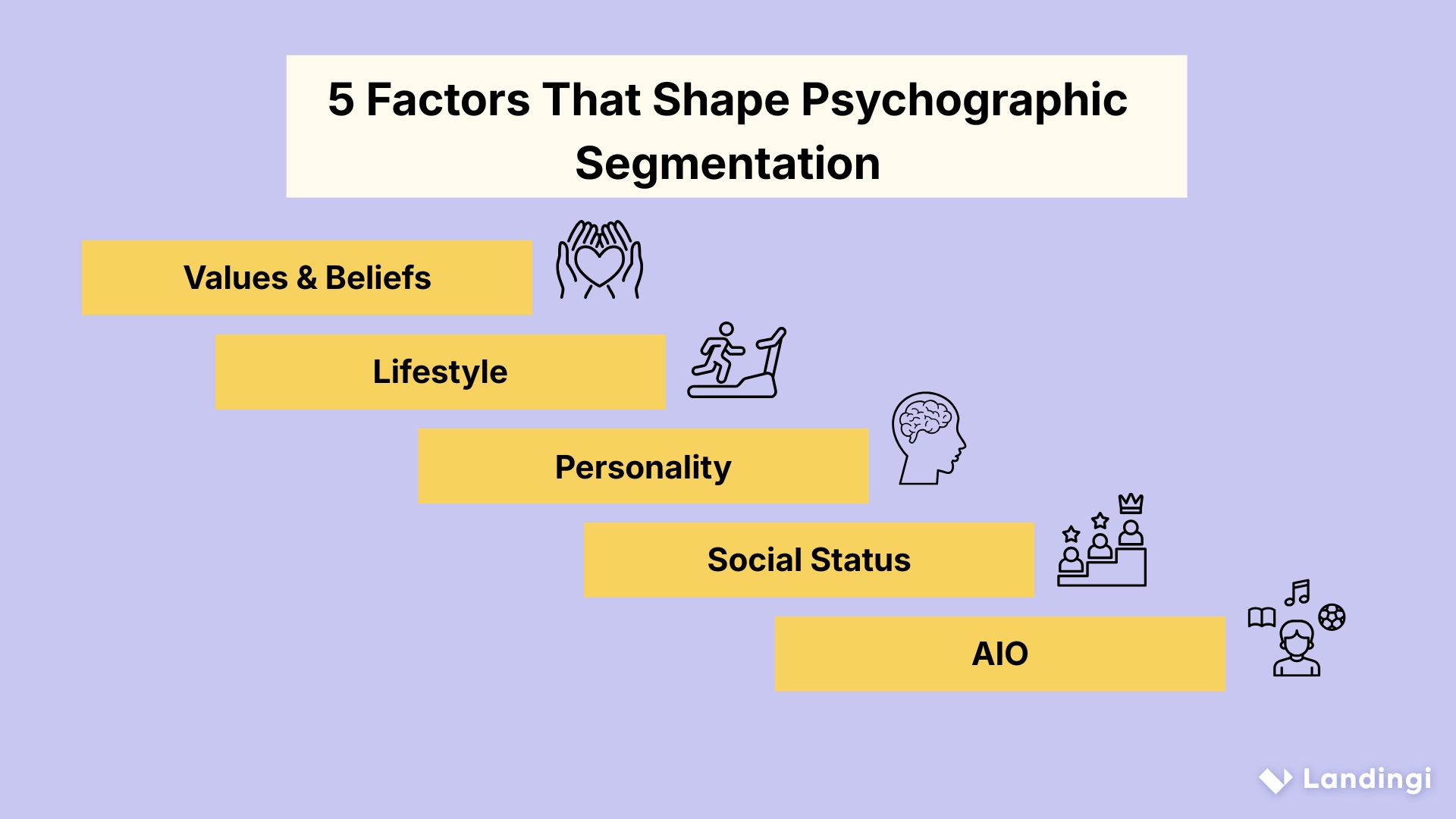
1. Values & Beliefs
Values drive what people support, prefer, or reject. When brands align with a belief a consumer already has, marketing becomes more persuasive because it feels like agreement, not persuasion.
Persona Example: – “The Conscious Consumer”:
The Conscious Consumer chooses products based on ethics, impact, and transparency. She avoids brands that feel wasteful or unclear about sourcing and is willing to pay more for solutions that match her values. To her, buying is a way of expressing responsibility.
How a brand uses it:
A cosmetics brand promotes refillable packaging and ethical sourcing. It doesn’t lead with “high quality” – it leads with purpose, because that’s what this customer segment buys.
2. Lifestyle
Lifestyle reflects daily habits and priorities. It helps brands figure out who will use a product frequently, who treats it as a reward, and who never considers it at all.
Persona Example – The Weekend Explorer”
The Weekend Explorer works office hours but lives for travel, hiking, and micro-adventures. She prioritizes gear that saves time, space, or stress, and follows creators who share practical travel hacks rather than luxury trips.
How a brand uses it:
A luggage company promotes compact, durable weekend bags specifically for micro-travelers, using psychographic data instead of broad demographic segmentation like age or salary.
Key fact: Brands don’t market to who customers are — they market to what they believe in.
3. Personality Traits
Creativity, introversion, assertiveness, risk-taking – these traits influence how customers respond to messaging.
Persona Example: – “The Planner”
The Planner makes decisions slowly, compares options carefully, and trusts structure more than hype. He values reliability, guarantees, and predictability. He wants proof, not excitement.
How a brand uses it:
A project management app doesn’t shout “Boost productivity!” to this segment. It uses messaging like “Never miss a deadline again. Track and plan every step.” Personality defines tone.
Use reusable sections to keep tone and visuals aligned across all segment‑specific pages.
4. Social Status & Self-Perception
Social status is about identity, not income. What people want to signal affects what they buy and how they justify price.
Persona Example – “The Quiet Luxury Buyer”
The Quiet Luxury Buyer isn’t interested in visible logos or prestige messaging. She values subtlety, craftsmanship, and limited editions because they reflect who she is, not what she can afford.
How a brand uses it:
A jewelry brand doesn’t talk about price or exclusivity. It talks about craft, heritage, and rarity because the purchase is a self-symbol, not a product.
5. Activities, Interests & Opinions (AIO)
AIO shows where attention lives: in hobbies, entertainment, online communities, creators, and niche opinions. It guides both creative messaging and channel selection.
Persona Example – “The Home Creator”
The Home Creator treats cooking and decorating as creative expression. She binge-watches design videos, saves recipes from creators she trusts, and values products that help her “build” a home story, not just complete a task.
How a brand uses it:
A cookware brand promotes not only in cooking forums, but also through home design channels, lifestyle podcasts, and creator kitchen makeovers. AIO tells brands where attention actually is.
Combining psychographic insights with behavioral data helps marketers predict consumer behavior, choose the right target audience, and create personalized marketing strategies that match real motivations.
3 Successful Examples of Implementation Psychographic Segmentation in Digital Marketing
Psychographic segmentation works best when brands apply motivations directly to messaging, offers, and positioning, turning the same product into different experiences for different mindsets.
#1 Spotify – Playlists Based on Mood and Identity
Spotify doesn’t just sort music by genre. It builds playlists around moods, mindsets, and lifestyles: Chill Vibes, Focus Flow, Beast Mode, Mood Booster.
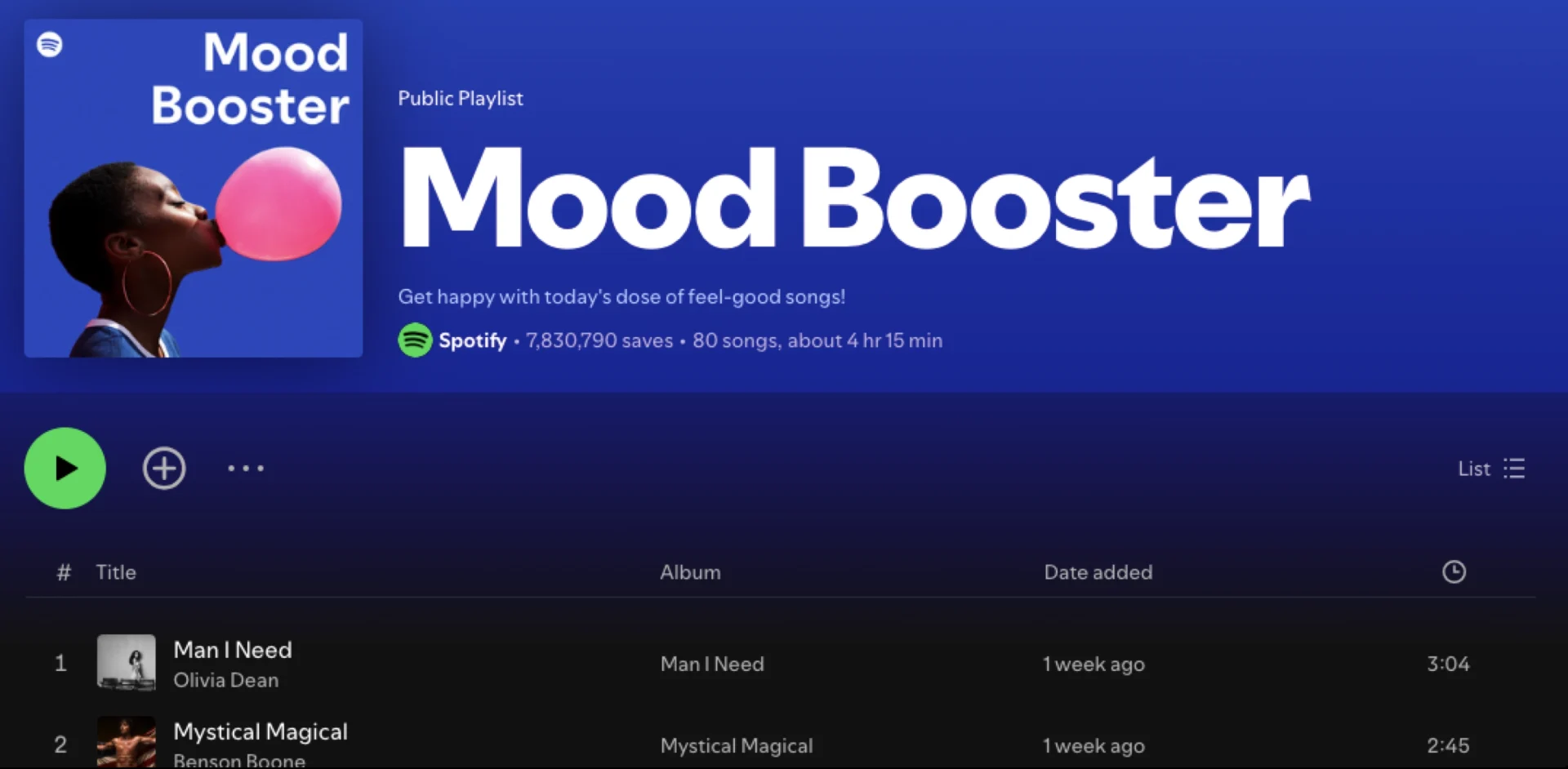
That’s psychographic segmentation based on personality and emotional triggers, not demographics. Users don’t choose songs, they choose who they want to be in that moment.
Why it works:
Spotify markets a feeling, not just music.
#2 Patagonia — Selling Values Instead of Products
Patagonia rarely leads with product features. Its marketing highlights activism, sustainability, and anti-consumerism campaigns like “Don’t Buy This Jacket.”

The product becomes a symbol of eco-driven motivations and personal values, attracting customers who see purchases as part of their beliefs.
Why it works:
Customers don’t buy a coat — they buy a cause they stand for.
#3 Harley-Davidson – Freedom as a Lifestyle, Not a Motorcycle
Harley-Davidson doesn’t sell motorcycles first. It sells the feeling of independence and the identity of someone who chooses the open road over routine. Its ads, merch, and the Harley Owners Group build a community around freedom, rebellion, and belonging, turning riders into a tribe with shared values, not just buyers of a product.

Why it works:
People aren’t purchasing a bike. They’re purchasing the right to call themselves free.
Key fact: Great campaigns don’t change products. They change the motivation behind the message.
How to Collect Data for Demographic Segmentation?
Psychographic data is collected through qualitative research that reveals why people think, feel, and act a certain way. The most effective methods include surveys, interviews, reviews, and social listening that uncover values, attitudes, lifestyle habits, and personal motivations.
Actionable psychographic segmentation requires data that goes beyond what people do and focuses on what drives their behavior. Open-ended survey questions, focus groups, and customer feedback platforms are particularly useful because they reveal personal preferences, opinions, and emotions. Behavioral data tools like Google Analytics and CRM platforms help validate those answers by showing whether user actions match their stated motivations. When both sources align, brands gain reliable psychographic insights that can shape messaging, product decisions, and targeted campaigns.
How Demographic Segmentation Can Impact Your Brand?
Demographic segmentation impacts your brand by defining who you should reach and how your product fits their basic needs. Grouping audiences by age, income, education, location, or family structure helps determine which products to promote, how to price them, and which channels will work best.
Example:
A skincare brand targets two demographic segments:
- Gen Z → lower price, social-first content, trend-focused ingredients
- Professionals 40+ → premium pricing, expert-backed formulas, longevity and quality
Same category, different positioning.
Demographic segmentation decides how the brand should speak to each group.
By mapping demographic data to real market opportunities, brands can refine buyer personas, focus budget on purchase-ready segments, and build messaging that matches each audience’s capacity and expectations. Demographics make branding practical: you learn who is worth targeting before deciding how to persuade them.
Generate dozens of custom‑landing pages at once to speak separately to each type of mindset.
What Is the Difference Between Psychographic Segmentation and Geodemographic Segmentation?
The difference between psychographic segmentation and geodemographic segmentation lies in what divides consumers into audience segments. Psychographic segmentation groups people based on psychological traits, values, and motivations, while geodemographic segmentation groups them based on where they live and how location influences their lifestyle.
Psychographic segmentation looks at internal drivers:
- personal preferences
- consumer attitudes
- personality traits and social status.
It helps brands understand why a customer group chooses specific products and services. These psychographic profiles guide personalized messaging and targeted campaigns built around real consumer motivations.
Geodemographic segmentation relies on place-driven indicators:
- neighborhoods
- income zones
- regional habits.
Here, marketers use data collection like census statistics or quantitative data to identify patterns among target groups living in the same area. For example, busy urban consumers may value convenience tech, while suburban families gravitate toward community-focused solutions.
What Is the Difference Between Psychographic Segmentation and Behavioral Segmentation?
The difference between psychographic segmentation and behavioral segmentation is that psychographic segmentation explains why people make decisions, while behavioral segmentation shows what they do through observable actions.
| Psychographic Segmentation | Behavioral Segmentation |
|---|---|
| Explains why people make decisions | Shows what people do through measurable actions |
| Based on values, lifestyle, personality, attitudes, motivations | Based on purchases, frequency, product usage, loyalty, triggers, engagement |
| Helps shape message, tone, value proposition, emotional positioning | Helps optimize timing, offers, targeting, product fit, retention tactics |
| Data sources: surveys, interviews, qualitative research, feedback | Data sources: analytics, CRM, purchase history, user activity, tracking tools |
| Used for personalized storytelling and brand alignment | Used for conversion optimization and product decisions |
| Answers: “What motivates this choice?” | Answers: “Which action did they take?” |
Psychographic segmentation groups a customer segment based on psychological factors such as values, lifestyle, and consumer attitudes. These psychographic insights reveal what motivates target consumers to choose specific products and services, helping brands shape personalized marketing strategies driven by beliefs.
Key fact: Psychographics tell you what customers believe, while behavioral data proves what they actually do.
Behavioral segmentation focuses on actions backed by transactional data: purchases, frequency, product usage, loyalty, and triggers that drive consumer behavior in real time. It helps identify which psychographic segments are actually converting – and which prospective customers are worth prioritizing.
Used together, they give marketers actionable insights to create marketing campaigns that speak to both intention and behavior.
What Is the Best Tool for Psychographic Segmentation?
The best tool for psychographic segmentation is a platform that combines qualitative insights with behavioral data. A strong example is HubSpot, which lets you collect surveys, tag behaviors, track engagement, and analyze audience motivations inside one CRM. This makes it possible to see not only what people do, but why they do it.
Other platforms like Klaviyo and Qualtrics offer similar capabilities, helping marketers capture values, lifestyle signals, attitudes, and transactional activity in one place. When both emotional motivations and behavioral evidence are stored together, psychographic segments start to reflect how audiences truly think and buy — turning insights into strategies that actually convert.
What’s the Use of Landing Pages in Psychographic Segmentation?
Landing pages help apply psychographic segmentation by giving each audience segment its own message, offer, and tone. Instead of sending everyone to the same page, brands can create landing pages that match specific values, lifestyles, and motivations.
This approach makes personalization practical. One page can highlight eco-friendly benefits for conscious buyers, while another focuses on speed, status, or results for different psychographic traits. Landing pages also act as testing tools: marketers can compare headlines, visuals, or calls-to-action to see which motivation actually drives conversions. That mix of personalized messaging and real behavioral data turns psychographic insights into targeted campaigns that feel more relevant and convert more often.

What Are the Limitations of Psychographic Segmentation?
Psychographic segmentation can be subjective, harder to measure, expensive to validate, unstable over time, and unreliable without additional data sources.
Psychographic data often relies on opinions, emotions, and self-reported answers, which can be subjective and inconsistent. Collecting accurate insights typically requires surveys, interviews, or qualitative research, making it more costly and time-consuming than demographic or transactional data. Personal preferences and consumer attitudes may also change quickly, which means psychographic segments can lose relevance if brands don’t validate them regularly using behavioral data or demographic segmentation to confirm real buying behavior.
Boost Growth With Psychographic Segmentation – Optimize Landing Pages With Landingi
Psychographic segmentation delivers real results only when motivations become experiences. Landing pages make that happen by speaking directly to how different customers think: the eco-minded buyer who wants impact, the status-driven buyer who wants exclusivity, the convenience-focused buyer who wants simplicity, or the performance-driven buyer who wants measurable progress. When you apply psychographic segmentation together with personality segmentation, each segment gets a message that feels designed for them, not just aimed at them.
And here’s the real advantage: you don’t need one perfect page. You need the right page for the right mindset. With Landingi, you can quickly create multiple landing page variations, experiment with motivations, test what resonates, and keep the versions that actually convert. Different audience segments get different promises, visuals, and offers – and each one feels like the brand truly “gets” them.
Want to see how your segments would convert with tailored landing pages? Try Landingi and build a page that finally speaks your customers’ language!