
Want to create ads people actually notice instead of scroll past? Digital advertising demands visuals and messaging that communicate value in just a split second, before the viewer moves on. With display ads representing nearly 35% of all digital ad spending (Marketing LTB), their impact on campaign performance is too big to overlook. By studying great display ad examples, you can pinpoint the techniques that turn simple banners into powerful traffic or sales drivers. The best display advertising examples prove that small design choices can have a big impact on performance.
Below, you’ll find 10 standout creatives that show how online display advertising can persuade, educate, or entertain in seconds. These examples reveal how smart visuals paired with strong value propositions can help your own brand level up its digital results.
1. ING – Consideration
ING’s animated ad highlights the bank’s wholesale expertise and invites viewers to explore tailored financial services for large enterprises. Rather than pushing a direct conversion or sign-up, the message guides the target audience toward researching and evaluating the brand’s specialized banking solutions – a classic mid-funnel consideration behavior.
The upside-down portrait creates psychological disruption that reinforces ING’s brand identity as bold, unconventional, and solution-driven. The concise call to action sparks curiosity and motivates users to learn more, ensuring the visual impact leads to meaningful engagement. In my view, the ad’s distinctiveness makes it memorable in a crowded feed, helping it stand out well beyond what a typical display ad campaign achieves.

2. Netflix – Engagement
Netflix banner ad promotes the second season of Wednesday by leaning into the show’s dark humor and instantly recognizable character attitude. This ad doesn’t push a subscription or platform sign-up – it builds excitement for the upcoming season with a provocative headline that speaks directly to fans’ expectations. By teasing the personality and tone viewers crave, the creative deepens emotional connection with existing audiences while sparking curiosity among newcomers.
Its effectiveness stems from a display ad strategy centered on engagement through intrigue, not immediate conversion. The iconic character imagery, eerie visual atmosphere, and sharp copy create instant recognition, motivating viewers to watch the show itself. Everyone would agree with that: this entertainment-first approach transforms curiosity into viewership, generating genuine anticipation that translates to measurable engagement on the platform.

3. Booking.com – Lead Generation
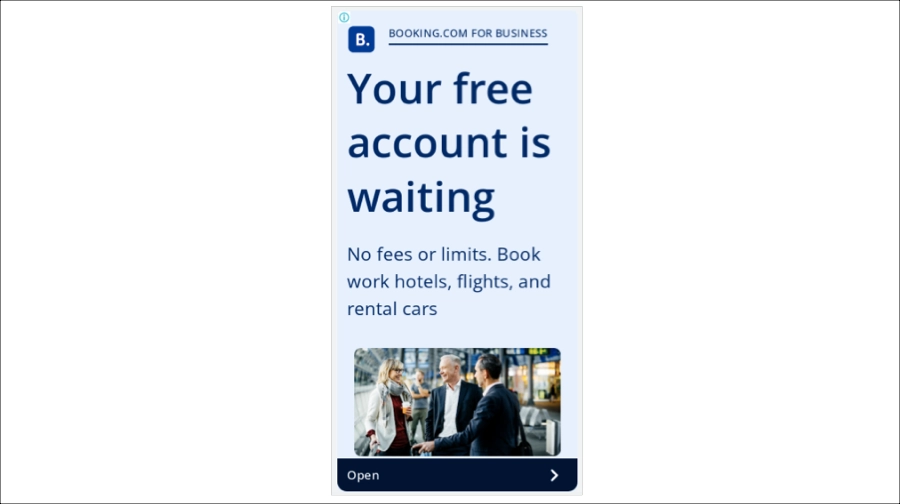
Booking.com’s display ad focuses on lead generation by prompting users to create a free account that streamlines work travel management. The value proposition is immediately clear through the promise of “no fees or limits”, making sign-ups feel low-risk while offering access to hotels, flights, and rental cars for business trips. Presented as if the account is already waiting, the creative leverages urgency and convenience – ideal for static ads commonly served across the Google Display Network.
Its effectiveness, in my opinion, stems from prioritizing clarity over complexity, using simple visuals of professionals on the go to reinforce the core message of seamless business travel planning. A direct CTA paired with the “free account” highlight removes friction, making the next step obvious and significantly increasing the likelihood of registration.
4. Chime – Product Consideration
This Chime video ad (also leveraged across programmatic display) promotes product consideration by showing how the service helps people “bank smarter” in everyday life. Jason Momoa plays multiple characters in a mall, humorously explaining core benefits, which makes the value feel relatable while highlighting how the app fits seamlessly into daily routines. Its use of varied ad formats reinforces consistent messaging, whether viewers encounter it on social feeds or during digital advertising placements.
The storyline builds engagement by entertaining first and selling second, encouraging people to watch through the entire piece of video content to uncover each perk. This playful approach captures attention before steering users toward the idea of Chime as a smarter app-based banking solution. So, why does it work? Instead of pushing a hard sell, it guides consideration organically by letting personality and product value work together.
5. Merrell – Sales
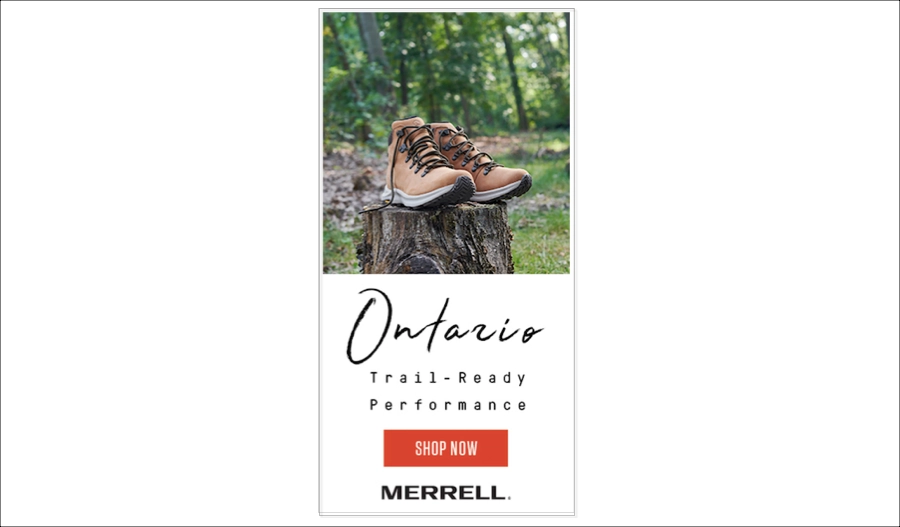
The Merrell display ad drives sales by highlighting a specific product – the Ontario hiking boot – and prompting viewers to make a purchase. The creative makes its ad promises instantly clear through an outdoor setting that signals durability, adventure, and performance. By placing the product front and center, the design eliminates distractions and focuses attention squarely on the purchasing process.
It works because the brand sells experiences, not products – and I think it’s what drives motivation to buy equipment. The effectiveness stems from pairing visual storytelling with strong visual elements that convey rugged reliability without relying on lengthy copy. The clean layout and bold CTA clarify the next step, while the natural backdrop builds desire through lifestyle association. The imagery creates aspiration, and the CTA converts intent into action – resulting in a compelling, conversion-focused sales ad.
Turn ad clicks into conversions! Start creating optimized landing pages with Landingi now.
6. Ecco – Catalog Engagement
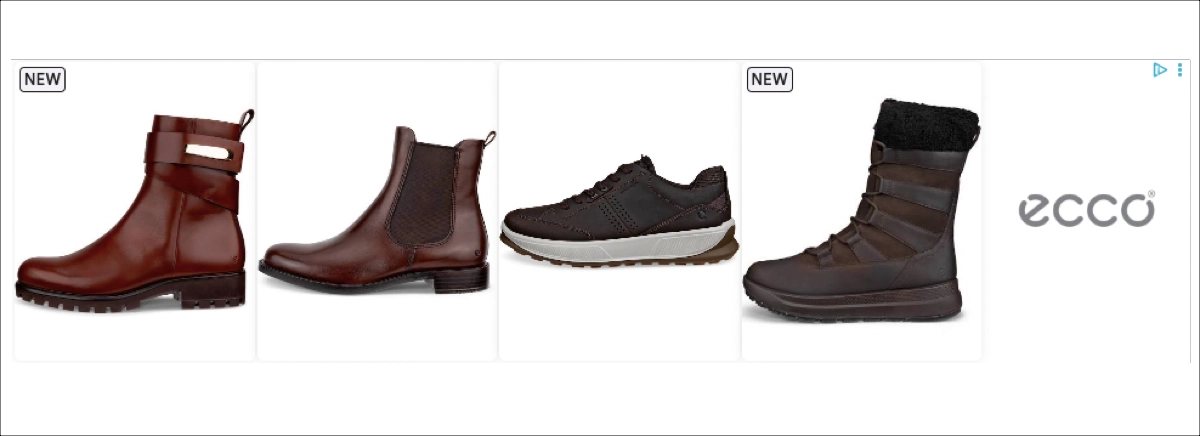
The display ad by Ecco showcases a row of different footwear styles, encouraging users to explore variety rather than focusing on a single item. By presenting multiple models, it feels like a curated shelf from a Google display ad campaign, nudging users to browse the wider collection. With the logo kept minimal, the spotlight remains on product selection instead of brand storytelling.
Its catalog engagement strength lies in mirroring the experience of window-shopping online, offering visual comparison at a glance that invites exploration. Because multiple styles are presented side by side, users feel motivated to click through and discover which option best suits them. The ad doesn’t need elaborate copy, and still – it works! Variety and instant choice handle the persuasion naturally.
7. Fanatics – Remarketing
The Fanatics ad, as shown below, is a classic remarketing execution designed to re-engage potential customers who previously browsed sports merchandise but didn’t make a purchase. By presenting familiar styles and discounted items, the creative reminds viewers of products they have already shown interest in. Delivered across major display networks, it works like a subtle nudge, bringing users back into the shopping journey rather than targeting a new audience.
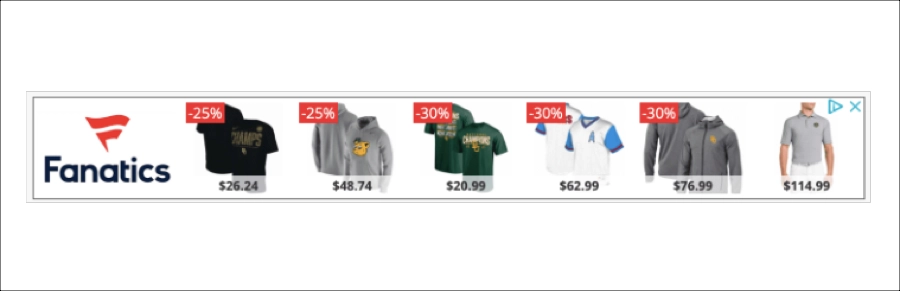
Why is this ad effective? Because it’s pairing remarketing with visible monetary incentives, using value cues like –25% and –30% as key elements that make returning to the site feel instantly rewarding. It mimics an online shopping shelf, making it more likely that users return to complete their purchase.
8. Busuu – App Promotion
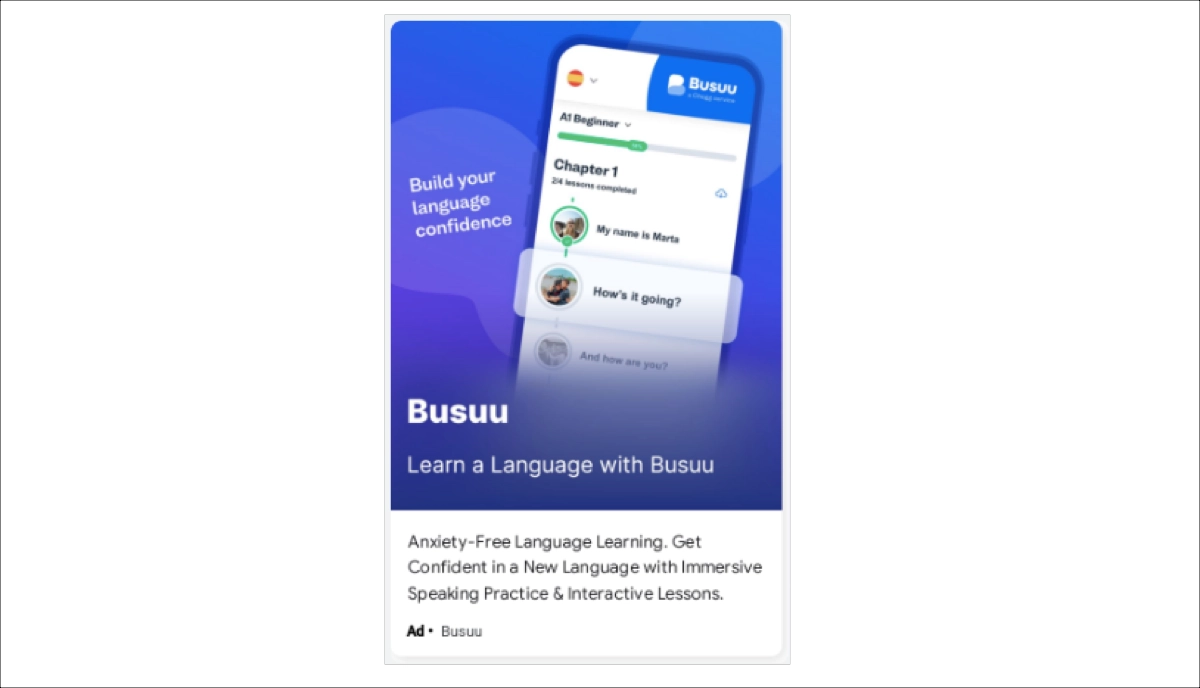
This Busuu display ad promotes the language-learning app by showcasing real in-app visuals and reinforcing an anxiety-free, confidence-building approach. By highlighting interactive speaking practice and clear lesson structure, the creative makes learning feel simple and achievable. Its use of interface visuals mirrors the experience users would see when encountering the product through Google Ads, making the value instantly understandable.
It’s effective as an app promotion because it demonstrates rather than describes – showing exactly how users can practice language skills through Busuu’s app. The straightforward brand message, paired with an authentic screenshot, makes the benefits tangible, helping to reduce hesitation for first-time learners. This combination builds trust and lowers the barrier to entry, turning curiosity into app downloads and real user growth.
From clicks to customers – Landingi helps you maximize the ROI of every display ad.
9. FIXIT Mobile – Traffic
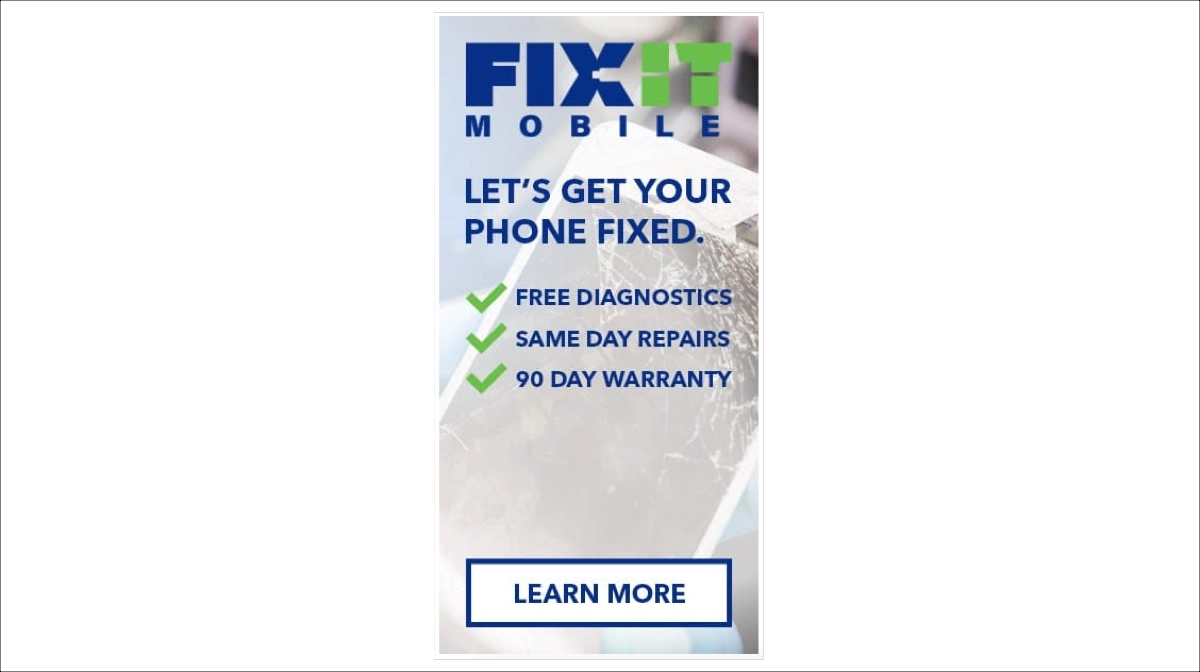
FIXIT Mobile’s ad is designed to drive traffic by encouraging users to visit the website for phone repair services. The ad text highlights three strong value propositions to build trust and give people a reason to click. Rather than asking viewers to book a repair immediately, it directs them to check out the offer.
The effectiveness of this ad lies in addressing common concerns about repairs (cost, speed, and reliability) before redirecting users to the website. By lowering hesitation first and inviting users to browse options, the ad makes a click feel easy and low-commitment. This traffic-first approach positions conversions to happen on the website itself, where users can browse options and make informed decisions at their own pace.
10. TaskRabbit – Conversion
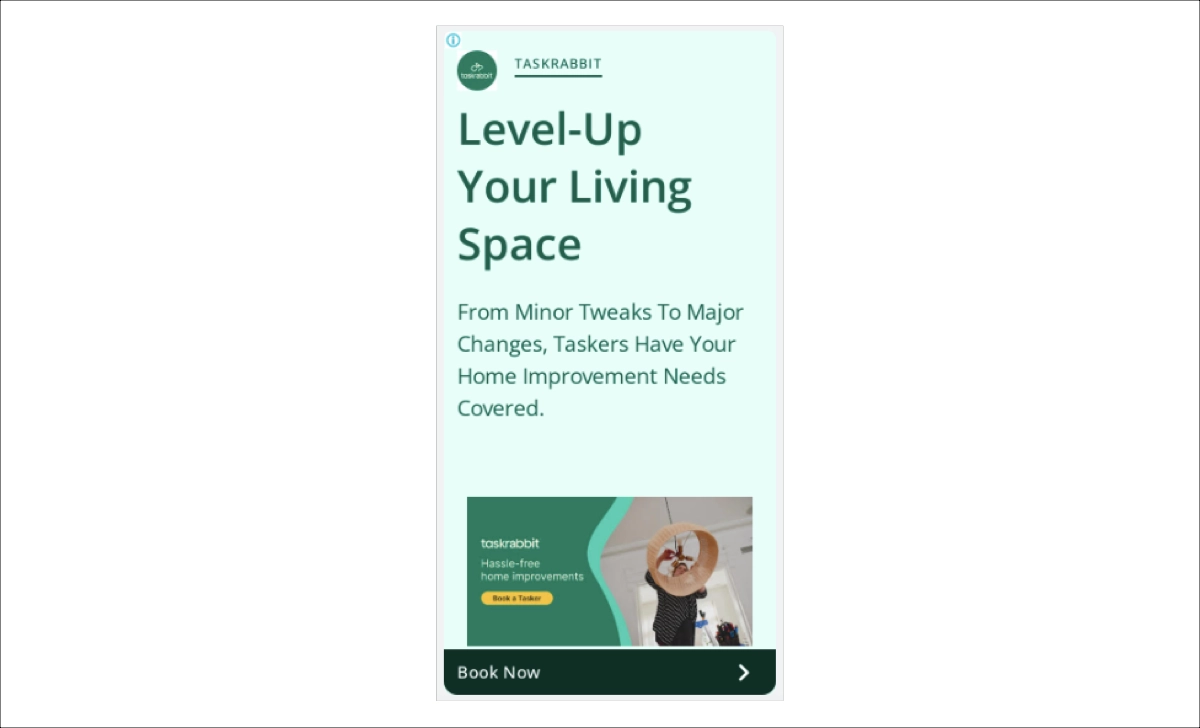
TaskRabbit’s ad is designed for conversion, using a direct “Book Now” call-to-action to entice users to schedule home improvement services right away. Its clear value proposition is delivered through concise copy that highlights everything from minor fixes to complete upgrades. Instead of building broad awareness or encouraging browsing, the ad makes booking feel like the next obvious step.
It’s effective because it pairs a strong action button with clear value, reducing hesitation by showing how easy and hassle-free hiring a Tasker is. The supporting visual of a real person working on a home project reinforces trust and credibility. Combining benefit-driven language with an immediate booking prompt always works – the ad is optimized to convert interest into a real service reservation.
What Factors Make Certain Display Ads Outperform the Rest?
The most effective display ads grab attention quickly, deliver value immediately, and make the next step effortless for the viewer. High-performing ads often go beyond good visuals – they communicate purpose, solve problems, and drive action. From aesthetics to messaging, these elements work together to create successful ad campaigns that trigger clicks, interest, and conversions.
Key factors that boost display ad performance:
- Breaking through banner blindness
Ads perform better when they disrupt repetitive layouts or generic stock imagery. Standing out visually counters banner blindness, helping the viewer stop scrolling long enough to take an interest.
- Direct value through a clear benefit
Strong ads never sell features alone – ads offer solutions. By addressing a common pain point, they instantly tell users why the product or service matters to them.
- Short, honest messaging with a compelling CTA
A concise headline plus a compelling call-to-action makes the desired action obvious. This works because users don’t need to interpret or search for the purpose of the ad.
- Using dynamic format when it adds value
Motion, multi-product layouts, or interactive visuals can be remarkably effective when they showcase real use, products, or personality. A dynamic format attracts attention and improves recall – but only when the function supports message clarity.
- Increasing click-through rate with trust signals
Proof (reviews, guarantees, recognizable logos, or specific benefits) boosts credibility and raises click-through rate – because people trust what feels proven.
- Matching ad intent to audience targeting
Strong ads perform because they reach the right people at the right time, enabling advertisers to personalize value based on where the user is in their decision journey.
Even the strongest ad fails if it leads to a poorly matched landing page. A message mismatch, slow page load, unclear value, or too many options can kill user interest instantly. If the page doesn’t fulfill the promise made in the ad, visitors drop off quickly – meaning great creative still won’t convert.
From inspiration to execution – build performance-driven landing pages with Landingi.
Start Building Landing Pages that Boost Your Display Ad Performance
Even though some marketers still treat display creatives like a relic of the early web, great display ads examples are far from outdated – they’re quietly powering visibility, retargeting interest, and driving conversions in places most users overlook. And when you draw inspiration from the best display ad examples, you can see how compelling visuals and sharp messaging still have the power to spark action.
But the real results don’t happen in the ad – they happen after the click. To turn attention into revenue, every visitor needs a personalized landing page that continues the same promise, offer, and tone they saw in the creative. This alignment doesn’t just improve user experience. It directly improves paid campaign optimization by reducing drop-offs and lowering cost-per-conversion across online display advertising campaigns.
Pairing effective display ads with tailored post-click experiences isn’t a nice-to-have – it’s a smarter marketing strategy that elevates your ROI. Want to build high-converting pages fast, without designers or developers? Try Landingi for free and start launching landing pages that make your display campaigns truly pay off.