
A Kickstarter landing page gives creators a place to build interest before the campaign goes live. It can collect email sign-ups, grow a launch list, explain the project, show the product or idea clearly, and later send visitors straight to the live Kickstarter campaign.
The pre-launch stage is where the page does most of its work. A simple form can turn anonymous traffic into a list of people you can contact on launch day, while the page itself helps you test how well the story, visuals, offer, and CTA resonate before you send more traffic.
A landing page for Kickstarter can be created in Landingi and launched quickly without a long development cycle. Creators can build complete landing pages with AI, edit them easily, add forms, create variants for different audiences or traffic sources, and keep optimizing the page as campaign data starts coming in.

5 Best Examples of Kickstarter Landing Pages
The best Kickstarter landing page examples make the project understandable within seconds and give visitors a clear next step. Some focus on collecting emails before launch, while others direct traffic straight to a live campaign, but the strongest pages consistently combine a clear value proposition, strong product visuals, social proof, and a focused CTA.
The examples below show different ways to structure a Kickstarter campaign landing page around those goals, from pre-launch list building to active campaign support.
1. CLVX 1 Keyboard and Touchpad in One Device
CLVX 1 works well as a Kickstarter landing page example because the product is unusual and needs a quick explanation. The page does that mostly through visuals, short feature sections, and product demos instead of long copy.
The strongest part of the page is how clearly it shows what the product actually does. Videos and animations demonstrate the keyboard, touchpad, and gesture controls in use, while the copy stays focused on practical benefits. The CTA then gives visitors a direct path to the Kickstarter campaign.

The original CLVX 1 campaign raised $198,345 from 1,051 backers against a $10,000 goal, so this is a good example of a product page that had to turn curiosity into enough understanding and trust to support a crowdfunding launch.
What works well here:
- Strong product demos that explain the idea quickly.
- Short, clear feature descriptions.
- Visuals that show the product in real use.
- A prominent CTA leading to Kickstarter.
- An FAQ that answers practical questions before conversion.
What could be better:
- The current page could make the connection with the original Kickstarter campaign clearer for visitors who arrive there today.
2. eufy x Robot Vacuum Omni S1 Pro
The eufy S1 Pro page is a strong Kickstarter landing page example because it explains a fairly technical product without making the page feel technical. The layout relies on large visuals, short feature sections, and product demos that show what the robot actually does.
The page also does a good job of building trust around a new product. It combines clear product benefits with videos, award badges, and endorsements, while the CTA keeps the path to the Kickstarter campaign obvious.

The campaign itself raised $3.51 million from 3,196 backers against a $10,000 goal, which makes it a useful example of how strong product presentation and social proof can support a crowdfunding launch.
What works well here:
- Clear product demos that explain the main features quickly.
- Strong visuals without burying the core message.
- Social proof through awards and endorsements.
- Short, benefit-led copy.
- A clear route from the landing page to the Kickstarter campaign.
What could be better:
- The page is visually rich, so keeping media weight under control is important to avoid slowing the experience on mobile.
3. LOOI Robot
LOOI is a good Kickstarter landing page example because the product needs to be seen in action to make sense. The page quickly shows how a smartphone turns into a small desktop robot, then uses short demos and visual sections to explain what LOOI can actually do.
The page leans heavily on videos and product visuals, which works well for a concept built around movement, interaction, and personality. Visitors can see LOOI playing games, charging a phone, moving around a desk, and interacting with its user without reading through long technical explanations.

The original Kickstarter campaign raised $518,838 from 3,578 backers against a $5,000 goal, so the page is a strong example of how clear product demonstration can support interest in an unfamiliar idea.
What works well here:
- Product demos that explain the concept almost immediately.
- Strong visuals that show different use cases.
- Short feature descriptions instead of heavy technical copy.
- A clear product story built around interaction and personality.
- An obvious path toward the campaign or product offer.
What could be better:
- More visible testimonials or feedback from real users could strengthen social proof now that the product has moved beyond its original Kickstarter launch.
4. Runaway Cow Vegan Ice Cream Shop
Runaway Cow shows that a Kickstarter landing page does not have to promote a gadget or digital product. In this case, the page supported the launch of a vegan ice cream shop in Chicago and used the founders’ story, the idea behind the business, and the local community angle to make the campaign feel personal.

The page works because the offer is easy to understand and the story gives visitors a reason to care. Strong food photography, simple sections, and clear CTAs keep the focus on supporting the project rather than overexplaining the business. Reward information also helps visitors see what they receive in return for backing the campaign.
What works well here:
- A clear, personal founder story.
- Strong visuals that make the product instantly appealing.
- Simple messaging around the purpose of the campaign.
- Reward information that gives backers a concrete reason to contribute.
- Clear CTAs leading toward support.
What could be better:
- The page could surface more social proof from customers or the local community, especially now that the shop is operating.
5. The Piggy Tales Book
The Piggy Tales Book is a useful Kickstarter landing page example for a creative project where the story and visual style matter as much as the product itself. The page introduces the book through colorful illustrations, short narrative sections, and clear information about what readers can expect.

The strongest part of the page is its visual consistency. The illustrations, colors, and copy all support the same tone, which helps the project feel coherent and memorable. Pre-order CTAs are placed around the key content, while the page gives visitors enough detail about the story and characters without becoming too text-heavy.
What works well here:
- A clear visual identity that matches the product.
- Storytelling that supports the book rather than overwhelming the page.
- Strong illustrations that show what backers are supporting.
- Simple, visible pre-order CTAs.
- Good use of white space and short sections.
What could be better:
- A short video introducing the book or creator could make the page feel more personal and give potential backers another way to connect with the project.
How Do I Create a Kickstarter Landing Page?
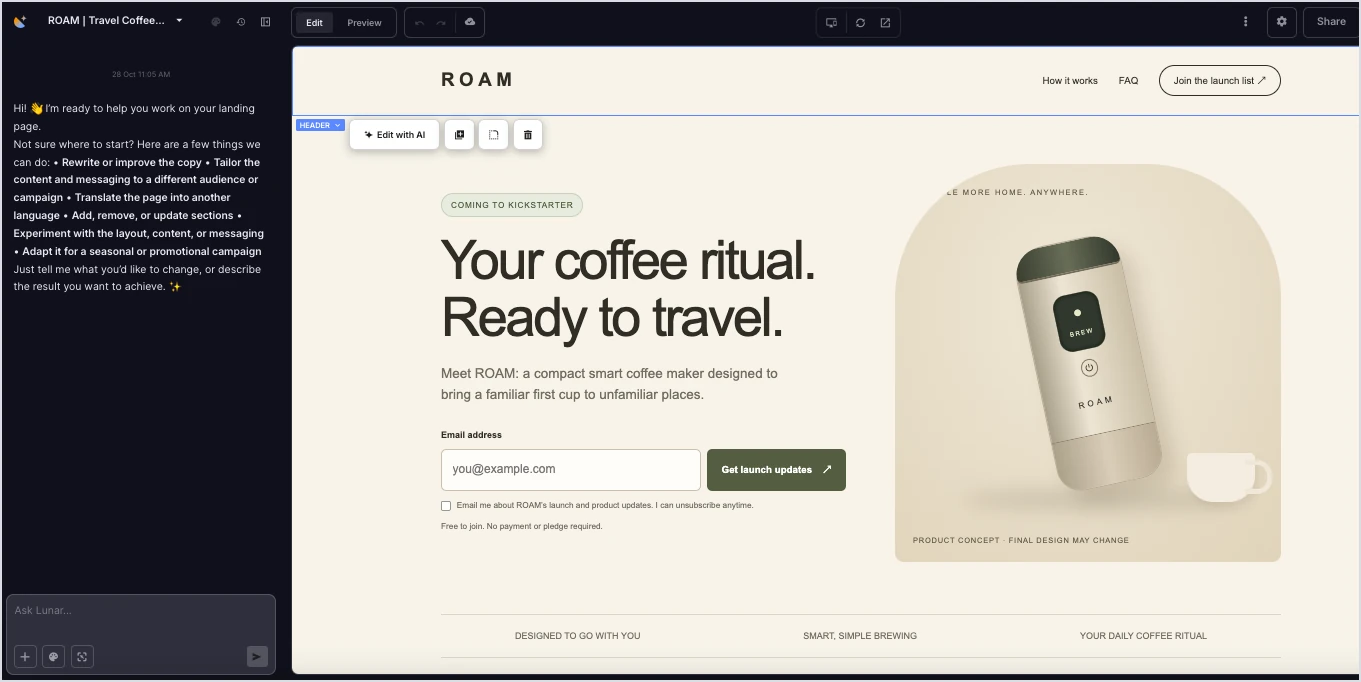
The fastest way to create a Kickstarter landing page is to use a landing page operation platform like Landingi. Start with a clear campaign brief and let Lunar turn it into a complete page. You can then refine the content and layout, add a signup form, publish the page, create variants, and optimize it as real campaign data starts coming in.
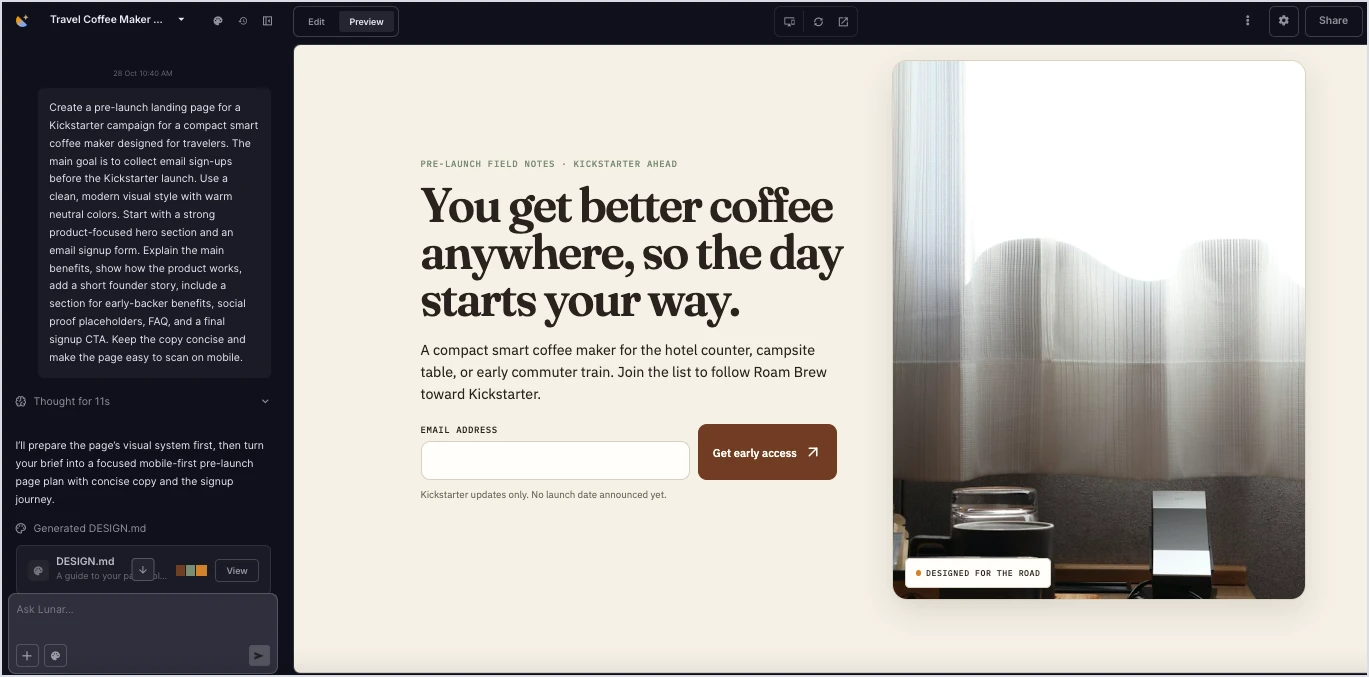
For a pre-launch campaign, give Lunar enough context to understand both the product and the action you want visitors to take. A useful prompt could look like this:
Create a pre-launch landing page for a Kickstarter campaign for a compact smart coffee maker designed for travelers. The main goal is to collect email sign-ups before the Kickstarter launch. Use a clean, modern visual style with warm neutral colors. Start with a strong product-focused hero section and an email signup form. Explain the main benefits, show how the product works, add a short founder story, include a section for early-backer benefits, social proof placeholders, FAQ, and a final signup CTA. Keep the copy concise and make the page easy to scan on mobile.Lunar can use that description to generate the page structure, sections, layout, and copy rather than giving you an empty template to fill in. The first version should still be treated as a starting point: replace generic visuals with real product images, check every claim, tighten the copy, and make sure the main CTA matches the campaign stage. Before launch, Join the waitlist or Get launch updates usually makes more sense than Back this project.
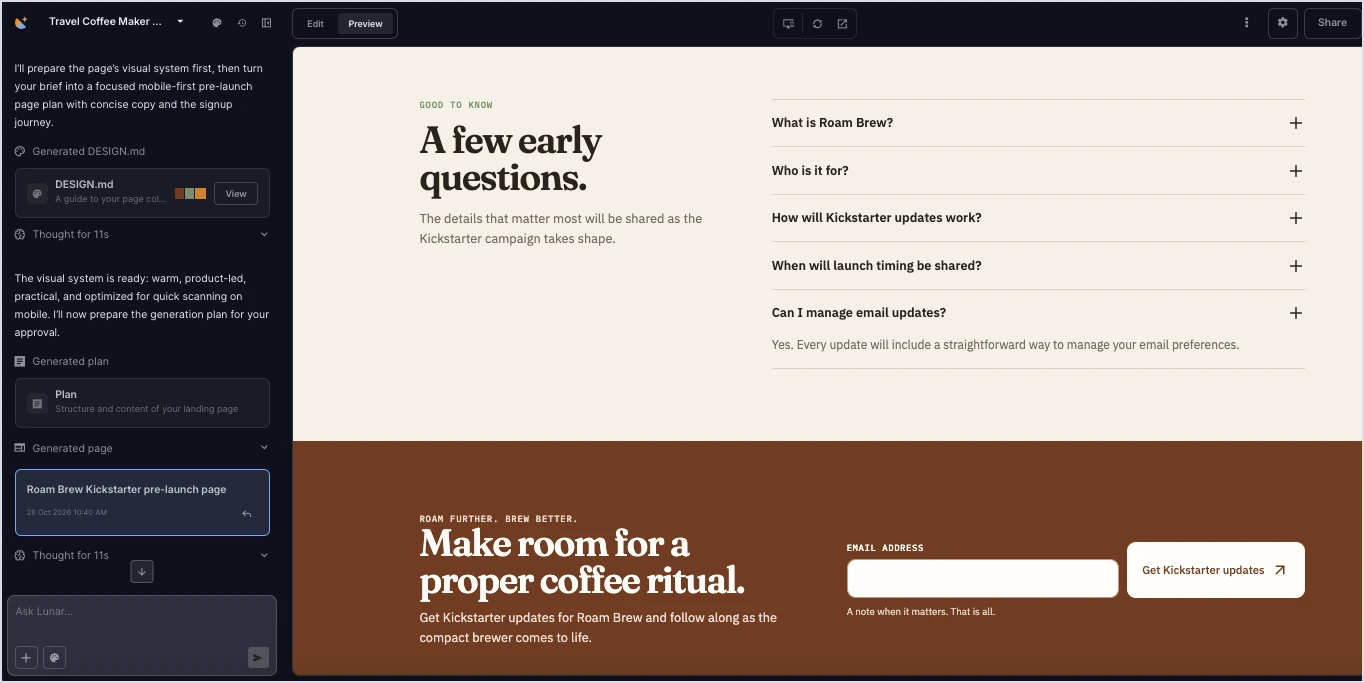
A simple form is especially important before the Kickstarter campaign goes live. Ask only for the information you actually need, usually an email address, and give people a clear reason to sign up. Early access, a launch reminder, or information about a limited early-backer offer gives the form a purpose beyond a generic newsletter subscription.
Once the core page is ready, create variants instead of trying to make one version work for every visitor. A product may need different messaging for people coming from Meta Ads, a creator partnership, or a niche community. Keep the offer consistent, but test the headline, hero visual, benefits, and CTA against the intent of each audience.

A few practical checks before publishing Kickstarter landing page:
- Make the product and its main benefit understandable from the first screen.
- Show the product in use instead of relying on feature lists alone.
- Keep the pre-launch form short and easy to complete on mobile.
- Give visitors one primary action rather than several competing CTAs.
- Add proof wherever you have it: prototypes, press mentions, beta feedback, awards, or real development progress.
- Keep Kickstarter launch details easy to update as the campaign moves from pre-launch to live.
Generate a launch-ready Kickstarter page from your campaign idea and shape it around the audience you want to reach.
After publishing, optimization should be based on real visitor behavior. EventTracker shows how visitors interact with the page, including clicks, form activity, and scroll behavior, while Solis analyzes those signals together with the page and campaign context and surfaces practical optimization recommendations.
That makes it easier to spot problems such as visitors dropping before the signup form, a section that gets little attention, or a mobile experience that needs work. Instead of redesigning the whole Kickstarter pre-launch page, you can focus on the parts that are actually creating friction.
Orbit can take the workflow one step further. As Landingi’s MCP server, Orbit connects an MCP-compatible AI environment with your Landingi workspace, so campaign context does not have to be copied manually between tools.
You can work from the AI conversation you already use and continue with page creation, updates, publishing, or performance checks from there.
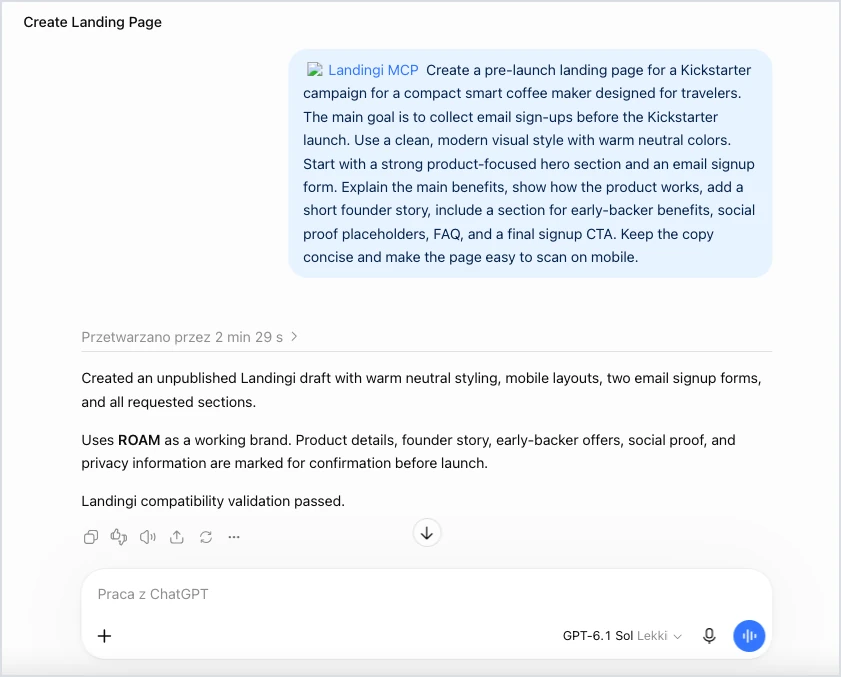
For a Kickstarter campaign, that could mean giving your AI workspace the campaign brief, product information, brand rules, and new launch details once, then using that same context to create another page variant, update the CTA when the campaign goes live, or review performance without rebuilding the workflow from scratch.
Connect your AI workspace with Landingi to create, update, publish, and review Kickstarter pages without switching tools.
5 Kickstarter Landing Page Best Practices
A strong Kickstarter landing page should help you collect leads before launch, test which messages resonate, and direct visitors to the live campaign once it starts. The same page can support different stages of the campaign as the goal shifts from building interest to generating pledges.
These five practices help keep the page focused, easy to act on, and useful throughout the campaign.
#1 Keep the signup form simple
For a Kickstarter pre-launch page, the form should make it easy for interested visitors to join your launch list. In most cases, an email address is enough.
Take a look at the example below:

Give visitors a clear reason to sign up, such as launch updates, early access, a campaign reminder, or information about an early-backer offer. The value of joining should be obvious before someone enters their email.
Keep the form close to the main value proposition and make sure it is easy to complete on mobile. Avoid asking for extra information unless you actually need it for the campaign.
#2 Match the CTA to the campaign stage
The main CTA should reflect what visitors can realistically do at that moment. On a Kickstarter pre-launch page, actions such as Join the waitlist, Get launch updates, or Notify me at launch usually make more sense than asking visitors to back a campaign that is not live yet.
Take a look at the example below:

Once the Kickstarter campaign launches, the CTA can change to Back on Kickstarter or another direct campaign action.
Keep one primary CTA throughout the page and repeat it where visitors are likely to make a decision, such as the hero section, after key benefits, and near the bottom of the page. Avoid giving several competing actions equal visual weight.
#3 Show the project in action
Kickstarter projects often introduce products, ideas, or experiences people have not seen before. Showing the project in use can explain more than a long feature list.
Take a look at the example below:

Use video, animation, product photography, prototype footage, or short visual demonstrations to show how the idea works and what a backer would actually be supporting.
Lead with the most useful proof rather than a long introduction. If the project solves a specific problem, show that problem and the result early. If the product has an unusual mechanism or interaction, demonstrate it directly.
Video can strengthen the page, but the core offer should still be understandable without pressing play. Visitors should be able to grasp the product, its value, and the next step from the surrounding copy and visuals.
#4 Make the value proposition clear from the first screen
Visitors should quickly understand what the project is, who it is for, and why it is worth their attention. The hero section should communicate the main value of the project without relying on a vague slogan or a long explanation.
Take a look at the example below:

Focus on the difference that matters most to a potential backer. That might be a new use case, a better design, a simpler solution to an existing problem, or an idea that is not yet widely available.
Support the main message with real campaign assets wherever possible: product images, prototypes, demonstrations, development progress, beta feedback, press coverage, awards, or other proof that makes the project easier to understand and trust.
If the landing page was generated with AI, treat the generated copy and visuals as a starting point. Replace generic content with real product information and check that every claim accurately reflects the campaign.
#5 Generate, test, and refine before launch
An AI-generated Kickstarter landing page should not be treated as a finished version. Use the first page as a base, then refine it as you learn more about the audience and the messages that generate interest.
Create variants for different traffic sources or audience segments instead of forcing one message to work for everyone. Visitors coming from Meta Ads, a creator partnership, an existing community, or PR coverage may respond to different benefits, headlines, visuals, or CTAs.

Test changes in focused areas such as:
- A Kickstarter landing page headline can test different ways of framing the project’s main benefit.
- A Kickstarter landing page hero can compare product shots, demonstrations, or lifestyle imagery.
- A Kickstarter pre-launch CTA can test different reasons to join the launch list.
- A Kickstarter landing page variant can adapt messaging to a specific audience or traffic source.
- Kickstarter landing page form performance can show whether additional fields create unnecessary friction.
Use behavioral and conversion data to decide what to refine next. In Landingi, EventTracker can show how visitors interact with the page, while Solis can analyze those signals together with the landing page and campaign context and point to areas worth improving.
The goal is not to redesign the whole page after every result. Use the data to identify where visitors lose interest, which messages attract stronger engagement, and which variants deserve more traffic before the Kickstarter campaign goes live.
Compare page variants and keep the version that drives stronger engagement or conversions.
How Can I Optimize My Kickstarter Landing Page for Higher Conversion Rates?
To optimize your Kickstarter landing page for higher conversion rates, focus on how visitors actually behave on the page and use that data to improve the elements that create friction.
In Landingi, EventTracker shows how visitors interact with the page through clicks, scroll depth, form activity, conversions, and other on-page events. Event and Scroll Maps help reveal which sections attract attention, where users stop, and whether important elements such as the signup form or CTA are being reached.

Solis goes further by analyzing EventTracker data together with the page structure, visuals, and campaign context. It surfaces alerts, discoveries, and practical optimization suggestions, so you can identify issues such as abandoned forms, weak CTA engagement, mobile friction, or sections that receive little attention.
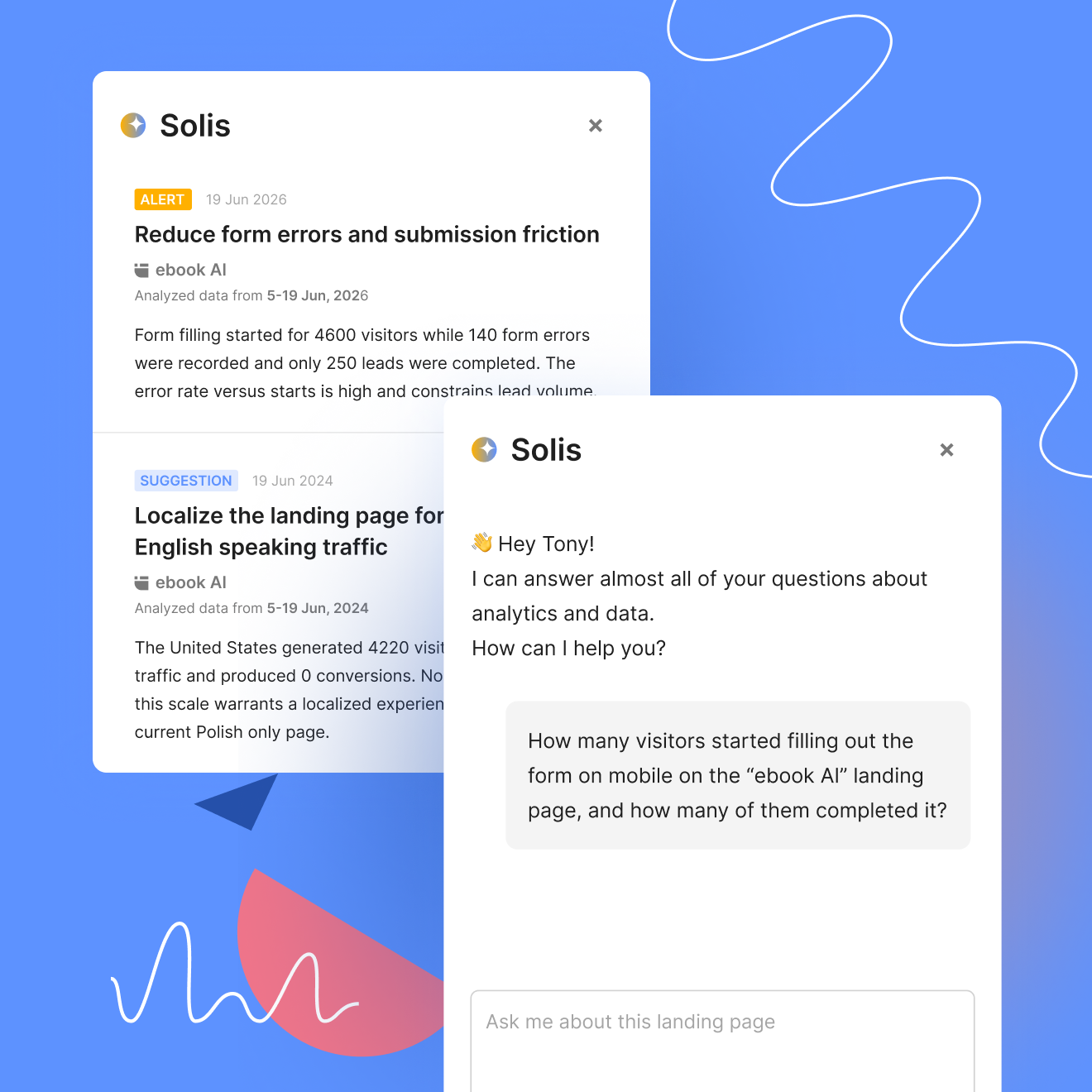
Use those insights to make targeted changes, then validate them with A/B testing. Test one meaningful variable at a time, such as the headline, hero visual, CTA, form, or section order, and compare how each version performs.
The process is simple: track behavior with EventTracker, interpret the data with Solis, test focused changes, and keep the version that performs better.
Use AI-powered insights to spot friction and prioritize the changes that can improve page performance.
FAQ About Kickstarter Landing Pages
These answers cover the practical questions creators usually face when planning, building, and promoting a Kickstarter landing page.
What is a Kickstarter landing page?
A Kickstarter landing page is a standalone page used to present a project, collect interest before launch, and direct visitors to the live Kickstarter campaign once it starts. A Kickstarter pre-launch page often focuses on email sign-ups, early-backer interest, and explaining the project clearly before pledging is available.
What should a Kickstarter landing page include? Key elements
A Kickstarter landing page should include a clear value proposition, strong product or project visuals, concise copy, a visible CTA, and a simple form if the campaign is still in pre-launch. Social proof, reward details, FAQs, founder information, and launch timing can also help visitors understand the project and decide what to do next.
What is the best Kickstarter landing page builder?
The best option is a platform that lets you create, publish, edit, test, and optimize the page without rebuilding the workflow as the campaign changes. Landingi is an AI landing page operation platform that combines AI page generation, forms, variants, analytics, A/B testing, and optimization tools in one place, which makes it well suited to both pre-launch and live Kickstarter campaigns.
How do I drive traffic to a Kickstarter landing page?
Drive traffic through the channels where your potential backers already spend time, such as social media, paid ads, creator partnerships, niche communities, email, PR, and existing audiences. Use dedicated page variants when different traffic sources need different messaging, and track which channels actually bring sign-ups or campaign clicks.
When should I create a pre-launch landing page?
Create a Kickstarter pre-launch page before you begin actively promoting the campaign, so early traffic has somewhere useful to go. The earlier the page is live, the more time you have to build an email list, test messaging, collect feedback, and improve the page before launch day.
Build, publish, test, and optimize your Kickstarter landing page in one platform.
Build and Optimize Your Kickstarter Landing Page With Landingi
Landingi gives creators one place to build, publish, test, and improve a Kickstarter landing page as the campaign moves from pre-launch to live promotion. Instead of treating the page as a one-time asset, you can keep adapting it as the audience, traffic sources, and campaign goals change.
Lunar can turn a campaign brief into a complete landing page, including structure, copy, and sections. From there, you can add forms, refine the page, create variants for different audiences, and publish without a long development process.
Once traffic starts arriving, EventTracker shows how visitors interact with the page, while Solis analyzes that behavior in the context of the campaign and points to areas worth improving. This makes it easier to adjust the page based on what visitors actually do.
Orbit extends the workflow into your preferred AI environment through MCP, so campaign context can stay connected while you create, update, publish, and review landing pages.
For Kickstarter campaigns, that means one page can evolve with the launch: collect emails before the campaign starts, shift the CTA when Kickstarter goes live, support new traffic sources, and keep improving as performance data comes in. Build with Landingi to create your Kickstarter page, launch it quickly, and keep optimizing it as the campaign grows.