Digital marketing, online marketing, internet marketing, and e-marketing are often used interchangeably. The key distinction is that online marketing requires an Internet connection, while digital marketing also includes offline digital channels such as SMS, digital billboards, and in-store screens.
The comparison below covers seven practical differences, including channel access, targeting, measurement, cost, and campaign flexibility. It also explains when landing pages connect offline digital touchpoints – such as QR codes or SMS – with measurable online actions.
A campaign-specific landing page gives users a place to complete the action promised in an ad, email, social post, SMS, or code. It also makes the response easier to measure than sending every campaign to a general website page.

What is Digital Marketing?
Digital marketing is the use of digital channels to promote products or services and engage with customers. These channels can be both online and offline.
Digital marketing may use online channels, such as search and social media, or offline digital channels, such as SMS and digital out-of-home displays. Real-time measurement and editing are usually more accessible in Internet-based campaigns than in fixed offline placements.
Main types of digital marketing include:
- Search engine optimization (SEO) – improving website visibility in search engines
- Email marketing – sending targeted messages to subscribers
- Content marketing – publishing content that answers audience questions, supports product research, or generates demand
- Paid advertising – using platforms like Google Ads or Facebook Ads
- Website or landing page marketing – matching pages to campaign intent and guiding visitors toward an action
- Social media marketing – distributing organic and paid content through platforms such as Instagram or LinkedIn
What is Online Marketing?
Online marketing is a form of digital marketing that uses the Internet to promote products or services. Because of this, it is often called internet marketing.
Online marketing includes well-known strategies such as:
- Search engine optimization (SEO)
- Social media marketing
- Email campaigns
- Website marketing
- Pay-per-click advertising (PPC or paid ads)
In everyday business language, online marketing and digital marketing are often treated as synonyms. The distinction becomes relevant when a campaign includes digital channels that do not require an Internet connection, such as SMS, digital signage, or electronic billboards.
Online marketing is also sometimes called e-marketing, though this term can be confused with electronic marketing, which may have broader meanings.
Online marketing differs from traditional marketing because it requires an Internet-connected channel. Traditional marketing includes formats such as print, direct mail, linear TV, and non-digital billboards, although many campaigns combine both groups.
7 Key Differences Between Digital Marketing and Online Marketing
The main difference is channel access: digital marketing includes both online and offline digital channels, while online marketing requires the Internet. The remaining differences – such as targeting, measurement, cost, and flexibility – mainly result from that channel distinction.
1. Channels used
Digital marketing uses both online and offline channels, including social media, TV ads, and digital screens in stores. Offline digital channels let brands reach people in locations or situations where they are not actively browsing the Internet, such as retail stores, public transport, or live events.
Online marketing uses only internet-based channels, such as PPC ads, social media campaigns, and website promotions. Its reach is limited to people with internet access.
2. Consumer groups
Digital marketing can reach both online and offline consumers, including those not active on the internet, through channels like SMS or TV ads. Offline digital channels is useful when Internet usage is limited, when the audience prefers SMS or television, or when the campaign needs to reach people in a specific physical location.
Online marketing targets only internet users, which may exclude regions or groups with limited online access. Online marketing is limited to connected users, but it provides more behavioral signals for segmentation, retargeting, and campaign measurement.
3. Targeting and personalization
Digital marketing includes offline methods like digital radio ads, which rely on broad and less precise targeting. However, channels such as SMS can still use precise first-party segments when the company has valid consent and reliable customer data.
Online marketing allows precise targeting using data such as:
- demographics
- user behavior
- interests
- location
Behavioral and first-party data can support tactics such as retargeting product viewers, excluding existing customers from acquisition ads, or sending offers based on previous purchases. These marketing tactics support long-term relationships only when frequency, consent, and message relevance are controlled.
4. Application scope
Digital marketing suits a wide range of industries. Local businesses may use digital billboards, while global brands combine TV and online ads.
Online marketing is especially important when research, comparison, lead generation, booking, or purchase happens online. This includes:
- e-commerce
- SaaS
- local services
- education
- financial services
- B2B companies
These industries rely on web interactions to reach and engage customers.
5. Cost level
Digital marketing can be more expensive, especially with offline channels like TV or radio. Producing ads or buying media slots often requires a higher budget.
Online campaigns often have a lower entry budget because advertisers can set daily limits and test a small audience before scaling. However, competitive keywords, narrow B2B audiences, creative production, and tracking tools can still make customer acquisition expensive.
6. Measurement and analytics
Online marketing offers detailed, real-time analytics through tools like Google Analytics. Marketers can track:
- click-through rates
- conversion rates
- lead volume
- revenue per conversion
Click, lead, and revenue data can be used to pause unprofitable ads, reallocate budget between audiences, identify form drop-off, or compare landing page variants.
Digital marketing provides strong analytics for online parts, but offline channels (like billboards) are harder to measure. They rely on estimates rather than exact data, which limits actionable insights.
When an offline digital campaign has no trackable response mechanism, advertisers may need brand-lift surveys, footfall analysis, or matched-market studies, increasing both measurement cost and lead time.
7. Campaign flexibility
Online marketing is highly flexible – marketers can adjust campaigns instantly based on performance, for example, pausing or changing a Facebook ad in real time.
Digital marketing is usually less editable than online campaigns, especially when it comes to offline elements like TV or radio. A booked digital screen, broadcast slot, or pre-produced asset may require additional approval, production work, or media cost before it can be changed.
Digital Marketing vs Online Marketing Examples
Let’s look at examples to clearly show the difference between digital and online marketing.
Digital marketing example
A digital billboard or a screen ad at a take-out restaurant is an example of digital marketing that isn’t online.

All online marketing is part of digital marketing. The examples below show both types.
Online marketing example
A paid Wall Street Journal ad displayed in a Facebook feed is online marketing because both delivery and interaction take place through an Internet-connected platform. While scrolling your Facebook feed, you might see this ad:
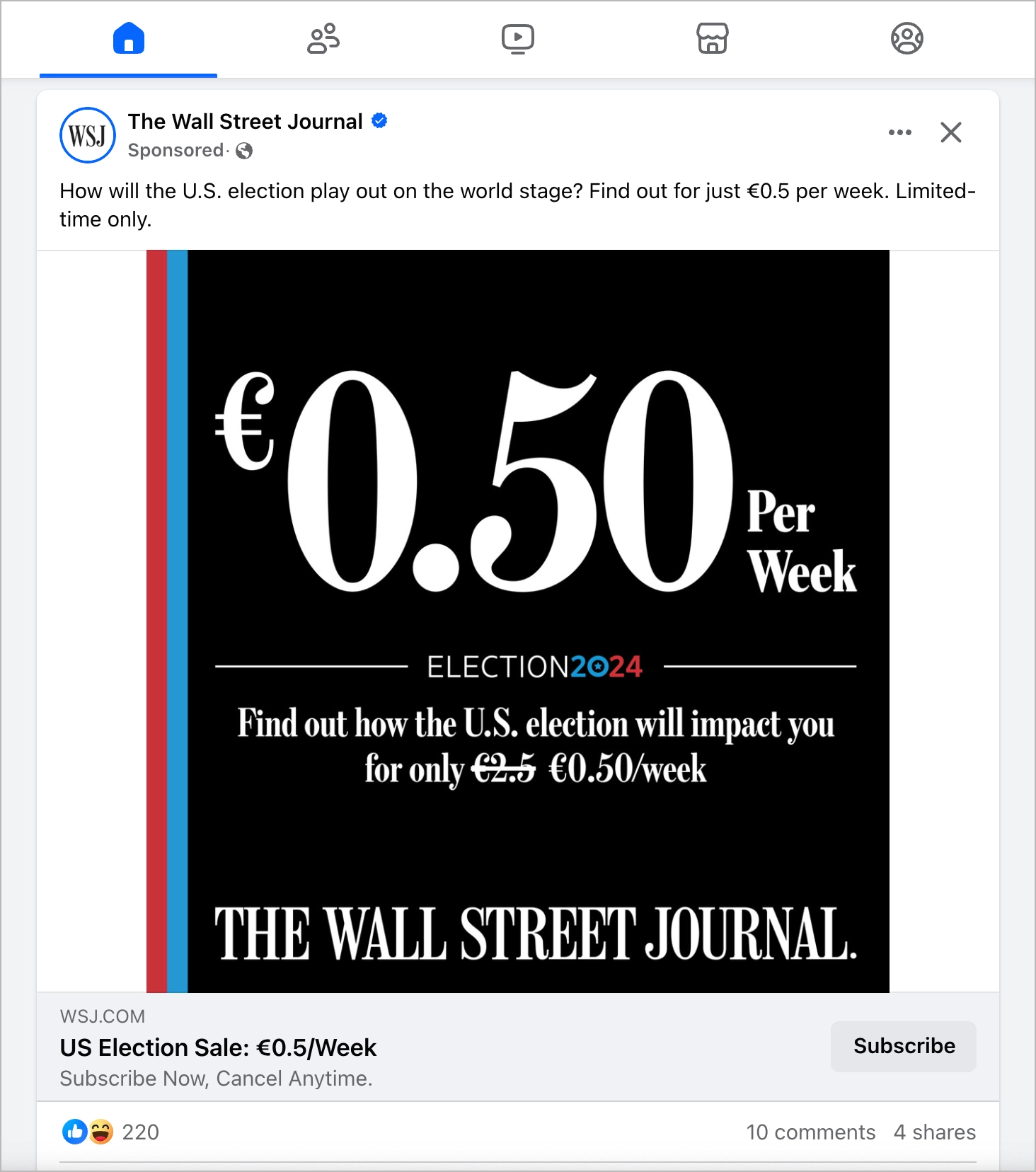
It’s a type of online ad called PPC (pay-per-click). You must be connected to the internet to see it, which makes it online marketing.
However, there’s a catch. The same ad can sometimes count as both online and offline, depending on how it’s shown. For example, if you’ve seen a similar Wall Street Journal ad on TV or streaming services, you’ve encountered both forms.
TV ads are part of traditional offline marketing. But when the same ad appears on a streaming platform, it becomes online – since you’re connected to the web. TV ads, by themselves, aren’t even digital.
This case is rare, but it shows how the line between online and offline can blur.
How Landing Pages Fit Into Digital & Online Marketing
In both digital and online marketing, landing pages are most useful when a campaign needs a trackable destination for a specific offer or audience segment. They can connect clicks, QR scans, or SMS responses with measurable actions such as form submissions, bookings, signups, or purchases.
In online campaigns, a dedicated landing page can isolate traffic from a specific ad, keyword, email, or audience. This makes it easier to measure the intended conversion (such as a lead, purchase, booking, or trial signup) without mixing results with general website traffic.
In offline digital campaigns, a short URL, QR code, or SMS link can direct people from a physical placement to a campaign-specific landing page. Separate URLs or tracking parameters can then show which placement generated the response.
What Are the Limitations of Digital Marketing?
Digital marketing faces challenges like high competition, privacy concerns, tech barriers, ad fatigue, and difficulty measuring results – all common in online campaigns. Offline digital efforts add issues like limited reach, high production costs, static content, and complex distribution.
High competition (online digital campaigns)
Digital marketing is accessible to all, so online spaces are crowded. Small businesses often struggle to compete with larger brands, especially in paid ads where higher budgets win visibility.
Rapidly changing trends (online digital campaigns)
Digital marketing evolves fast. New platforms, tools, and techniques appear constantly, forcing marketers to adapt quickly. For example, search algorithms change often, requiring continuous learning and quick adjustments to stay effective.
Dependency on technology (online digital campaigns)
Digital marketing depends on tech, which can fail. Glitches, software bugs, or platform outages can disrupt campaigns and waste budgets.
Ad fatigue and ad blockers (online digital campaigns)
Users often ignore repetitive ads or block them entirely. Without fresh, relevant content, ad performance drops over time.
Privacy concerns (online digital campaigns)
As data collection grows, so do privacy worries. Laws like GDPR limit access to personal data, making targeting and personalization harder.
Measurement challenges (online digital campaigns)
Digital marketing offers lots of data, but it’s not always clear-cut. Attribution issues make it difficult to know which channels drive results, complicating ROI tracking.
Limited interaction in certain industries (online digital campaigns)
Certain industries, especially those targeting older audiences or needing in-person contact, may find digital marketing less effective.
Difficulty in tracking engagement (offline digital campaigns)
Offline campaigns rely on estimates for reach and impact. Measuring engagement often requires surveys or focus groups, which are time-consuming.
High production costs (offline digital campaigns)
TV ads and billboards are expensive to produce and run. Creative development, media buying, and installation costs make them less accessible for smaller brands.
Static content (offline digital campaigns)
Offline digital ads, like banners or TV spots, can’t be updated once launched. This limits flexibility and responsiveness to trends or feedback.
Limited reach (offline digital campaigns)
Offline channels like local TV or in-game ads target narrow audiences. Unlike online campaigns, they lack broad or global reach.
What are the Limitations of Online Marketing?
Online marketing faces rapidly changing trends, high competition, ad fatigue, privacy laws, tracking challenges, and limited adoption in certain industries (e.g., local services).
The main limitations of online marketing are platform competition, privacy and consent requirements, incomplete attribution, ad fatigue, technical dependency, and exposure to algorithm or policy changes. Online campaigns are easier to edit than most offline placements, but that flexibility also creates a risk of reacting to short-term data before a test has produced a reliable result.
Connect Online and Offline Campaigns with Trackable Landing Pages
Landingi supports the landing page stage of online campaigns and offline-to-online journeys. You can use it to create separate destinations for paid ads, email traffic, SMS links, or QR codes and compare how each source converts.
Landingi offers key pillars of internet marketing:
- A drag-and-drop builder for landing pages, microsites, mobile pages, forms, and more
- AI-native landing page generator Lunar
- AI tools for content creation, SEO, and image editing
- Optimization features like A/B testing, Solis AI insights, and behavior tracking
- Scalability tools including Smart Sections, automated translations, and programmatic pages
- 170+ integrations with other marketing platforms
Start your free trial in Landingi and build a separate landing page for your next ad, email, SMS link, or QR-code campaign. Keep the offer and message consistent with the source, then track which channel produces the intended action!